
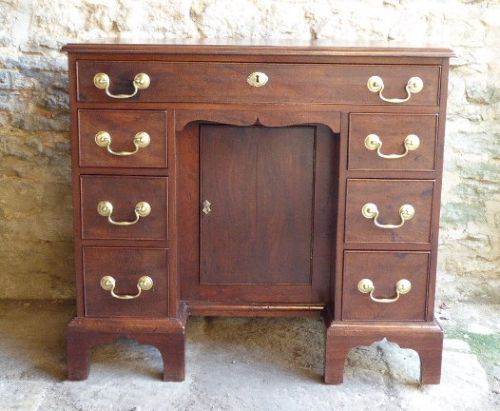
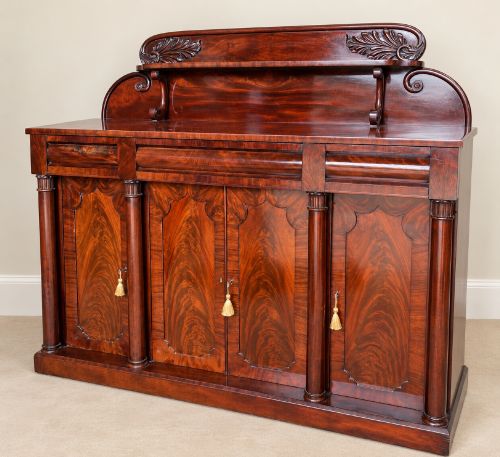
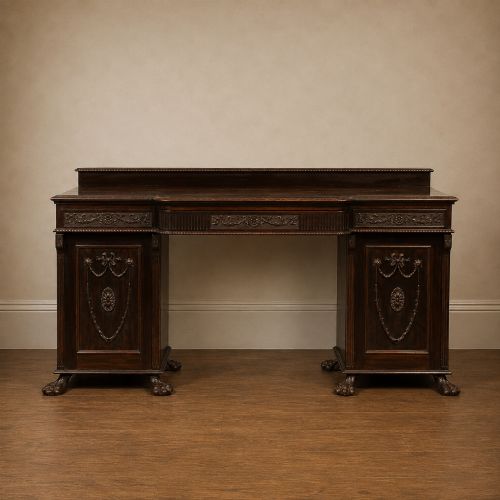
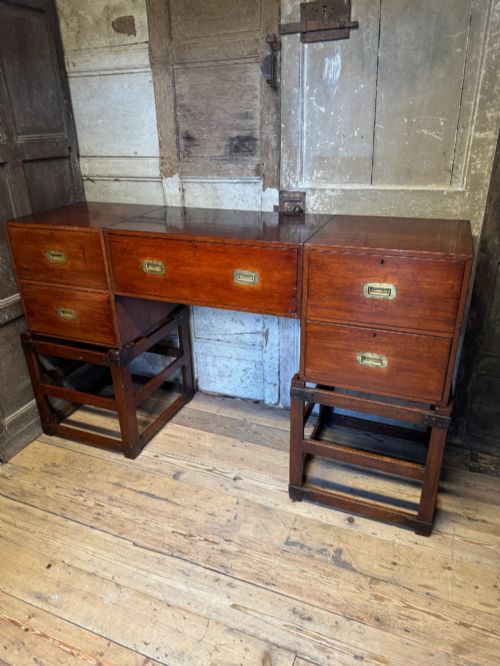


Mahogany Pedestal Sideboard Table
A mahogany pedestal sideboard table provides commanding dining room presence, combining deep timber grain with functional cabinet space for entertaining.
Mahogany Pedestal Sideboard Table
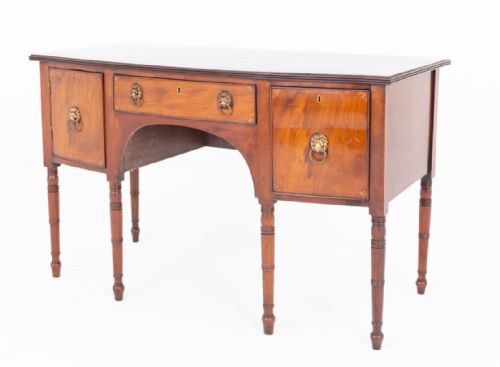
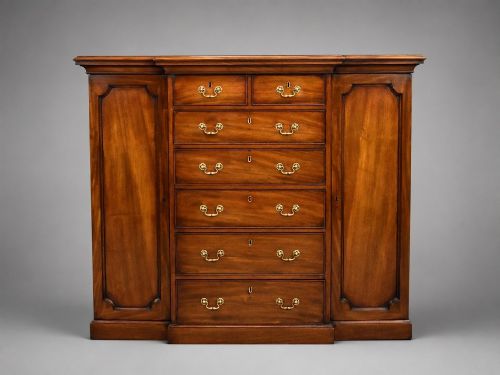
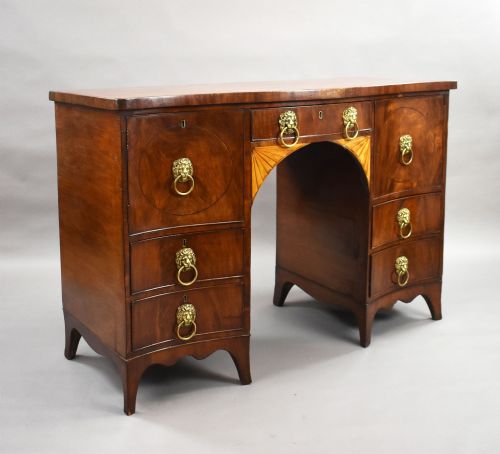
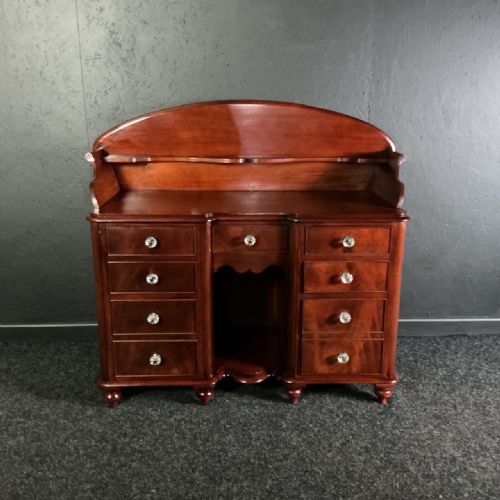
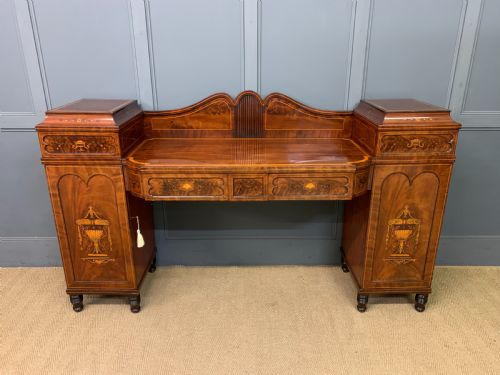
A mahogany pedestal sideboard table represents a grand dining room fixture designed for serving and storage, appearing predominantly in Georgian, Regency, and Victorian formats. Buyers searching for a mahogany pedestal sideboard table encounter substantial case pieces featuring flanking cupboards or pedestals joined by a central serving surface.
The selections span from late eighteenth century George III examples to later nineteenth century Victorian and Edwardian revivals, including specialised forms like Scottish stage-back designs and brass-galleried servers. These large furniture items anchor formal dining spaces while offering deep drawers and cellaret compartments for utility.
Construction materials and timber techniques
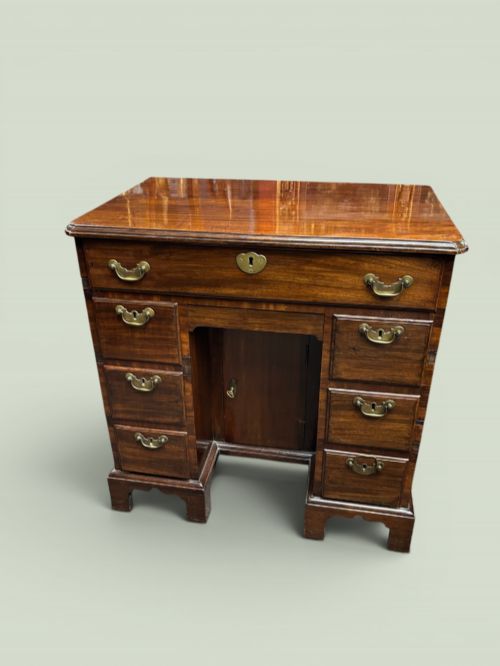
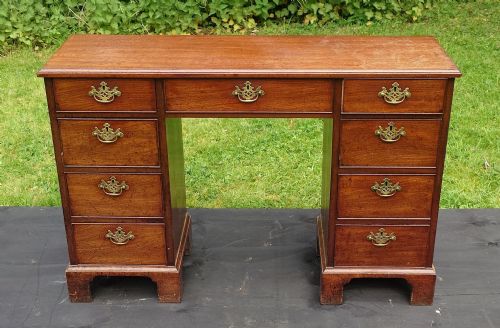
Cabinet makers utilised dense solid mahogany alongside flame mahogany veneer to achieve rich, figured surfaces across the drawer fronts and cupboard doors. Secondary embellishments frequently include contrasting boxwood and satinwood stringing or inlay work.
Structural hardware relies heavily on cast brass, taking the form of drop handles, backplates, and occasionally decorative galleries mounted to the rear serving shelf. Timber selection dictates the visual weight, pairing dark foundational structures with highly figured grain patterns.
A few sideboards include hidden cellaret drawers designed to keep wine bottles cool against the floorboards.
Distinctions in construction and design execution
The upper tier of craftsmanship displays exceptional timber selection, such as figured Scottish flame mahogany, matched with precise boxwood and satinwood inlay. Proportions also dictate value, with unusually small or monumental country house scales commanding distinct architectural interest.
Design sophistication separates standard production from exceptional cabinet work, seen in complex serpentine fronts, stage-backs, and integrated brass galleries. The handling of secondary woods and the integrity of the original veneer surfaces determine the overall calibre of the piece.
John Gregory London·James Mein of Kelso·Gillows
The Mahogany Pedestal Sideboard Table Glossary
- Flame mahogany
- A highly figured timber veneer showing a flickering, flame-like grain pattern. This decorative cut was utilised on prominent drawer fronts and cabinet doors.
- Pedestal sideboard
- A dining room storage form comprising two distinct flanking cabinets connected by a central table section. This layout provides concealed bottle storage and cutlery drawers.
- Stage-back
- A raised tier or superstructure at the rear of a serving surface. It provides additional display space or holds a brass gallery.
- Serpentine
- A gently curved front line bending outward in the centre and inward toward the sides. This fluid shape required advanced cabinet-making skill.
- Stringing
- Thin inlaid lines of contrasting light wood, such as boxwood or satinwood, set into the dark mahogany surface. It creates fine geometric borders around panels.
Mahogany Pedestal Sideboard Table: Frequently Asked Questions
Where did these sideboards stand?
These large pieces were placed against the dining room wall, positioned centrally to serve food and hold silver during formal meals.
The flanking pedestals provided storage for dining accessories, bottles, and linens while keeping the central floor space accessible for servants.
How do I date a Georgian piece?
Georgian examples from the eighteenth and early nineteenth centuries often exhibit restrained classical lines, hand-cut dovetails, and dense native mahogany timbers.
Looking closely at the construction methods inside the drawers and the style of the brass hardware helps confirm the production period.
What is a stage-back sideboard?
A stage-back version incorporates a raised wooden shelf or gallery along the rear edge of the top surface.
This regional Scottish variation allowed for the display of heavy silver platters and kept serving items from sliding backward.
How do I style a pedestal sideboard?
A sideboard works best against a substantial dining room wall, paired with heavy timber dining tables and formal seating.
The wide top surface accommodates lamps, decorative ceramics, or serving trays while the interior cabinets manage everyday storage needs.