
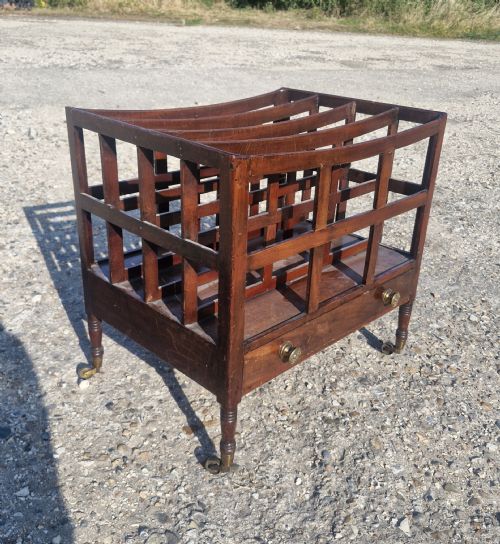
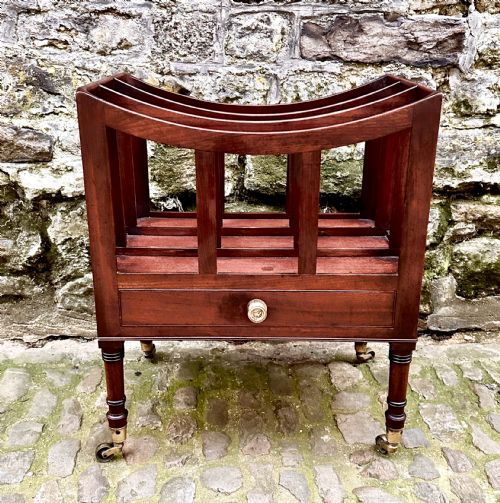
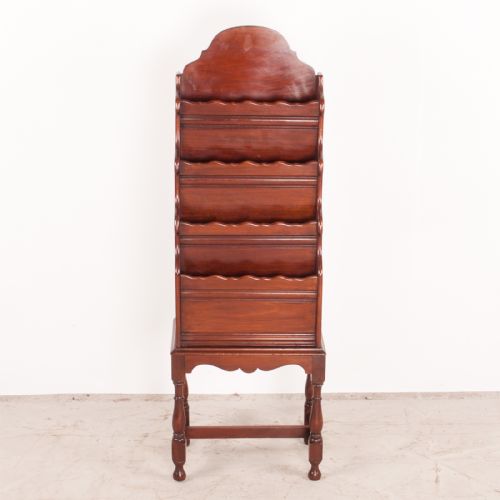
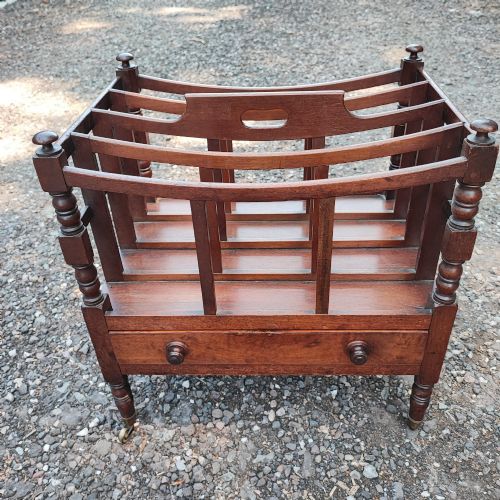


Mahogany Paper Holder
These mahogany paper holders are practical furniture for sorting sheets and folios, bringing tidy order to a desk or floor.

Mahogany Paper Holder
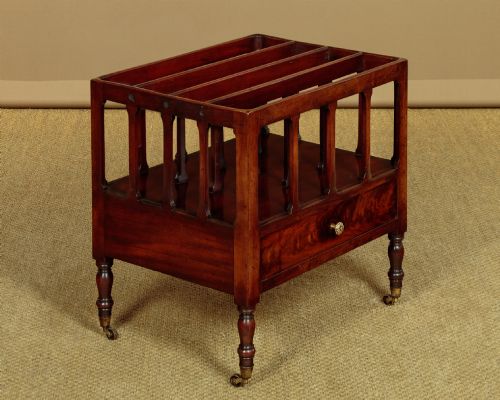
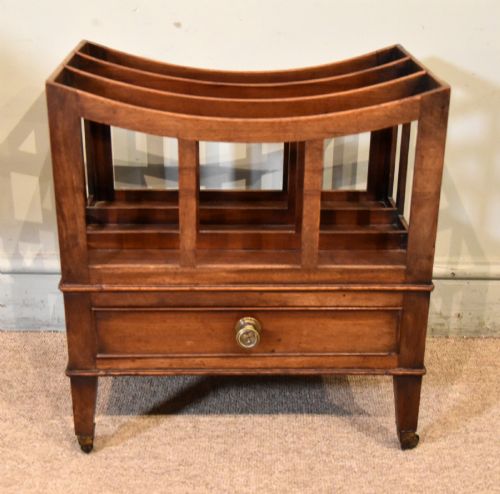
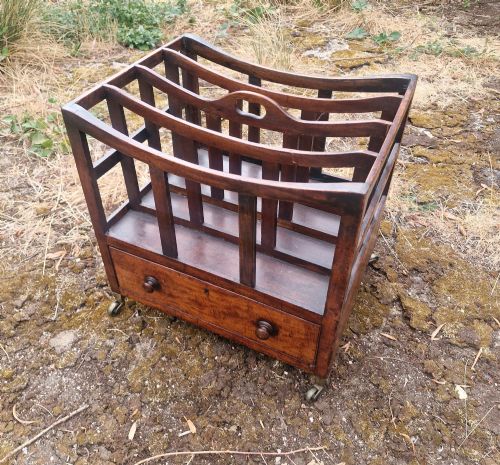
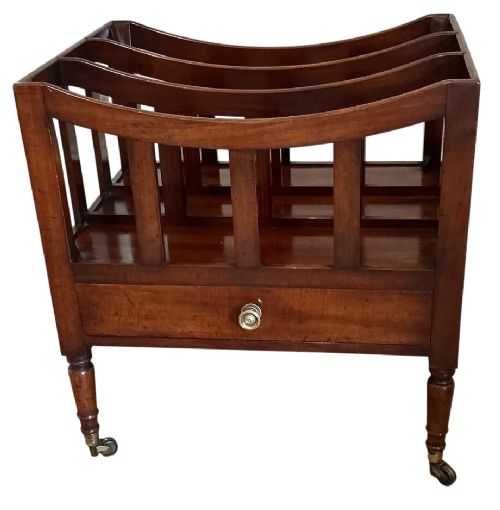
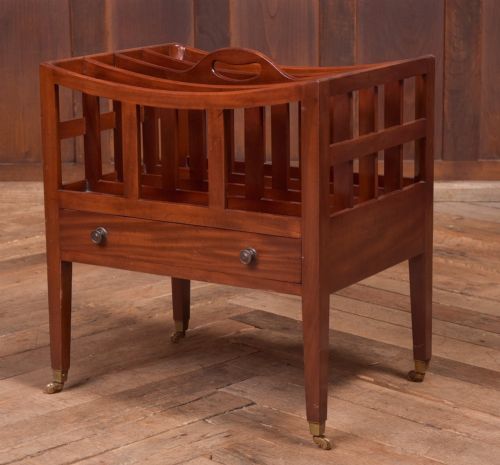
A mahogany paper holder functions as a stand or tidy for sorting folios, magazines, and letters in a room. When you search for a mahogany paper holder, you find pieces spanning the eighteenth, nineteenth, and early twentieth centuries, including Georgian, Regency, Victorian, and Edwardian examples.
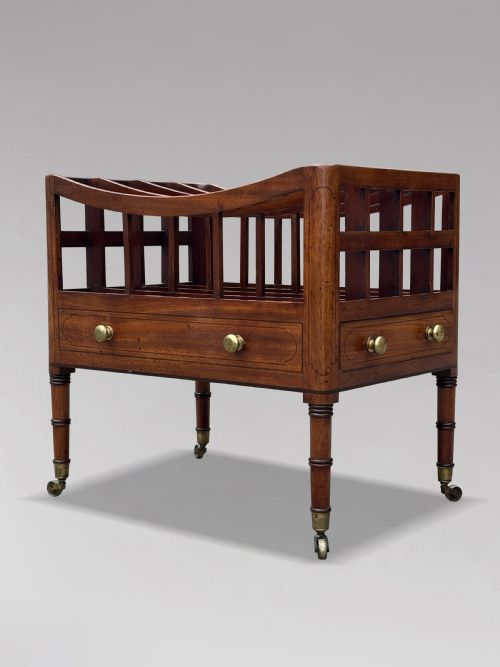
The most common form on this page is the canterbury, featuring multiple tiers or pierced divisions designed to hold papers upright. Alongside these stand desk tidies, magazine racks, music stands, and folio stands.
Origins stretch across English country houses, town residences, and offices, utilising traditional cabinet-making forms intended for daily utility.
Materials and construction
Joinery relies on traditional cabinet-making techniques to construct vertical divisions, slatted sides, and tiered shelves. Details include carved scrollwork, pierced fretwork, and turned feet.
Design and proportion
Quality rests in the crispness of the timber selection and the precision of the joinery across the divisions and tier supports. Finer examples display thoughtful proportions, balanced scrollwork, and careful attention to secondary timbers.
Decorative enhancements, including boxwood or ebony banding, fine brass fittings, and well-executed turning, elevate a standard utility piece into a refined item of furniture.
Howard and Sons of London
The Mahogany Paper Holder Glossary
- Desk tidy
- A small tabletop accessory designed to organise letters, documents, and writing paper. It often incorporates drawers, slots, or tiered compartments.
- Folio stand
- A piece of furniture designed to hold large sheets of paper, prints, or books in a vertical or sloping position.
- Inlay
- A technique where pieces of contrasting wood like boxwood or ebony are set into the mahogany surface to form decorative patterns.
Mahogany Paper Holder: Frequently Asked Questions
What is a mahogany paper holder used for?
These pieces serve to organise loose sheets, letters, magazines, and folios either on a desktop or directly on the floor beside a seat.
Their divided sections keep papers upright and accessible for daily use in a study or sitting room.
How do I identify a Georgian canterbury?
Georgian examples often display clean architectural lines, precise mahogany grain, and traditional pierced woodwork on the divisions.
They frequently date from the late eighteenth or early nineteenth century and rely on understated elegance rather than heavy ornament.
Where were these stands placed?
They sat beside desks, reading tables, or in the centre of studies and libraries within country houses and town residences.
Their portability allowed servants or owners to move them easily across rooms as needed.
What is the difference between a canterbury and a desk tidy?
A canterbury is typically a floor-standing piece with upright divisions and castors designed for larger folios and magazines.
By contrast, a desk tidy sits on a table surface to organise smaller letters, envelopes, and writing paper.