
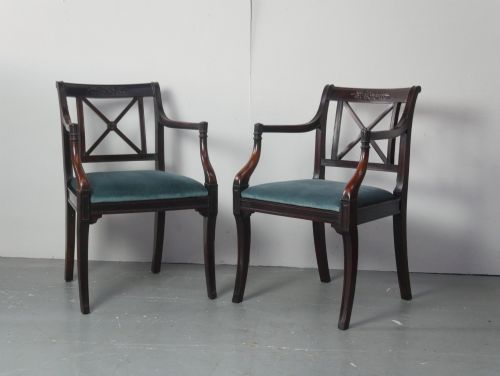
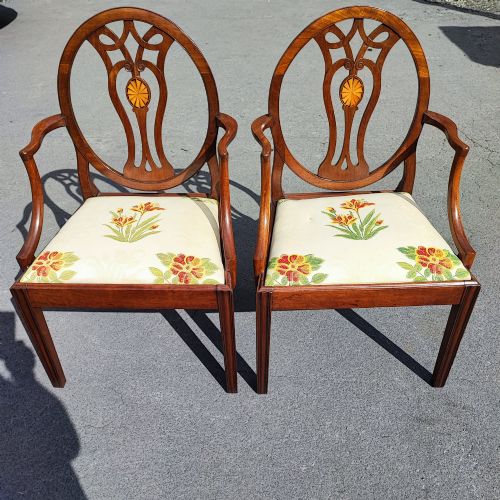
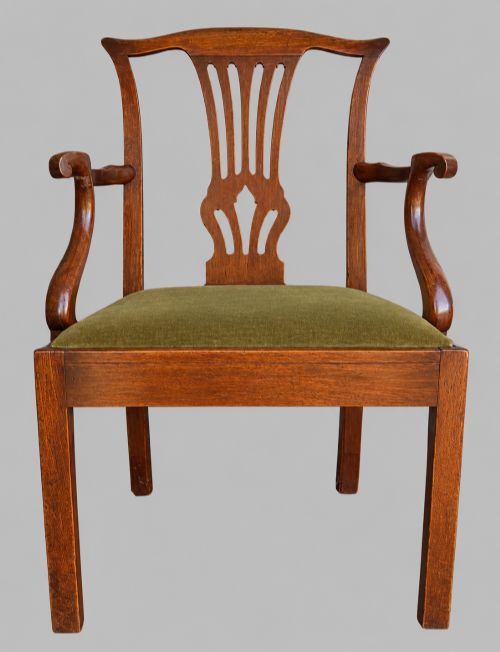
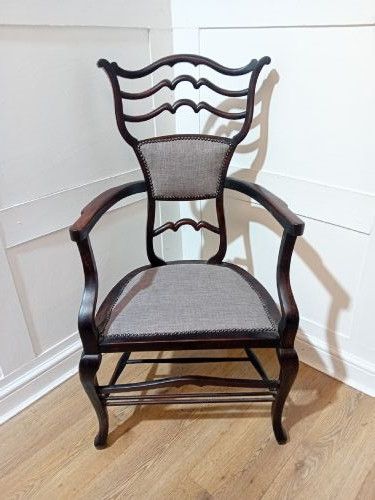
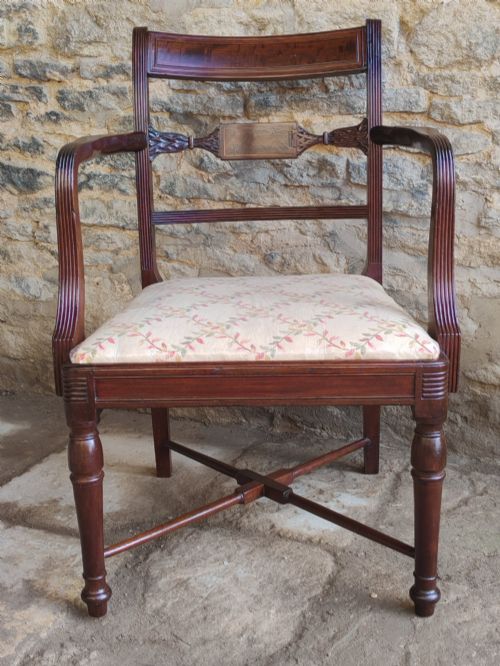
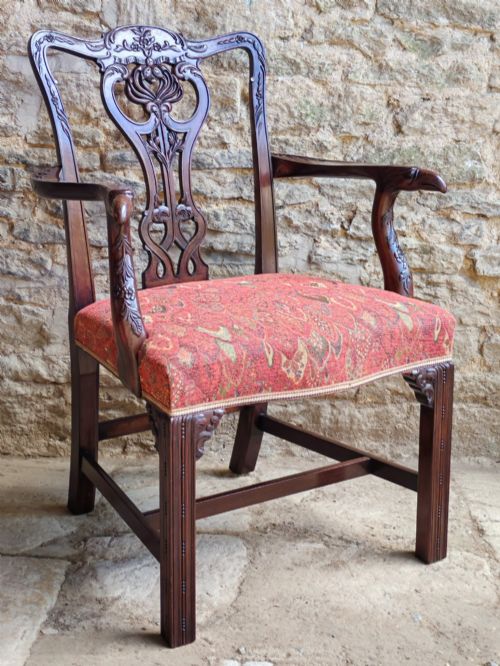
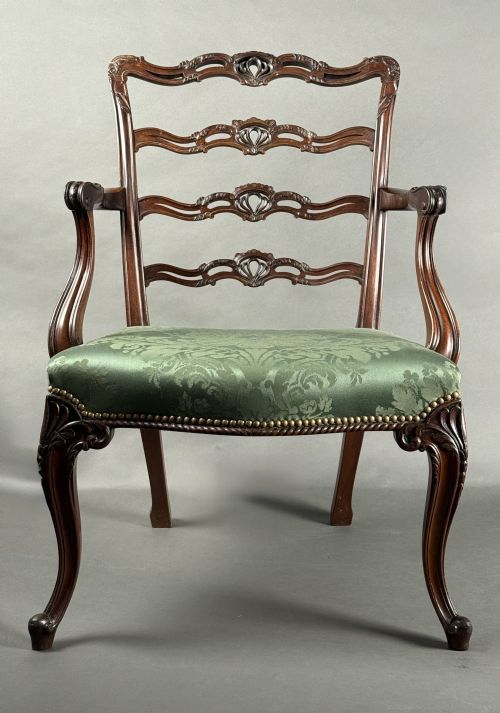
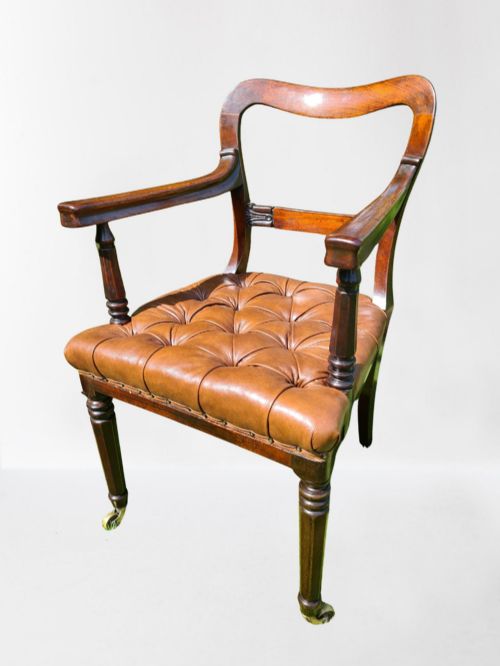
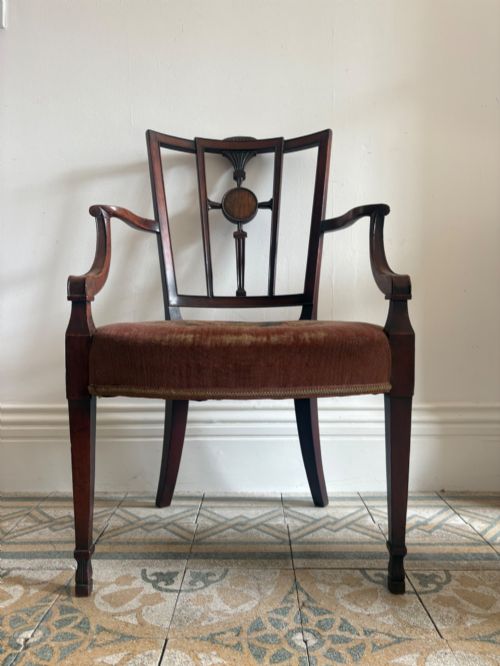
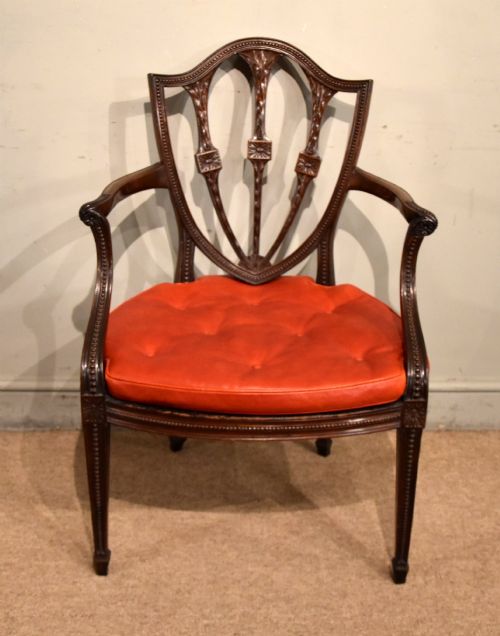
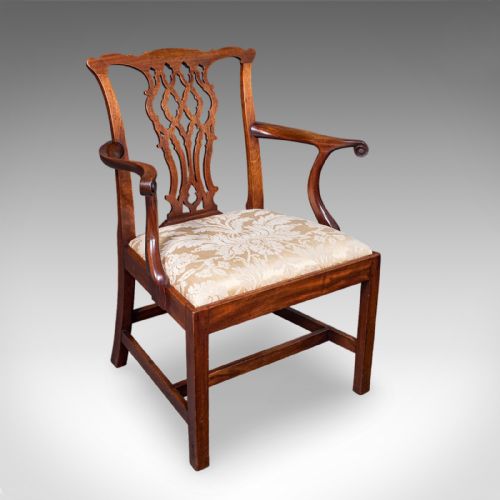
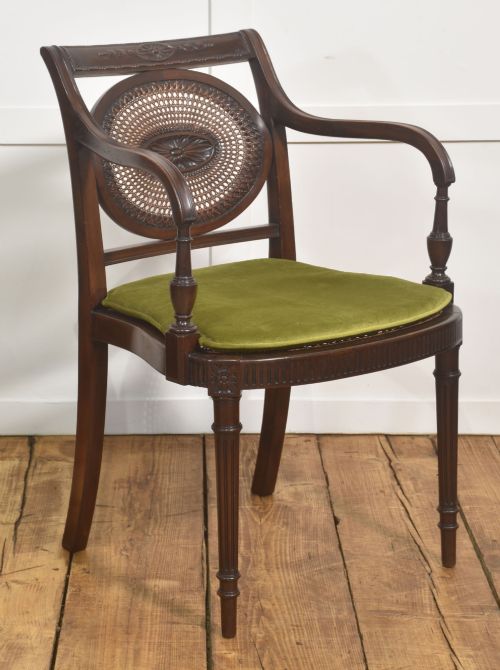
Mahogany Open Elbow Chairs
Mahogany open elbow chairs provide steady arm support and handsome timber grain, spanning Georgian and Regency periods with enduring utility.
Mahogany Open Elbow Chairs
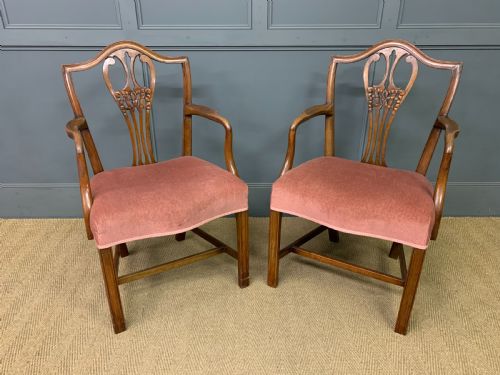
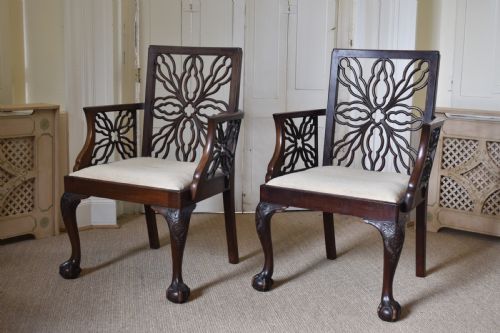
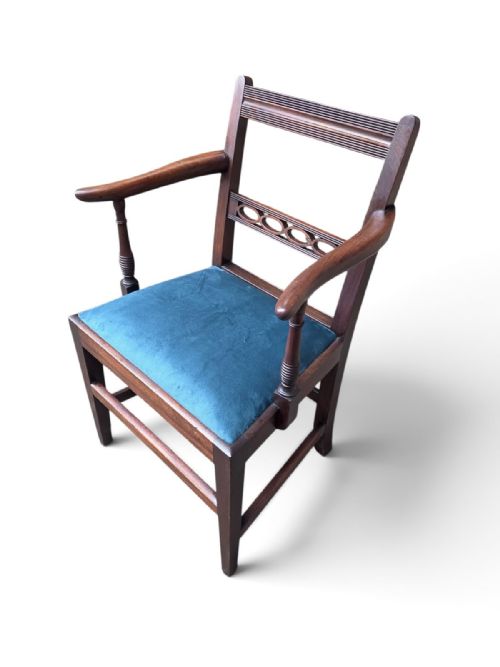
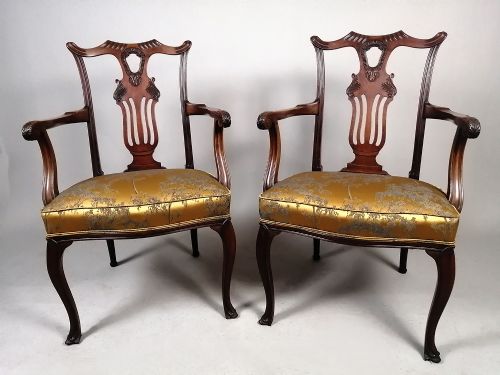
Mahogany open elbow chairs appear frequently in eighteenth and nineteenth-century forms, offering structured seating with open sides for ease of movement.
A buyer seeking mahogany open elbow chairs will encounter pieces ranging from Georgian and Regency eras to later revival styles such as Chippendale and Hepplewhite.
The selections span functional desk chairs, library armchairs, and dining carvers, constructed predominantly in rich timber with varied drop-in or upholstered pads.
How they were made
Cabinetmakers utilised solid mahogany for the structural frames, carving crest rails, splats, and arms with precise joinery.
Seats incorporate materials like leather, cane, velvet, and tapestry, secured over webbing or drop-in wooden frames.
Subtle details such as brass accents and rosewood roundels complete the construction of finer examples.
Materials paired with mahogany frames include cane, leather, velvet, brass, and tapestry.
What varies in quality
The depth and crispness of carved detail across the splats and knuckles distinguish standard workshop production from master craftsmanship.
Timber selection dictates overall visual weight, with dense, figured mahogany showing greater depth of grain than plain stock.
Proportion and structural integrity of the open arms define the architectural balance of the seat.
Howard and Sons·Gillows
The Mahogany Open Elbow Chairs Glossary
- Carver
- An armchair designed - typically with open elbows - to match a set of dining chairs.
- Elbow chair
- An alternative term for an armchair, referencing the supportive wooden rests for the arms.
- Drop-in seat
- A removable upholstered frame that drops securely into the rebated seat rail of the chair.
- Splat
- The vertical central strip of wood within the backrest, often pierced or carved in revival styles.
Mahogany Open Elbow Chairs: Frequently Asked Questions
How do I identify a Georgian elbow chair?
Look for timber density, hand-carved decorative motifs such as ribbons or acanthus leaves, and pegged mortise and tenon joinery.
Early pieces often display a richer patina and heavier proportions compared to later nineteenth-century revivals.
Can these chairs be used at a desk?
Many period elbow chairs function effectively as desk or library seats due to their open arm design.
Ensure the seat height and arm clearance match your desk dimensions before daily placement.
What is the difference between a carver and an armchair?
The terms are frequently used interchangeably in trade descriptions to denote a chair with open arms.
Historically, carvers often served as the head seats at dining tables alongside simpler side chairs.
How should I care for mahogany and leather?
Apply natural beeswax sparingly to nourish the mahogany timber and maintain a soft, protective sheen.
Condition leather seats periodically to prevent drying while avoiding direct sunlight and excessive heat.