
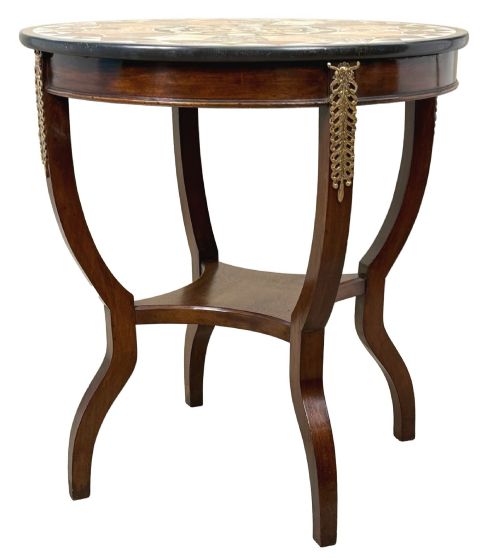
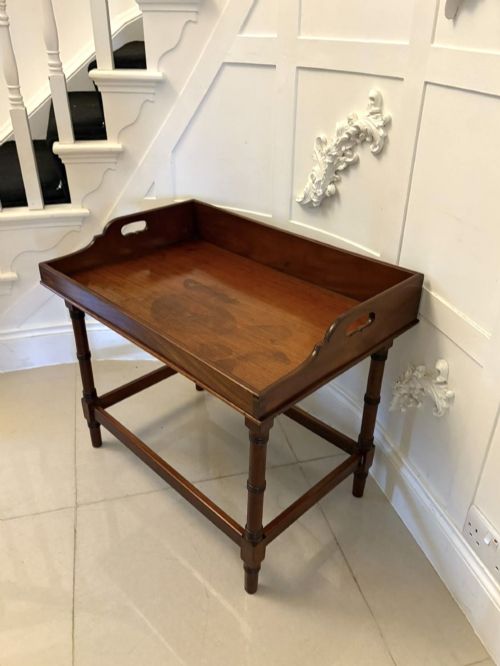
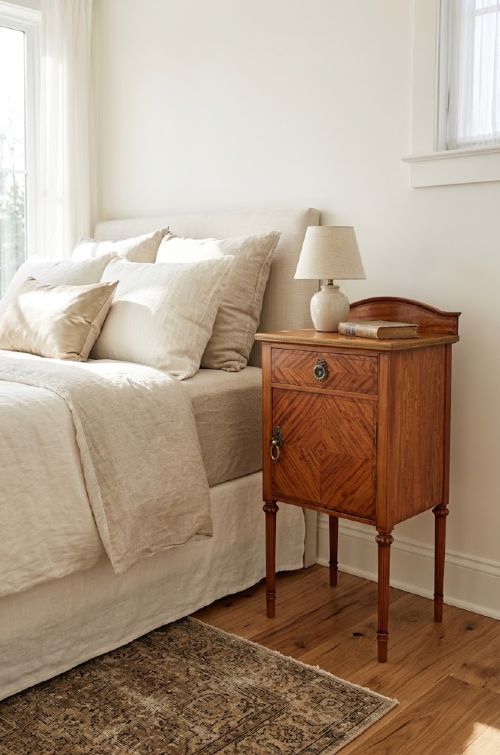
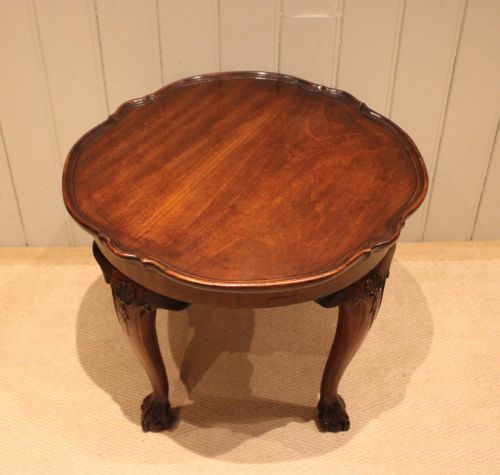
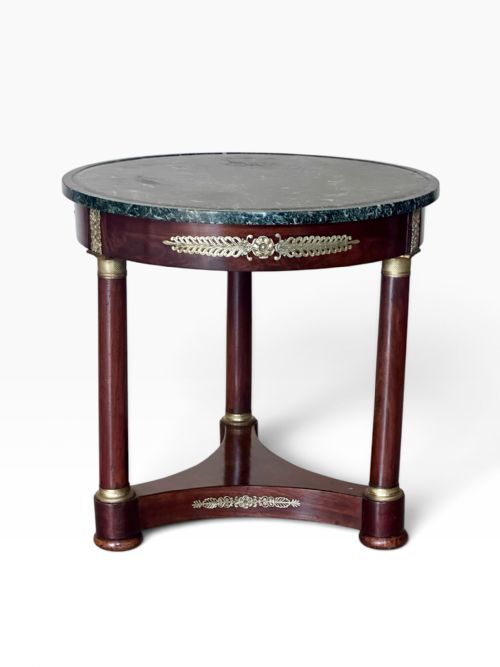
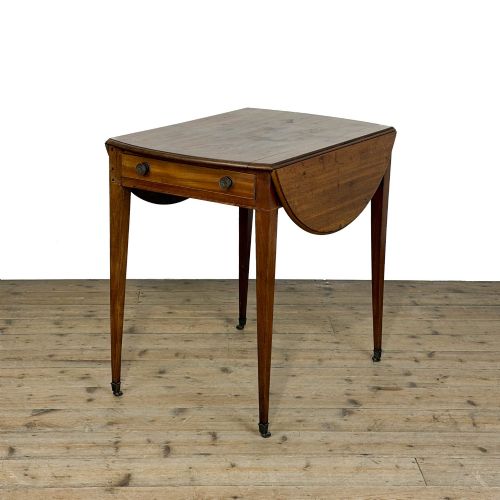
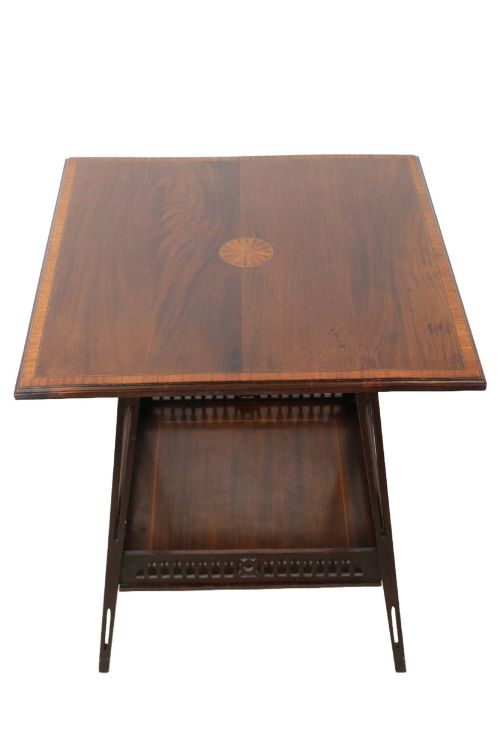
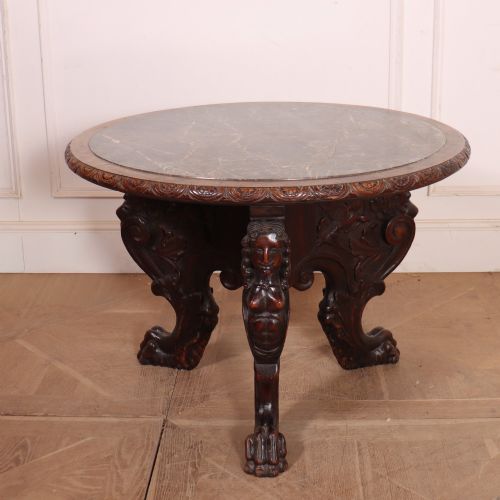
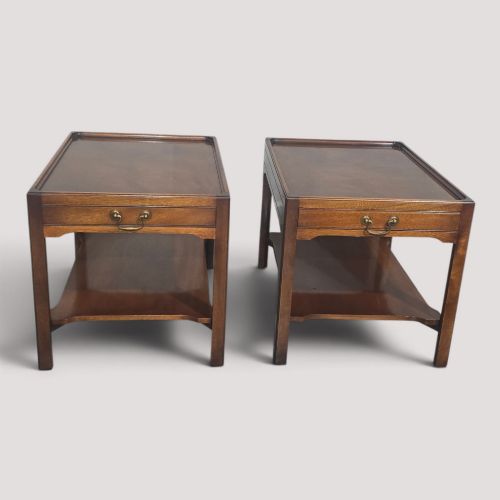
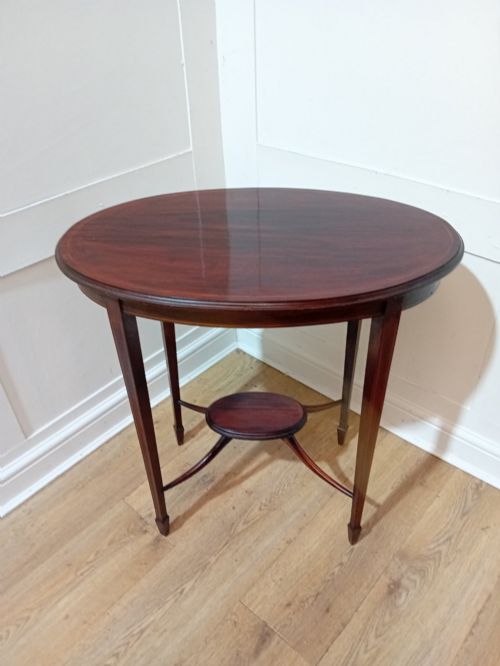
Mahogany Occasional Side Table
A mahogany occasional side table provides versatile surface space and refined timber character for a traditional interior.
Mahogany Occasional Side Table
A mahogany occasional side table serves as a movable surface for lamps, drinks, or books within a sitting room or bedroom. These pieces appear across multiple eras, spanning the Georgian, Victorian, and Edwardian periods.
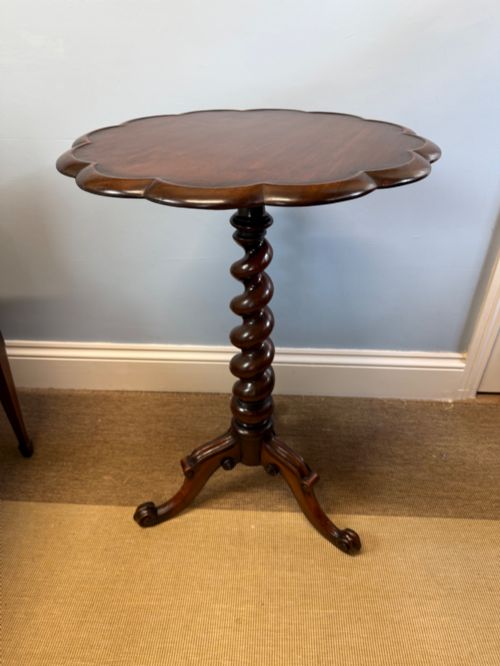
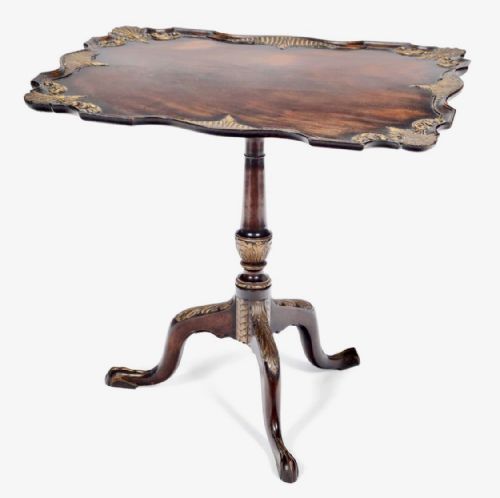
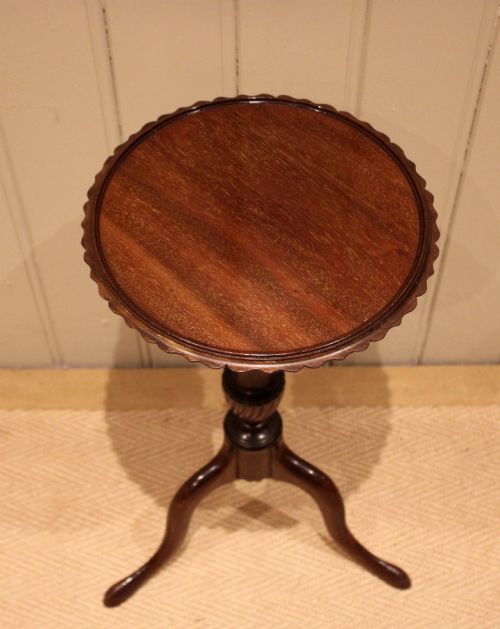
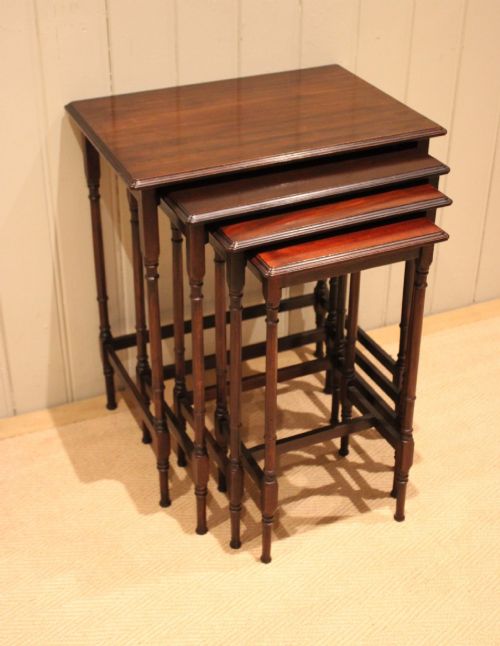
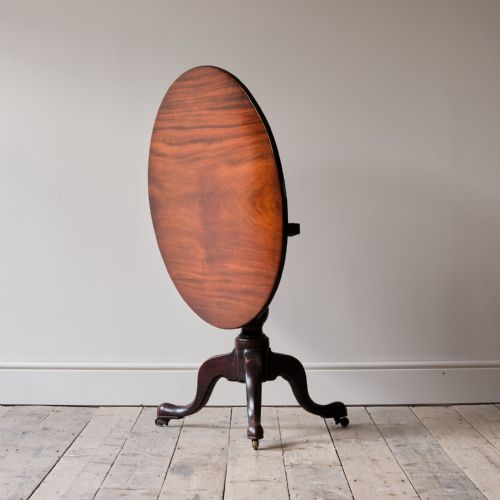
The selection includes compact wine tables, tilt-top tripod stands, nests of tables, and Pembroke designs with drop leaves. Edwardian inlaid examples and 18th-century Georgian forms represent the most frequent finds in this category.
Makers and workshops utilised various formats, ranging from simple spider leg constructions to elaborate lamp and centre tables. Buyers find both authentic period pieces and later revival styles influenced by Chippendale and Sheraton designs.
How They Were Made
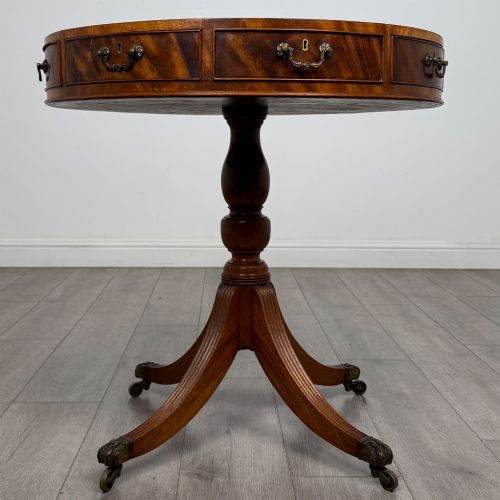
Cabinet makers constructed these pieces primarily using solid mahogany and figured timber veneers, frequently incorporating secondary woods like satinwood and boxwood for decorative contrast. Wood inlay and brass hardware added refinement to drawer fronts and tabletops.
Structural techniques included tripod pedestal bases, gate-leg actions for drop leaves, and tilt mechanisms with birdcage or catch supports. Surface finishes relied on French polishing to accentuate the deep grain and colour of the timber.
Common forms on this page include wine tables, Pembroke tables, nests of tables, and tripod lamp stands.
What Varies in Quality
The distinction between standard examples and top-tier pieces lies in the selection of figured timber, the crispness of hand-carved details, and the integrity of the original construction. Superior items display finely figured mahogany veneers, precise boxwood or satinwood stringing, and well-balanced proportions.
Secondary elements such as original cast brass handles, well-fitted drawers, and stable tilt mechanisms indicate superior workshop execution. Pieces featuring parcel gilding, marble inserts, or sophisticated mechanical actions command greater attention from collectors.
Trevor Page & Co·Maison Millet
The Mahogany Occasional Side Table Glossary
- Tilt-top
- A tabletop mounted on a catch mechanism that pivots vertically to allow compact storage against a wall when not in use.
- Tripod table
- A small stand supported by a central pillar resting on three curving legs, typical of 18th-century wine and candle tables.
- Pembroke table
- A drop-leaf table featuring two hinged flaps on opposite sides and usually containing one or more small drawers.
- Stringing
- A narrow inlaid line of contrasting wood, such as boxwood or satinwood, used to edge drawer fronts and tabletops.
- Sutherland table
- A narrow drop-leaf table with exceptionally slender legs where both leaves fold down almost flat.
Mahogany Occasional Side Table: Frequently Asked Questions
What is a tilt top table used for?
A tilt top table served as a versatile surface for holding candles, tea, or books in domestic sitting rooms. When not needed, the mechanism allowed the top to fold flat against the wall to save floor space.
Craftsmen engineered these stands with stable tripod bases so the pivoting mechanism remained secure during daily use.
How do I identify a Georgian occasional table?
Georgian occasional tables typically feature substantial mahogany timbers, hand-carved tripod legs, and restrained proportions. Details like dish tops or birdcage mechanisms point toward 18th-century craftsmanship.
Later Edwardian pieces often imitate these earlier styles but employ machine-cut veneers and lighter internal framing.
Where should I place an occasional table?
An occasional table works well beside an armchair or sofa to support a lamp, drink, or book. Their compact footprints also suit hallways and bedrooms as small display surfaces.
Because many examples feature finished backs and polished timber all round, they sit comfortably in the middle of a room as centre tables.
What is a nest of tables?
A nest of tables consists of a set of graduated occasional tables designed to slide neatly beneath one another. This arrangement provides multiple surfaces that deploy when guests arrive.
Edwardian makers produced elaborate sets utilising figured mahogany and fine boxwood inlay.