




Early Victorian Work Table
An early victorian work table is a domestic sewing and writing piece designed for the nineteenth-century parlour, combining storage with refined timber craftsmanship.
Early Victorian Work Table
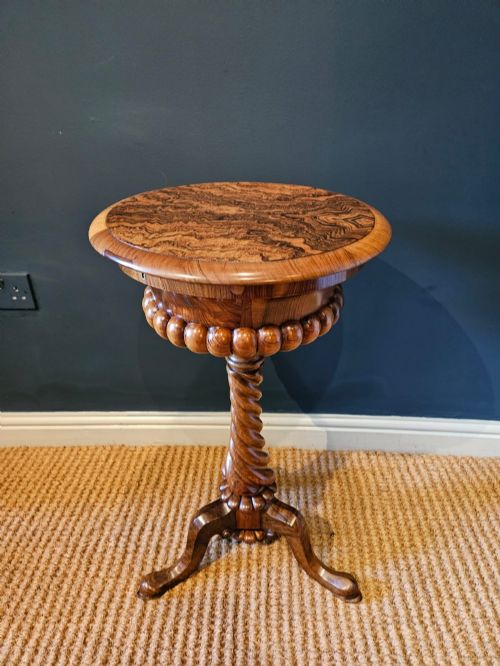
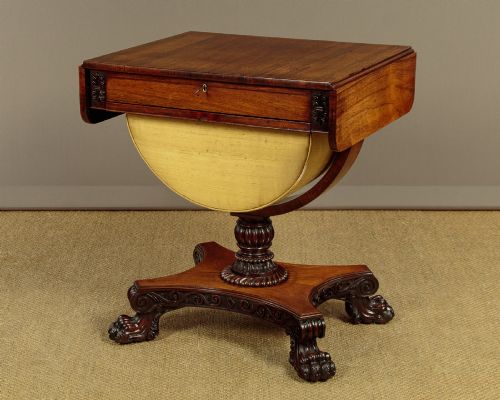
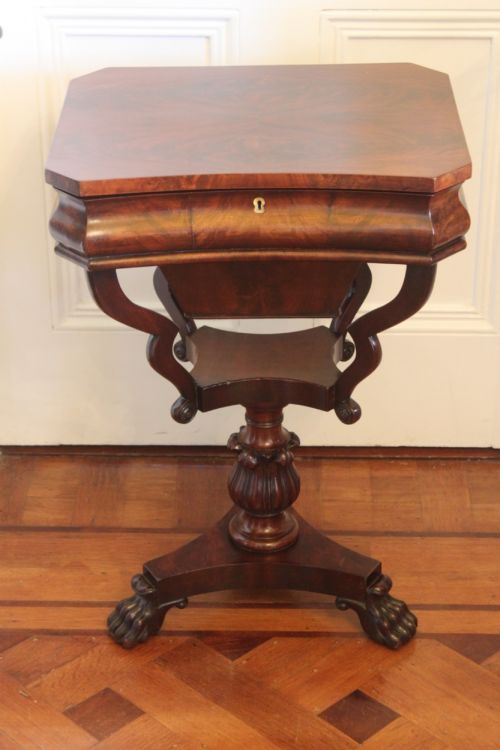
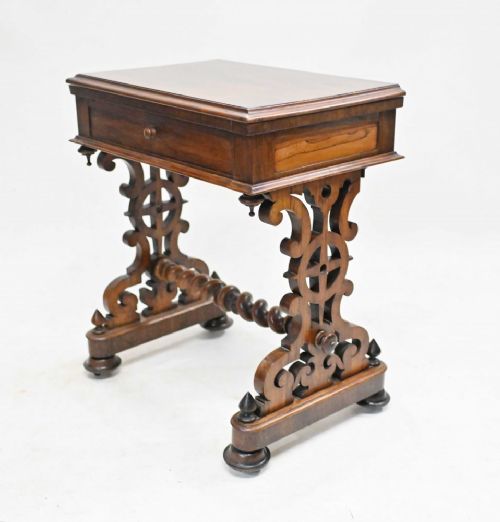
When you search for an early victorian work table, you encounter specialised furniture created for needlework, writing, and leisure in domestic settings. These items typically feature fitted tops above compartments, bags, or drawers intended to hold threads, fabrics, and small personal items.
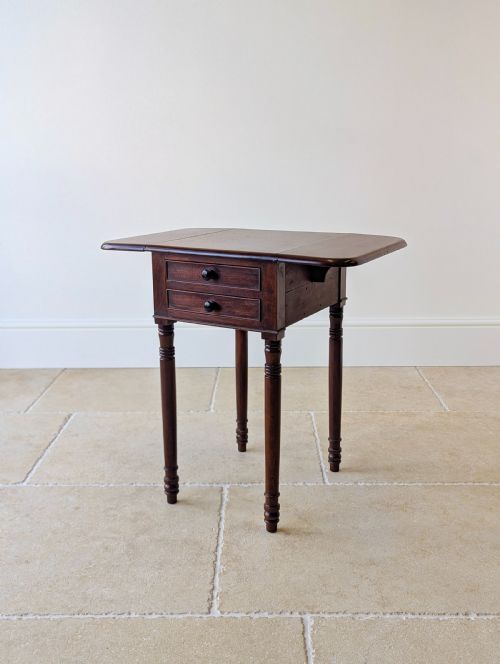
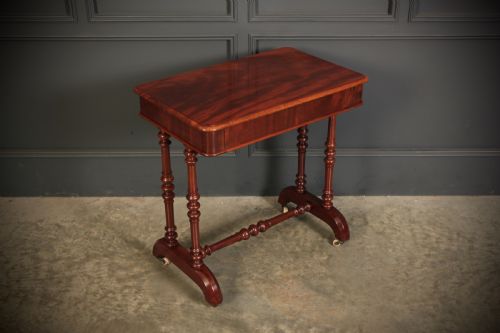
The versions most frequently met on this page are constructed from rosewood or mahogany, often taking the form of sewing tables, pedestal tables, or drop-leaf designs. They bridge the gap between utilitarian sewing furniture and elegant parlour tables through careful proportion and decorative timber grain.
Originating predominantly in the nineteenth century, these pieces reflect the domestic priorities of the Victorian era. Alongside dedicated work tables, related forms such as games tables and side tables appear, sharing similar construction dates and materials.
How They Were Made
Cabinet makers utilised dense, richly figured hardwoods such as mahogany, rosewood, and burr walnut for the primary structure and veneers. These timbers were selected for their deep colour and pronounced grain patterns, which were frequently polished to a high finish.
Internal components often incorporated silk or fabric for storage bags, alongside brass castors, handles, and occasional inlaid details. Construction methods combined solid timber framing with delicate joinery to support hinged tops, drop flaps, and pedestal pillars.
Pedestal tables and drop-leaf formats appear frequently alongside specialised sewing furniture.
What Varies in Quality
The selection of timber grain largely separates standard items from finer examples, with figured mahogany, burr walnut, and matched rosewood veneers commanding greater attention. Exceptional pieces display continuous grain alignment across drawer fronts and hinged surfaces.
The sophistication of the interior fittings and the retention of original brass hardware or silk components also influence distinction. Refined turning on pedestal pillars and precise joinery distinguish workshops of higher skill from routine commercial production.
Heal & Son·Gillows
The Early Victorian Work Table Glossary
- Work table
- A small nineteenth-century table equipped with drawers or fabric bags designed to hold sewing equipment and writing materials.
- Rosewood
- A dense, dark timber with distinct figuring, frequently utilised for high-status Victorian cabinet work.
- Drop leaf table
- A table featuring hinged flaps on the sides that can be raised or lowered to adjust the surface area.
- Pedestal table
- A form supported by a central pillar rising from a platform base, often resting on brass castors.
- Burr walnut
- Timber taken from the warted growths of walnut trees, producing a swirling, highly decorative veneer.
Early Victorian Work Table: Frequently Asked Questions
How were work tables used historically?
These tables were kept in sitting rooms and parlours where women spent their afternoons engaged in needlework, embroidery, and correspondence. The compartmentalised drawers and hanging silk bags kept sewing implements organised and out of sight when visitors called.
Many examples also doubled as games tables or small writing desks, offering versatile surfaces for leisure activities during the Victorian period.
Where should I place a work table?
A work table functions well as a side table beside a sofa or armchair, where its surface can hold a lamp or book. Because many examples feature finished backs and detailed pedestals, they also suit placement where the piece is visible from all angles.
The compact proportions allow them to fit easily into smaller spaces, serving as accent furniture in hallways, bedrooms, or studies.
How do I distinguish mahogany from rosewood?
Mahogany typically displays a warm reddish-brown colour with straight or ribbon-like grain patterns that mellow gracefully over time. Rosewood is generally darker, featuring a heavier, purplish-brown tone with contrasting black grain lines.
Examining the weight and surface texture under good light helps reveal the natural characteristics of each distinct timber.