

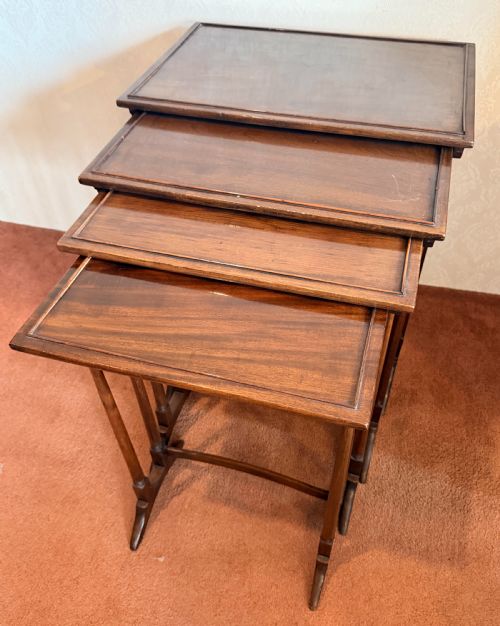


Mahogany Nesting Side Tables
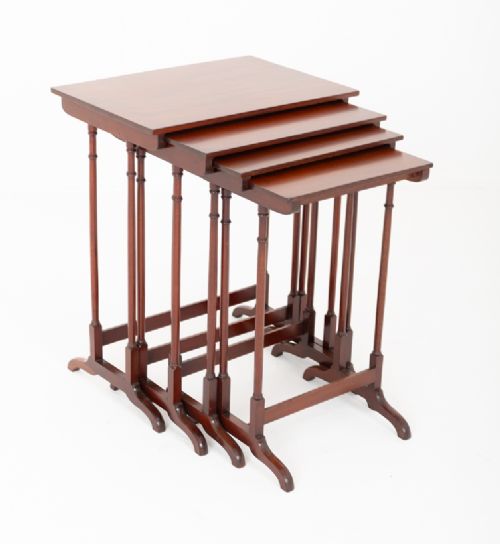
Mahogany nesting side tables offer a practical multi-tiered surface arrangement that slides neatly together when floor space matters.
Mahogany Nesting Side Tables
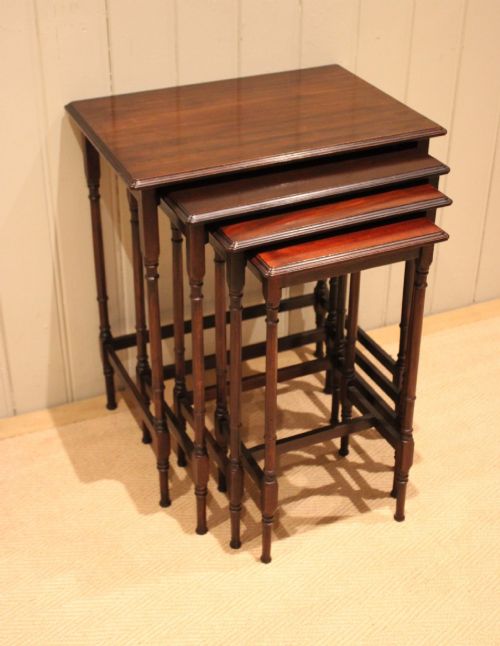
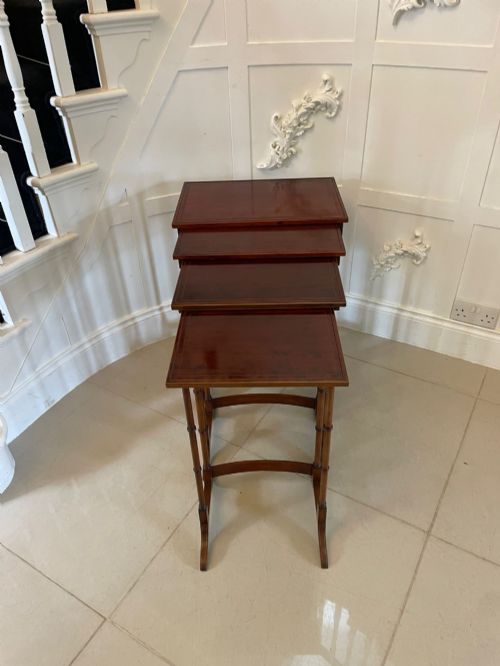
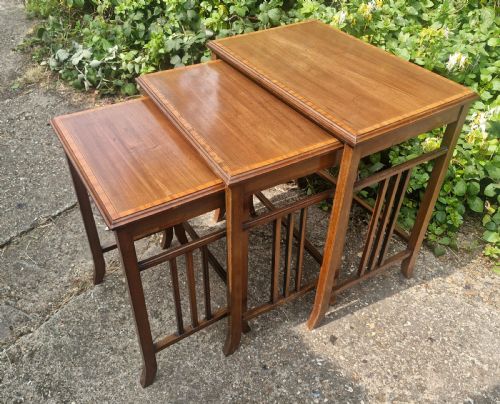
When you search for mahogany nesting side tables, you encounter sets of graduated tables designed to stack inside one another. The pieces on this page span several periods, with Edwardian examples and nineteenth-century pieces appearing most frequently alongside Georgian and Regency interpretations.
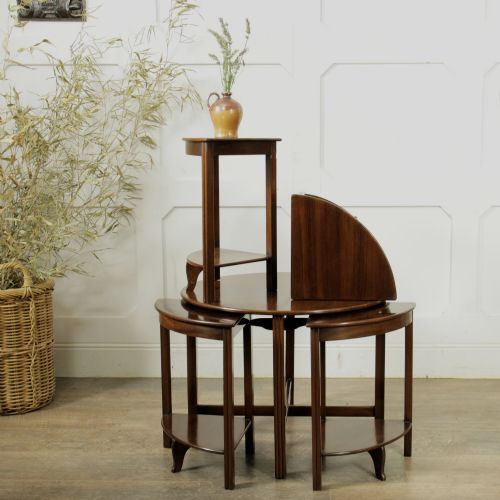
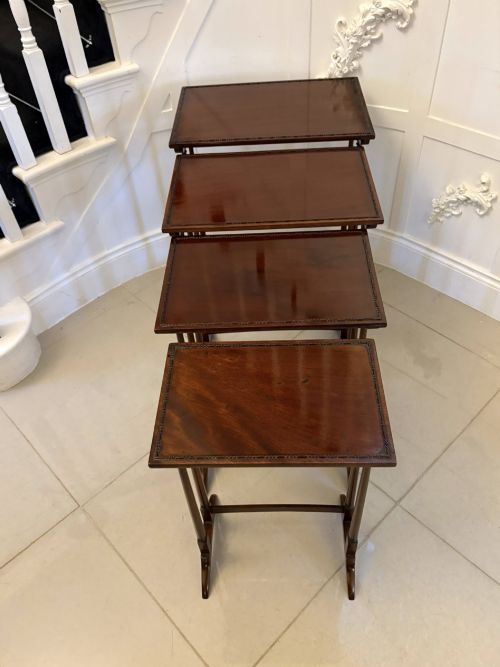
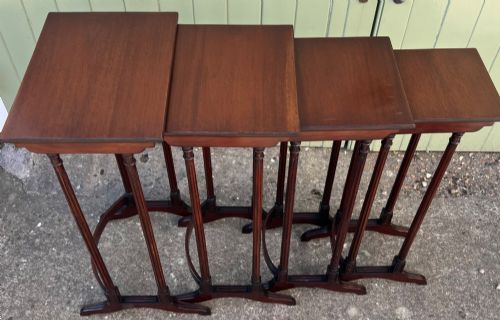
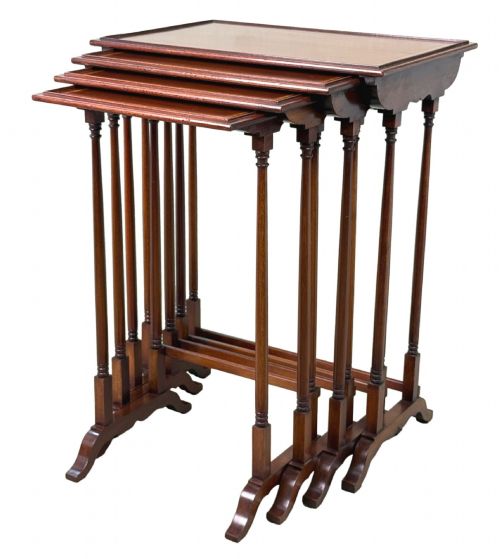
Most sets comprise three or four tables, occasionally appearing as a quartetto format or expanding to five circular tiers. They function primarily as occasional tables, serving tea or holding small lamps before separating around a room.
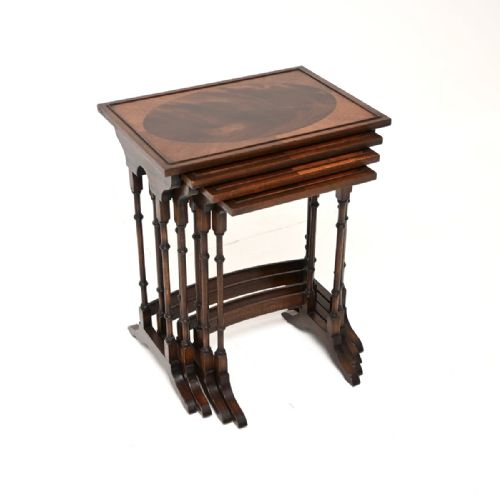
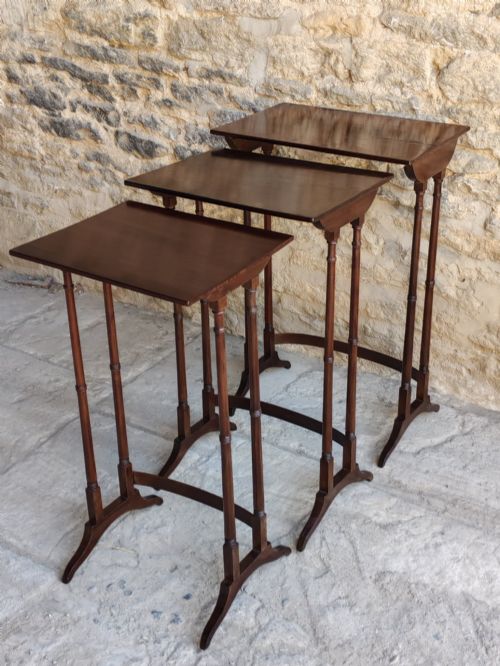
The forms range from rectangular coffee tables to serpentine shapes and oval tops supported by slender legs. Makers often styled these sets after earlier Georgian and Sheraton designs, producing revival pieces that dominate the selection.
Materials and Construction
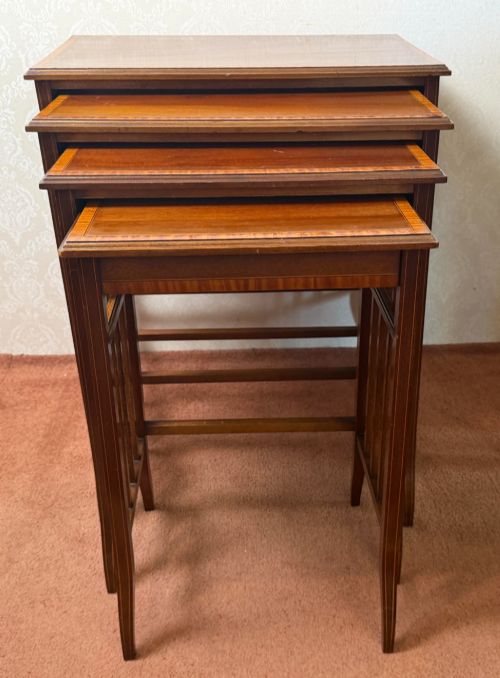
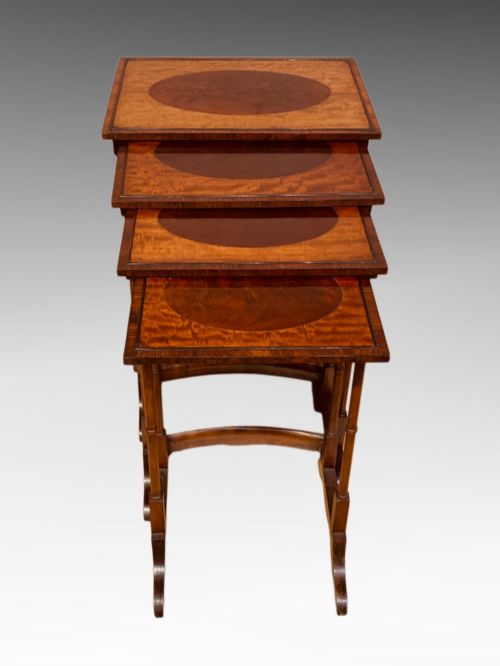
Cabinetmakers constructed these tables using solid mahogany and mahogany veneers over secondary timbers, frequently applying contrasting satinwood and boxwood inlay. Selected pieces incorporate fine details such as cross-banding on the tops and square tapered legs.
Some specialised examples feature embossed leather inset tops or glass surfaces. Workshops built the quartetto sets with precise graduated clearances so each smaller table slides smoothly into the frame of the next.
Listings span the Edwardian period, nineteenth century, and Georgian styles, utilising mahogany alongside satinwood, boxwood, veneer, glass, and leather.
The Measure of Quality
The distinction between standard utility sets and the finest examples rests on timber selection and decorative restraint. Superior sets employ highly figured mahogany veneers, crisp satinwood inlay, and precise boxwood stringing that remains intact across all tiers.
Structural integrity defines the lower range from the upper tier, particularly how securely the legs join the aprons and whether the stacked tables sit level without rocking. Finer examples display refined proportions and smooth sliding action rather than bulky joints.
The Mahogany Nesting Side Tables Glossary
- Quartetto
- A set of four nesting tables designed to slide one beneath another. This term appears frequently in Edwardian cataloguing for matching graduating sets.
- Cross-banding
- A strip of veneer applied to the border of a table top with the grain running perpendicular to the main surface. It frames the central mahogany field.
- Satinwood
- A pale, hard timber used extensively for inlay and stringing on late Victorian and Edwardian furniture. It provides strong visual contrast against dark mahogany.
- Stringing
- A narrow inlay of contrasting wood, such as boxwood, set flush into channels in the mahogany surface. It creates delicate linear decoration around table edges.
Mahogany Nesting Side Tables: Frequently Asked Questions
What is a quartetto nest?
A quartetto nest is a matching set of four tables designed to slide sequentially beneath the largest top.
Cabinetmakers popularized this specific format during the Edwardian period for entertaining.
How were these tables used?
They served as occasional tables for tea, reading materials, or small decorative objects in Victorian and Edwardian drawing rooms.
Servants separated the tiers around the room when guests arrived and stacked them away afterward to save floor space.
How do I date a nest?
Dating relies on timber characteristics, inlay styles, and leg shapes combined with structural joinery. Edwardian pieces often feature delicate satinwood stringing and Sheraton revival motifs.
Nineteenth-century examples display heavier proportions and simpler mahogany framing without elaborate revival veneers.
Do all sets have four tables?
While four-piece sets and quartettos are most common, sets of three tables appear regularly alongside occasional five-tier circular variants.
Each set varies in the total count depending on the original commission and period.