

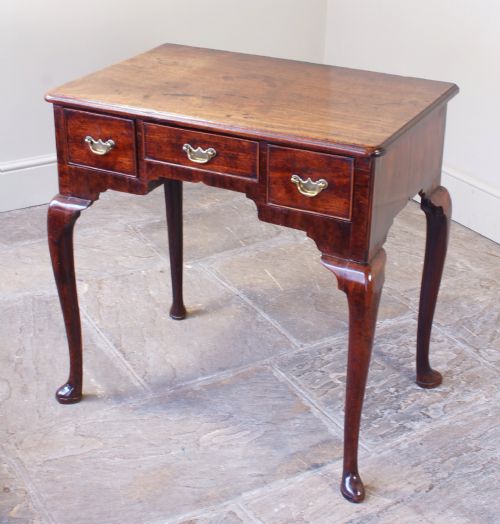
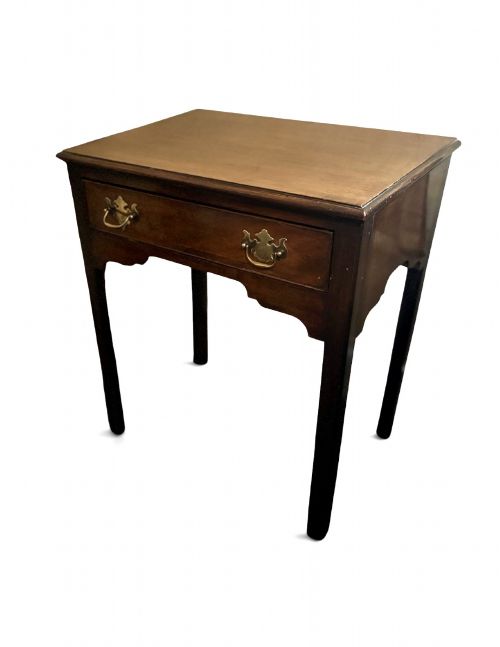


Mahogany Lowboy Desk
Mahogany lowboy desk pieces combine compact proportions with practical drawers, serving equally as dressing tables, side tables, or writing desks.
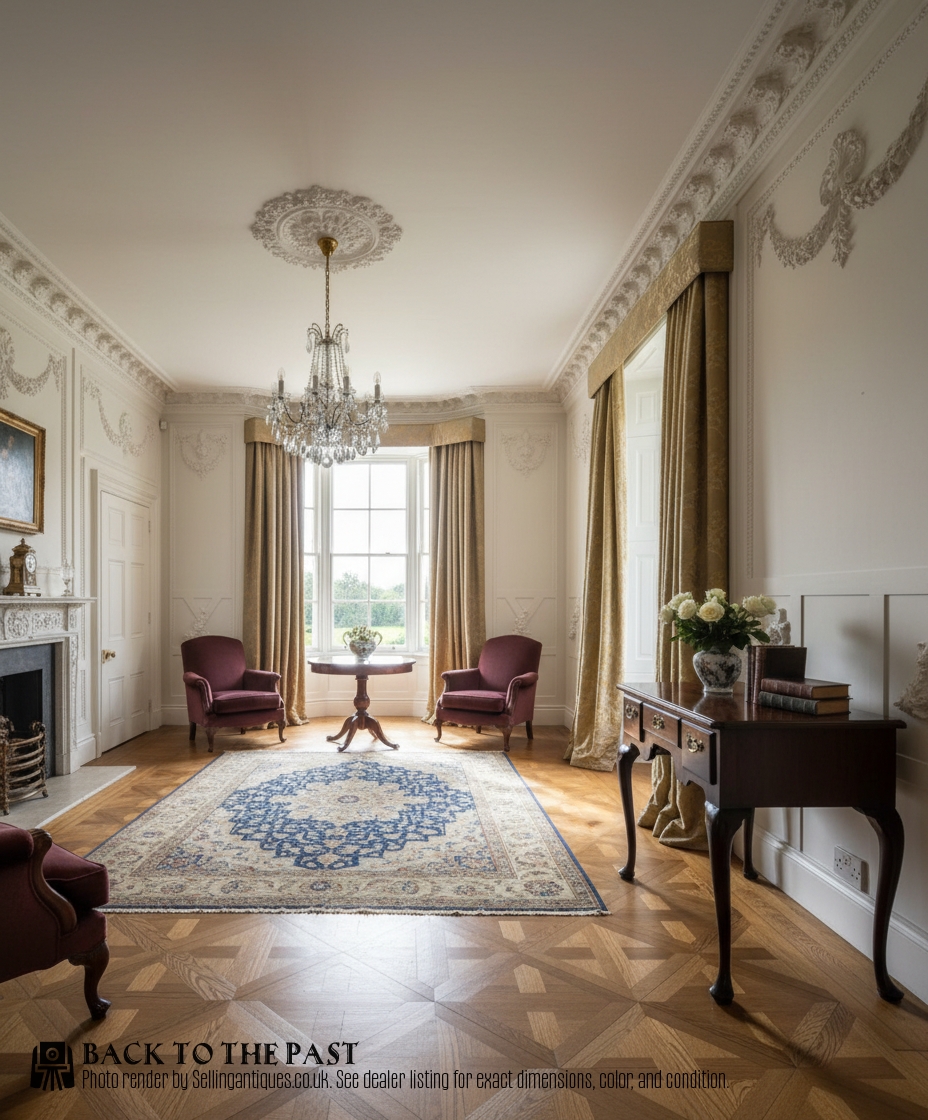
Mahogany Lowboy Desk
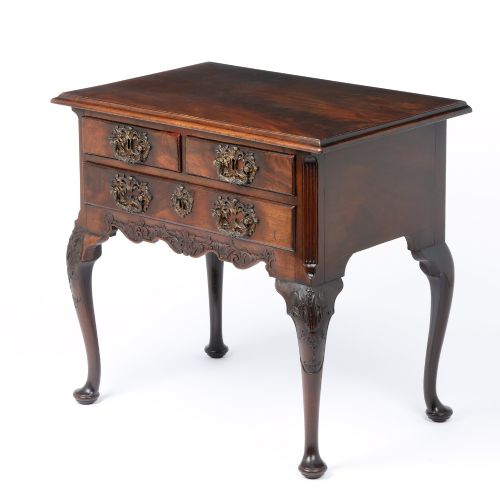
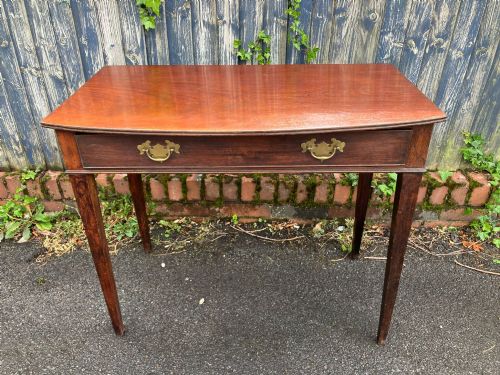
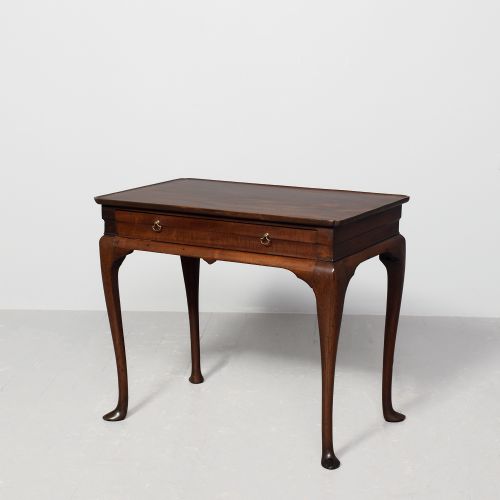
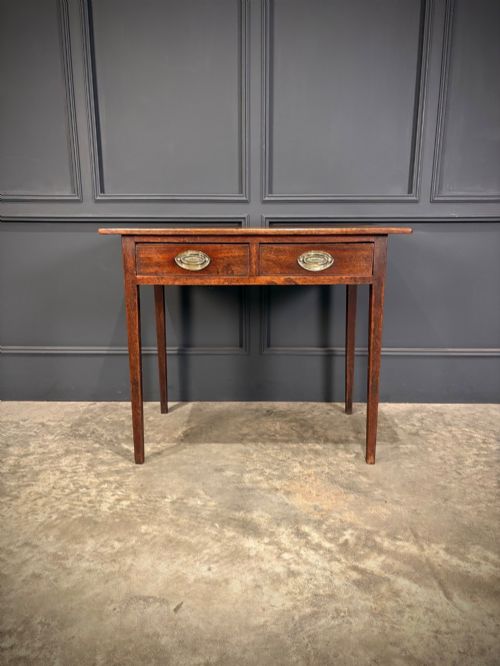
A mahogany lowboy desk is a low-standing side table equipped with drawers, originating primarily in the Georgian and 18th-century periods.
These tables frequently double in function, appearing in historical and modern inventories as writing desks, correspondence tables, side tables, and hall tables.
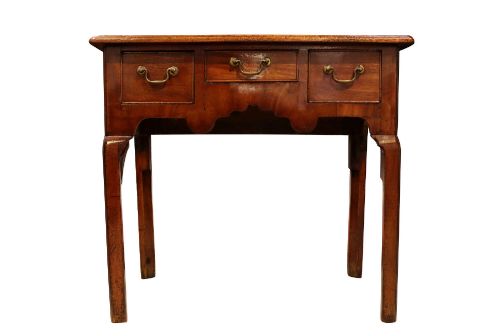
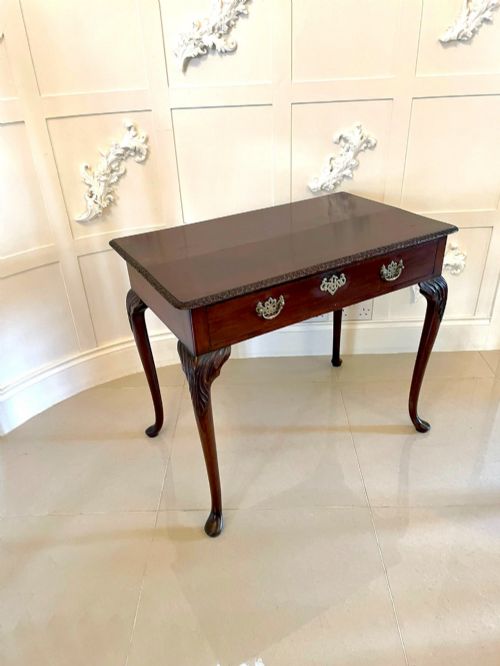
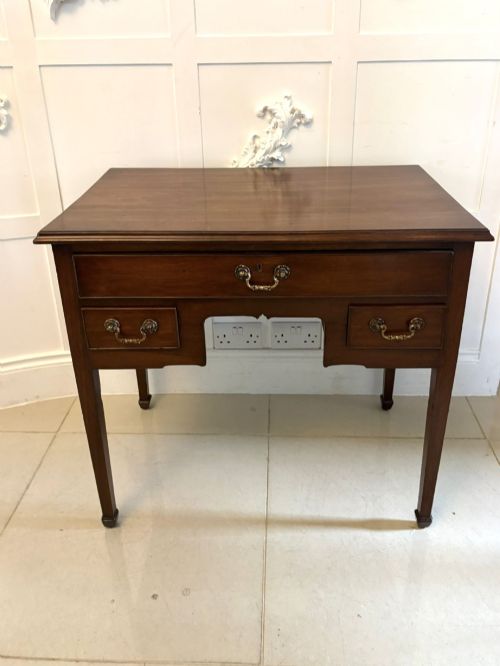
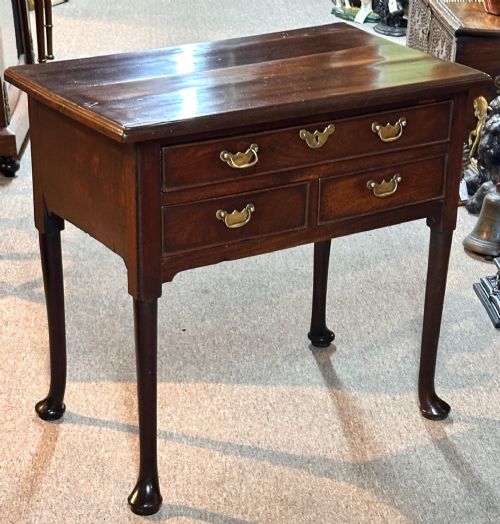
The version most commonly met on this page is the Georgian mahogany lowboy, often featuring cabriole legs or straight framing, with smaller proportions suited to domestic rooms.
How they were made
Makers constructed these pieces using solid and figured mahogany timber, occasionally incorporating walnut or applying contrasting stringing such as boxwood and satinwood inlay.
Brass hardware, including swing handles and key escutcheons, secures the drawer fronts, while secondary woods form the internal drawer linings.
Surfaces receive polish to highlight the natural grain and deep colour of the timber, reflecting the cabinet-making standards of the 18th and 19th centuries.
Listings span from the mid 18th century through the Georgian and Victorian eras up to Edwardian and 1920s reproductions.
What varies in quality
The selection of timber dictates much of the visual appeal, with figured mahogany and flamed grain patterns sitting at the higher end of the range compared to plain stock.
Proportion and leg form influence desirability, as pieces with well-executed cabriole legs or crisp inlay demonstrate greater craftsmanship than plain, utilitarian versions.
Original brasses and intact structural joinery maintain the integrity of the piece, whereas replacements or heavy alterations reduce the historical continuity.
The Mahogany Lowboy Desk Glossary
- Lowboy
- A short table with one or more rows of drawers, commonly used as a dressing table or writing desk in 18th-century homes.
- Cabriole leg
- A furniture leg that curves out and then in, resembling an animal's leg, frequently seen on George II examples.
- Inlay
- A technique where contrasting materials such as boxwood or satinwood are inserted into recesses in the mahogany surface to form decorative patterns.
- Escutcheon
- A flat plate of brass surrounding the keyhole of a drawer, designed to protect the surrounding wood from wear.
Mahogany Lowboy Desk: Frequently Asked Questions
What is a lowboy desk used for?
These pieces function primarily as compact writing desks, hall tables, or side tables with built-in drawer storage for correspondence and small items.
Their shallow depth allows them to fit into narrow spaces like hallways and reception rooms without obstructing movement.
How do I tell an 18th-century lowboy apart from later ones?
Eighteenth-century examples rely on period timber selection, hand-cut dovetailing in the drawer construction, and traditional timber framing methods.
Later Edwardian or 20th-century reproductions often display machine-made joints and different internal lining woods.
Did these tables always have drawers?
The defining characteristic of a lowboy is the inclusion of one or more drawers beneath the flat top surface.
Some variations include single central drawers flanked by smaller side drawers, while others present a single wide drawer.
Where should I place a lowboy desk in my home?
They suit entrance halls, bedrooms as writing surfaces, or living rooms as console tables against a wall.
Their modest height and low profile ensure they do not dominate smaller interior spaces.