
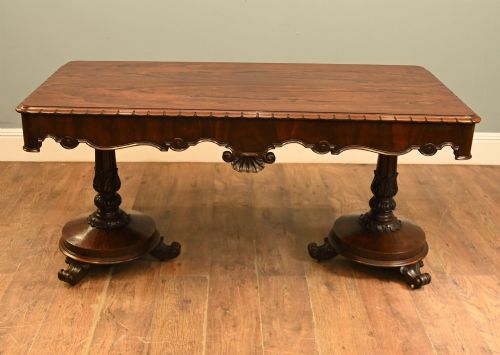
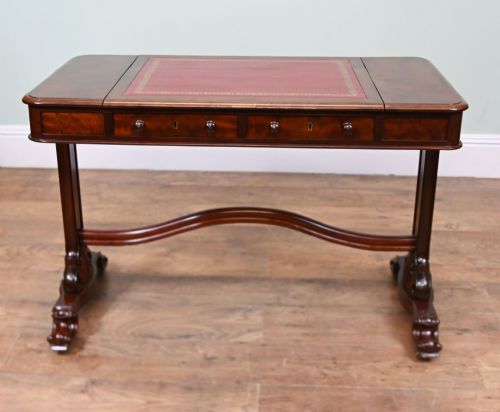
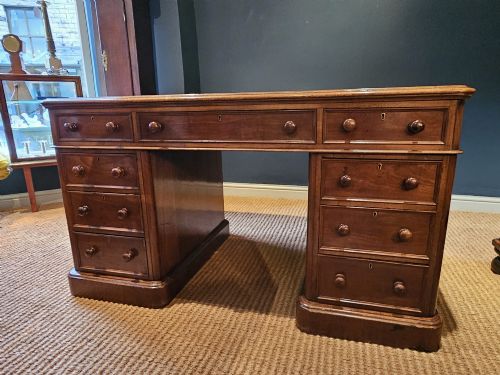
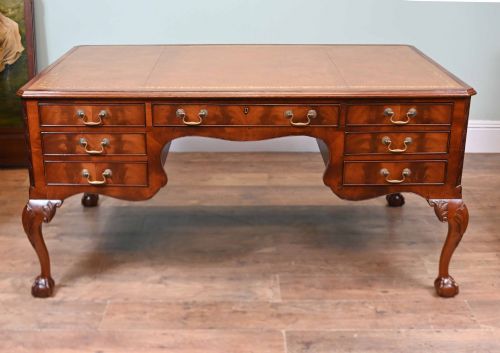
Mahogany Library Writing Desk
A mahogany library writing desk is a substantial workspace designed for heavy study, and these pieces offer enduring timber and considered proportions.
Mahogany Library Writing Desk
A mahogany library writing desk represents a serious piece of architectural furniture built for personal study, public reading rooms and grand residences. These tables and pedestals serve as practical workspaces designed to handle heavy volumes and correspondence.
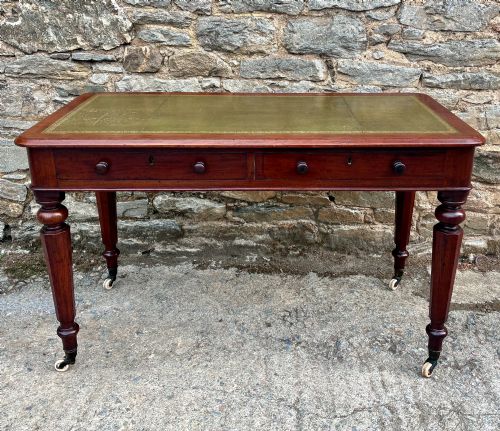
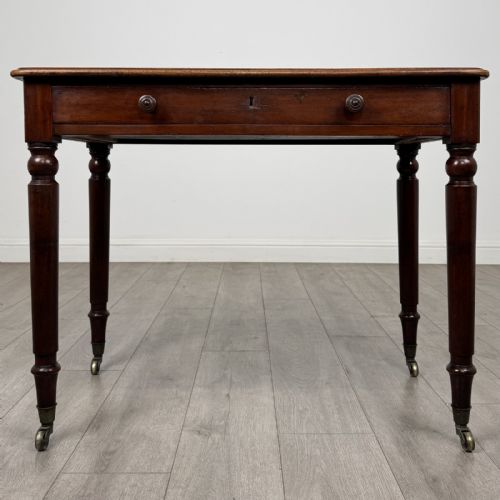
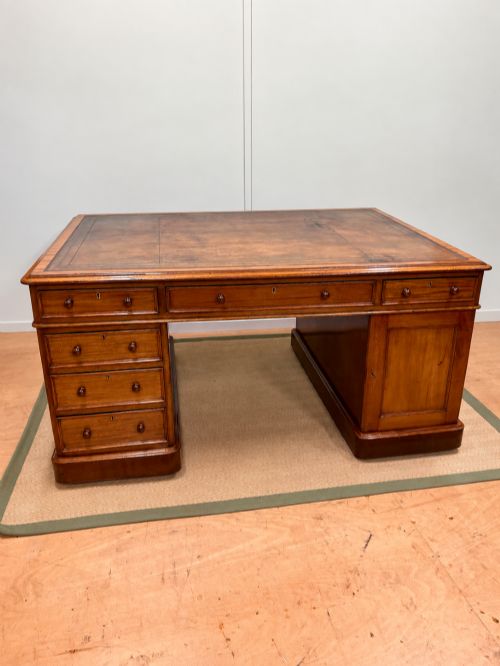
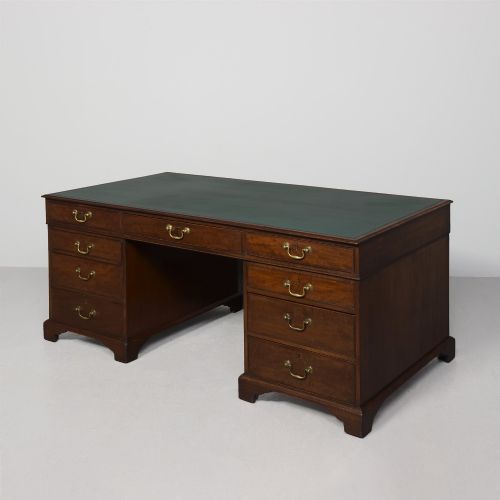
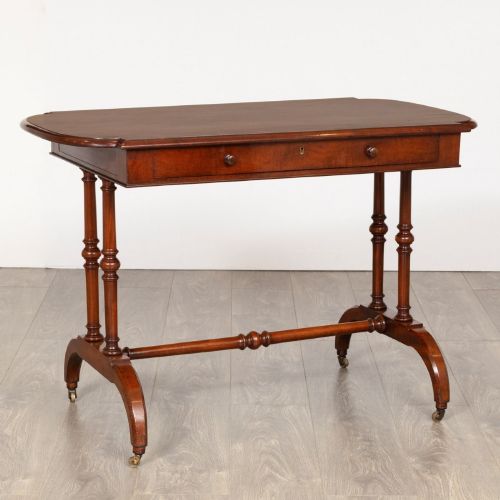
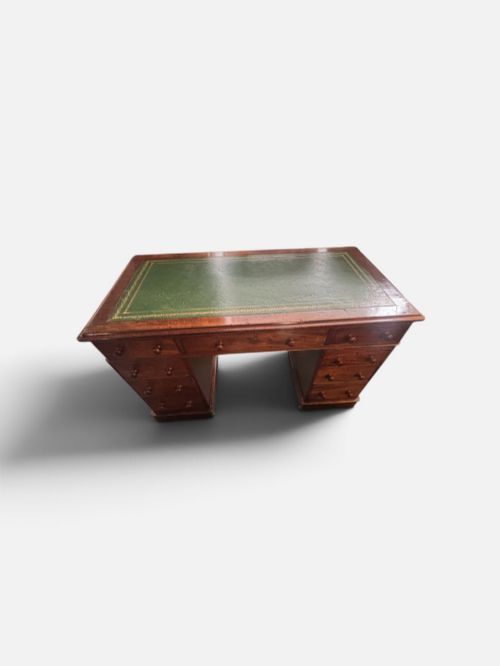
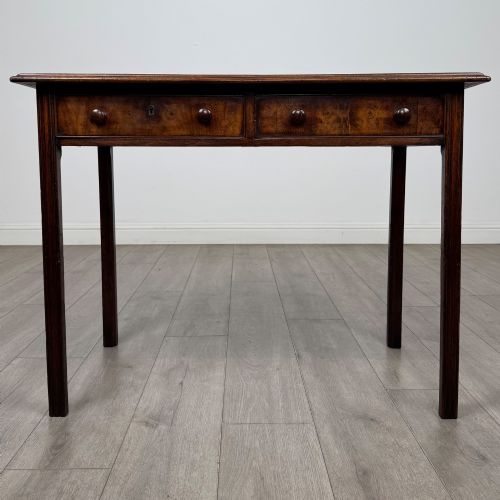
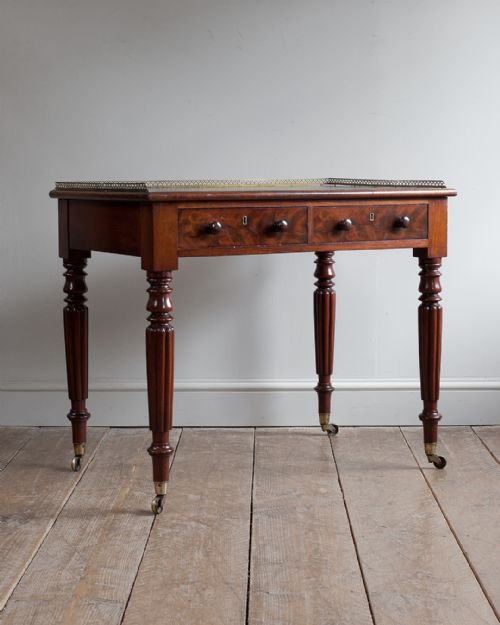
The versions met most frequently on this page span the Georgian, Regency and Victorian periods, taking forms from simple twin-drawer writing tables to massive partners desks. Many incorporate leather writing surfaces, brass handles and deep pedestals fitted with multiple drawers.
Makers often drew inspiration from Chippendale, Sheraton or French revival styles, producing freestanding library tables that look finished from every angle. Buyers encounter everything from compact reading tables to large six-drawer partners desks intended for shared studies.
How They Were Made
Cabinet makers relied primarily on solid mahogany and figured mahogany veneers applied to secondary structural timbers like oak or pine. Many examples incorporate premium materials such as brass for drawer hardware and castors, or ormolu mounts on French revival pieces.
Writing surfaces typically feature inset leather panels, often blind-tooled or gilt-tooled around the perimeter, framed by solid mahogany borders. Inlays of satinwood, ebonised wood, rosewood and kingwood add decorative contrast to drawer fronts and tabletops.
Construction techniques involve robust dovetail joints for drawer construction and stable pedestal framing to support heavy loads of books and papers. Turned legs, reeded columns and brass castors ensure mobility and structural endurance across centuries of use.
Secret compartments and hidden release buttons inside pedestal drawers often kept private correspondence safe from wandering eyes.
What Varies in Quality
The overall standard of a mahogany library writing desk depends heavily on the choice of timber and the depth of figure in the mahogany grain. Selection of dense, well-figured veneers and consistent matching across large surfaces distinguish superior cabinet work from plain utility pieces.
Design sophistication and maker attribution elevate certain desks well above standard workshop production. Pieces bearing stamps or signatures from known firms like Gillows, Edwards & Roberts, or Holland & Sons demonstrate finer carving, superior hardware and more meticulous internal joinery.
Trollope & Sons·Edwards & Roberts·Johnstone & Jeanes·Charles Andrea Nosotti·Holland & Sons·Whytock & Reid·Gillows of Lancaster
The Mahogany Library Writing Desk Glossary
- Partners desk
- A large pedestal desk designed with drawer sets on both sides so two people can work facing each other. These pieces usually feature cupboards or dummy drawers opposite.
- Drum table
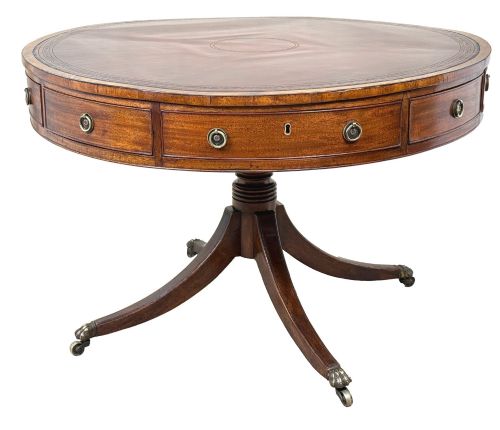
- A circular library table containing a frieze of drawers around the entire perimeter, often revolving on a central pillar with tripod or quadruped legs. They date predominantly from the Georgian and Regency eras.
- Bureau plat
- A French style of writing table featuring a rectangular top inset with leather and one or more rows of drawers in the frieze. These are finished on all sides to stand free in the room.
- Pedestal desk
- A heavy desk comprising two vertical banks of drawers supporting a single wide desktop and central drawer. They became standard fixtures in Victorian libraries and offices.
- Frieze
- The horizontal band beneath the tabletop that houses the drawers. It is often decorated with carved mahogany mouldings or inlaid wood stringing.
Mahogany Library Writing Desk: Frequently Asked Questions
What is a partners desk?
A partners desk is a double-sided pedestal desk built with identical drawer or cupboard configurations on both front and back. This layout allowed two people to sit opposite one another in a shared library or office.
Such desks are typically large, freestanding pieces constructed to anchor the middle of a room rather than sit against a wall.
How do I distinguish a Regency desk?
Regency desks lean towards classical architectural restraint, featuring clean lines, Cuban mahogany veneers, and brass ring handles or inlay. They often employ reeded legs, pillar supports, and sabre legs rather than heavy Victorian pedestal banks.
The timber on Regency examples frequently displays a rich, faded patina developed over two centuries of exposure.
Can I use a library table for daily work?
Library tables and writing desks make excellent daily workspaces because they offer large, stable surfaces and deep drawers for storage. Their traditional leather inserts provide a smooth, resilient writing plane.
Placing them in a modern study requires only basic care for the antique timber and leather top.
What distinguishes a drum table?
A drum table is instantly recognised by its circular top and central pillar base, which usually ends in carved tripod feet or brass castors. The deep frieze contains a ring of alternating working and dummy drawers.
These tables were designed for libraries to hold reference books and writing materials within easy reach.