



Mahogany Leg Slipper Chair
A mahogany leg slipper chair sits low to the ground for ease of dressing, combining nineteenth-century timber frames with rich textile upholstery.
Mahogany Leg Slipper Chair
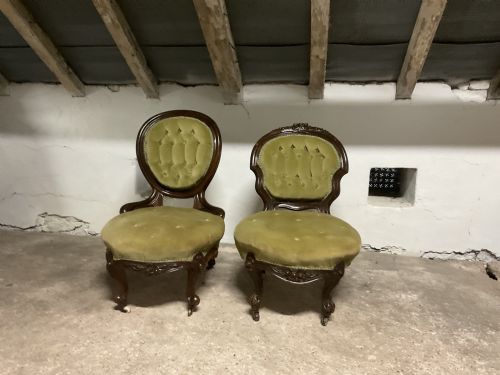
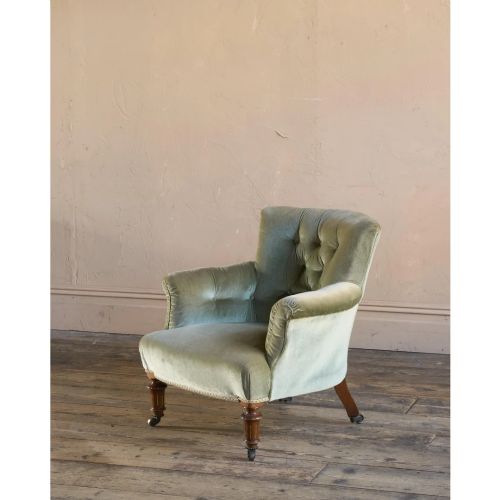
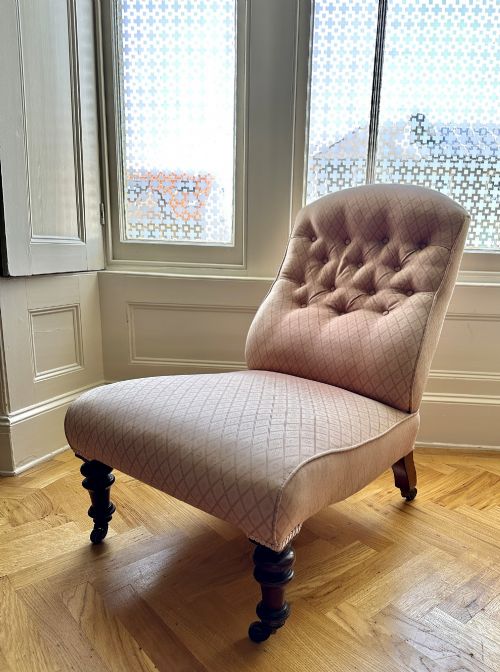
A mahogany leg slipper chair is a low-slung, upholstered seat designed historically for the bedroom or dressing room, allowing a lady to sit comfortably while putting on footwear. The listings here span the Georgian, Regency, William IV, and Victorian eras, alongside specific dates from the mid to late nineteenth century.
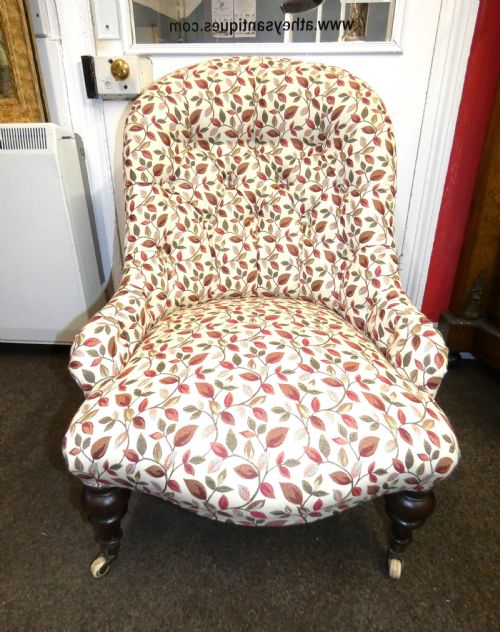
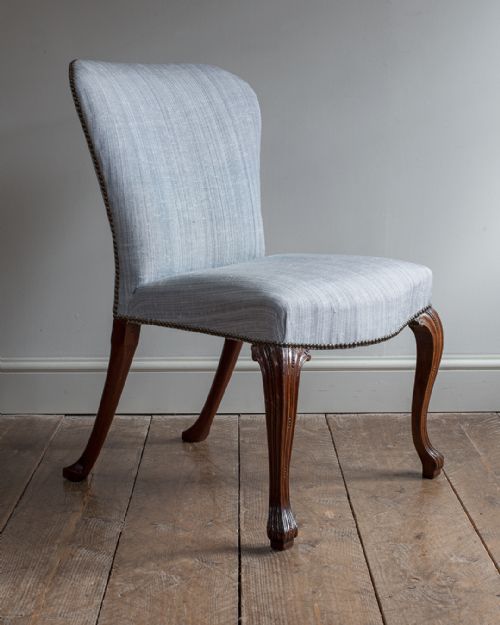
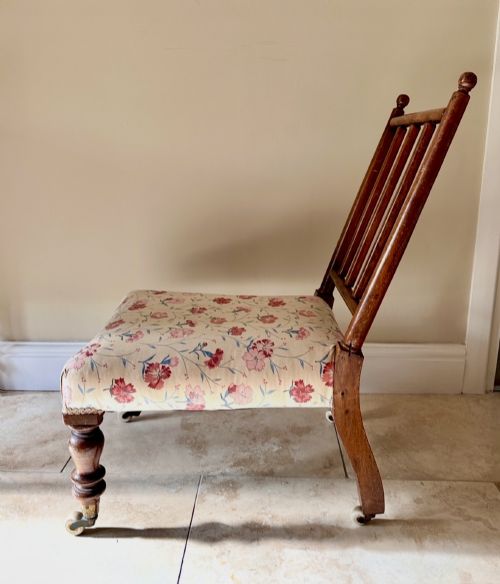
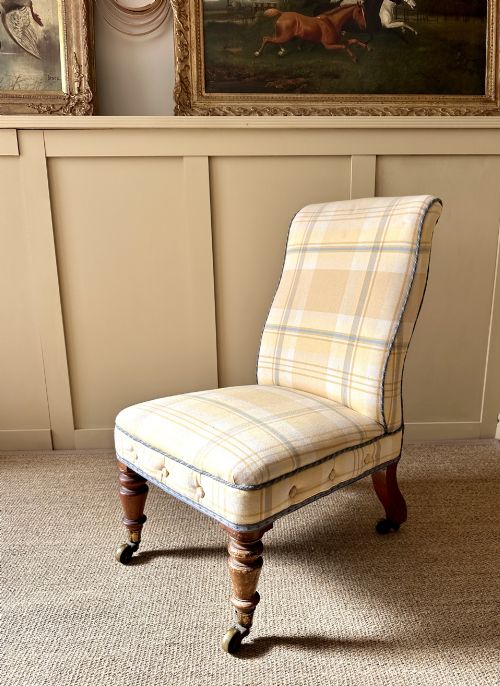
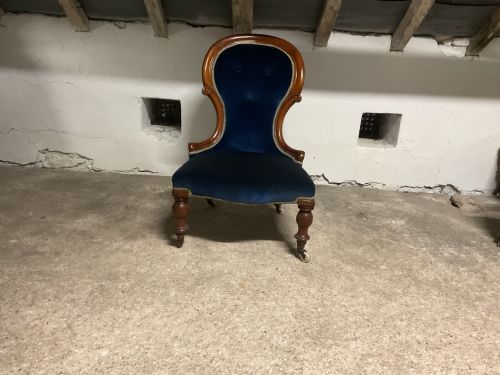
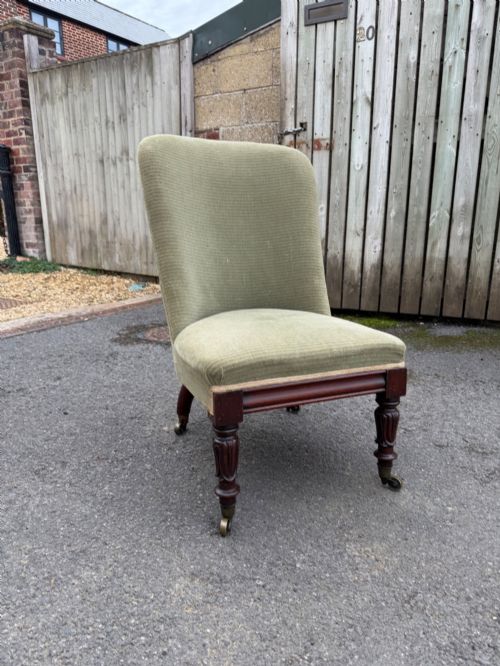
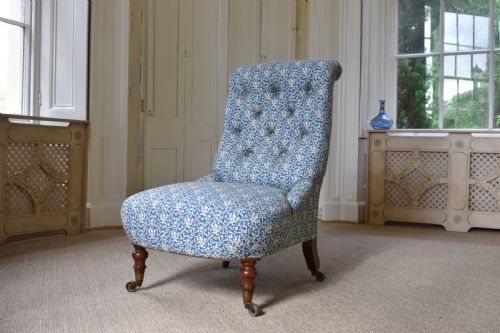
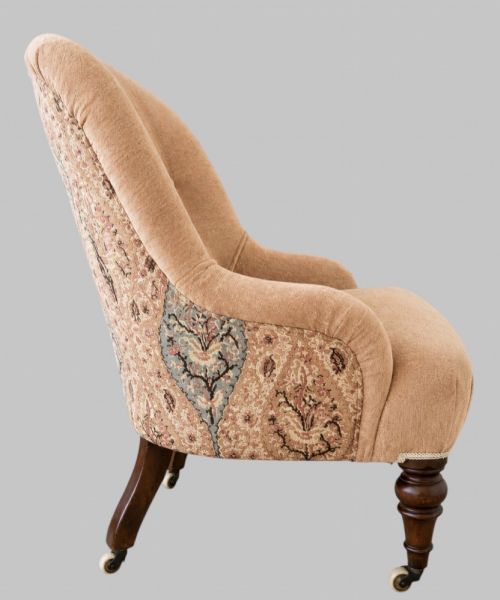
Most examples you encounter on this page take the form of a Victorian nursing chair, a bedroom chair, or a petite armchair. These pieces typically feature turned, fluted, or sabre mahogany legs, often mounted on brass castors for mobility across carpets.
How they were made
Makers constructed the structural frames of these seats in solid mahogany, frequently shaping the wood through turning or carving to form low profiles and supportive backs. Iron internal supports also appear in certain Victorian designs to provide rigidity to the low-backed frame.
Upholstery forms a major component of the construction, utilising textiles such as velvet, cotton, tapestry, and patterned fabrics over button-backed or sprung padding. Brass fittings, including castors, finish the legs to allow smooth movement across the floor.
Mahogany Leg Slipper Chair Retail Price Guide 2026
Typical asking prices for mahogany leg slipper chair among the pieces listed under this phrase on Sellingantiques today, from the lower quarter to the upper quarter. They describe what is for sale here now, not the wider market.
What varies in quality
The standard of a nineteenth-century low seat rests heavily on the crispness of the mahogany frame and the integrity of its joinery. Finer workshops invested greater labour in hand-carved details, balanced proportions, and robust internal framing.
Quality also shows in the choice of upholstery textiles and the precision of the stuffing. Pieces bearing maker stamps or originating from notable cabinet-makers exhibit superior craftsmanship in both wood and webbing.
Gillows·Howard and Sons·Hindley and Sons·J Kendell·Robert Kime
The Mahogany Leg Slipper Chair Glossary
- Slipper chair
- A low-seated upholstered chair traditionally used in bedrooms for changing shoes. They lack arms to accommodate voluminous nineteenth-century dresses.
- Nursing chair
- A low-backed Victorian seat designed for comfort while nursing infants. These often feature sprung seats and buttoned upholstery.
- Castor
- A small wheel attached to the base of a chair leg for ease of movement. Brass versions are common on nineteenth-century mahogany furniture.
- Button back
- An upholstery technique where depressions are formed in the padding using buttons pulled tight. This secures the filling and creates a tufted pattern.
- Sabre leg
- A concave, outwardly curving leg shape popular during the Regency period. It tapers toward the foot for a lighter appearance.
Mahogany Leg Slipper Chair: Frequently Asked Questions
What is a mahogany leg slipper chair used for?
These low seats were originally placed in bedrooms or dressing rooms to provide a comfortable place for putting on footwear and garments. Their compact proportions made them easy to move around private chambers.
Today, they function well as accent seating in living spaces, studies, or bedrooms where a low profile is desirable.
How do I date a Victorian low chair?
Dating relies on observing the stylistic details of the woodwork and the upholstery structure. Earlier nineteenth-century examples from the Regency and William IV periods display clean lines or heavier turned members, whilst later Victorian pieces often feature spoon backs or iron frames.
Makers' stamps, where present on the timber frame or castors, offer the most precise indication of origin.
Are these chairs comfortable for daily use?
The low seat height and padded backrests are designed for relaxed sitting rather than upright desk work. Many feature deep buttoning and sprung interiors that provide substantial support.
Upholstery condition varies, so buyers often assess the internal webbing and padding alongside the wooden frame.
Why do some models have castors?
Small wheels attached to the base of the legs allowed nineteenth-century owners to reposition the furniture easily across heavy carpets. Brass was the standard metal used for these fittings.
They also raised the timber slightly off damp floorboards, protecting the mahogany from moisture.