
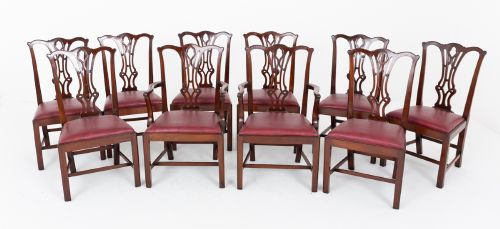
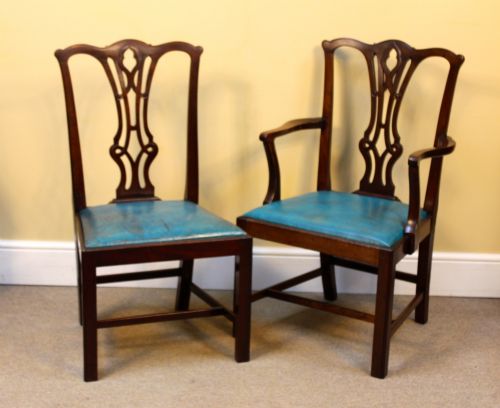
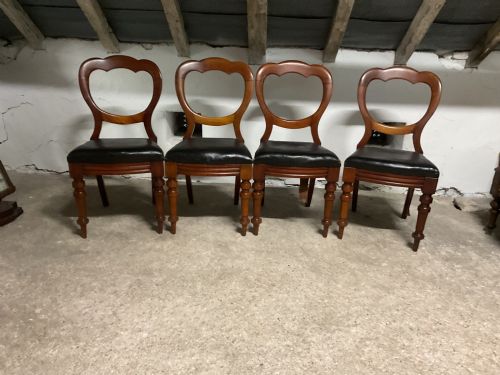
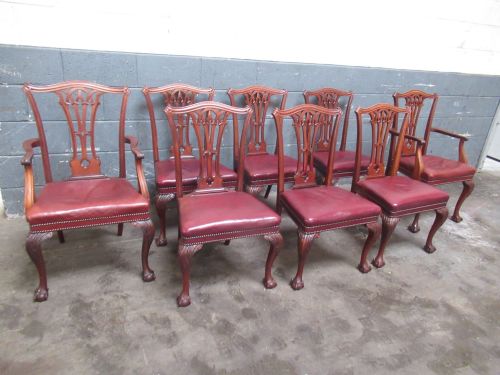

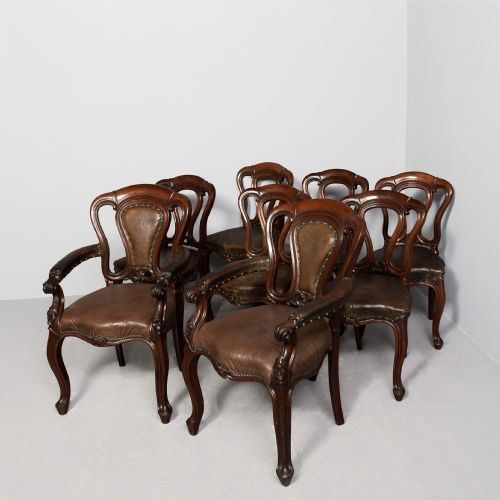
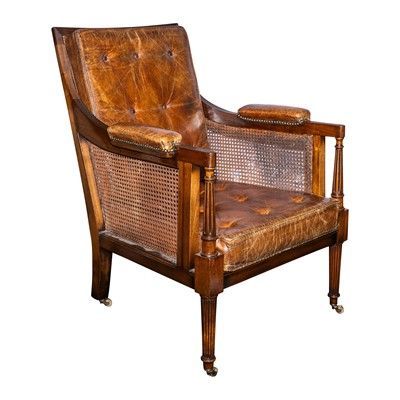
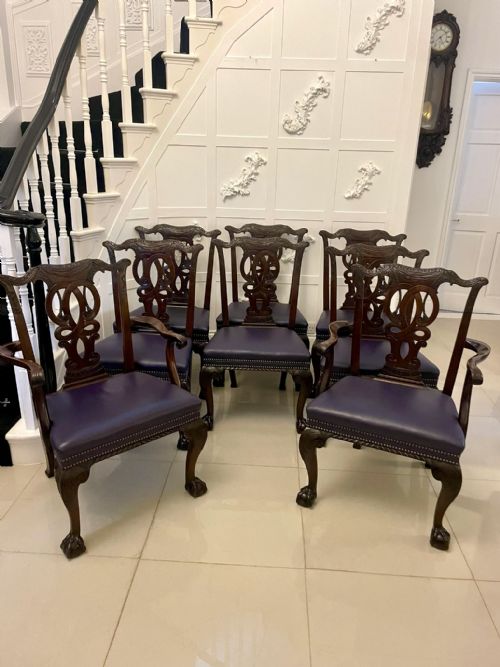


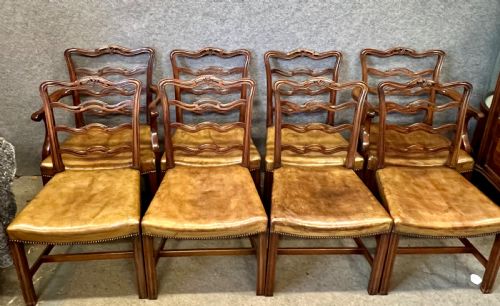
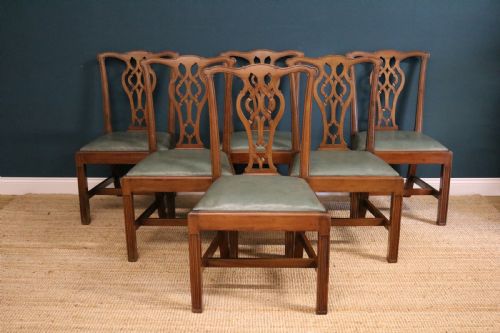
Mahogany Leather Side Chairs
Mahogany leather side chairs combine dense timber frames with supple hides, providing sturdy seating for dining rooms and libraries alike.
How they were made
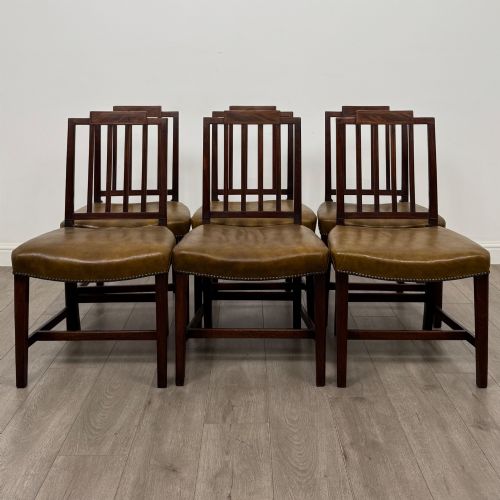
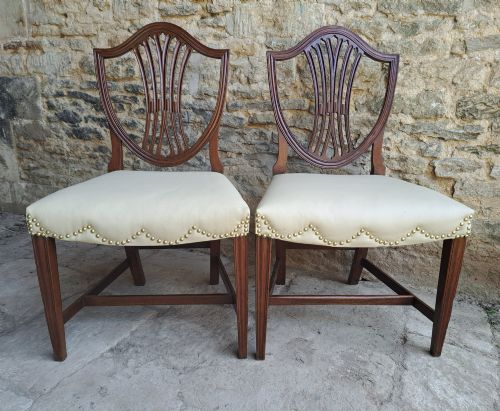
Cabinetmakers utilised dense tropical timber for the frames, prized for its strength and deep reddish-brown tone. Carved details such as shield backs, balloon shapes and sabre legs were shaped directly from the solid wood.
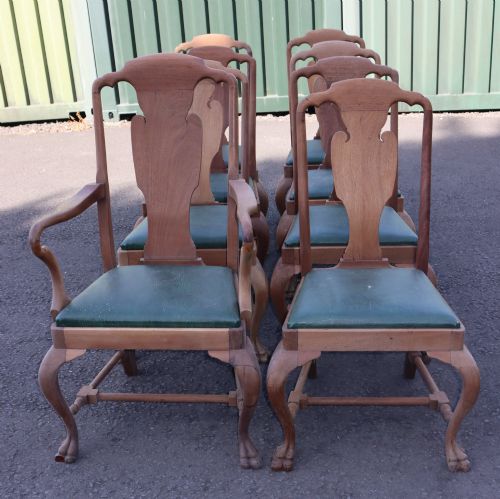
Hides were stretched over upholstered pads, often secured with brass nail heads along the seat rails. Caning and rattan also appear on lighter library chairs and bergères alongside the standard leather surfaces.
What varies in quality
The calibre of timber selection and the depth of hand-carving distinguish finer examples from standard production pieces. Crisp execution of chair backs and legs indicates skilled joinery.
The grade of hide and the integrity of the internal stuffing determine the longevity of the seat. Original leather surfaces with good patination command particular attention.
Listings feature mahogany timber combined with leather, cane, and brass across Georgian, Victorian, and Edwardian periods.
William Walker And Sons
The Mahogany Leather Side Chairs Glossary
- Bergere
- An enclosed upholstered armchair with wooden frames, often featuring cane panels on the sides and back. These seats originated in France and gained popularity in English libraries during the Regency period.
- Shield Back
- A chair back shaped in the outline of a heraldic shield, popularized by eighteenth-century designers like Hepplewhite. This form often incorporates delicate pierced splats.
- Balloon Back
- A rounded, continuous chair back resembling a balloon, characteristic of Victorian seating design. It offers ergonomic support through a smooth curved wooden frame.
- Sabre Leg
- A chair leg that curves outward in a concave sweep reminiscent of a cavalry sword. This form provides stable support and appears frequently on Regency and nineteenth-century pieces.
- Carver
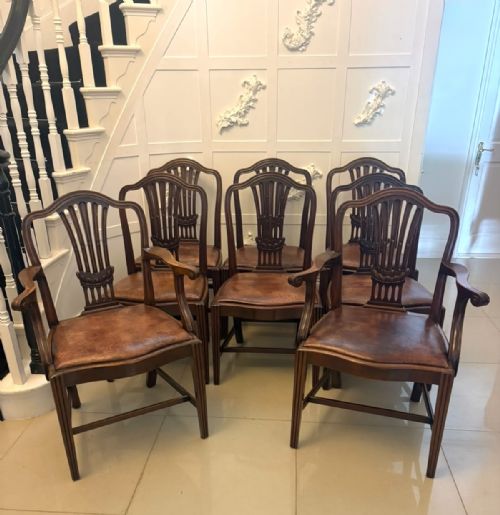
- An armchair designed to match a set of smaller side chairs, typically placed at the heads of a dining table. These pieces feature integrated armrests for added comfort.
Mahogany Leather Side Chairs: Frequently Asked Questions
How do I date mahogany leather side chairs?
Dating relies on stylistic markers such as shield backs, balloon shapes, or sabre legs, which align with specific design periods from the eighteenth century onward.
Construction methods and timber characteristics further help narrow the decade of manufacture.
Are these chairs suitable for daily dining?
Most antique versions were built for heavy domestic use from dense hardwoods, making them robust enough for regular seating.
Leather surfaces also offer practical durability for dining environments compared to delicate fabrics.
What is the difference between side chairs and carvers?
Side chairs are built without arms to allow several seats to fit compactly around a dining table.
Carvers include armrests and typically serve as the primary seats at either end of the table.
How should I maintain leather seats on antique chairs?
Leather upholstery benefits from periodic conditioning to keep the hide supple and prevent cracking over time.
Keeping timber frames away from direct heat sources protects both the wood and the underlying joinery.