


Tan Leather Side Chairs
Tan leather side chairs bring warmth and tactile richness to a room, offering practical seating rooted in nineteenth-century and early twentieth-century traditions.
Tan Leather Side Chairs
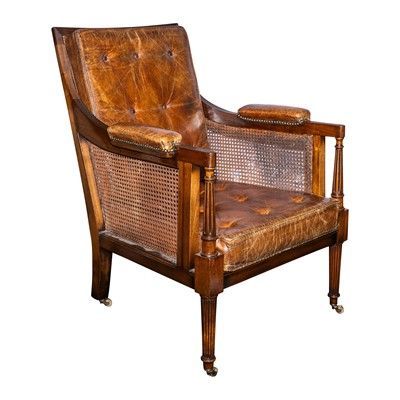
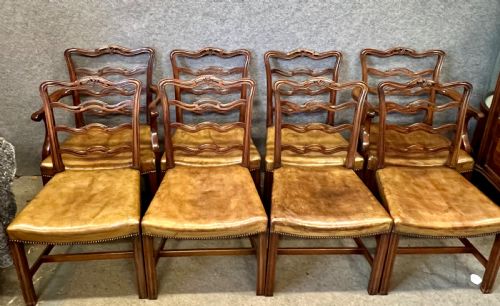
Tan leather side chairs encompass dining chairs, carvers, and library seating originating from the Regency, Victorian, and early twentieth-century periods. These pieces bridge formal seating requirements with the inviting warmth of hide upholstery.
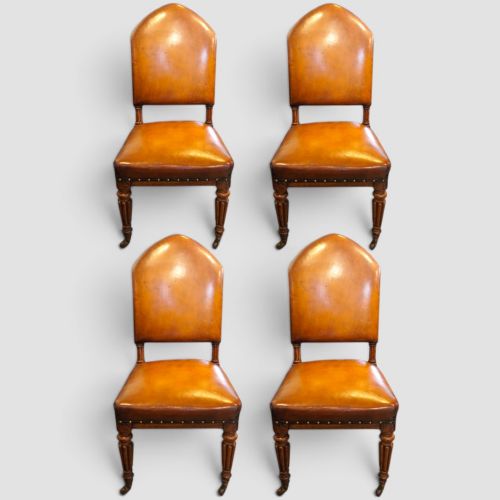
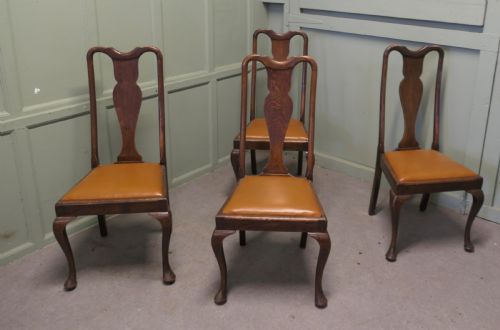
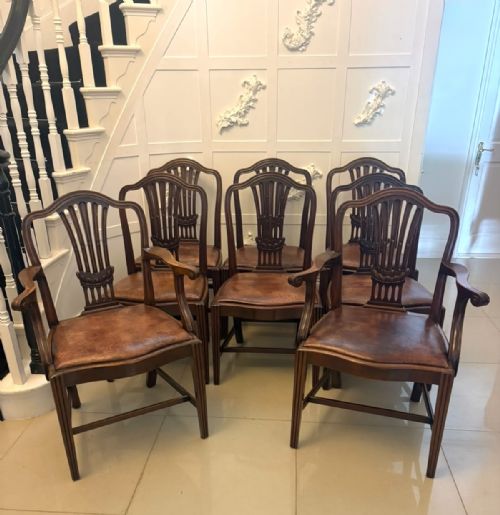
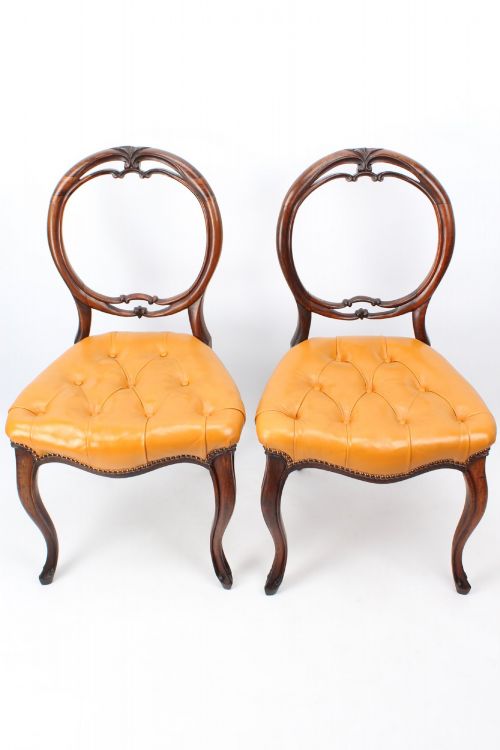
The selections available here lean heavily toward Victorian and Edwardian dining chairs alongside revival styles, executed in mahogany, oak, and rosewood. Buyers encounter individual pieces as well as assembled sets suitable for dining tables or studies.
Forms range from balloon backs and shield backs to Gothic and Queen Anne interpretations, reflecting the stylistic shifts across the decades. Leather upholstery appears either as original patinated hide or renewed surfaces tailored to antique frames.
Construction and Materials
Frames are constructed from dense hardwoods such as mahogany, oak, and rosewood, often shaped through traditional joinery and turning techniques. Timber selection dictates the structural integrity and weight of each piece.
Upholstery relies on leather secured to wooden frames using brass tacks or studs, frequently paired with cane or willow elements in specific chair types. The combination of durable timber and resilient animal hide ensures longevity.
Some chairs quietly double as library companions, ready to hold volumes of forgotten poetry while offering a comfortable place to sit.
Assessing Quality
Quality rests in the precision of the timber carving and the structural stability of the frame joints. Superior examples display crisp detail in styles such as Chippendale or Hepplewhite revivals without looseness in the legs or back.
The character of the leather forms another distinction, where smooth integration with the wooden framework and appropriate ageing elevate a chair's visual appeal. Consistency across a set of dining chairs separates uniform suites from assembled groups.
The Tan Leather Side Chairs Glossary
- Carver
- An armchair designed to sit at the head of a dining table, sharing stylistic traits with the matching side chairs. These often feature open arms.
- Shield back
- A chair back shaped in the outline of a heraldic shield, popularised during the eighteenth century and revisited in later revival pieces. This design provides ergonomic support.
- Balloon back
- An oval or rounded chair back resembling a balloon, characteristic of mid-nineteenth-century seating. It offers a graceful, curved profile.
- Bergère
- An enclosed armchair with upholstered sides and back, typically featuring cane work or leather panels. These pieces prioritise comfort in a library setting.
Tan Leather Side Chairs: Frequently Asked Questions
How do I clean antique leather?
Maintenance involves gentle dusting with a soft cloth and the occasional application of specialist leather conditioner to keep the hide supple. Avoid harsh chemical cleaners that strip natural oils.
Keeping chairs away from direct sunlight and heat sources prevents the leather from drying out and cracking over time.
Can I mix these chairs with modern tables?
Period chairs combine effectively with contemporary tables, creating a deliberate contrast between modern clean lines and traditional timber patination. The warmth of tan leather anchors the seating within diverse interior schemes.
Consider the seat height and arm clearance to ensure comfortable alignment beneath a modern table surface.
How do I identify a Victorian chair?
Victorian seating frequently displays heavier timber proportions, deeper carving, and specific back shapes such as the balloon or Gothic arch. The use of mahogany and oak dominates pieces from this era.
Joinery methods and tool marks on the underside of the frame offer further clues to nineteenth-century manufacture.
Are large sets harder to find?
Extended sets of dining chairs matching in timber and upholstery occur less frequently than pairs or small groups. Many surviving suites have been gathered together over time rather than originating as a single workshop commission.
Examining the grain and construction details helps verify whether a set shares a common origin.