

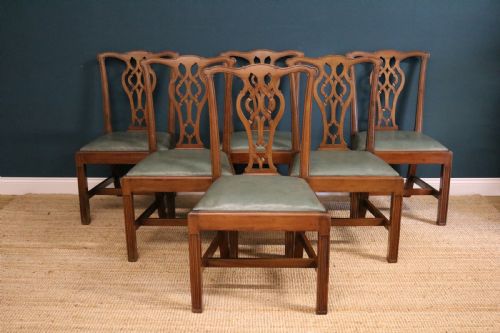
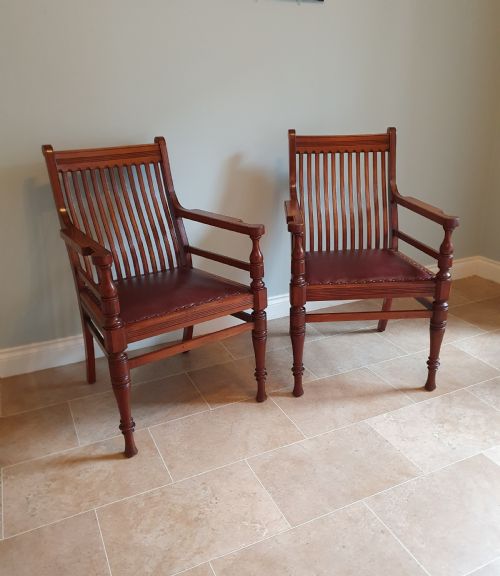

Traditional Leather Side Chairs
Traditional leather side chairs offer practical seating shaped by centuries of revival styles and sturdy timber frames.
Traditional Leather Side Chairs
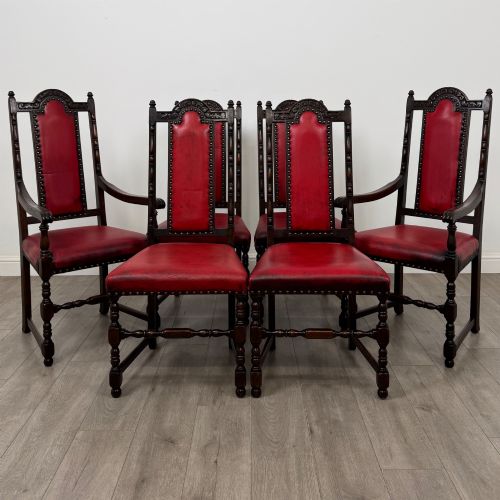
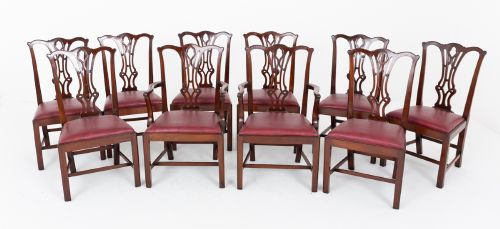
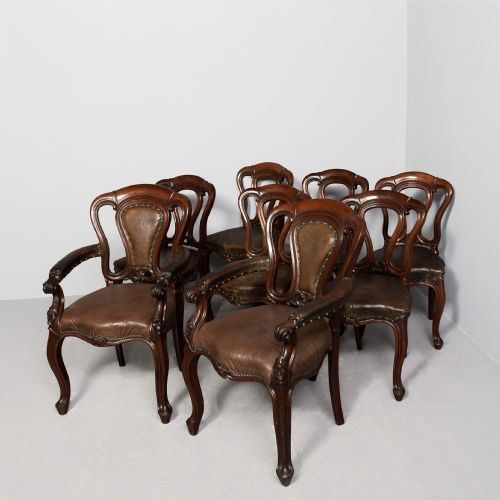
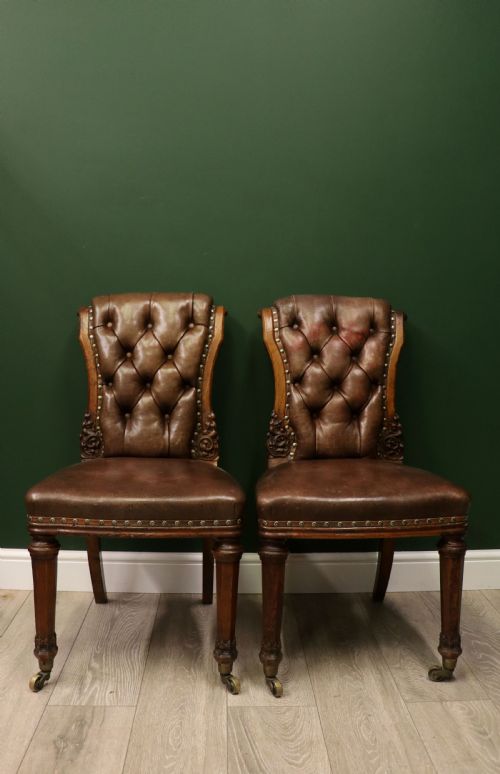
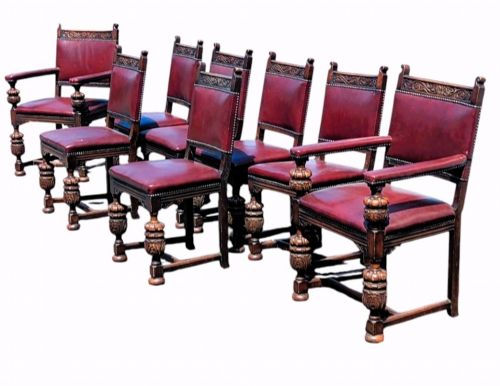
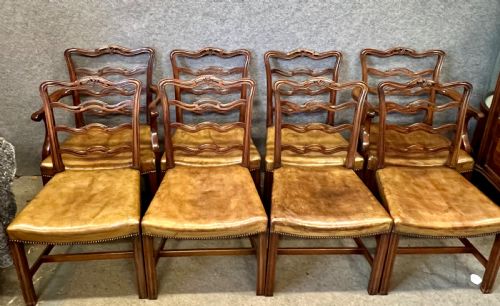
Traditional leather side chairs are primarily upright seating designed for dining rooms and libraries, appearing frequently in Victorian and Edwardian iterations. Buyers seeking this search phrase encounter pieces configured in matched sets as well as smaller pairs.
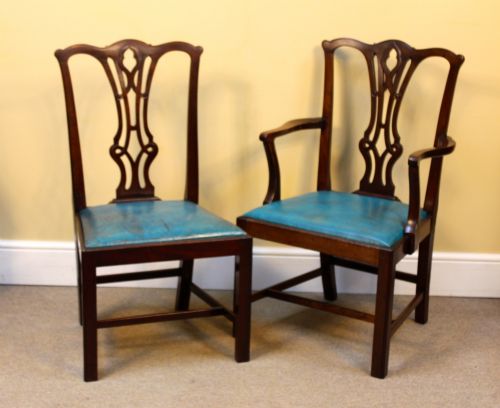
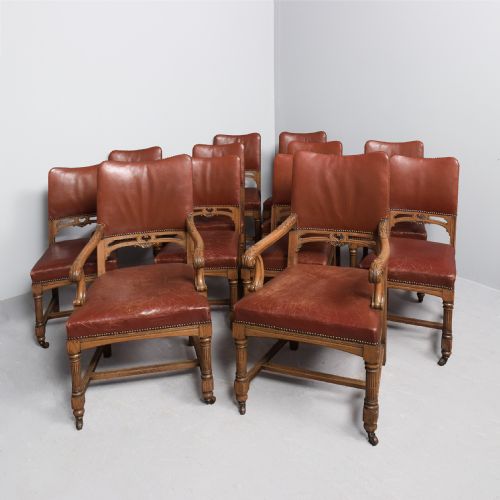
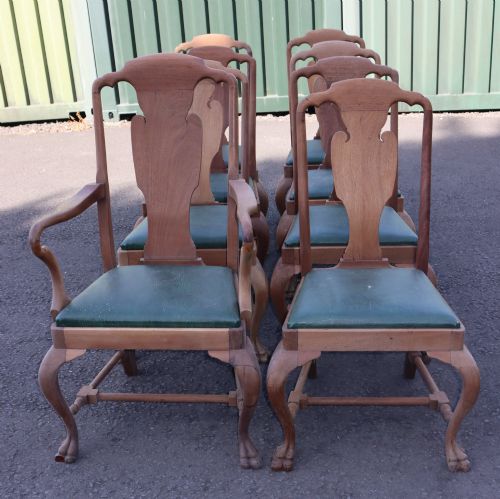
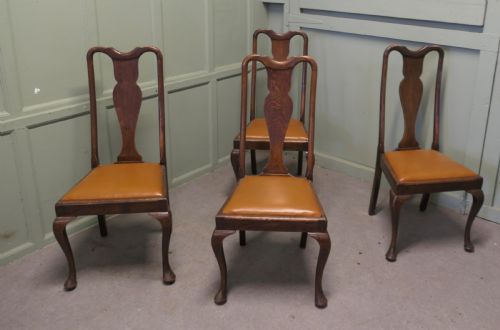
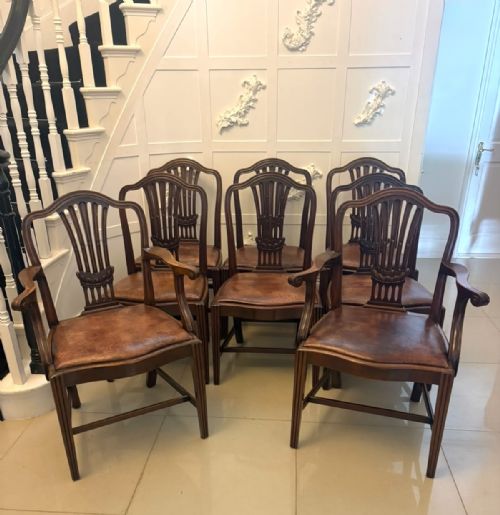
The timber frames range from dark mahogany and walnut to sturdy oak and golden oak, often incorporating revival styles such as Chippendale, Hepplewhite, and Queen Anne. These chairs provide dependable function around a dining table while displaying period carving and turned legs.
How they were made
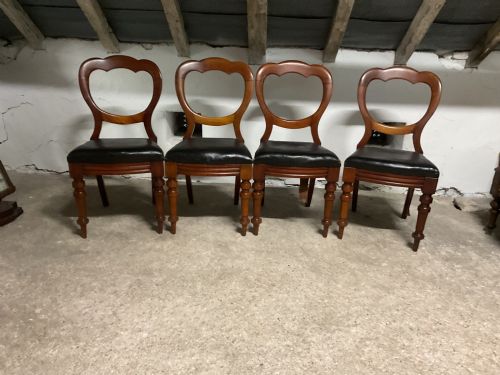
The construction relies heavily on solid hardwoods like mahogany and oak, shaped into balloon backs, shield backs, and ladder backs. Joinery is traditionally dowelled or tenoned to withstand daily dining use without losing structural rigidity.
Upholstery involves stretched leather secured over padded seats, sometimes complemented by brass stud work along the edges. Caning and fabric also appear in related seat options, though leather remains the primary durable surface.
Listings feature timbers including mahogany, oak, walnut, and golden oak alongside brass and cane.
What varies in quality
Quality rests in the crispness of the hand carving on the frame and the density of the chosen timber, such as heavy oak or fine-grained mahogany. Matching sets maintain consistent colour and grain pattern across every single chair.
The integrity of the leather upholstery and the firmness of the underlying frame construction determine the longevity of daily use. Finer examples retain original patination on the leather and precise joinery without timber shrinkage.
John Taylor and Son
The Traditional Leather Side Chairs Glossary
- Shield back
- A chair back shaped like a heraldic shield, popular in Hepplewhite designs during the late eighteenth and nineteenth centuries. This silhouette provides a slender profile while supporting the upper back.
- Balloon back
- A rounded, curved chair back popular during the Victorian era. This shape offers ergonomic comfort through a continuous oval wooden frame.
- Carver
- An armchair designed to match a set of smaller side chairs, usually placed at the head of a dining table. These include supporting armrests carved in the prevailing style of the set.
- Barback
- A chair featuring a horizontal crossbar across the upper backrest, often seen in William IV designs. This horizontal member provides sturdy support and a clean architectural line.
Traditional Leather Side Chairs: Frequently Asked Questions
How do I care for leather seats?
Clean the surface gently using a soft, dry cloth to remove dust and grit.
Condition the leather periodically with appropriate balms to prevent drying and cracking over time.
Can I mix these with modern tables?
These timber frames contrast effectively with modern glass or steel tables by adding warmth and texture.
Ensure the seat height matches the underside clearance of your contemporary table before purchasing.
How do I spot a revival style?
Revival pieces imitate earlier eras like Chippendale or Queen Anne but are constructed using nineteenth or twentieth-century woodworking techniques.
Look at the underside of the rails and the timber grain to determine the actual period of manufacture.
Are side chairs comfortable for long dinners?
Traditional side chairs are built upright to support posture during formal meals rather than lounging.
Padded leather seats provide adequate cushioning for standard dining durations.