
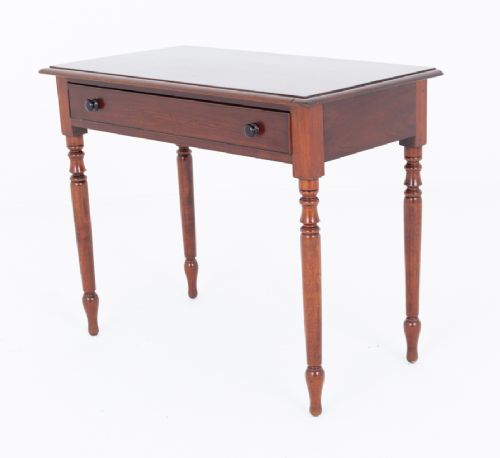
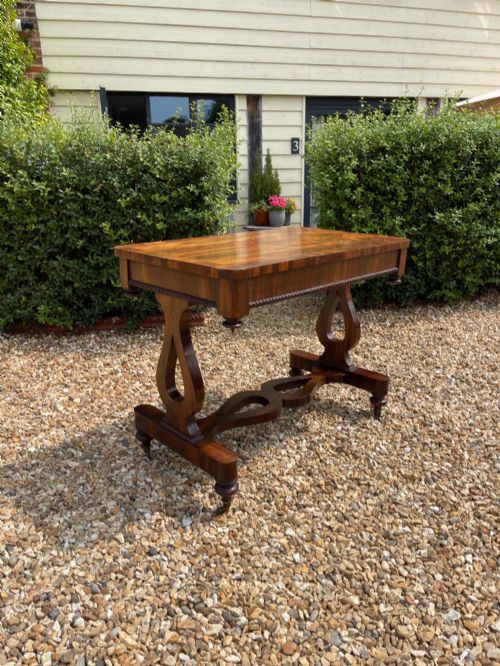

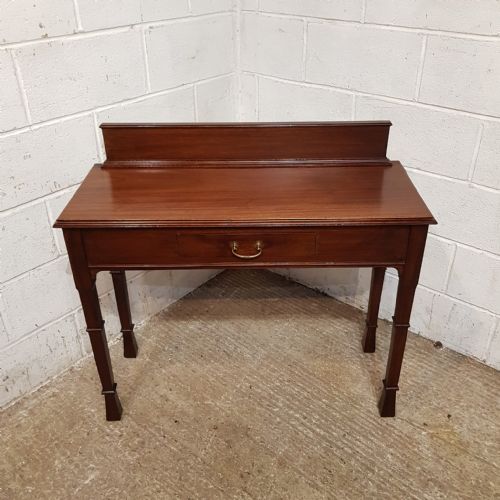
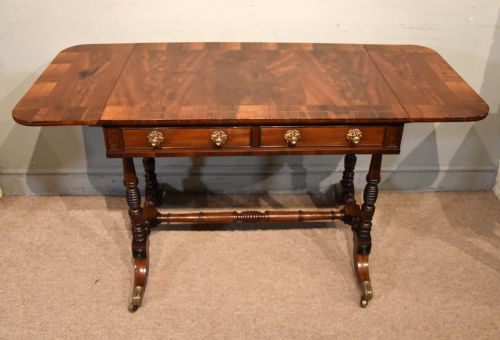


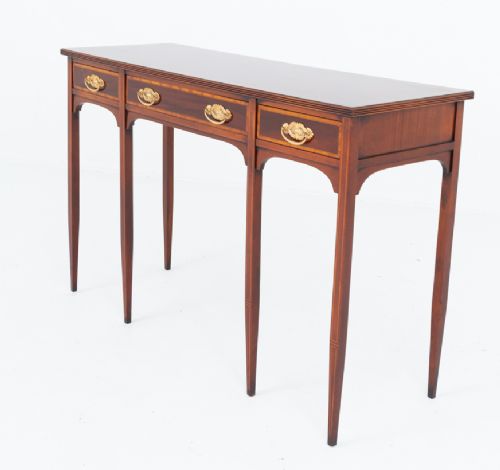
Mahogany Hall Sofa
A mahogany hall sofa brings substantial timber presence into an entranceway, combining long seating forms with the rich grain of nineteenth-century wood.
Mahogany Hall Sofa
A mahogany hall sofa sits at the intersection of long seating and hallway furniture, drawing upon forms recorded across the Georgian, Regency, Victorian, and Edwardian periods. Buyers exploring this phrase encounter both long seat benches and narrow console or sofa tables historically used in grand vestibules.
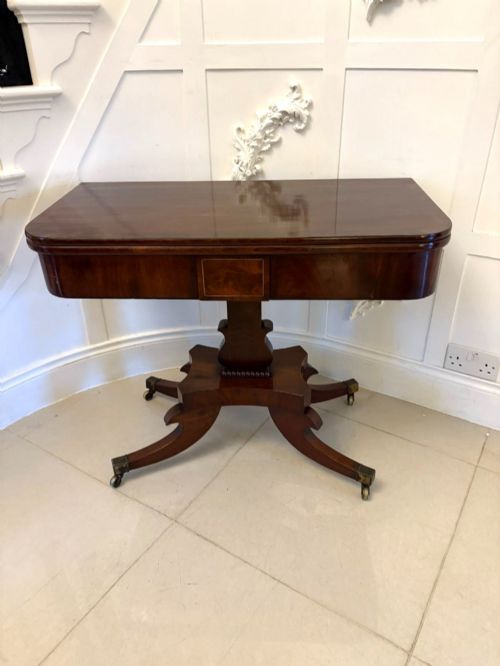
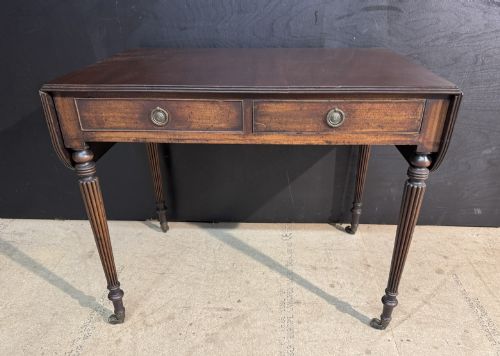
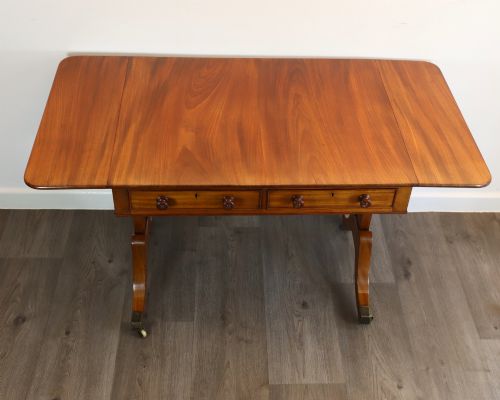
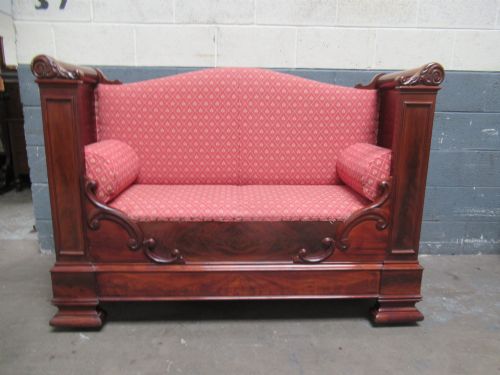
The pieces appearing on this page span several decades of design, including nineteenth-century carved frames, William IV examples, and Edwardian inlaid settees alongside drop-leaf sofa tables. These items reflect the diverse ways makers adapted timber furniture for circulation spaces and reception rooms.
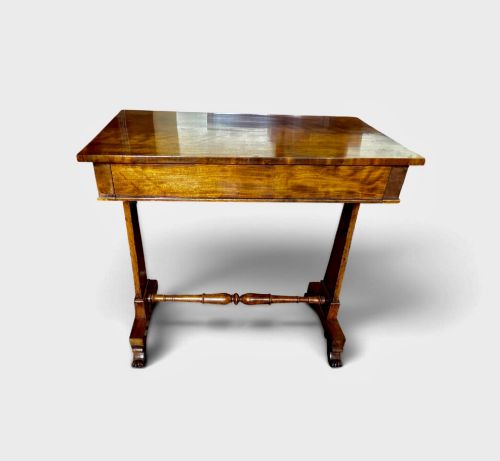
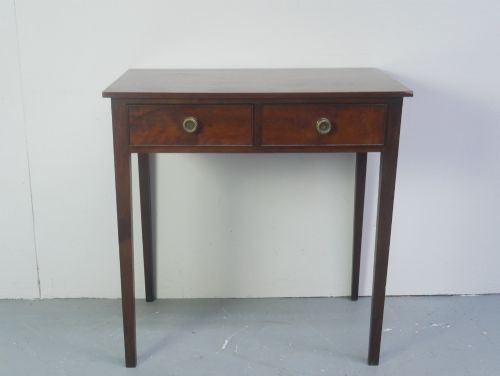
Originating predominantly from British workshops alongside continental examples, these pieces utilise dense timbers shaped for domestic utility and reception grandeur. The selection ranges from plain nineteenth-century side tables to substantial carved hall sofas.
Materials and construction
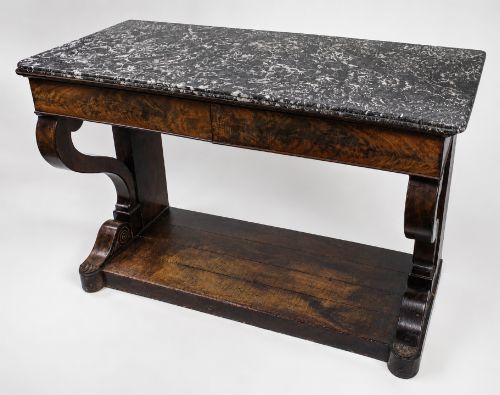
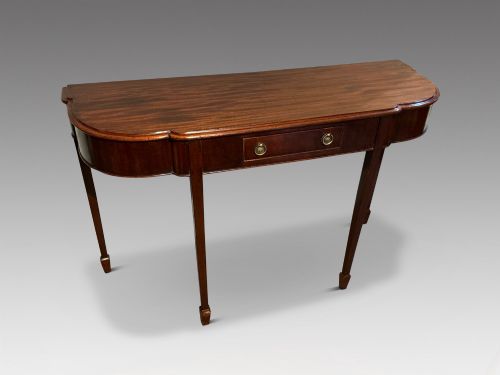
Makers relied heavily on solid mahogany and flame veneers, frequently complemented by satinwood, rosewood, and ebony stringing to create surface contrast. Brass fittings, leather inserts, and marble tops appear across various console and sofa table variants.
Joinery methods involved precise wood inlay, crossbanding, and drop-leaf mechanisms designed for flexibility in domestic spaces. Carved frames in Victorian and Edwardian examples demonstrate traditional cabinetmaking techniques passed through generations.
Listings incorporate materials such as mahogany, rosewood, satinwood, brass, and marble across 19th-century and Edwardian periods.
Assessing quality in timber furniture
The distinction between ordinary utility items and exceptional pieces rests upon the selection of figured mahogany, timber depth, and the precision of inlaid details. Finer examples display deliberate grain matching across expansive drop leaves and tabletops.
Proportion and structural restraint separate workshop pieces from standard productions, where balanced dimensions and restrained carving elevate the overall presence of the furniture.
James Mein Kelso·Andrew Thomson Sons
The Mahogany Hall Sofa Glossary
- Crossbanding
- A border technique where thin strips of veneer are laid perpendicular to the main grain, often seen in contrasting timbers like rosewood.
- Sofa table
- A rectangular table traditionally designed to stand in front of a sofa, usually featuring drop leaves on either end and twin pedestals or trestle supports.
- Console table
- A table fixed or placed flat against a wall, frequently utilised in hallways and entrance spaces.
- Inlay
- A decorative technique of inserting contrasting materials into wood surfaces to form patterns or geometric stringing lines.
- Drop leaf
- A hinged table flap that can be raised to extend the surface area or lowered when space is limited.
Mahogany Hall Sofa: Frequently Asked Questions
Where were these pieces placed historically?
These items were positioned in grand entrance halls, vestibules, and formal reception rooms where guests were first received.
Their narrow proportions allowed them to line corridors or sit against walls without obstructing movement through the house.
How do I identify Regency pieces?
Regency items typically display clean architectural lines, classical proportions, and dark dense timbers often accented with brass or ebony stringing.
Look for flame mahogany veneers and balanced pedestals that reflect the classical revival tastes of the early nineteenth century.
Can these items function in modern hallways?
Their slender depths make them suitable for contemporary entryways, providing surface space for everyday items or occasional seating.
Drop-leaf variants offer adjustable dimensions that adapt easily to narrower modern floor plans.
What distinguishes Edwardian examples?
Edwardian items frequently incorporate lighter marquetry inlay, satinwood details, and delicate frames influenced by earlier Sheraton revivals.
These pieces tend to feel airier than their heavy Victorian or Georgian predecessors while maintaining traditional timber construction.