




Mahogany Graduated Drawers
Mahogany graduated drawers offer timeless storage, stepping down neatly from top to bottom.
Mahogany Graduated Drawers
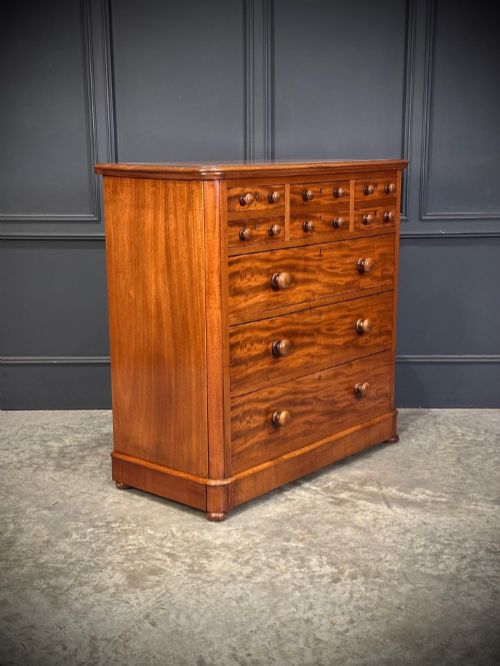
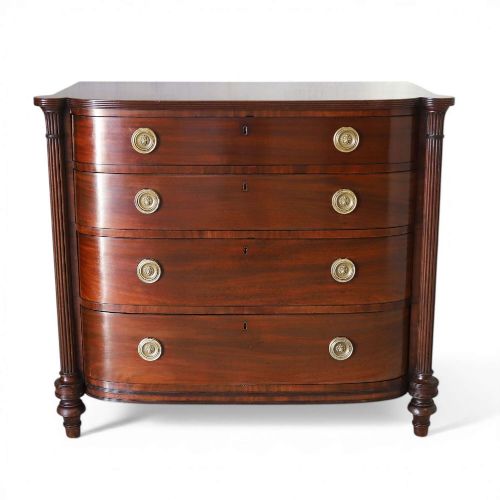
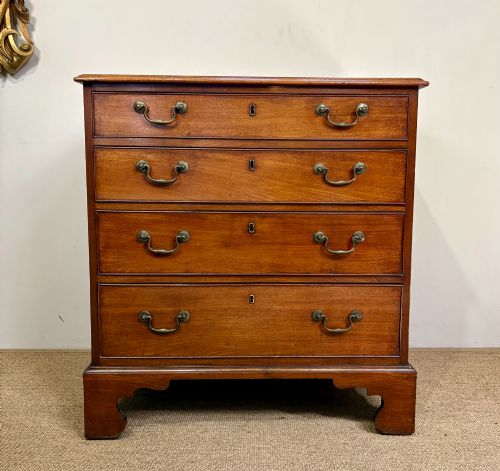
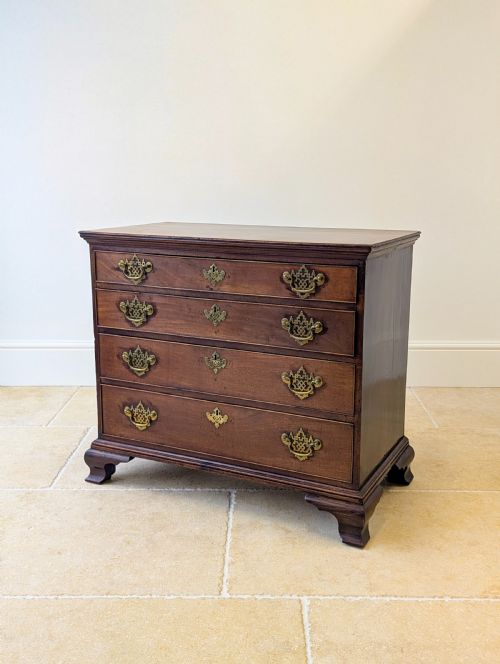
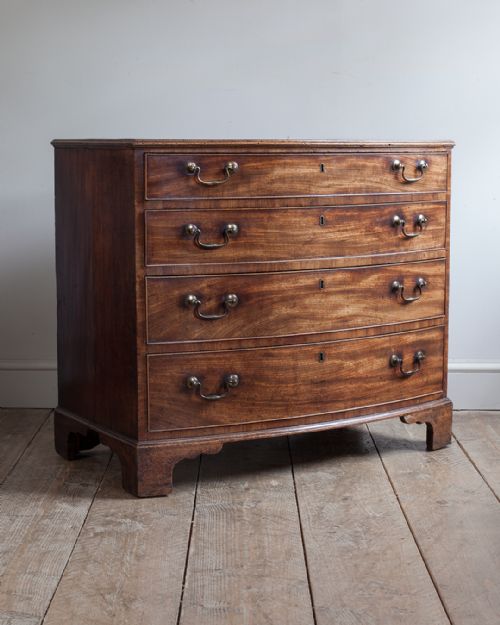
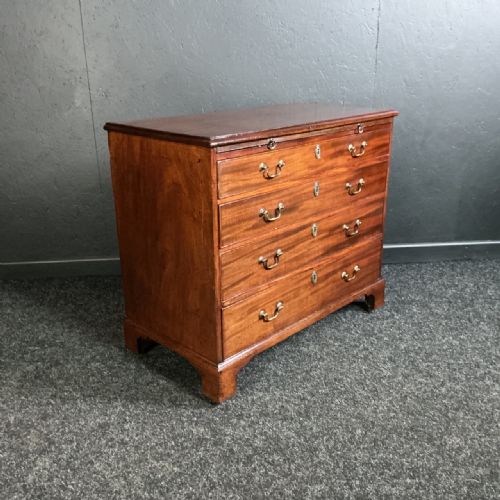
Mahogany graduated drawers are primarily found within Georgian and Regency chests of drawers, where storage units diminish in depth from base to top. These pieces demonstrate careful proportioning across the 18th century and 19th century periods, often appearing as bow front chests or straight front carcasses. The form provides functional utility alongside formal elegance.
Beyond standard chests, mahogany graduated drawers appear in dressing chests, tall slim chests, and collectors cabinets. Buyers encounter both compact examples of small proportions and larger multi drawer configurations. The structural arrangement relies on diminishing drawer depths to create visual harmony.
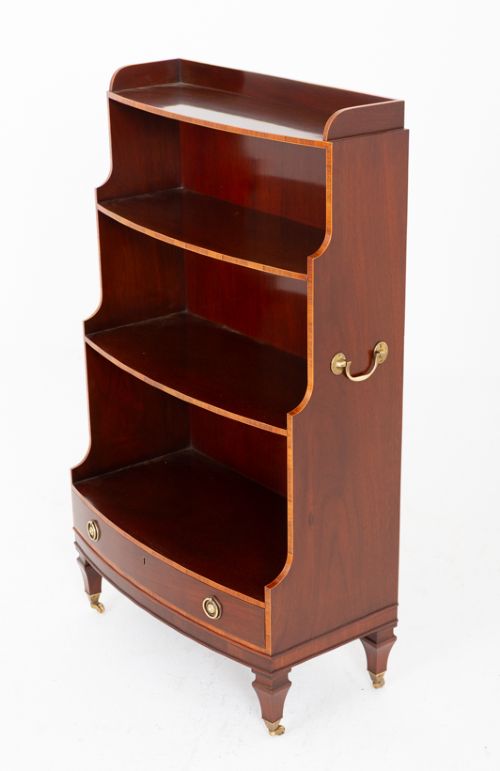
Waterfall bookcases and display shelves also utilise graduated tiers rather than enclosed drawers, offering an open shelving format. These variations share the characteristic stepped profile that defines the category across Victorian and Edwardian iterations as well as earlier Georgian examples.
How they were made
Cabinet makers utilised solid mahogany and flame mahogany veneers over secondary timbers such as oak and pine. The application of figured wood grain to drawer fronts required precise sawing and matching to enhance the aesthetic appeal of the surface.
Construction relied on traditional joinery techniques, paired with brass hardware including handles and escutcheons. Internal drawer linings in pine or oak demonstrate sturdy joinery designed to withstand daily use over centuries.
Listings feature items spanning the 18th century, Georgian, Regency, Victorian, and Edwardian periods, constructed from mahogany, flame mahogany, brass, oak, and pine.
What varies in quality
Quality rests in the choice of timber figure, particularly the depth and movement in flame mahogany veneers, alongside the crispness of the drawer graduation. Superior pieces exhibit well-balanced proportions and refined handling of edges and mouldings.
The Mahogany Graduated Drawers Glossary
- Graduated drawers
- Drawers that decrease in depth progressively from the bottom to the top of the piece. This arrangement creates a balanced aesthetic and accommodates smaller items near the top.
- Flame mahogany
- A veneer cut from the fork of the mahogany tree where branches meet the trunk. It produces a distinctive flickering, flame-like pattern highly prized by cabinet makers.
- Bow front
- A convex curved front elevation popular during the Georgian and Regency periods. It softens the linear profile of a chest of drawers.
- Serpentine
- A cabinet front featuring a gentle undulating curve that bulges outward in the centre and recedes at the sides. This shape requires advanced woodworking skill.
- Chest on chest
- A tall case furniture piece featuring one chest of drawers stacked directly on top of another. Also known as a tallboy, it maximises vertical storage.
Mahogany Graduated Drawers: Frequently Asked Questions
What defines graduated drawers?
Graduated drawers feature a sequence where each drawer from bottom to top is slightly shallower than the one below it. This stepped reduction creates a balanced visual weight.
Cabinet makers used this method across chests of drawers and cabinets to ensure proper proportion and ergonomic access.
How do I spot a Georgian piece?
Georgian pieces display specific proportions, hand-cut dovetail joints, and characteristic timber selections like solid mahogany or figured veneers. Look at the secondary woods inside the drawers.
Earlier pieces often show greater attention to fine detail and moulding profiles compared to later 19th century reproductions or Victorian variations.
Where should I place a chest?
These chests suit bedrooms, hallways, or living spaces where surface area and drawer storage are both required. Their finished timber backs and sides in some cases allow freestanding placement.
Ensure the room maintains stable humidity levels to protect the mahogany wood and prevent veneer shrinkage over time.
Are all these pieces formal furniture?
While many examples originate from formal Georgian and Regency drawing rooms or chambers, functions varied widely. Some served as dressing chests with internal compartments.
Other variants include specialised items like collectors cabinets and open bookcases with graduated shelves for display purposes.