
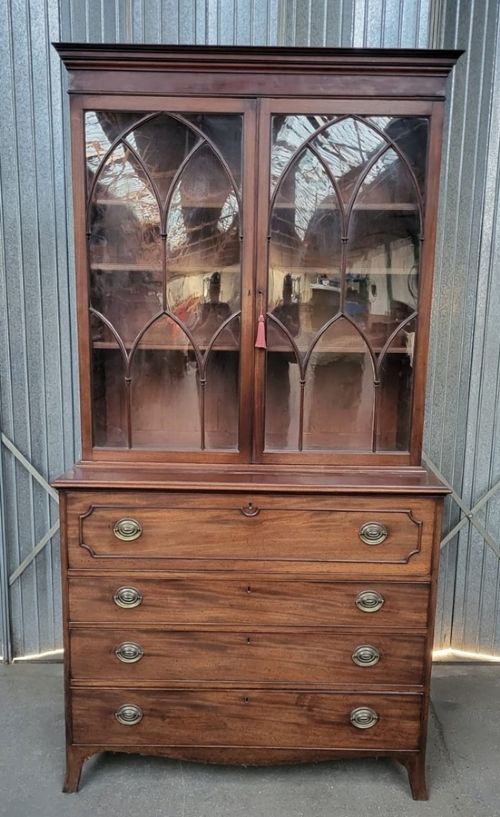
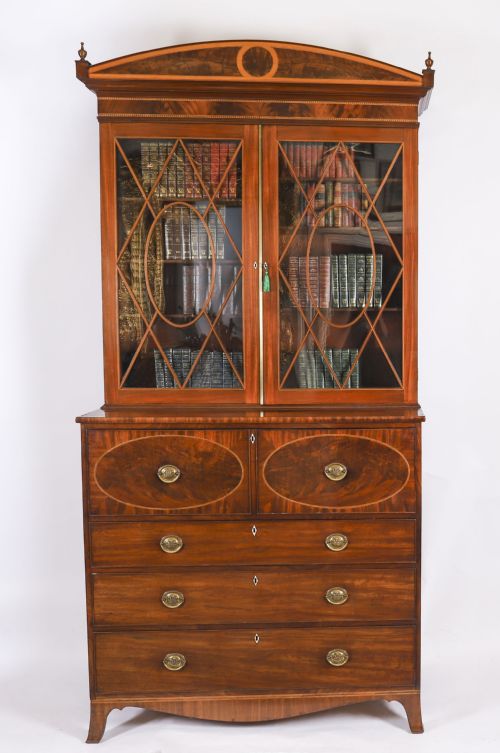
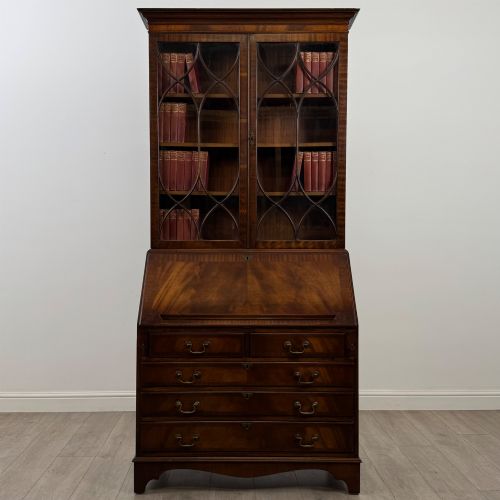
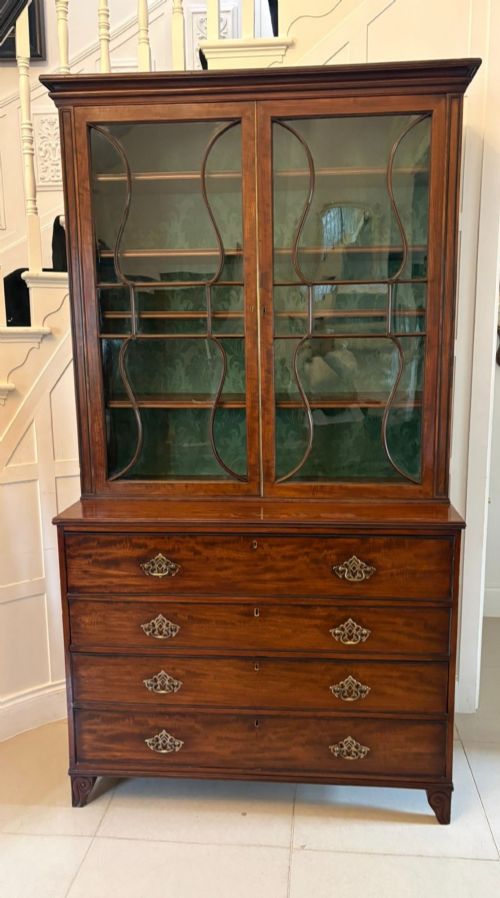
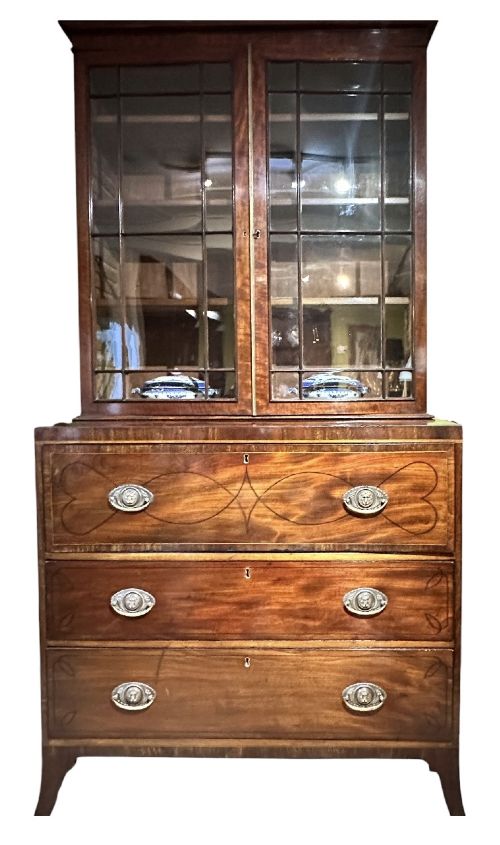
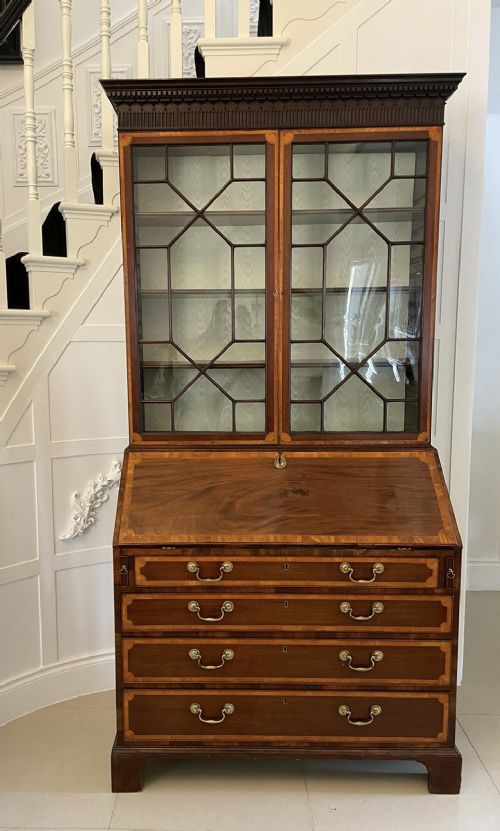
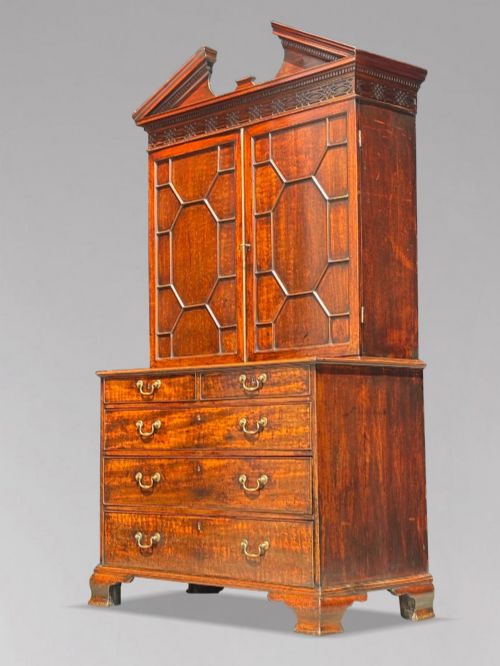
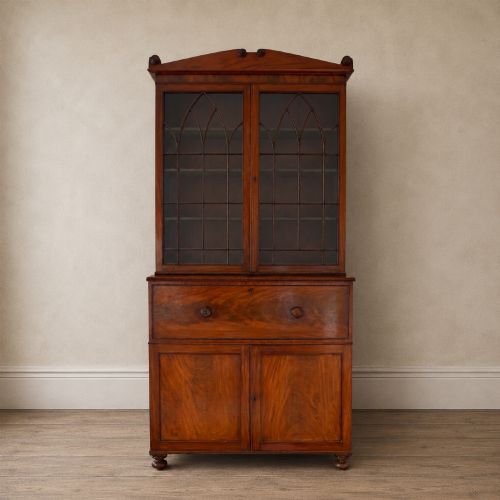
Mahogany Glazed Bureau Cabinet
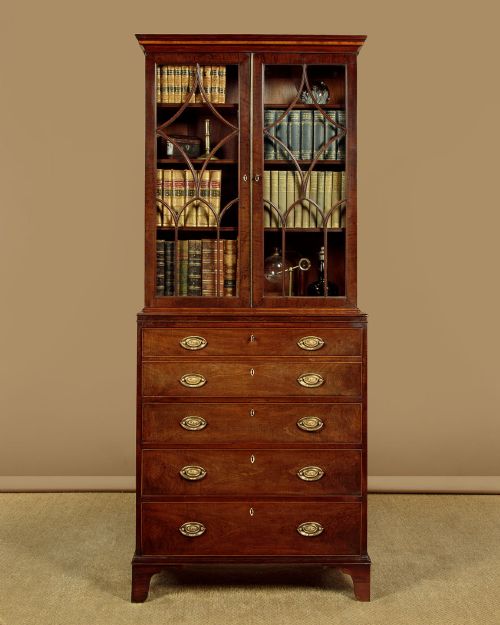
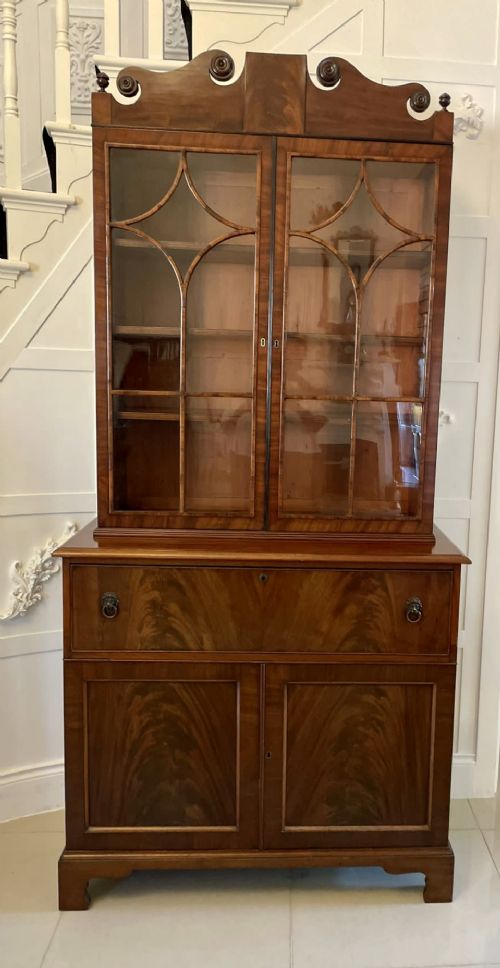
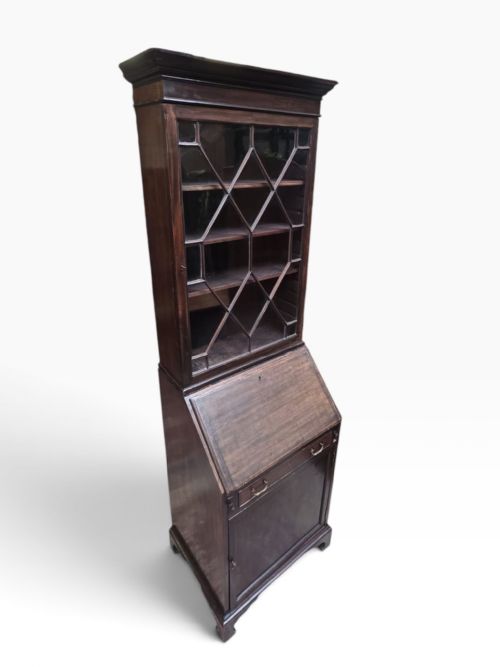
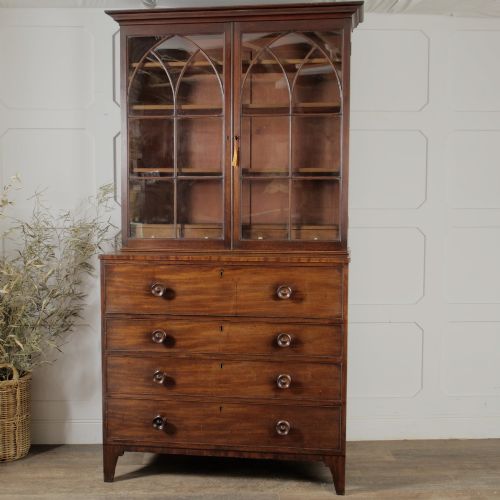
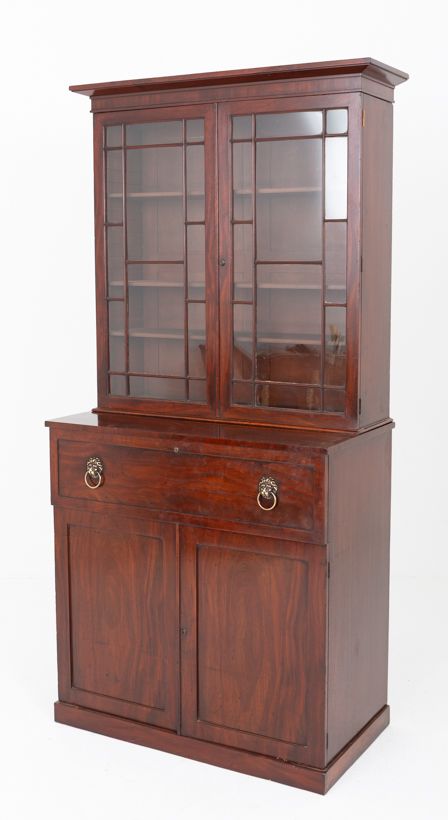
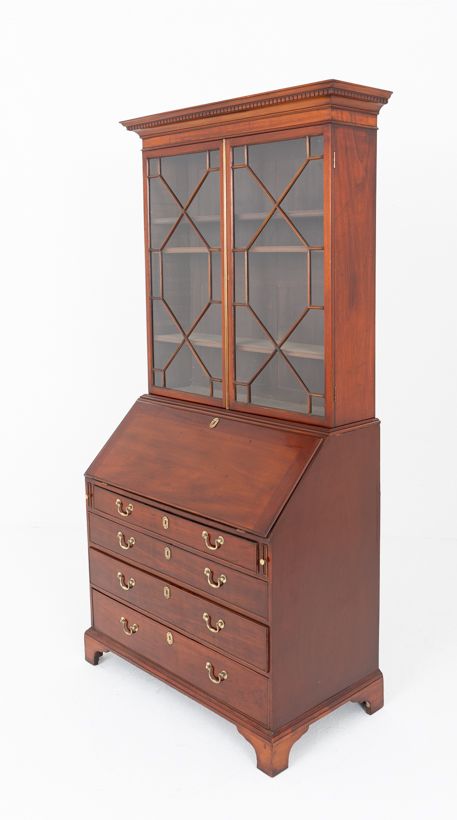
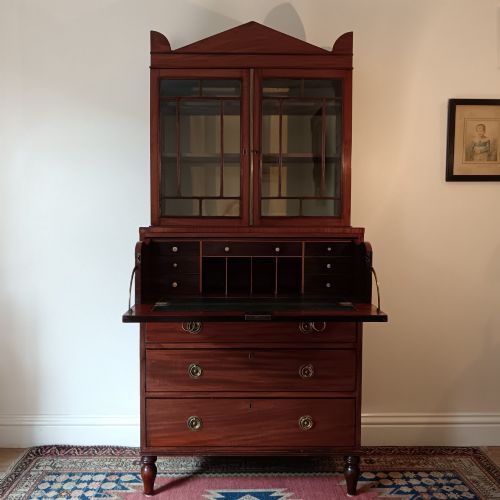
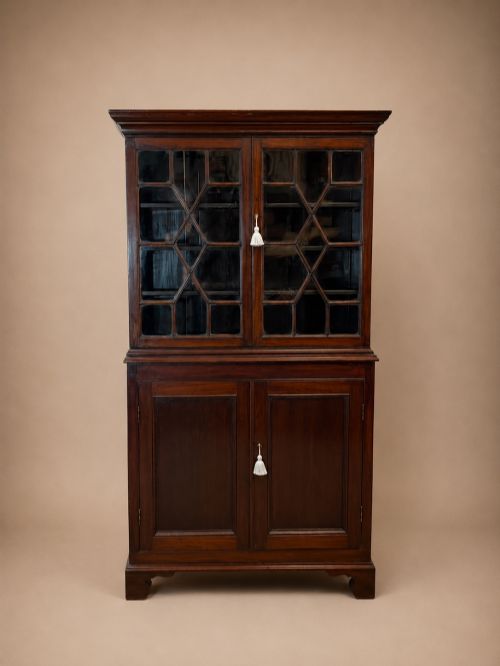
These mahogany glazed bureau cabinet examples combine a fitted writing desk and a shelved library display behind glass doors.
Mahogany Glazed Bureau Cabinet
A mahogany glazed bureau cabinet houses books behind glass upper doors while providing a drop-down writing surface or fitted drawer for correspondence. These architectural pieces serve practical storage and display functions in domestic interiors.
The selections span the eighteenth century through the Edwardian period, incorporating Georgian, Regency, William IV, and Victorian eras. Forms range from full-sized library bookcases to small variants and miniature apprentice samples.
Makers recorded in the evidence include Gillows of Lancaster, George Oakley, Thomas Chippendale, Tudor and Burrey of Shrewsbury, and Maple and Co.
How they were made
Cabinet makers utilised solid mahogany and figured veneers, frequently selecting flame mahogany to highlight grain patterns on drawer fronts and fall-front desks. Secondary timbers such as oak provide structural stability within the internal compartments.
Glazing bars organise the glass upper doors into geometric patterns, while brass hardware secures doors and internal drawers. Satinwood stringing and inlay add contrasting detail to primary surfaces on select pieces.
One tiny survivor is a quarter-size apprentice piece made simply to show off a cabinet maker's scaling skills.
What varies in quality
The refinement of internal fittings, such as secret compartments and pigeonholes within the secretaire drawer, distinguishes finer cabinets from simpler utilitarian storage. Precision in the joinery of the astragal glazing bars and the selection of figured mahogany veneers also mark superior craftsmanship.
Proportions dictate the visual balance of the upper bookcase relative to the bureau base, with slimmer or more compact scaling commanding particular attention from collectors.
Thomas Chippendale·Gillows·George Oakley·Maple and Co·Tudor and Burrey
The Mahogany Glazed Bureau Cabinet Glossary
- Secretaire
- A writing drawer featuring a drop front that conceals small drawers and pigeonholes. This component allows the cabinet to function as a desk without requiring a separate table.
- Astragal
- A moulding profile used to divide glass panes within the upper cabinet doors. These thin wooden strips create geometric patterns across the glazed frontage.
- Flame mahogany
- A veneer cut from timber where the branch meets the trunk, producing a distinctive flickering flame pattern. Cabinet makers reserved this timber for prominent surfaces like drawer fronts.
- Bureau bookcase
- A combination furniture form uniting a sloping desk or secretaire drawer with a shelved upper cabinet. These dual-purpose pieces evolved to store books and manage correspondence in one unit.
- Cylinder bureau
- A desk form featuring a rolling quarter-circle wooden shutter that conceals the writing surface and internal fittings. This mechanism retracts into the body of the cabinet.
Mahogany Glazed Bureau Cabinet: Frequently Asked Questions
How do I use a secretaire drawer?
The front pulls forward and drops down on horizontal hinges to reveal a flat writing surface above small interior drawers.
Pushed back into place, the hinged front conceals all writing materials and papers from view.
How do I date a mahogany cabinet?
Stylistic indicators such as bracket feet, cornice designs, and glazing bar thickness help determine the manufacturing period.
Secondary timbers and construction methods inside the drawers provide further evidence for dating.
Where were these cabinets placed in a home?
Libraries and parlours housed these dual-purpose units to store household accounts and display bound volumes.
The upper glass doors protected valuable books from dust while keeping them visible.