


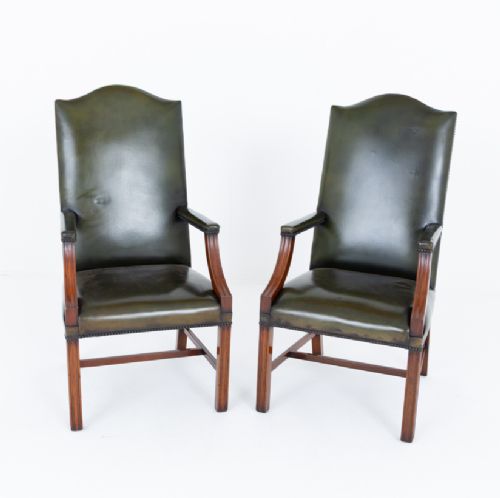
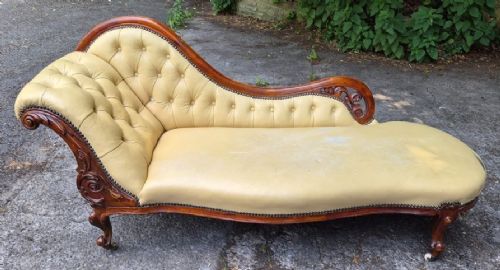


Mahogany Framed Leather Chairs
Mahogany framed leather chairs combine sturdy hardwood frames with durable hides, offering traditional seating built to last.
Mahogany Framed Leather Chairs
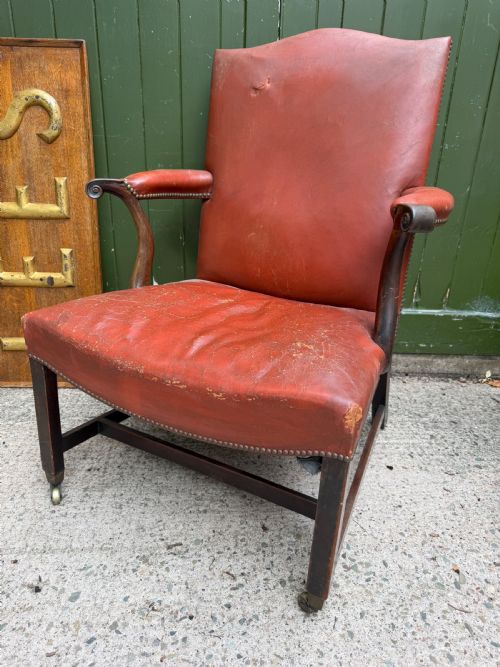
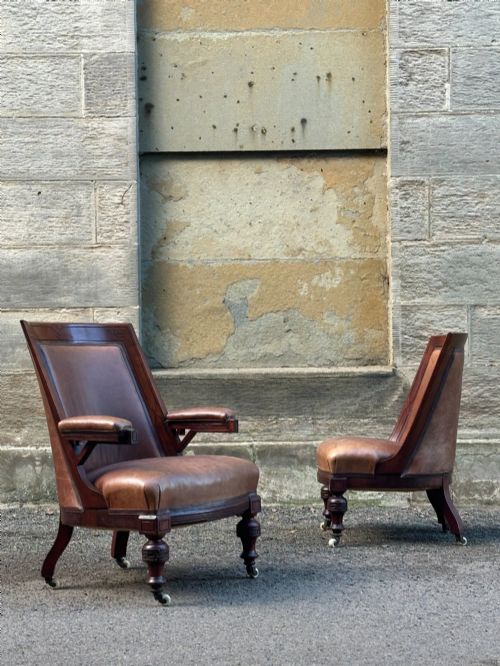
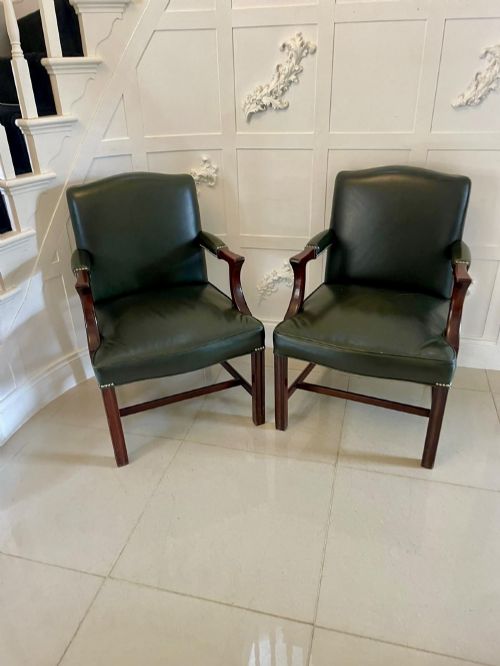
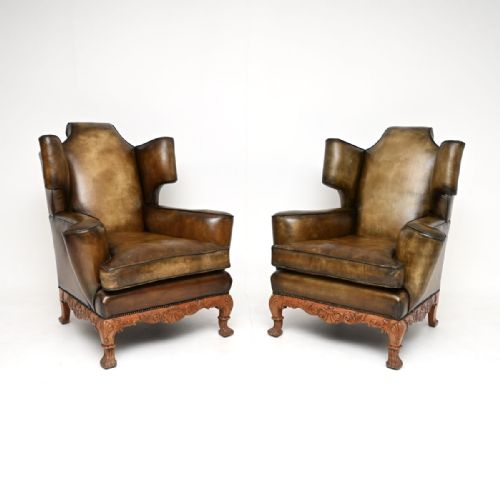
When searching for mahogany framed leather chairs, buyers encounter a variety of forms including library armchairs, desk chairs, wing backs, and rocking chairs. These pieces span multiple eras, notably the Victorian period, Edwardian era, and Georgian revivals.
The selections available here range from grand Gainsborough library armchairs to functional swivel office chairs and compact desk seats. Hardwood frames paired with leather upholstery define the primary aesthetic across these seating options.
How They Were Made
Construction relies primarily on mahogany and other hardwoods to build robust frames that support frequent use. Utopian designs incorporate leather applied to seats, backs, and arms, often secured with brass details.
Cabinetmakers shaped the wooden frames using traditional joinery, applying carving to legs and arms in styles reflecting Victorian or Georgian influences. Secondary materials such as cane, iron, and metal appear in specific structural or decorative capacities.
Mahogany Framed Leather Chairs Retail Price Guide 2026
Typical asking prices for mahogany framed leather chairs among the pieces listed under this phrase on Sellingantiques today, from the lower quarter to the upper quarter. They describe what is for sale here now, not the wider market.
Materials documented across the inventory include mahogany, leather, brass, cane, and iron.
What Varies in Quality
The calibre of the wood carving and the depth of the mahogany grain distinguish finer examples from standard production. Superior framing utilises dense hardwood with robust joinery that maintains structural integrity over generations.
The grade and treatment of the leather upholstery further set pieces apart, with hand-dyed finishes and careful hide selection representing higher tiers of craftsmanship. Attention to period-appropriate detailing, such as carved cabriole legs or precise nailhead trim, marks the better iterations.
J Foot And Son·Cooper And Holt·Gillows
The Mahogany Framed Leather Chairs Glossary
- Gainsborough chair
- A wide, open-armed armchair with a padded seat and back, designed in the mid-18th century. This form frequently appears in library and desk settings.
- Cabriole leg
- A furniture leg that curves out and then in, resembling an animal's curving leg. This shape is common on Victorian and Georgian revival seating.
- Wing back
- An armchair with side panels attached to the back of the chair, originally intended to shelter the user from drafts. Leather upholstery is a frequent finish for this style.
- Caned
- Woven rattan material incorporated into the frame of a chair to provide a lighter seating panel. Edwardian examples occasionally utilise this technique alongside wood and leather.
Mahogany Framed Leather Chairs: Frequently Asked Questions
How do I identify a Victorian mahogany framed leather chair?
Victorian examples often feature darker mahogany tones, heavier carved frames, and specific upholstery styles like deep buttoning on Chesterfield designs. The joinery and wood finish typically reflect mid to late 19th-century manufacturing methods.
Examining the underside and the wear patterns on the leather and wood helps confirm the age of the piece.
Are these chairs suitable for daily office use?
Many of these pieces, particularly desk chairs and swivel models from the Edwardian and later periods, were built specifically for workspace environments. Their sturdy mahogany frames and durable leather surfaces handle regular sitting.
Checking the mechanism on swivel variants ensures they function smoothly for modern use.
How should I care for the leather and mahogany?
Maintaining the wood involves dusting the mahogany frame regularly and occasionally applying a suitable polish to preserve the finish. The leather benefits from conditioning treatments to prevent cracking and to keep the hide supple.
Keeping the chairs away from direct heat sources and strong sunlight protects both materials from drying out.