


Mahogany Envelope Table
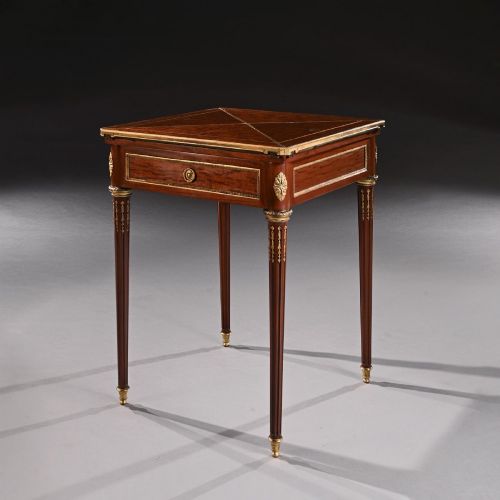
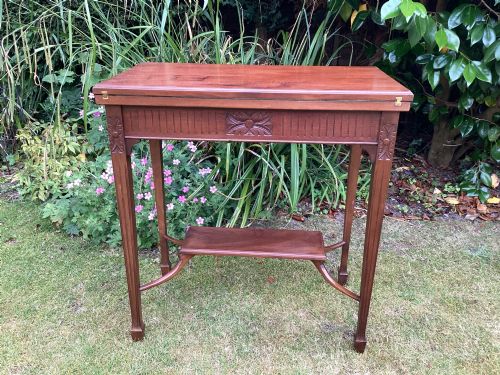
A mahogany envelope table folds its clever triangular leaves to serve as both a compact occasional surface and a generous card table.
Mahogany Envelope Table
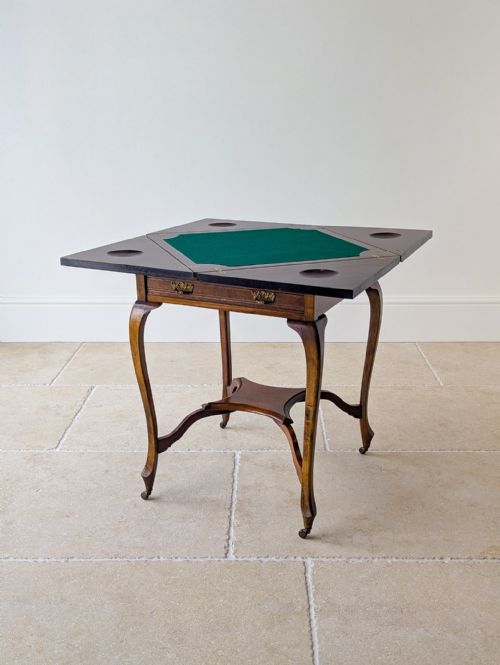
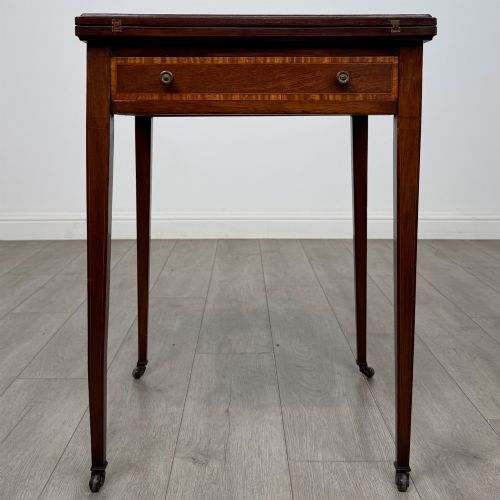
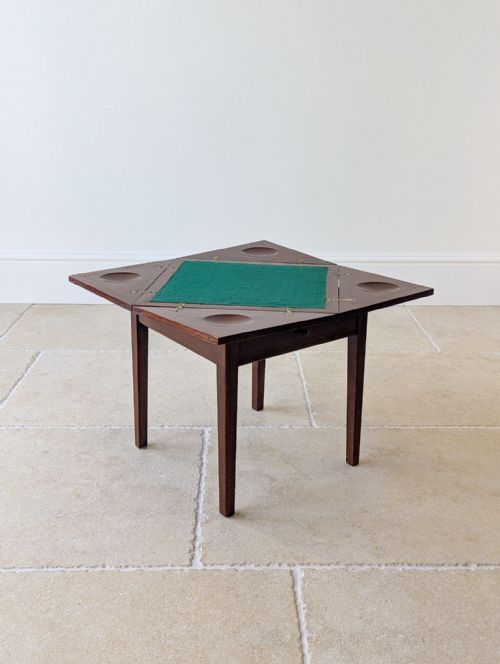
A mahogany envelope table presents a square top when closed, composed of four rotating triangular flaps that open in sequence to reveal a baize-lined playing surface. The pivot mechanism forms the defining characteristic of the type, often supported on slender square-tapered legs terminating in castors. Card tables, games tables, and occasional tables dominate the surviving inventory, designed to save space in polite drawing rooms.
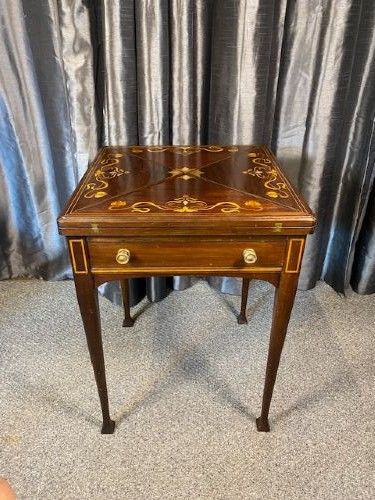
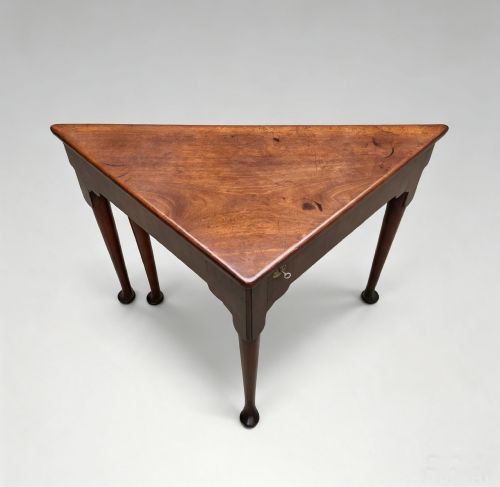
Edwardian examples appear most frequently on the market, frequently displaying delicate satinwood inlay or brass stringing along the frieze and borders. Earlier nineteenth-century and Victorian iterations also survive, alongside occasional eighteenth-century George II or George III precursors, showing simpler lines and heavier timber proportions.
Timber Selection and Assembly
Makers built these pieces primarily using solid and veneered mahogany, chosen for its stability and rich grain. Satinwood and various exotic timbers provided contrasting inlay and banding for Edwardian and Victorian models, while brass fittings reinforced hinges and castors.
The ingenious folding top relies on counterweighted pivoting leaves that swing outward simultaneously as one flap is lifted. Interior wells beneath the leaves frequently accommodate counters and cards, requiring precise cabinetwork to ensure the folding flaps close flush.
Listings span the eighteenth, nineteenth, and twentieth centuries, with Edwardian examples employing satinwood inlay and baize interiors.
Distinctions in Execution
The refinement of the pivoting mechanism dictates the baseline of quality, separating smooth, self-opening action from stiff or misaligned flaps. Superior examples maintain tight joints and crisp inlay without warping across the four rotating leaves.
Timber selection and decorative ambition separate standard production from exceptional pieces. The presence of fine marquetry, ormolu mounts, or intricate brass inlay indicates higher workshop standards, whereas plain mahogany carcasses reflect utility-focused manufacture.
Antoine Lampre·Lampre of Paris·Maples
The Mahogany Envelope Table Glossary
- Envelope table
- A square table with a four-flap folding top that opens diagonally like an envelope to reveal a baize playing surface.
- Baize
- A coarse woollen material resembling felt used to line the playing surface of card and games tables.
- Satinwood inlay
- Contrasting light-coloured wood inserted into the mahogany surface to create geometric borders or decorative motifs.
- Gaming wells
- Small recessed compartments built into the corners of the table surface to hold counters, dice, or coins during play.
- Marquetry
- Elaborate decorative veneer patterns formed by fitting together pieces of various coloured woods.
Mahogany Envelope Table: Frequently Asked Questions
How do the folding leaves operate?
Lifting one triangular flap causes the remaining three interconnected leaves to rotate smoothly outward into an open position. Internal weights and pivot hinges coordinate the movement without manual adjustment of each flap.
Closing the table reverses the sequence, bringing the four points together to form a flat square top suitable for use as a lamp or side table.
Where were these tables used?
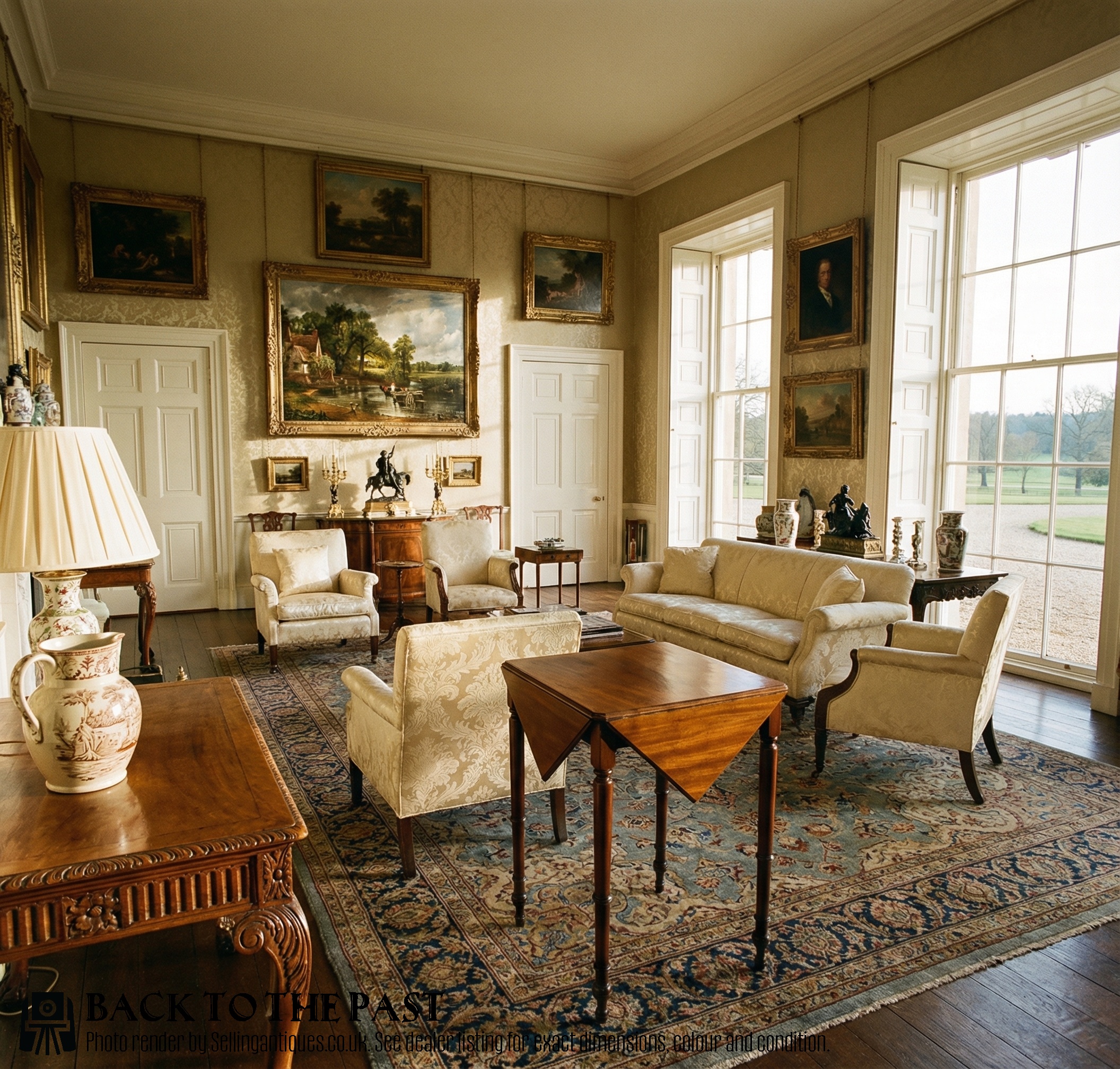
Drawing rooms and parlours accommodated these versatile pieces, serving daily duties as occasional or tea tables against a wall. When evening arrived, the owners cleared the surface to unfold the leaves for card games and social assemblies.
The compact closed footprint made them particularly practical for smaller Victorian and Edwardian urban homes.
How do I distinguish Edwardian from Victorian pieces?
Edwardian examples generally feature lighter proportions, slender tapered legs, and extensive satinwood stringing or delicate marquetry. They date primarily from the turn of the twentieth century and reflect a preference for refined, bright decoration.
Victorian pieces tend to be heavier in the timber, sometimes utilising bolder mouldings, richer dark mahogany, and simpler lines without complex inlaid borders.
What is inside the table beneath the flaps?
Many models conceal small triangular storage wells beneath the folding leaves designed to hold playing cards and bone counters. These compartments remain hidden and secure while the table is closed for everyday domestic use.
Some variations include small corner ledges or recessed depressions specifically shaped to keep markers from sliding during a game.