

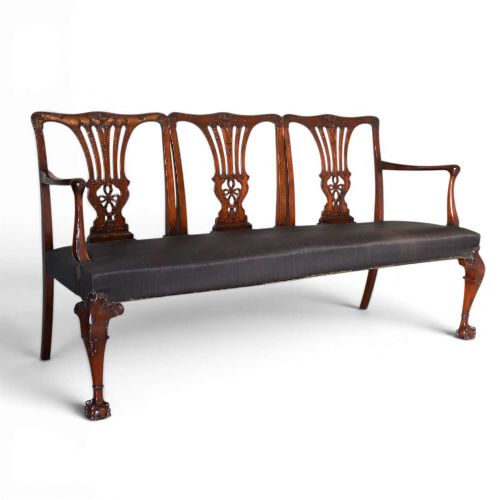


Mahogany Double Chair Bench
These mahogany double chair bench pieces combine seating for two with the pierced splats of dining chairs, bringing formal British design into the hallway or drawing room.
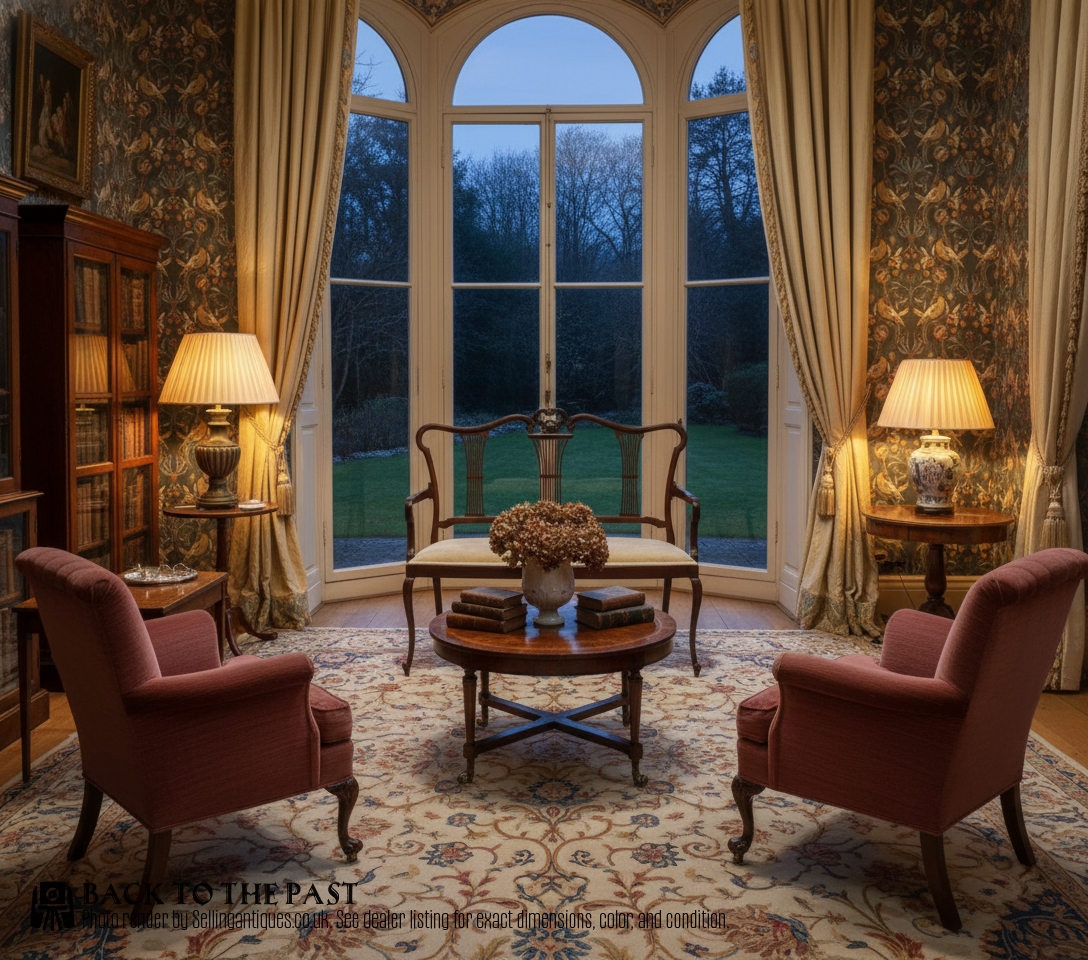
Mahogany Double Chair Bench
A mahogany double chair bench takes the form of two or three conjoined chair backs atop a single long seat, creating a sofa that mimics the appearance of dining chairs placed side by side. When searching for a mahogany double chair bench, buyers encounter formats spanning the eighteenth century through to Edwardian revivals, often described as chair-back sofas or settees.
The aesthetic draws heavily on historical revivals, with George II, Chippendale, and Hepplewhite styles dominating the selection. These pieces bridge the gap between formal seating and decorative woodwork, utilising open carved splats rather than solid upholstered backs.
How they were made
Makers constructed these frames predominantly from solid mahogany, sometimes incorporating delicate satinwood inlay for contrast along the crest rails or splats. Structural support relied on traditional joinery, shaping the timber to form the distinct pierced backs characteristic of the design.
Upholstered drop-in seats or fixed pads used materials such as velvet, fabric, hessian, and standard upholstery over a wooden frame. The carved details on the backsplats and legs required skilled hand-carving rather than steam bending alone.
Mahogany Double Chair Bench Retail Price Guide 2026
Typical asking prices for mahogany double chair bench among the pieces listed under this phrase on Sellingantiques today, from the lower quarter to the upper quarter. They describe what is for sale here now, not the wider market.
Listings span the eighteenth century, the Victorian era, and the Edwardian period, uniting original craftsmanship with later revival interpretations.
What varies in quality
The crispness and depth of the carved woodwork separate standard production from superior craftsmanship. Finer examples display undercut carving on the top rail and crisply pierced splats rather than flat, machine-cut contours.
The choice of timber grain and the precision of any satinwood inlay dictate the visual hierarchy. Robustness in the joinery where the chair backs meet the seat rail determines the long-term stability of the piece.
The Mahogany Double Chair Bench Glossary
- Chair-back settee
- A long seat whose back is constructed to resemble two or three individual dining chairs joined together. This layout mimics the formal dining furniture of the Georgian period.
- Splat
- The central vertical slat of a wooden chair back, often pierced and carved in the manner of Chippendale designs. In these benches, multiple splats repeat across the length.
- Satinwood
- A durable, yellowish timber native to Ceylon and India, utilised for contrasting inlay work on mahogany furniture. It provides bright linear decoration against dark wood.
- Crest rail
- The top horizontal member of a chair or settee back. It frequently bears carved ornamentation such as scrolls, shells, or ribbon motifs.
Mahogany Double Chair Bench: Frequently Asked Questions
Where should I place a chair-back settee?
These benches suit narrow reception rooms, hallways, or the foot of a bed where deep sofas block movement. Their open backs allow light to pass through, keeping small spaces feeling open.
Position them against plain walls to let the carved woodwork of the splats stand out as a visual feature.
How do I identify a revival piece from an 18th-century original?
Look closely at the secondary woods, tool marks, and uniformity of the carving. Edwardian and Victorian revivals often display machine-sawn framing components and sharper, shallower carving styles.
Eighteenth-century examples typically show hand-planed surfaces, irregular pegging, and timber patination developed over centuries of use.
Are these settees comfortable for daily lounging?
They offer upright, formal seating rather than deep, soft lounging. The rigid wooden backs enforce a straight posture typical of dining or parlour chairs.
Upholstered drop-in seats provide a firm pad, but the primary appeal remains decorative and structural rather than comfort-driven.
What fabric matches the upholstery?
Traditional upholstery choices range from plain hessian and textured fabrics to patterned velvet. Selecting woven textiles in muted tones maintains historical consistency.
Avoid overly modern synthetic finishes that clash with the dark grain of the mahogany frame.