






Dark Wood Bench Sofa
A dark wood bench sofa brings substantial timber frame character and seating presence to a room, spanning formal Regency models to rustic workshop forms.
Dark Wood Bench Sofa
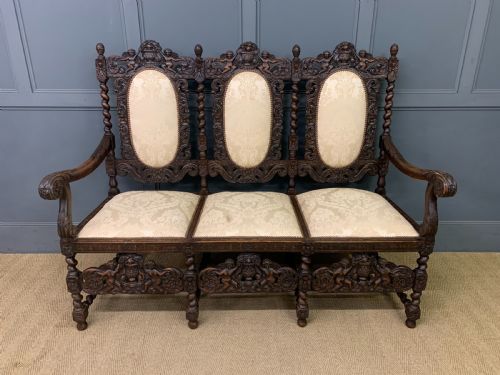
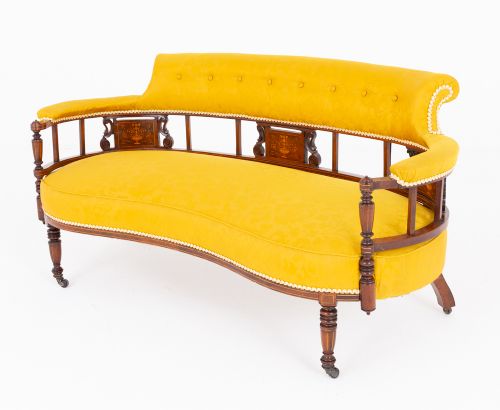
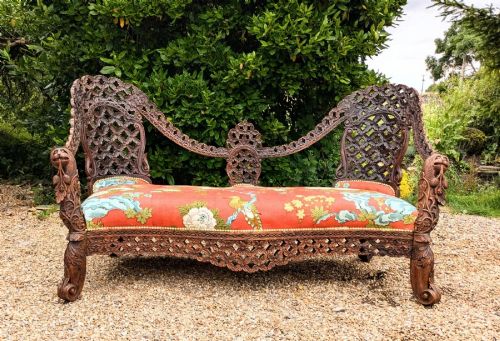
When searching for a dark wood bench sofa, buyers encounter a diverse grouping that bridges refined parlour seating and utilitarian workshop timber forms. The selection includes formal Regency and Victorian mahogany settees alongside Chinese export benches, Anglo-Indian daybeds, and heavy French elm workbenches.
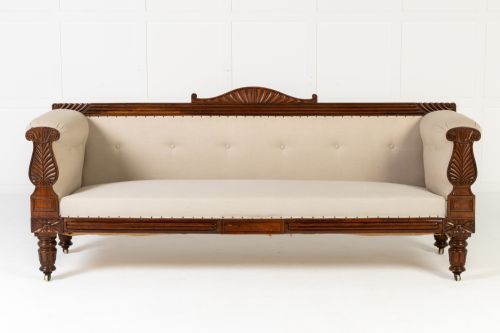
The most frequently met pieces on this page are 19th-century and Edwardian examples fashioned from rosewood, mahogany, and walnut. These range from inlaid satinwood and bone creations to carved William IV chaises longues and country house sofas.
Formations vary from triple chair back settees and hall benches to low-slung daybeds and functional workbenches complete with clamping bars. Origins stretch from English and French workshops to Italian, Dutch, and Asian centres of cabinetmaking.
Materials and construction methods
Frames rely on dense timbers including mahogany, rosewood, walnut, oak, elm, and unspecified hardwoods, often shaped with bobbin turning, intricate carving, or marquetry inlay. Many pieces incorporate secondary elements such as brass fittings, mother of pearl inlay, bone detailing, and cane panels.
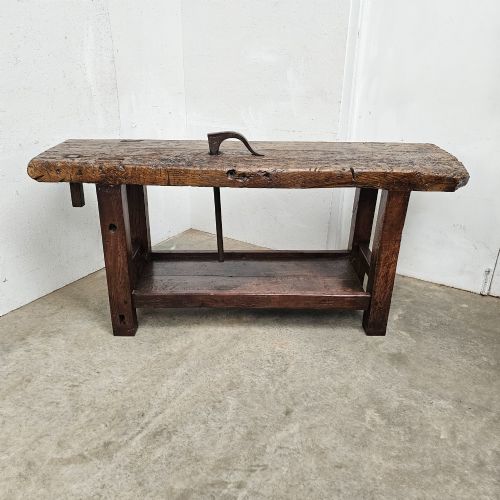
Upholstered variants utilise hessian and fabric foundations, while utilitarian workbenches depend on heavy solid timber slabs joined with functional vices and clamping bars. Cabinetmakers employed traditional joinery to support the substantial weight of dense tropical and European hardwoods.
Dark Wood Bench Sofa Retail Price Guide 2026
Typical asking prices for dark wood bench sofa among the pieces listed under this phrase on Sellingantiques today, from the lower quarter to the upper quarter. They describe what is for sale here now, not the wider market.
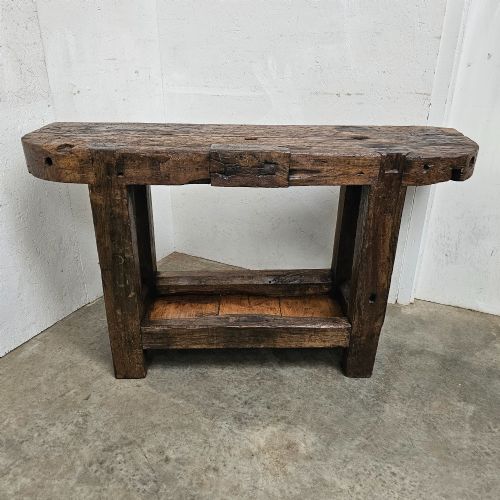
Some workbenches arrive bearing generations of honest carpenter's scars and tight clamping bars, ready to anchor a hallway with stubborn French charm.
Assessing build and material grade
Quality separates through the selection of timber grain, the crispness of hand-carved ornamentation, and the integration of specialised inlays like satinwood, bone, and mother of pearl. Superior examples show meticulous attention to secondary details such as bobbin-turned framing or intricate marquetry.
Structural integrity depends on the original density of the hardwood used, whether heavy rosewood, figured mahogany, or robust walnut. The refinement of the joinery and the survival of original components govern the standing of each piece within its specific style category.
Thonet
The Dark Wood Bench Sofa Glossary
- Chaise longue
- An upholstered sofa shaped like a chair with a seat long enough to support the legs. These pieces emerge strongly in 19th-century William IV designs.
- Marquetry
- Decorative veneer applied to furniture in patterns using different woods and materials. Dutch makers frequently utilised this technique on settee frames.
- Settee
- A long upholstered seat with a back and arms, accommodating more than one person. They appear across Edwardian, Victorian, and Regency periods.
- Settle
- A wooden bench with high backs and arms, often incorporating panel construction. Chinese export and Anglo-Indian variants use dense hardwoods for these forms.
- Workbench
- A sturdy table used by artisans for manual work, occasionally repurposed as a bench. French elm and oak examples feature practical clamping bars and vices.
Dark Wood Bench Sofa: Frequently Asked Questions
What is a dark wood bench sofa?
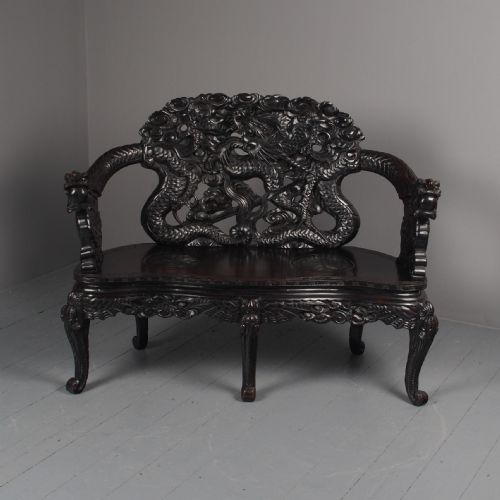
A dark wood bench sofa encompasses a broad category of seating furniture built from dense timbers like mahogany, rosewood, and walnut. These range from formal Victorian and Edwardian parlour settees to utilitarian French workbenches and carved Asian hall benches.
They combine the linear qualities of a bench with the cushioned comfort of a sofa or daybed. The grouping includes regional styles such as Anglo-Indian, Chinese export, and European period furniture.
How do I date a wooden settee?
Dating relies on observing the prevailing style characteristics, timber choices, and construction techniques visible in the frame. Pieces from the Regency and William IV eras often display robust mahogany carving, while Edwardian examples frequently feature satinwood and bone inlay.
Secondary materials like cane, hessian, and brass hardware also offer clues to the manufacturing decade. Comparing the turning, joinery methods, and decorative motifs helps narrow down the period of origin.
Where were these benches placed?
Historically, these pieces served varied functions depending on their formal or utilitarian design. Finer rosewood and mahogany settees occupied drawing rooms, parlours, and end-of-bed locations in grand houses.
Sturdier oak and elm workbenches functioned in craft workshops, while hall benches and settles lined grand entryways. Today, buyers adapt them for living rooms, hallways, and conversational seating areas.
Are workbenches used as seating?
French oak and elm workbenches originally served craftsmen for woodworking tasks involving clamping bars and vices. Their solid timber construction and distinct industrial character make them popular for alternative interior uses.
When brought into domestic spaces, they function effectively as low benches or display surfaces. Their robust timber build ensures they withstand regular daily use.