

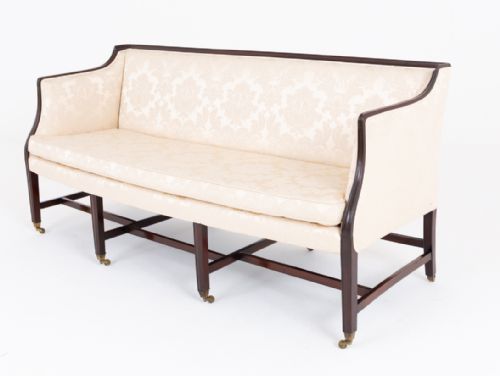


Hepplewhite Style Bench
These hepplewhite style bench pieces, appearing here as mahogany settee and sofa forms, offer refined seating with classic shield back designs.
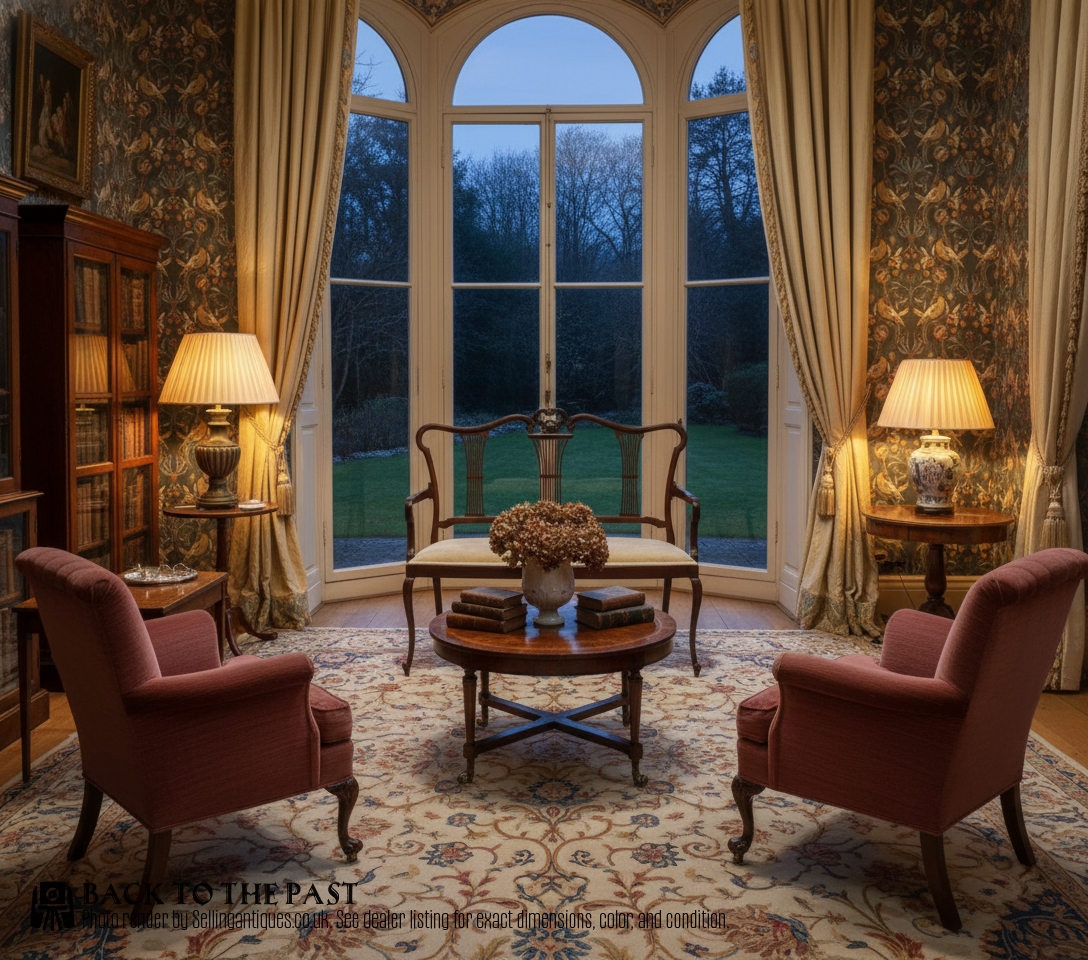
Hepplewhite Style Bench
When you search for a hepplewhite style bench, you encounter multi-seat seating forms predominantly recorded as settees, chair back settees, and sofas. The listings show forms with distinctive triple chair backs and shield backs, reflecting the enduring influence of eighteenth-century design.
The pieces on this page span several periods, ranging from original Georgian examples to later nineteenth-century interpretations, Edwardian pieces, and revival items dated around nineteen hundred and nineteen twenty. Mahogany is the primary material underpinning these forms.
Makers and craftsmen of these settees utilised traditional joinery to construct robust chair-back frameworks, often integrating satinwood inlay and fine fabric upholstery. The overarching aesthetic draws heavily upon neoclassical principles adapted for domestic drawing rooms.
How they were made
Makers constructed these settees primarily using solid mahogany, selected for its strength and rich grain, occasionally embellished with satinwood inlay. The structural framework typically supports carved shield backs or triple chair backs.
Upholstery techniques incorporated traditional textiles, including damask, fabric, and hessian, secured sometimes with brass detailing. The combination of carved wood and upholstered seating defined the construction of these domestic pieces.
Hepplewhite Style Bench Retail Price Guide 2026
Typical asking prices for hepplewhite style bench among the pieces listed under this phrase on Sellingantiques today, from the lower quarter to the upper quarter. They describe what is for sale here now, not the wider market.
Some nineteenth-century makers evidently miscounted their seats, labelling three-seater chair-back sofas with enthusiastic variations of triple chair backs.
What varies in quality
The refinement of the carving on the shield backs and chair frames dictates much of the visual merit across these settees. Crispness in the woodwork and the finesse of any satinwood inlay distinguish finer examples from simpler production.
Proportion and the integrity of the timber frame separate standard nineteenth-century revivals from earlier Georgian pieces. The execution of the triple chair back geometry plays a significant role in the overall balance of the settee.
The Hepplewhite Style Bench Glossary
- Shield back
- A chair or settee back shaped like an upturned shield, characteristic of neoclassical furniture design. This form provides both structural support and a decorative canvas for carved motifs.
- Settee
- A long upholstered seat for more than one person, featuring a back and arms. These pieces often incorporate multiple chair backs joined in a single framework.
- Satinwood
- A durable, lustrous timber from tropical trees, utilised for decorative veneer and inlay work. Its pale yellowish sheen contrasts effectively with darker mahogany.
- Neoclassical
- A style of architecture and decorative arts that drew inspiration from the classical art and culture of ancient Greece and Rome. This aesthetic governed the proportions and ornamentation seen on these frames.
- Damask
- A reversible figured fabric of silk, wool, linen, cotton, or synthetic fibres, woven with patterns. It frequently serves as the primary upholstery material for seats.
Hepplewhite Style Bench: Frequently Asked Questions
How do I identify a revival piece?
Revival pieces, such as those from the late nineteenth century or nineteen twenty, replicate earlier Georgian aesthetics using contemporary tools and slightly different timber seasoning. Examining the construction joints and the wear patterns helps determine the actual period of manufacture.
Comparing the specific carving style against documented eighteenth-century examples clarifies whether you are looking at an original period item or a later homage.
Where were these settees placed?
Historically, these settees stood in drawing rooms, grand halls, and parlours as both functional seating and decorative statements. Their open chair backs kept rooms feeling spacious compared to fully upholstered heavy sofas.
Today, they function well in similar reception spaces, entrance halls, or bedrooms where slender proportions are advantageous.
What timber was standard?
Mahogany is the predominant timber found across these listings, valued for its stability, deep colour, and ability to hold crisp carved details. Satinwood was frequently used as a contrasting inlay material to accentuate specific design elements.
These hardwoods ensured the settees survived centuries of domestic use while maintaining structural integrity.