


Carved Splat Back Settee
These carved splat back settee examples bring together robust timber frames and openwork backsplats to anchor a room with traditional seating form.
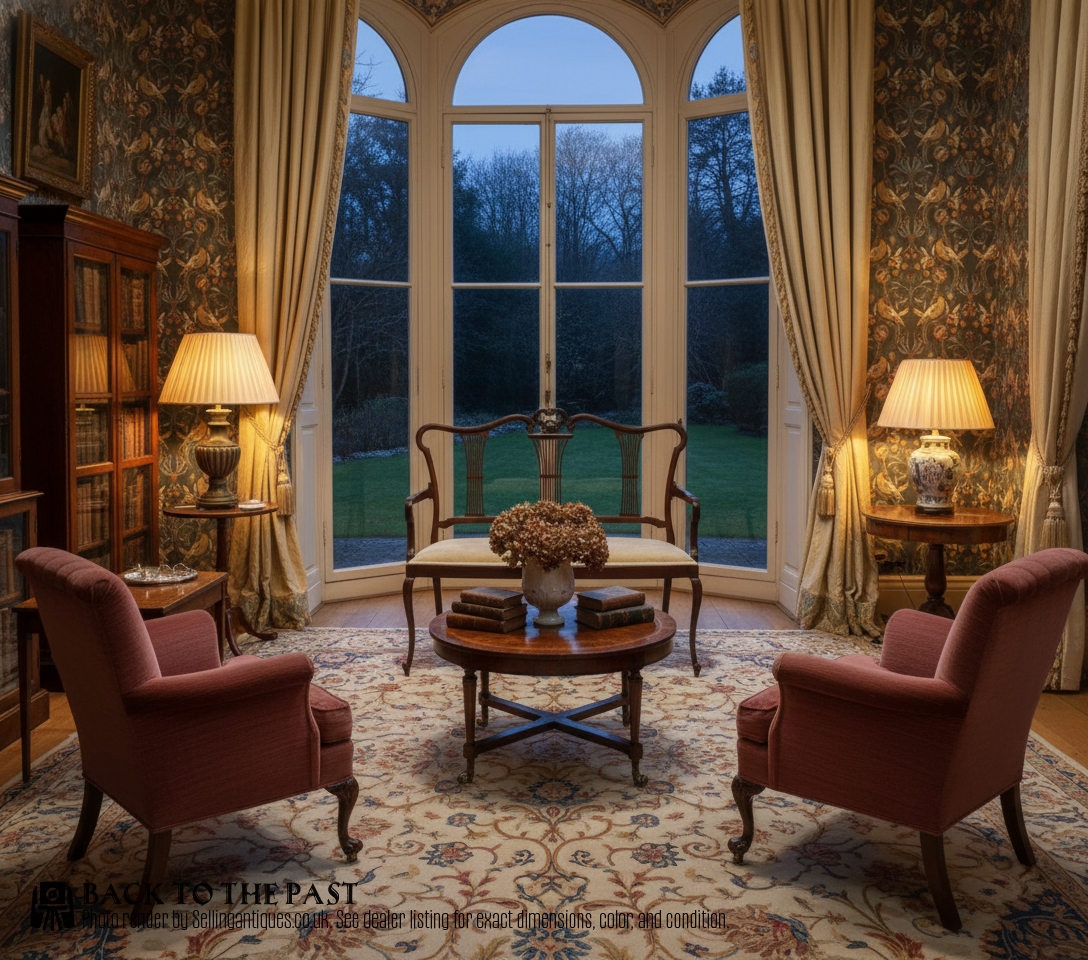
Carved Splat Back Settee
A carved splat back settee presents a multi-seat timber frame where individual vertical splats dominate the backrest, often mirroring chair-back designs linked together. Buyers searching for a carved splat back settee will encounter variations spanning the eighteenth century through to Victorian and early twentieth-century revivals.
The materials recorded in these listings rely heavily on mahogany, walnut, oak, elm, and blonde wood, occasionally paired with cane panels or upholstered seat pads in fabric and textile. Forms range from strict Chippendale style and Hepplewhite style shield backs to French Louis XV style frameworks and George II interpretations.
Most pieces on this page lean towards revival periods, notably Chippendale style and Georgian revival interpretations, alongside genuine eighteenth-century survivals. The proportions accommodate two or more occupants while retaining the distinct openwork silhouette characteristic of the form.
Materials and construction methods
The primary structural timber is dense hardwood, predominantly mahogany and walnut, chosen for its tensile strength in supporting complex pierced splats. Cabinetmakers shaped these upright elements using hand saws and chisels before applying detailed surface carving along the top rails and splat edges.
Secondary framing utilises oak and elm for structural stability, whilst specialist techniques like steam bending or curved joinery form the sweeping contours of shield back and chair-back settees. Caned panels, where utilised, are hand-woven into rebated frames to provide resilient and breathable seating.
Carved Splat Back Settee Retail Price Guide 2026
Typical asking prices for carved splat back settee among the pieces listed under this phrase on Sellingantiques today, from the lower quarter to the upper quarter. They describe what is for sale here now, not the wider market.
Listings feature eighteenth-century pieces alongside nineteenth-century Victorian examples and early twentieth-century revivals, constructed in mahogany, walnut, oak, elm, and blonde wood.
Assessing quality in the structure
Quality rests in the crispness of the timber carving and the architectural integrity of the backsplats, where deep relief work and fluid lines distinguish finer pieces from mechanical reproductions. The junction between the arms, legs, and seat rail reveals the underlying joinery standard, with tight, integrated joints indicating superior craftsmanship.
Timber selection dictates the visual depth of the settee, with well-figured mahogany and rich walnut exhibiting natural chatoyancy that flat secondary timbers lack. The proportion and balance of the pierced splats relative to the overall width determine whether the design feels harmonious or cumbersome.
The Carved Splat Back Settee Glossary
- Splat
- The central vertical wooden strip within a chair or settee backrest, frequently shaped, pierced, and carved. It bears the weight and pressure of the sitter's back.
- Chippendale Style
- A decorative aesthetic derived from the mid-eighteenth-century designs of Thomas Chippendale, characterised by ribbon backs, cabriole legs, and intricate carving. Revival pieces from the nineteenth and twentieth centuries frequently adopt these motifs.
- Cane
- Woven peeled rattan used to create lightweight, flexible seat panels or back inserts. It offers tactile contrast to solid timber framing.
Carved Splat Back Settee: Frequently Asked Questions
How do I date a settee?
Dating relies on examining construction marks, timber characteristics, and stylistic vernaculars. Eighteenth-century originals differ in joinery methods and patination compared to Victorian or Edwardian revivals.
Comparing the secondary woods and the sharpness of the carving helps establish whether a piece belongs to the original period of design or a later revival.
Can I use one daily?
These settees accommodate regular daily use provided the timber frame and joinery remain stable. Many feature upholstered pad seats or sturdy wooden surfaces suited to everyday environments.
Placing them away from direct heat sources and sudden humidity shifts protects the wood and any applied canework from drying out.
What styles are available?
The available inventory encompasses Chippendale style, Hepplewhite style, George II, and French Louis XV style interpretations. Each style brings distinct leg forms, carving motifs, and backrest contours.
From shield-back silhouettes to multi-chair-back designs, the aesthetic range spans classic English and continental revivals.