

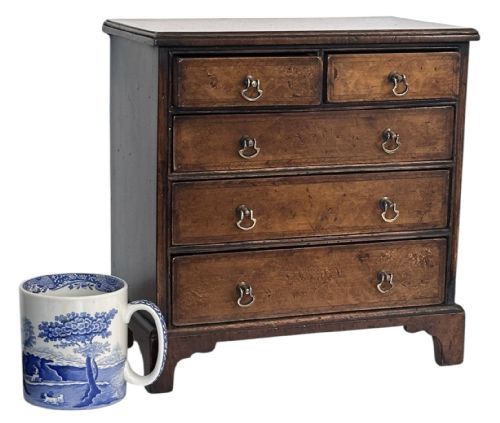


Mahogany Desktop Drawers
Mahogany desktop drawers bring small-scale storage and craftsmanship to a workspace, offering period character in compact formats like miniature chests and dressing mirrors.
Mahogany Desktop Drawers
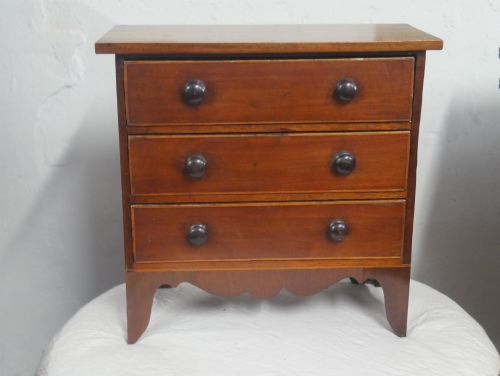
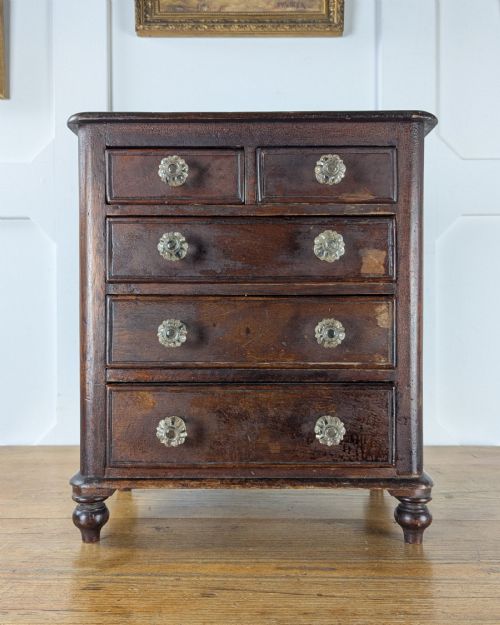
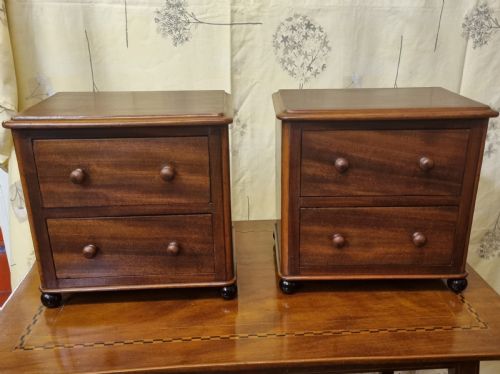
Mahogany desktop drawers encompass a range of compact furnishings designed for tabletop or bureau use, including miniature chests of drawers, apprentice pieces, and dressing table mirrors. These items appear across Georgian, Victorian, and Edwardian periods, reflecting the domestic and professional storage needs of past centuries.
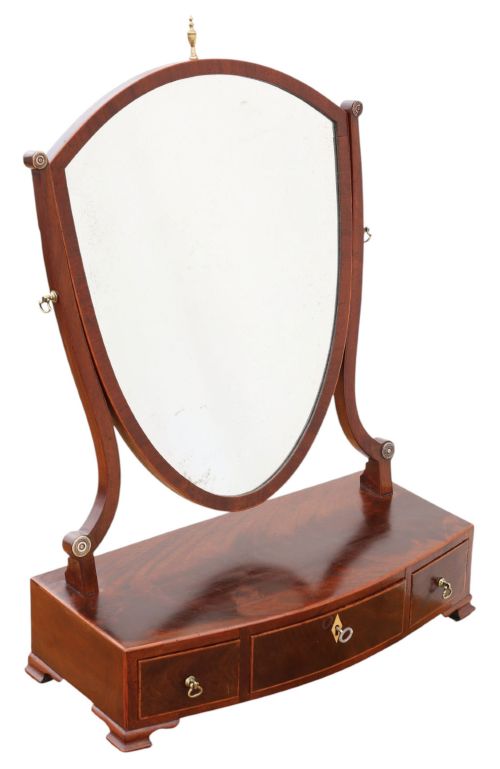
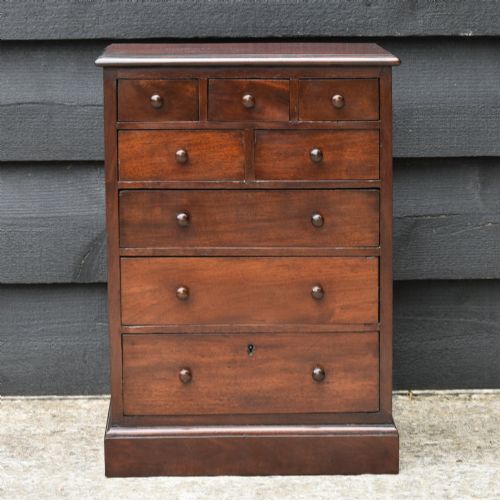
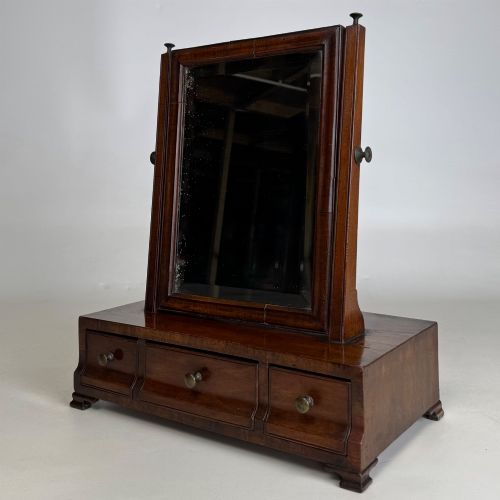
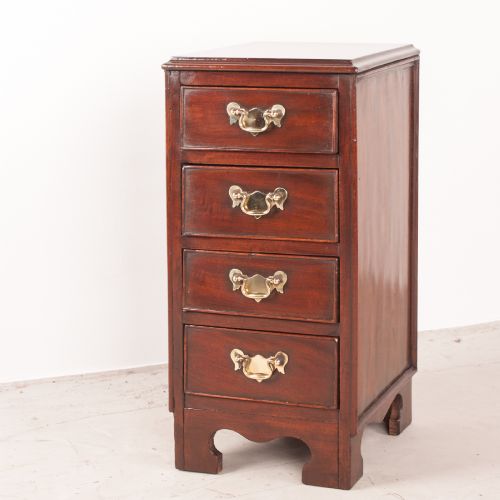
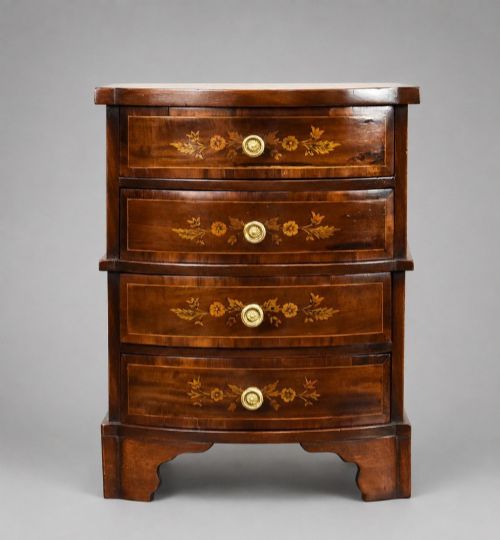
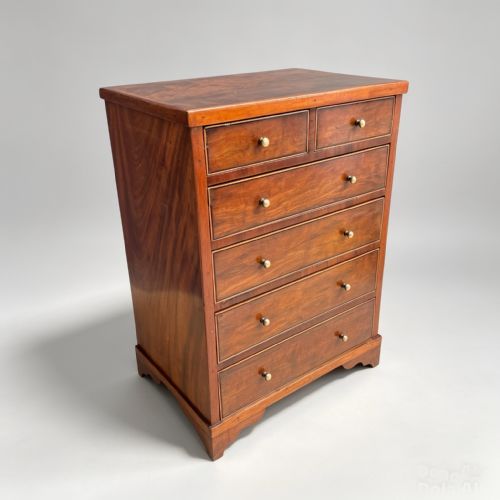
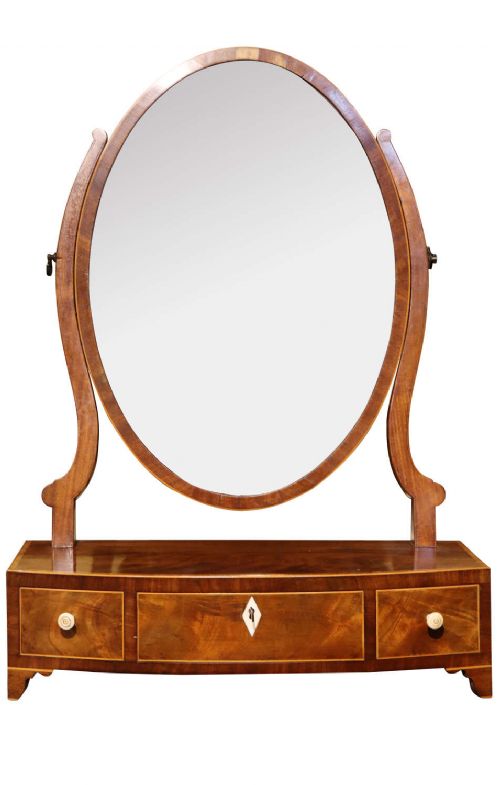
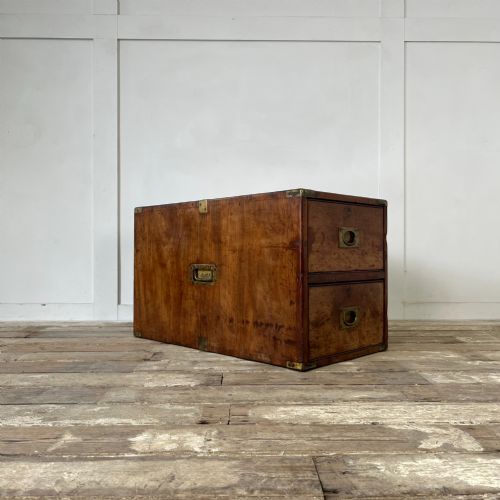
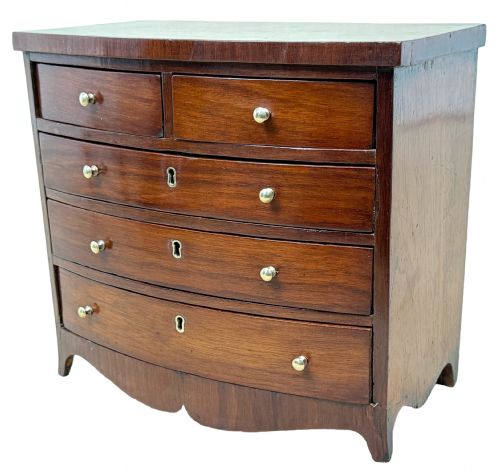
The most common formats on this page are miniature chests of drawers and swing dressing mirrors. Examples span straight-front, bow-front, and serpentine designs, alongside specialised pieces like specimen cabinets, watchmaker cabinets, and campaign chests fitted with brass mounts.
Materials and Construction
Makers utilised solid mahogany and mahogany veneers, frequently pairing the timber with secondary woods such as pine for drawer linings and carcase backs. Crossbanding, marquetry inlay, and wood inlay add decorative contrast to drawer fronts and mirror frames.
Hardware details rely on brass, seen in drop handles, escutcheons, and campaign mounts, while bone accents and glass components appear on specific mirrors and specialty desktop accessories.
Watchmakers left tiny traces of their trade inside, while hotel letterboxes witnessed a century of lost correspondence.
The Distinction in Quality
The standard of a piece rests in the precision of its timber selection, cabinet joinery, and patination. Superior examples display carefully matched mahogany grain, tight dovetail joints in the drawers, and original brass hardware that sits flush with the wood.
Proportion and decorative restraint divide utilitarian items from finer examples. Pieces displaying crisp crossbanding, delicate inlay, and well-balanced miniature scaling demonstrate the higher skill of period cabinet makers.
The Mahogany Desktop Drawers Glossary
- Apprentice piece
- A small-scale item demonstrating advanced skill created by a woodworker completing training. These often take the form of miniature chests of drawers.
- Crossbanding
- A decorative border of veneer laid perpendicular to the surrounding grain. This technique frames drawer fronts and mirror surrounds on Georgian and Victorian pieces.
- Marquetry
- Fitted patterns of wood veneer forming pictorial or geometric designs. Edwardian and Dutch examples frequently display this detailed surface work.
- Swing mirror
- A dressing glass mounted on upright pivots between vertical supports, allowing the angle of the glass to tilt. These sit upon tabletop box bases fitted with drawers.
- Wellington chest
- A tall, narrow chest of drawers secured by a hinged locking stile on one side. Miniature versions appear in Victorian formats.
Mahogany Desktop Drawers: Frequently Asked Questions
How do I date a mahogany tabletop chest?
Dating relies on examining construction methods, timber choice, and hardware styles across periods like Georgian and Victorian. Drawer linings, dovetails, and the type of mahogany indicate the manufacturing era.
Stylistic shifts, such as the transition from Georgian straight fronts to Victorian bow fronts, also help establish the date of creation.
Where were these small drawers used?
These pieces served functional roles on desks, dressing tables, and writing surfaces in homes and offices. They held documents, jewellery, watchmaking tools, and personal items.
Specialised versions like campaign chests and letterboxes were adapted for travel or specific institutional uses.
Are dressing mirror drawers functional?
The drawers set into the bases of dressing mirrors provide storage for small accessories, cosmetics, and trinkets. They operate independently of the pivoting mirror above.
Construction of these small drawers generally follows standard furniture standards with dovetailed joints.