
Mahogany Credenza Cupboard
A mahogany credenza cupboard is a substantial storage piece in rich timber, designed to anchor a dining room or hall with quiet authority.
Mahogany Credenza Cupboard
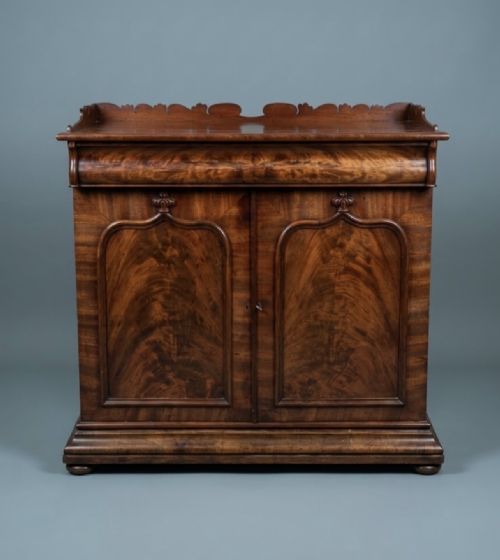
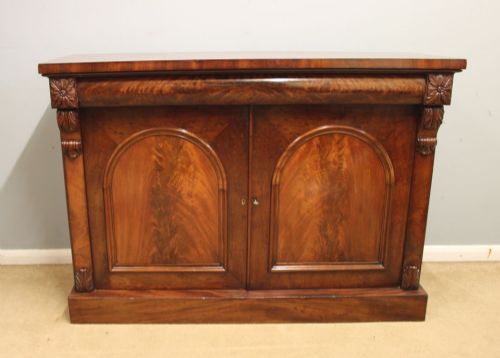
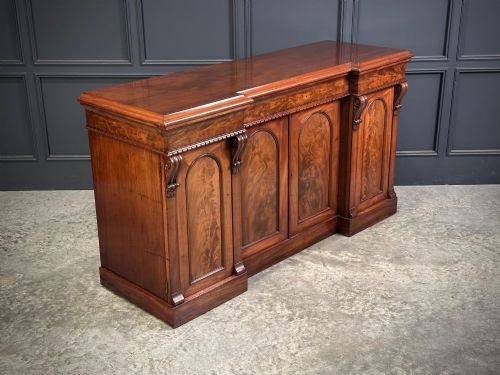
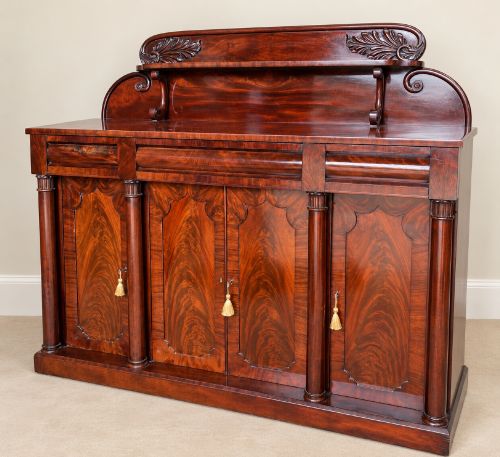
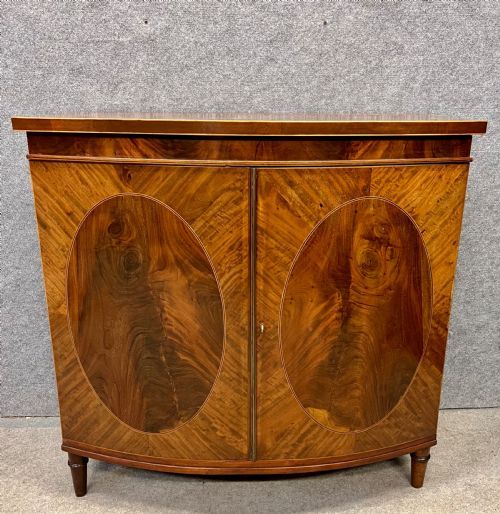
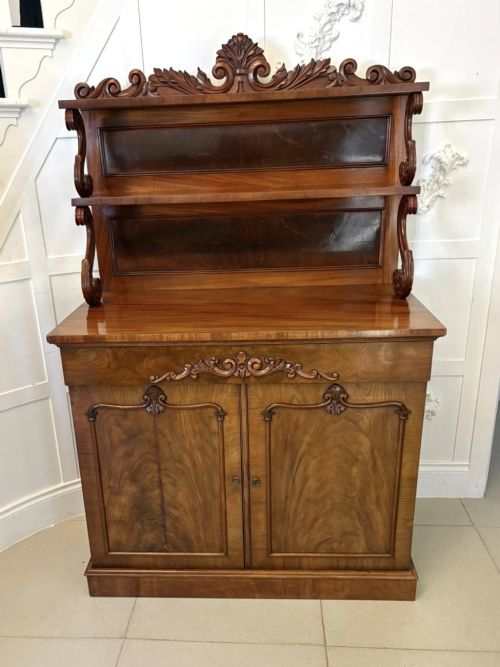
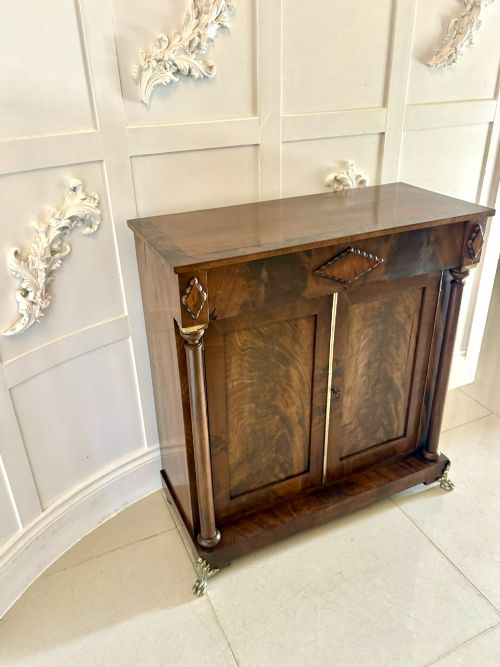
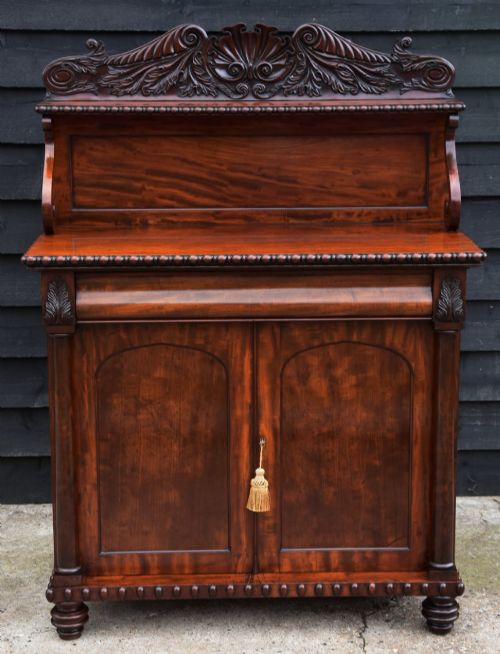
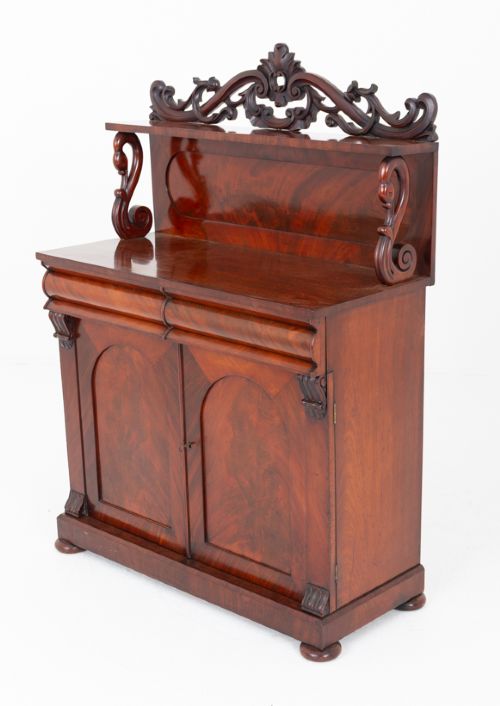
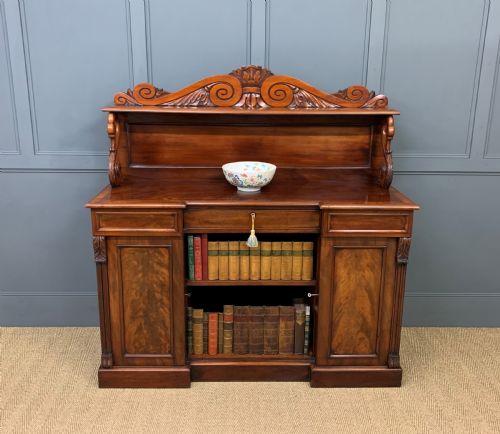
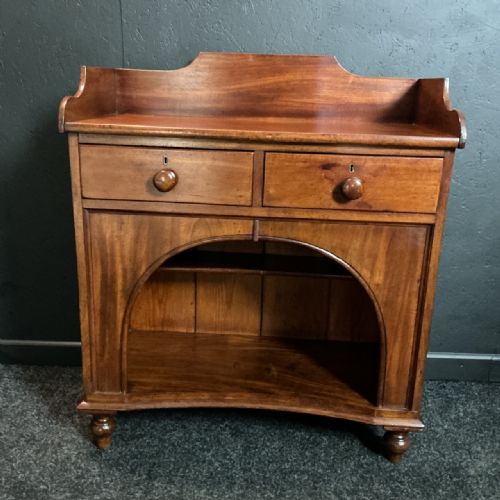
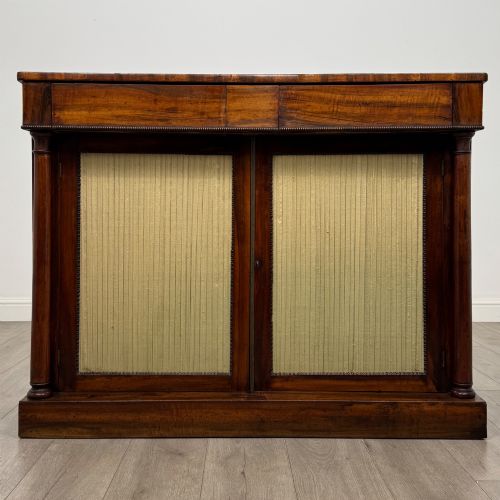
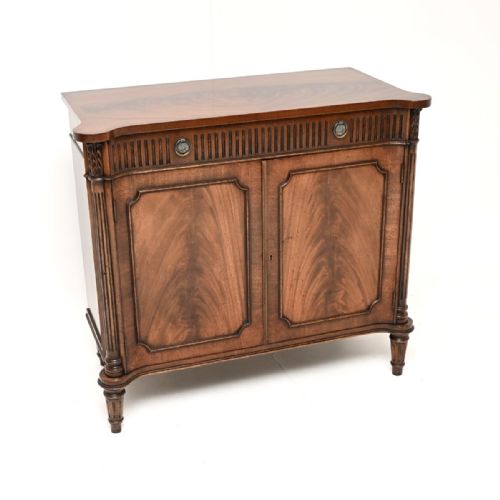
A mahogany credenza cupboard encompasses a variety of large storage furniture, including sideboards, chiffoniers, side cabinets, and bookcases found across multiple eras. These pieces originate predominantly from the Georgian, Regency, Victorian, and Edwardian periods, reflecting the shifting tastes in domestic entertaining and storage over two centuries. A buyer searching for this phrase is looking for a formal timber cabinet that combines display space or a flat surface top with enclosed shelving below.
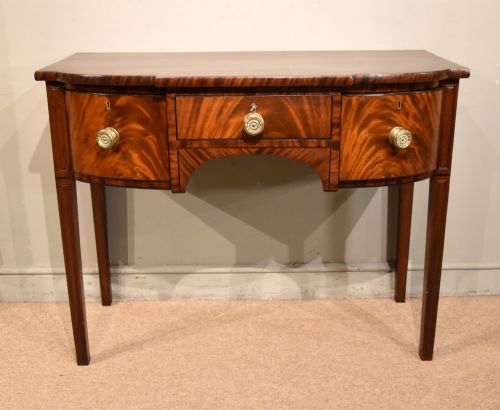
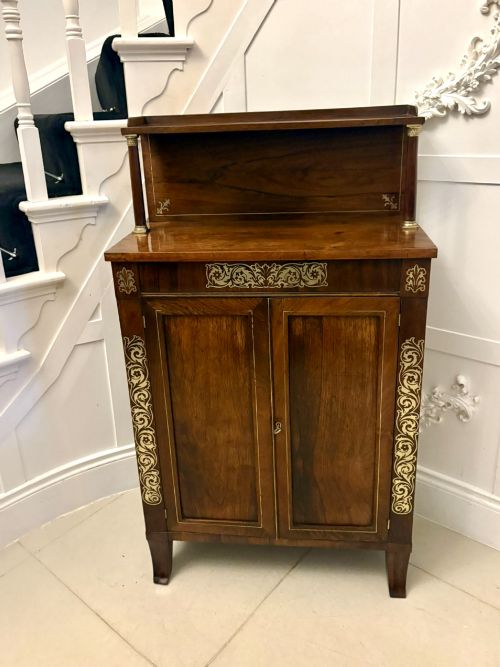
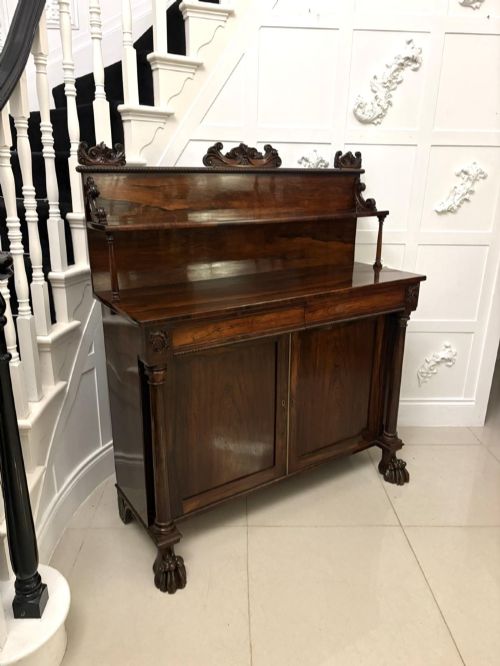
The version most commonly met on this page is the Victorian or nineteenth-century mahogany chiffonier or side cabinet, frequently featuring panelled doors and sometimes a tiered superstructure. Regency examples also appear regularly, often displaying clean architectural lines and figured grain, alongside Edwardian variations with delicate inlaid details. These pieces served historically to store linens, silver, or glassware in dining rooms and grand hallways, providing both utility and status.
Materials and Construction
Makers relied heavily on solid mahogany and flame mahogany veneer, often laid over secondary timbers to create striking patterned surfaces on door fronts and drawers. Brass mounts, handles, and occasional gallery rails provide contrast against the dark timber, whilst glass panels appear in upper display sections of cabinets and chiffoniers. Inlaid details incorporate lighter woods such as satinwood to accentuate the geometric or serpentine outlines characteristic of revival styles.
Cabinetmakers constructed these cupboards using traditional jointing methods, building carcases that housed panelled doors, drawers, and internal shelving. Veneers were hand-sawn and matched carefully across wide surfaces to exploit the natural figure of the grain, particularly in flame mahogany examples. Surface finishes were built up using traditional polishing techniques that deepened the natural reddish-brown tone of the wood over generations.
One listed Victorian piece includes a dog kennel base beneath the main cabinet structure.
Gradations in Quality
Quality in these pieces is dictated by the selection of the timber and the precision of the cabinetwork rather than sheer scale. The finest examples utilise highly figured flame mahogany or curl-mahogany veneer matched symmetrically across doors and drawers, showing depth and movement in the grain. Lesser examples rely on plain timber boards with simpler construction and minimal attention to visual symmetry.
The integration of secondary materials also separates standard production from exceptional cabinet-making. Superior pieces incorporate finely cast brass hardware, subtle satinwood stringing, and well-executed carved details that remain crisp and defined. Secondary timbers inside drawers and behind backboards reveal the standard of joinery maintained by the workshop, with cleanly cut dovetails marking out the better commissions.
Gillows·Maple and Co·Edwards and Roberts
The Mahogany Credenza Cupboard Glossary
- Chiffonier
- A low sideboard or cabinet, typically featuring enclosed cupboards below and sometimes a raised shelf or mirror tier above. They became popular in dining rooms during the nineteenth century for serving food and storing tableware.
- Flame mahogany
- A veneer cut from timber where the branch meets the trunk, producing a distinctive flickering flame-like pattern across the wood. Cabinetmakers prized this figure for principal display surfaces such as cabinet doors.
- Credenza
- A sideboard or buffet cabinet designed for storage and serving, often standing low to the floor with multiple doors. The term spans several stylistic revivals from the Georgian period through to the Edwardian era.
- Bow-front
- A convex, curved front profile applied to cabinets and sideboards. This curved form softened the linear geometry of dining room furniture during the Georgian and Regency periods.
- Satinwood
- A pale, durable exotic timber used primarily for stringing, banding, and marquetry inlays on darker mahogany surfaces. It provides sharp visual contrast against the deep reddish-brown body of the cabinet.
Mahogany Credenza Cupboard: Frequently Asked Questions
What is a mahogany credenza cupboard used for?
These pieces served historically in dining rooms and grand reception spaces to store tableware, linens, and bottles while providing a surface for serving food.
Today, they function well in modern interiors as media consoles, hallway storage units, or dining room servers that conceal clutter behind heavy timber doors.
How do I tell a Regency piece from a Victorian one?
Regency cabinets generally exhibit restraint, featuring clean architectural lines, classical proportions, and understated brass mounts reflecting neoclassical tastes.
Victorian examples tend to be heavier, often incorporating richer carved details, panelled doors, and occasionally mirrored superstructures or tiered upper shelves.
What is flame mahogany?
Flame mahogany is a decorative wood veneer harvested from the point where a branch joins the main tree trunk. This specific cut creates a dramatic, rippling flame effect across large surfaces.
Cabinetmakers reserved this timber for the most prominent areas of a piece, such as central cabinet doors and drawer fronts.
How should I care for antique mahogany furniture?
Maintain a stable indoor environment away from direct sunlight and extreme temperature fluctuations to prevent the timber and veneer from splitting.
Dust regularly with a soft, dry cloth and apply a traditional wax polish sparingly to preserve the depth of the finish.