


Mahogany Corner Side Table
A mahogany corner side table brings compact warmth and clever geometry to neglected corners.
Mahogany Corner Side Table
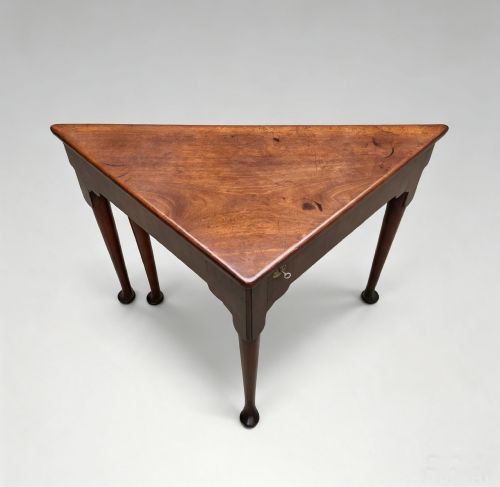
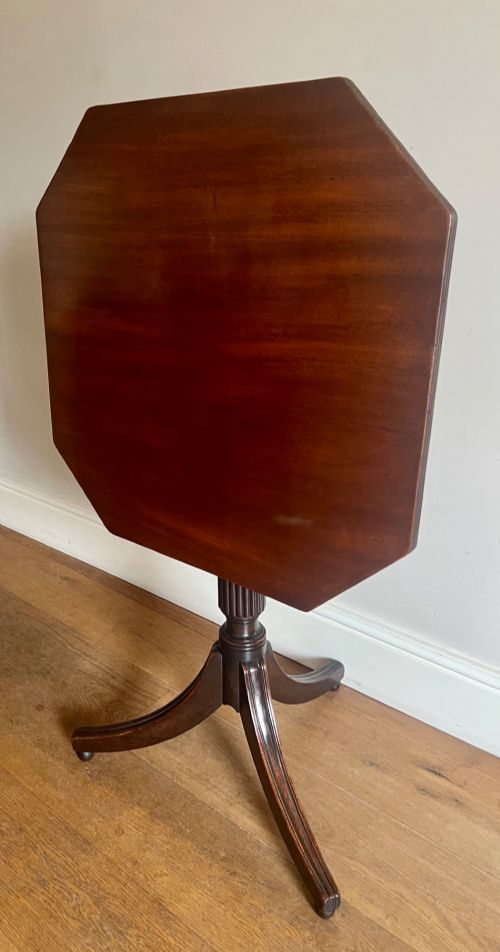
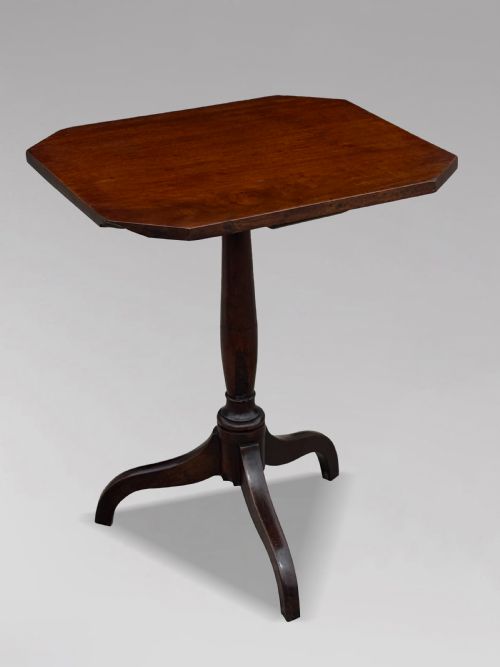
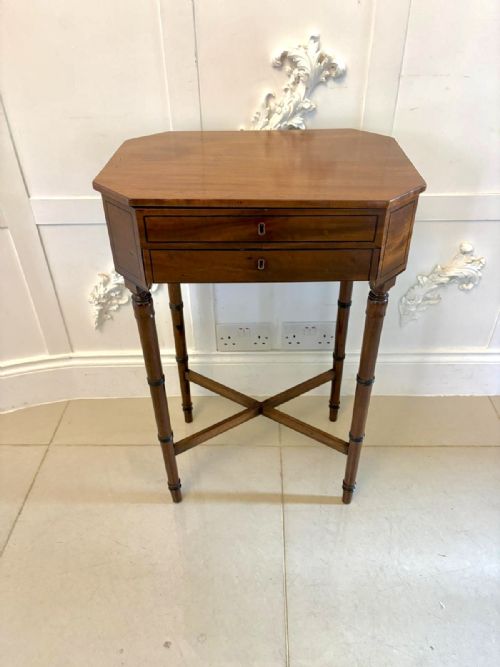
A mahogany corner side table represents a practical solution for awkward domestic spaces, turning empty angles into functional surfaces. The selection spans compact triangular surfaces and folding tea variants designed to fit snugly against room junctions.
Most examples hail from the Georgian and Edwardian eras, bridging the gap between utilitarian washstands and elegant display ledges. Buyers encounter everything from simple drop-leaf designs to tiered occasional pieces intended for lamps and plants.
The fundamental appeal lies in timber conservation and efficient design, letting homeowners utilise dead space without crowding a room. These pieces demonstrate how period cabinetmakers solved spatial problems with considerable grace.
Materials and construction
Makers relied principally on solid mahogany and rich veneers, frequently accented with satinwood, boxwood, and fruitwood stringing. Brass hardware and occasional leather inserts added functional durability and textural contrast.
Joinery methods prioritized stability in angled formats, utilising clever folding mechanisms, tripod bases, and tiered supports. Cabinetmakers balanced dense tropical timber with lighter secondary woods to ensure manageable weight.
Listings feature Georgian, Edwardian, and Regency periods, utilising mahogany alongside satinwood, fruitwood, and brass.
Markers of excellence
Superior execution shows in the crispness of carved details, the subtlety of wood grain selection, and the tightness of corner joints. Master workshops achieved fluid movement in folding tops and drop leaves without relying on modern fasteners.
Patina and surface depth separate standard production from exceptional survival, revealing decades of careful waxing and handling. The best iterations maintain structural integrity alongside original brass fittings and uncompromised timber thickness.
The Mahogany Corner Side Table Glossary
- Campaign
- Furniture constructed in sections with recessed brass handles for military transport. These pieces prioritize portability and robust construction.
- Drop-leaf
- A table featuring hinged flaps that fold down to save floor space. This mechanism allows the surface area to expand when required.
- Tripod table
- A small freestanding table supported by a pillar above three spreading legs. This design prevents rocking on uneven historical floors.
- Whatnot
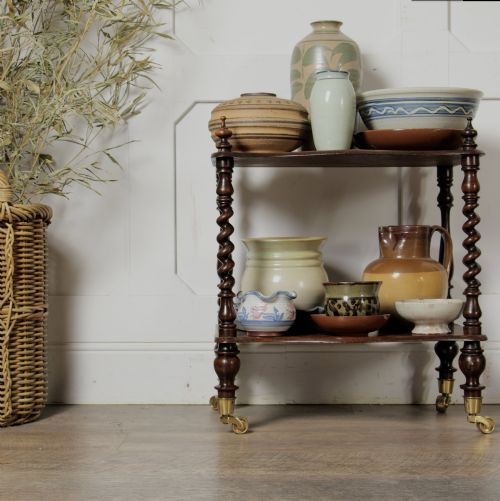
- A set of open shelves for displaying ornaments or books. Multiple tiers maximise vertical display capacity in compact rooms.
- Stringing
- Thin inlaid lines of contrasting timber used to outline panels and edges. This decorative technique highlights the structural geometry.
Mahogany Corner Side Table: Frequently Asked Questions
Where should I place a corner table?
These tables find a natural home in dead architectural angles, stair landings, and narrow hallways where standard rectangular furniture blocks traffic. They turn neglected junctions into functional display areas for lamps or small decorative objects.
The triangular footprint allows the piece to sit flush against two adjacent walls, anchoring the space visually. Placing one in a corner creates a balanced focal point without encroaching on the room's central floor plan.
How do I identify a Georgian piece?
Georgian examples exhibit dense, richly patinated mahogany timber, hand-cut joinery, and restrained decorative carving rather than heavy factory ornamentation. Look for traditional construction methods such as hand-cut dovetails and pegged joints.
The proportions tend to favor functional elegance, reflecting the domestic requirements of the eighteenth century. Secondary woods like oak or pine often appear in the hidden structural elements.
Are these tables sturdy enough for daily use?
Period tables use robust hardwoods and time-tested joinery that generally provides excellent daily stability. Three-legged tripod variants and fixed-leg corner designs handle everyday lamp or plant placement with ease.
Care should be taken with folding leaf mechanisms and antique hinges, which benefit from gentle handling. Avoiding excessive weight on extended leaves ensures the joints remain tight for generations.
What is the difference between an occasional table and a side table?
Occasional tables are typically lighter, portable pieces designed to be moved around a room as needed for specific tasks. Side tables generally maintain a more permanent station against a wall or in a corner.
Both categories overlap significantly in historic inventories, especially within corner formats designed for specific spatial niches. The distinction usually rests on whether the piece was built for mobility or fixed placement.