


Mahogany Console Side Table
A mahogany console side table brings architectural presence and rich grain to a hallway or reception room.
Mahogany Console Side Table
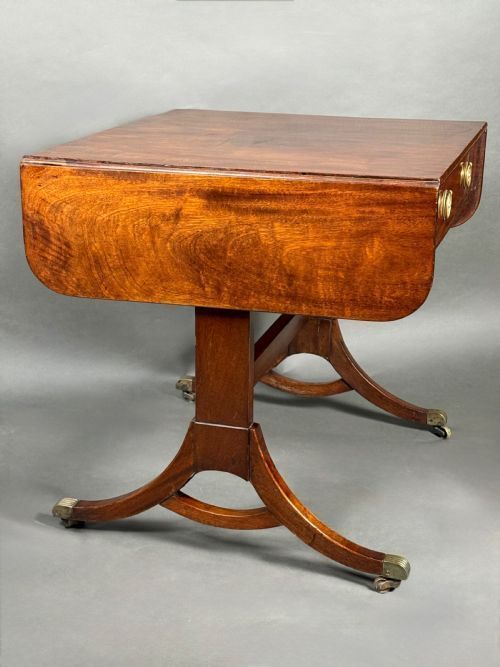
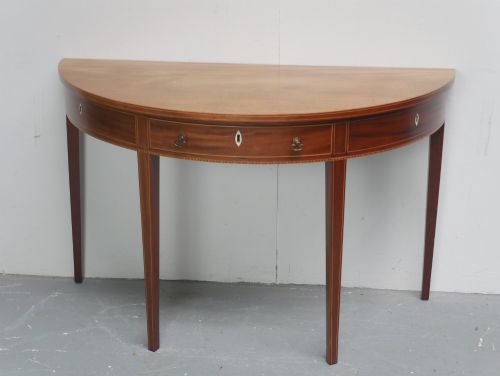
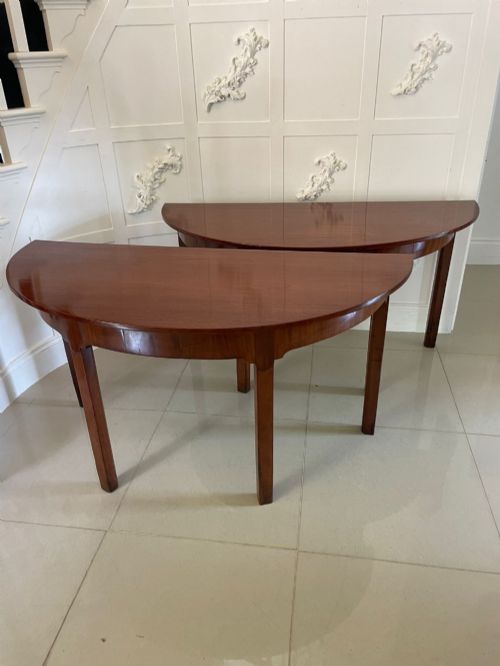
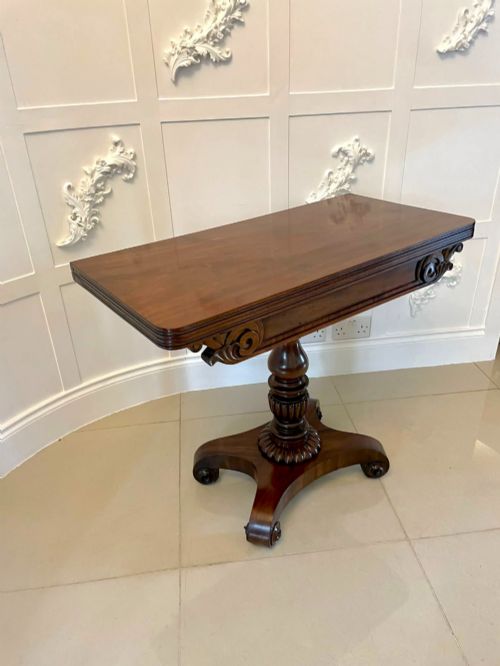
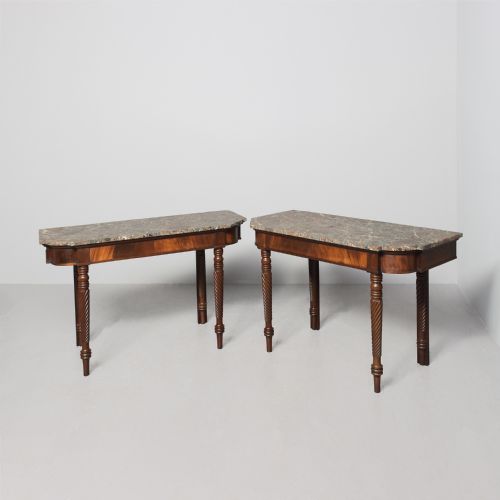
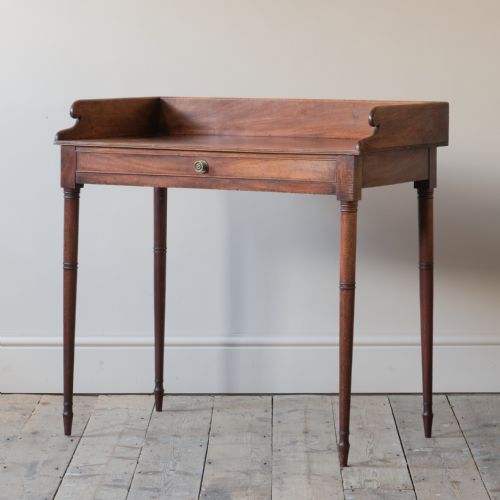
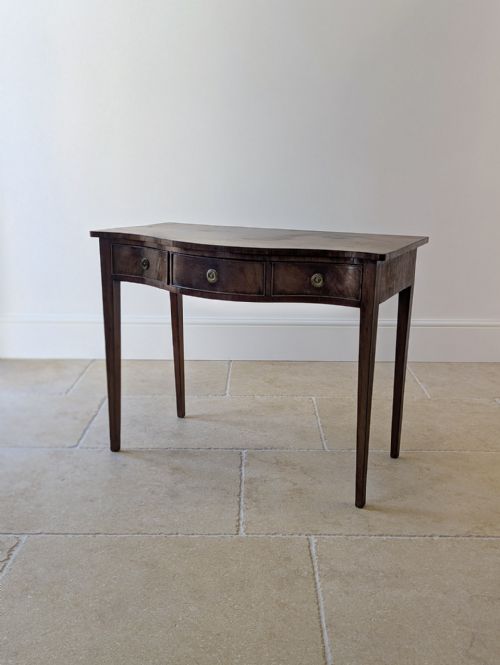
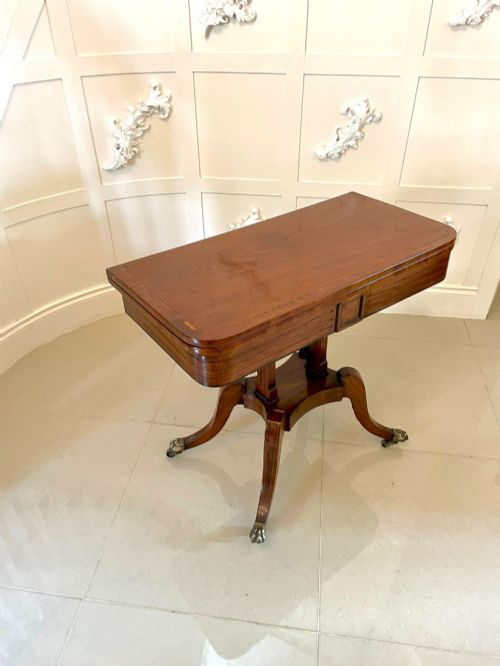
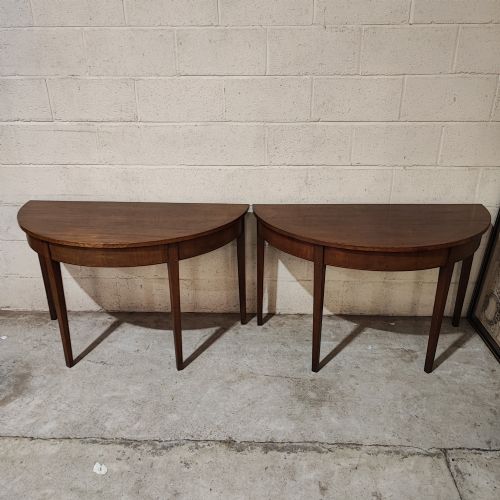
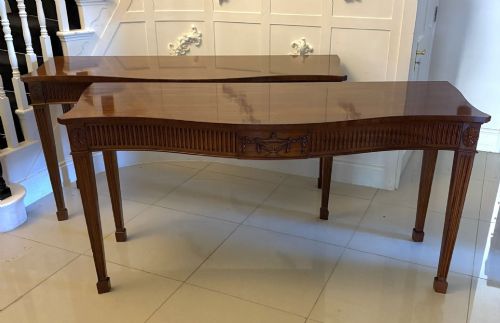
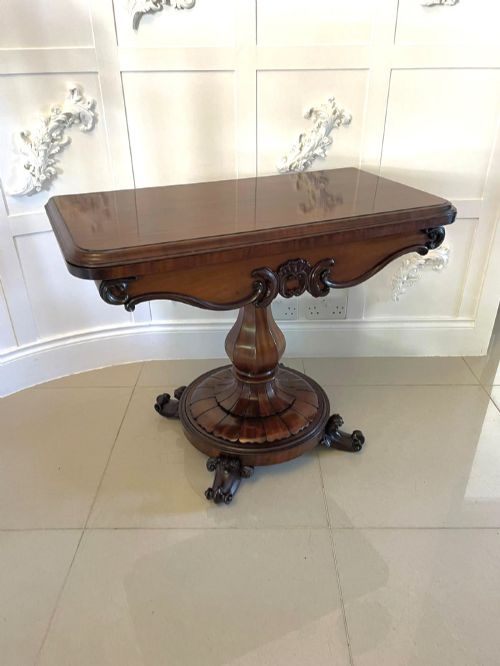
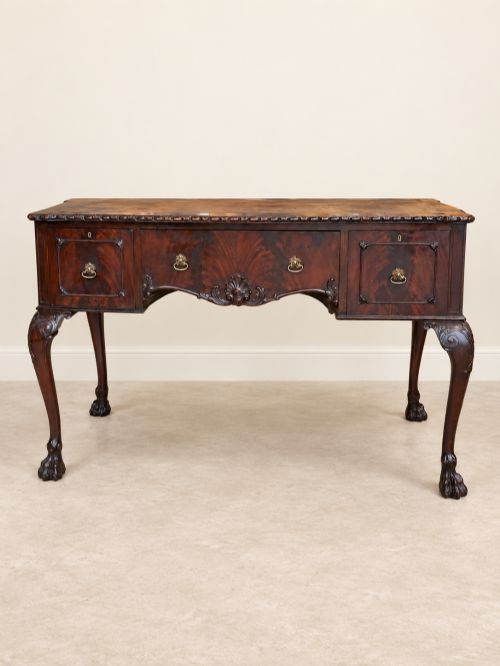
A mahogany console side table serves as a functional and decorative surface, originating primarily in Georgian, Regency and Victorian eras to stand against a wall. The pieces appearing in this selection frequently take the form of demi-lune shapes, fold-over tea tables, writing desks and rectangular console formats.
How they were made
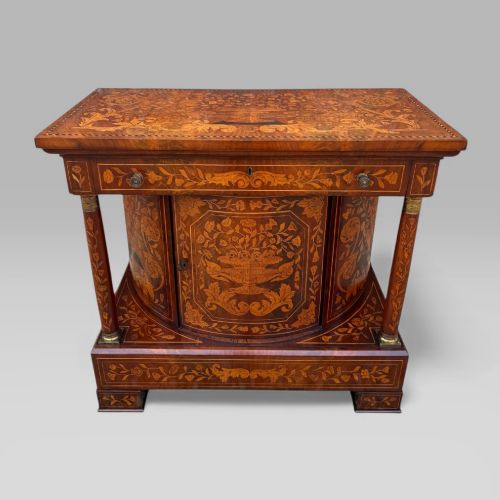
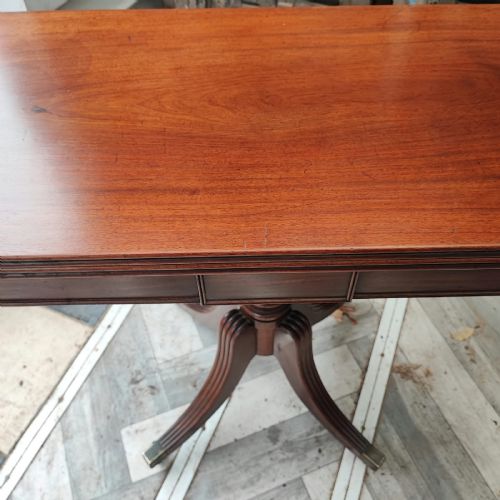
Cabinetmakers constructed these tables using solid mahogany and applied wood veneers, frequently highlighting flame mahogany figures across prominent tabletops and drawer fronts. Workshops incorporated secondary timbers for internal framing while integrating brass hardware, marble inserts and glass components.
Decorative detailing relies on precision techniques including wood inlay, marquetry, reeded legs, sabre legs and neoclassical carving. Joinery methods such as concertina actions for card tables and traditional drawer construction demonstrate the structural demands placed upon these utilitarian yet refined objects.
Listings feature mahogany console side tables spanning from the 18th century through the Edwardian period, incorporating marble tops and brass fittings.
What varies in quality
The degree of distinction in a mahogany console side table rests upon the selection of timber figure, such as highly figured flame mahogany, and the crispness of applied carving or inlay. Exemplary pieces display balanced proportions, symmetrical wood grain matching, and refined structural details like reeded or sabre legs.
Provenance and stylistic cohesion also dictate standing, with matched pairs and tables attributed to known workshops or specific design idioms commanding greater attention. The integration of high-grade supplementary elements, including original marble tops or sophisticated mechanical actions, elevates an individual piece above standard utilitarian production.
Gillows·Maison Millet
The Mahogany Console Side Table Glossary
- Demi-lune
- A half-moon shape commonly utilised for console and side tables designed to sit flush against a wall.
- Flame mahogany
- A distinctive wood veneer pattern featuring flickering, flame-like grain figures prized for its decorative visual impact.
- Marquetry
- The art of applying pieces of veneer to a structure to form decorative patterns and pictorial designs.
- Concertina action
- An expanding frame mechanism used on folding tables to support the open top evenly.
- Reeded
- A decorative moulding consisting of parallel convex rows carved directly into the wood leg or frieze.
Mahogany Console Side Table: Frequently Asked Questions
Where should I place a console table?
These tables find their traditional home against a wall in entrance halls, living rooms or dining spaces where surface area is required without blocking foot traffic. Their shallow profiles allow them to occupy narrow corridors effectively.
Pairs of these tables often stand beneath mirrors or flank architectural openings to create balanced focal points in a reception room.
How do I identify a Georgian table?
Georgian pieces generally exhibit restrained classical proportions, solid mahogany construction, and understated decorative elements such as subtle stringing or straightforward tapered legs. Earlier examples from this span lean toward rich patination and heavy timber sections.
Checking the secondary woods inside drawers and the nature of the joinery helps confirm the period of manufacture alongside the prevailing aesthetic style.
What is the difference between a side table and a console?
A console table is specifically designed to stand against a wall, sometimes requiring wall fixing or featuring flat backs when made as demi-lune shapes. Side tables are traditionally free-standing items finished on all sides.
Over time, these definitions have overlapped significantly, with many antique pieces functioning interchangeably in modern interiors.
How do I care for mahogany surfaces?
Maintaining mahogany requires protection from direct sunlight and extremes of humidity that can cause wood veneer to dry out or split. Regular dusting with a soft, dry cloth preserves the finish without requiring heavy polishes.
Applying occasional specialist wax helps nourish the timber and maintain the natural lustre accumulated over centuries.