

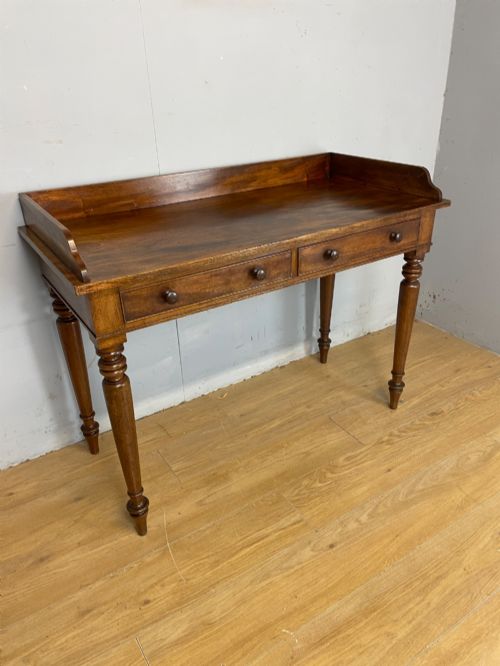
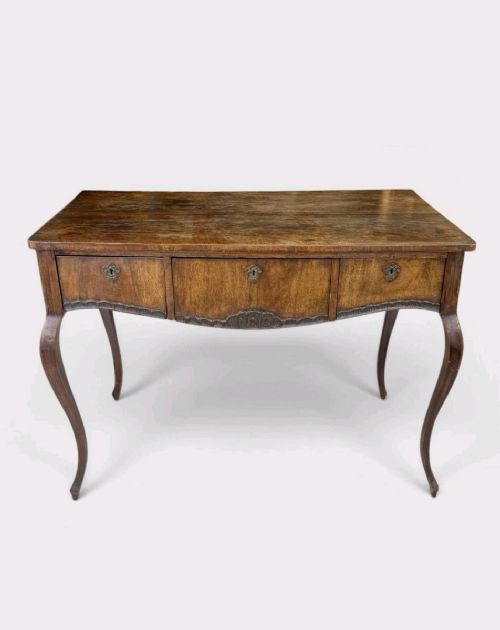
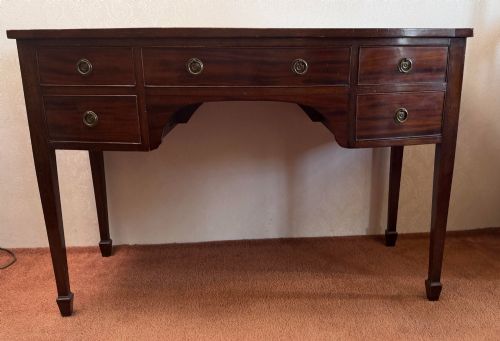
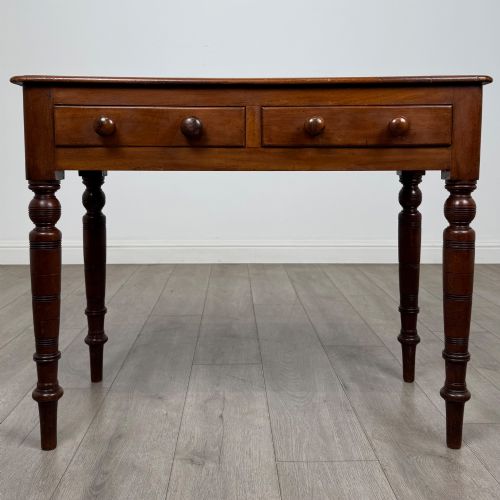
Mahogany Console Desk
Mahogany console desk pieces bring tactile warmth and structured utility into a room, uniting the function of a writing surface with the slender elegance of a hall table.
Mahogany Console Desk
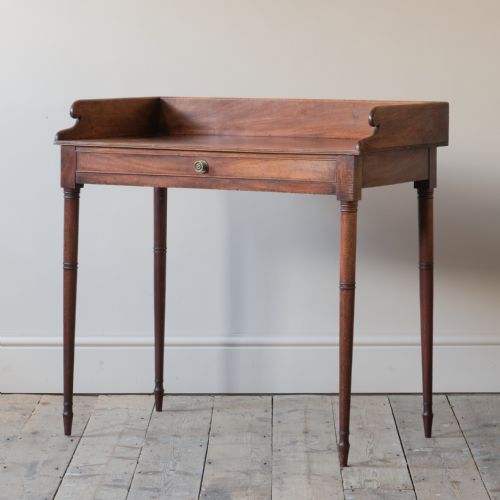
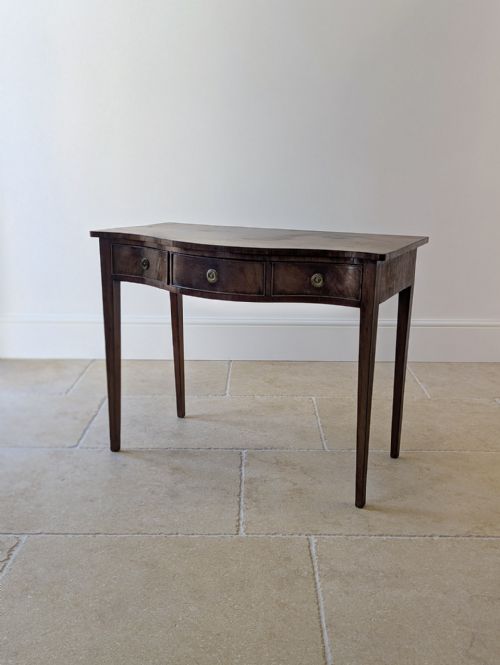
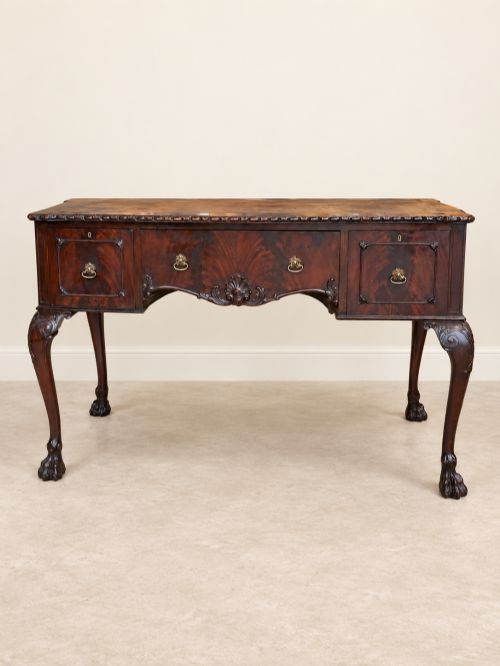
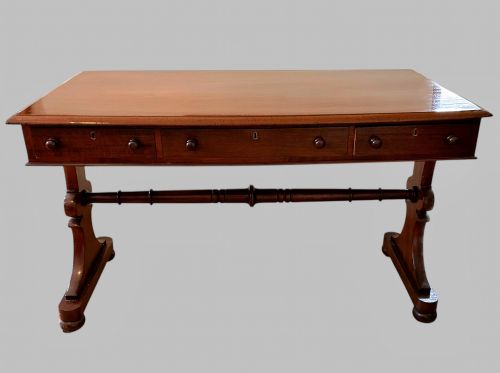
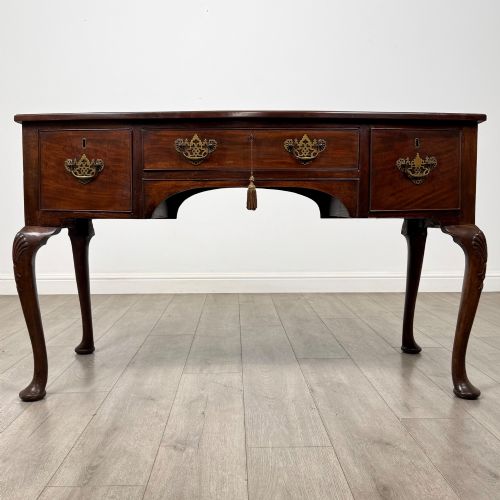
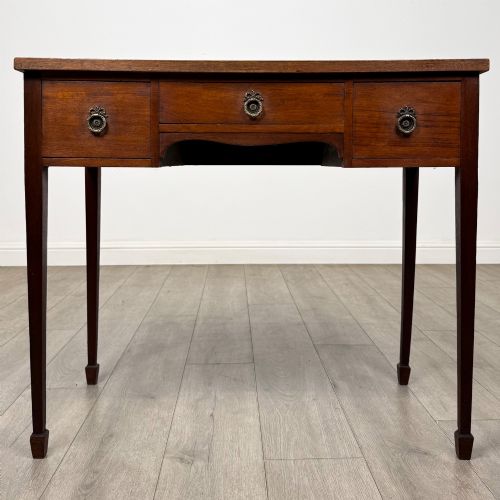
A mahogany console desk bridges the boundary between a side table and a workspace, designed to stand against a wall or float behind a sofa. When searching for this form, you meet pieces that span the Georgian, Regency, Victorian, and Edwardian periods.
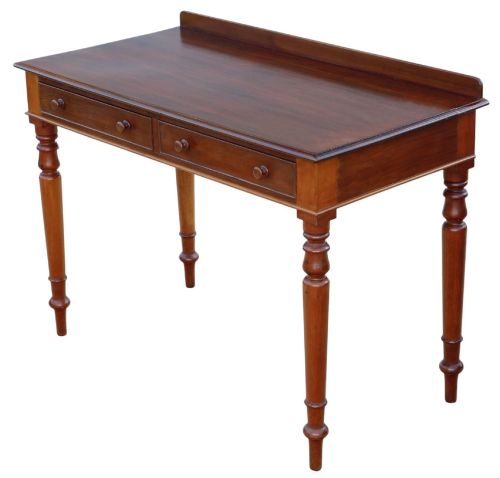
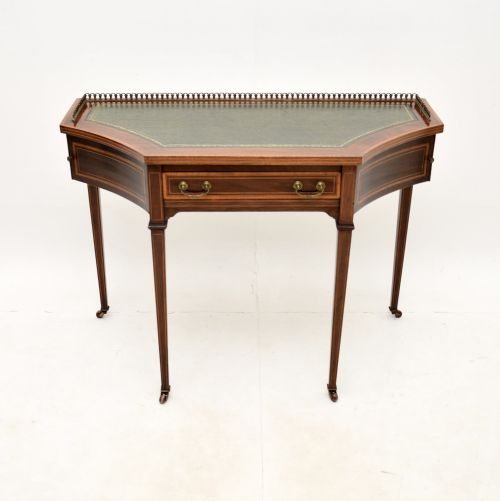
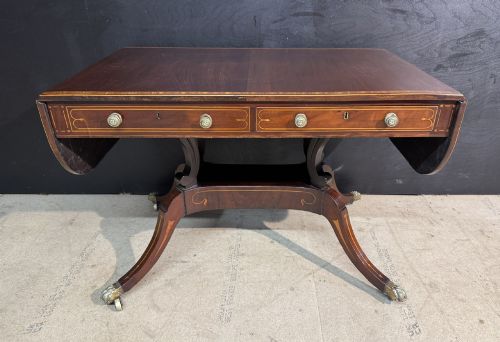
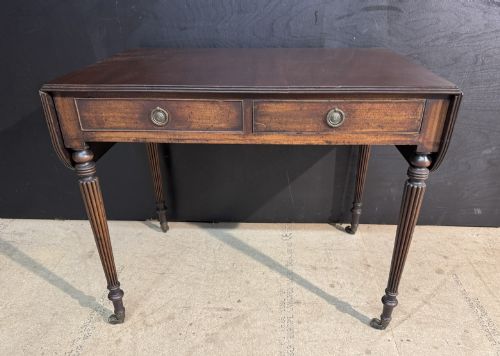
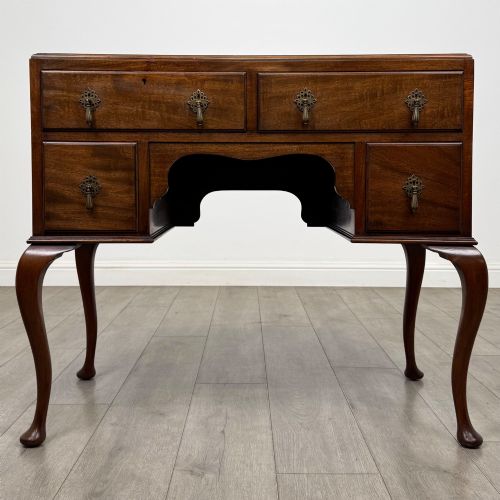
The objects appearing here take many functional shapes, including writing tables, sofa tables, lowboys, washstands, and side tables. Georgian examples emphasise proportion and clean lines, whilst Victorian and Edwardian pieces frequently introduce drawers, leather inserts, and subtle inlay work.
How they were made
Cabinet makers constructed these pieces primarily from solid mahogany and flame mahogany veneer, often enhanced by contrasting timbers such as satinwood and boxwood for decorative inlay. Structural stability relied on dense secondary woods like oak, whilst brass fittings provided functional hardware for drawers and castors.
Surfaces were frequently finished with inset leather writing panels, hand-polished with wax to highlight the natural grain and depth of the timber. Joinery techniques varied from simple dovetails in drawer construction to turned barley twist legs and delicate tapering supports.
Mahogany Console Desk Retail Price Guide 2026
Typical asking prices for mahogany console desk among the pieces listed under this phrase on Sellingantiques today, from the lower quarter to the upper quarter. They describe what is for sale here now, not the wider market.
Barley twist legs make occasional appearances, adding a satisfyingly jaunty swirl to otherwise sober administrative furniture.
What varies in quality
The distinction between ordinary and exceptional pieces lies in the selection of the timber and the precision of the construction. Superior examples display symmetrical flame mahogany veneers and crisp, hand-cut inlay work that remains flush with the surrounding wood.
Subtlety of proportion and the integrity of the original hardware separate better pieces from standard workshop output. Refined edge moulding, tight drawer dovetailing, and the use of secondary woods like oak indicate a higher standard of British craftsmanship.
Heal and Son·Gillows
The Mahogany Console Desk Glossary
- Flame mahogany veneer
- A thinly sliced section of timber exhibiting a distinctive flickering flame pattern, prized for its decorative visual impact on drawer fronts and tabletops.
- Lowboy
- A small traditional side table featuring one or more rows of drawers, commonly used as a dressing table or writing desk during the Georgian period.
- Sofa table
- A rectangular table designed to stand in front of a sofa, typically featuring drop leaves at either end and twin under-tier supports or trestle legs.
- Demi-lune
- A half-moon shape characteristic of side desks and console tables designed to fit flush against a wall in smaller spaces.
- Inlay
- A technique where contrasting woods such as satinwood and boxwood are embedded into the primary mahogany surface to create geometric or floral patterns.
Mahogany Console Desk: Frequently Asked Questions
What is a mahogany console desk used for?
These pieces function as compact writing desks, hallway landing tables, or serving surfaces depending on their drawer configuration and depth. Their narrow profile allows them to fit into circulation spaces where a standard desk would block movement.
Historically, they provided a stable surface for correspondence or reading while occupying minimal floor space against a wall. Today, buyers use them in living rooms and studies to combine workspace utility with traditional furniture display.
How do I identify a Georgian piece?
Georgian furniture relies on balanced proportions, restrained decorative carving, and structural honesty without excessive ornamentation. Look for hand-cut dovetails, solid mahogany drawer linings, and tapered or bracket feet.
Pieces from this era often feature simpler brass pull handles and warm, dark patination developed through centuries of polishing.
Are these desks suitable for daily laptop work?
Many of these tables offer adequate depth and height for modern writing tasks, though kneehole clearance varies significantly by period. Georgian and Regency models can have lower drawer rails that limit legroom compared to later Victorian iterations.
Checking the internal drawer dimensions and floor-to-apron clearance ensures comfort when seated at the desk for extended periods.
What distinguishes Victorian models from earlier eras?
Victorian pieces tend to be heavier in construction, frequently incorporating multiple drawers, turned legs, and richer flame mahogany veneers. They often feature inset leather writing surfaces framed by delicate gilt tooling.
Cabinet makers in this period also utilised broader mechanical improvements, resulting in smoother drawer runners and sturdier internal framing.