

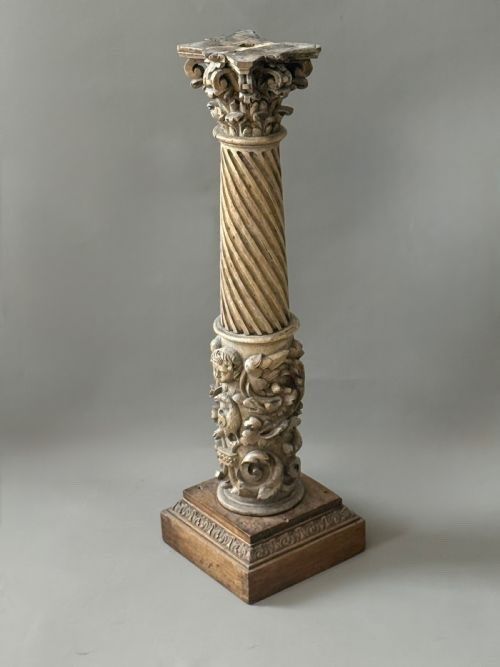


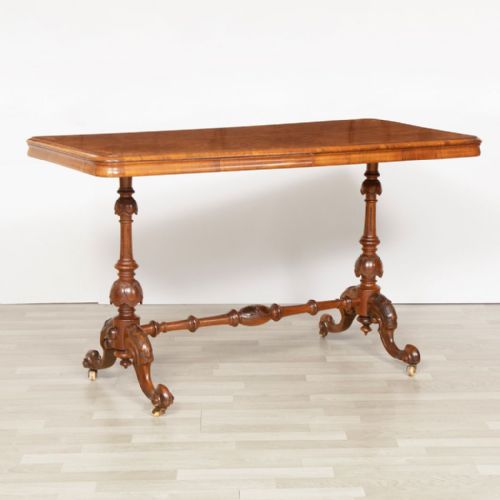


Carved Pillar Table
These carved pillar table pieces are substantial domestic timbers built to anchor a room, and you want one for their sturdy central supports and rich period presence.
How these pieces were constructed
The makers relied primarily on dense timbers such as mahogany, oak, walnut and burr walnut, shaping the central pillars with intricate hand carving. Joinery methods matched the heavy structural demands of a single central column supporting a wide top.
Surfaces often show figured veneers, inlay, or simple polished wood finishes that highlight the natural grain. Supporting structures utilise robust tripod bases or heavy octagonal pillars to ensure stability.
What separates the finest examples
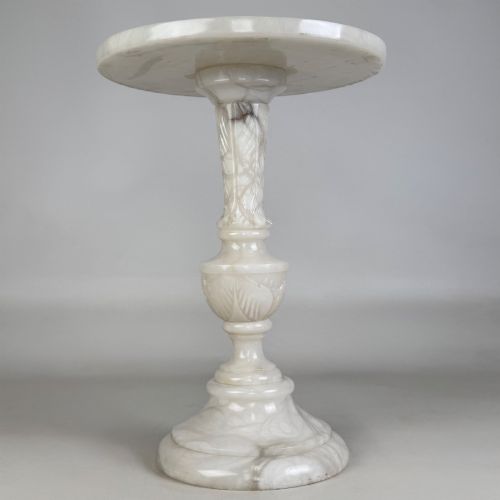
Quality rests in the depth and sharpness of the hand carving on the pillar column, where crisper foliage or fluting denotes superior bench work. The choice of timber also dictates grade, with highly figured burr walnut and dense, rich mahogany marking out the better examples.
Construction integrity defines the lower end from the top tier, particularly how firmly the central pillar connects to the base and the tabletop. Better pieces maintain structural alignment without wobble across heavy dining formats or tilting mechanisms.
Carved Pillar Table Retail Price Guide 2026
Typical asking prices for carved pillar table among the pieces listed under this phrase on Sellingantiques today, from the lower quarter to the upper quarter. They describe what is for sale here now, not the wider market.
Some circular tables feature tilting tops designed to snap upright, storing flat against the carved pillar to save space when tea was finished.
The Carved Pillar Table Glossary
- Pillar column
- The central vertical timber support that carries the weight of the tabletop and bears the primary carved ornament.
- Tripod base
- A three-legged support system commonly found beneath smaller circular tables to distribute weight evenly.
- Breakfast table
- A large circular or oval table designed for morning use, typically featuring a tilt-top mechanism mounted on a central pillar.
- Snap-top
- A hinged tabletop mechanism allowing the surface to fold vertical against the pillar when not in use.
- Burr walnut
- A highly figured timber harvested from walnut tree growths, prized for its swirling grain patterns on table surfaces.
Carved Pillar Table: Frequently Asked Questions
What is a carved pillar table used for?
These tables serve primarily as dining surfaces, breakfast tables, or occasional tea tables depending on their scale and top configuration. The central column design allows maximum legroom around the perimeter.
Larger twin-pillar and multi-pillar variants suit principal dining spaces, while smaller tripod versions function as side tables or tea tables in sitting rooms.
How do I identify the period of a table?
Period identification relies on timber choice, carving styles, and structural mechanics such as tripod bases versus heavy platform feet. Regency and William IV pieces often display crisp classical motifs like reeding and bold mahogany grain.
Earlier eighteenth-century examples lean towards simpler tripod forms with restrained column turning, while Victorian items frequently incorporate burr walnut veneers and richer inlay work.
How do I care for mahogany and walnut surfaces?
Polished timber surfaces require regular dusting with a soft, dry cloth and occasional treatment with appropriate traditional wax. Direct sunlight and sudden changes in room humidity must be avoided to prevent timber splitting.
Liquid spills should be wiped away immediately to protect the polish and underlying veneer from staining or lifting.
Are these tables stable on uneven floors?
The stability depends heavily on the base configuration, with tripod designs naturally adjusting to uneven floorboards better than four-legged pedestal bases. Multi-pillar dining tables rely on balanced floor placement and properly adjusted feet to prevent rocking.
Heavier oak and mahogany variants offer substantial weight that keeps them grounded once positioned correctly in a room.