




Mahogany Coat Stand
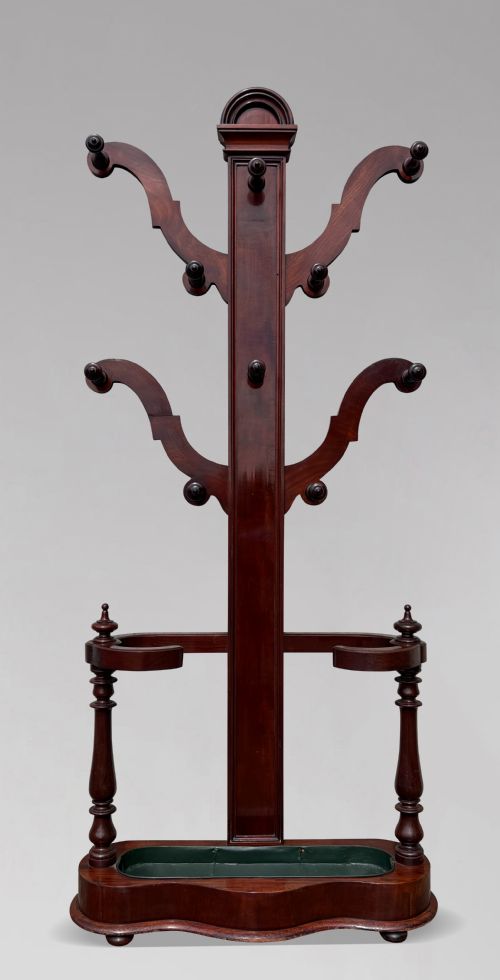
A mahogany coat stand brings architectural presence and practical utility to an entrance hall.
Mahogany Coat Stand
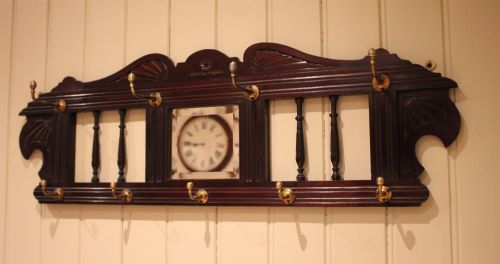
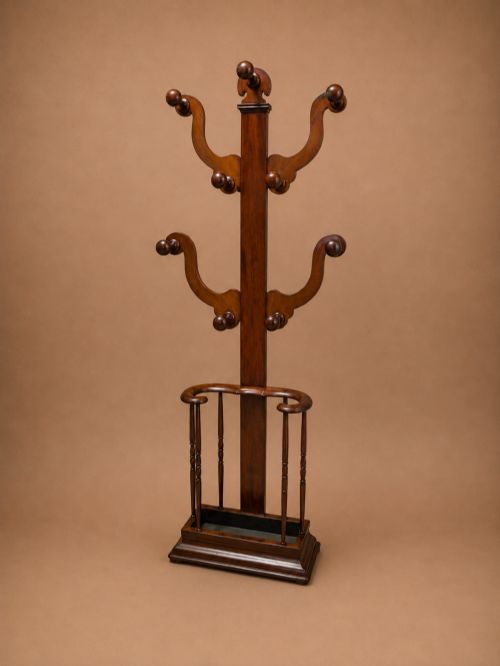
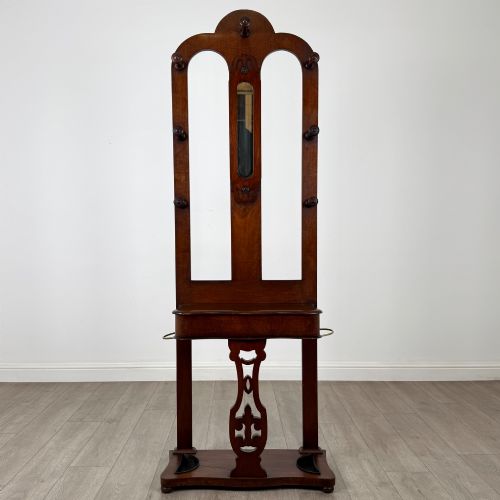
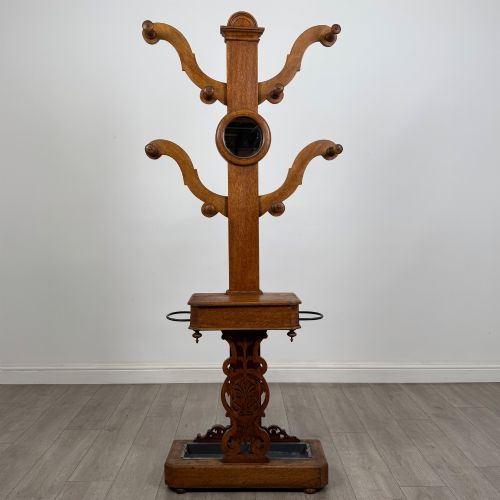
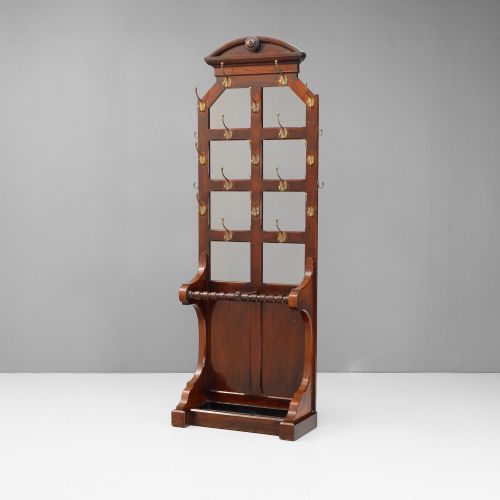
A mahogany coat stand serves primarily as a grand piece of hallway furniture designed to organise outerwear, hats, and walking implements. The selections span compact tripod configurations, revolving top frames, and substantial hall stands equipped with umbrella wells and mirrors.
The archive and current listings show strong representation from the Victorian and Edwardian eras, alongside Regency examples and Arts and Crafts interpretations. Pieces often double as hall trees or incorporate marble shelves and brass hooks.
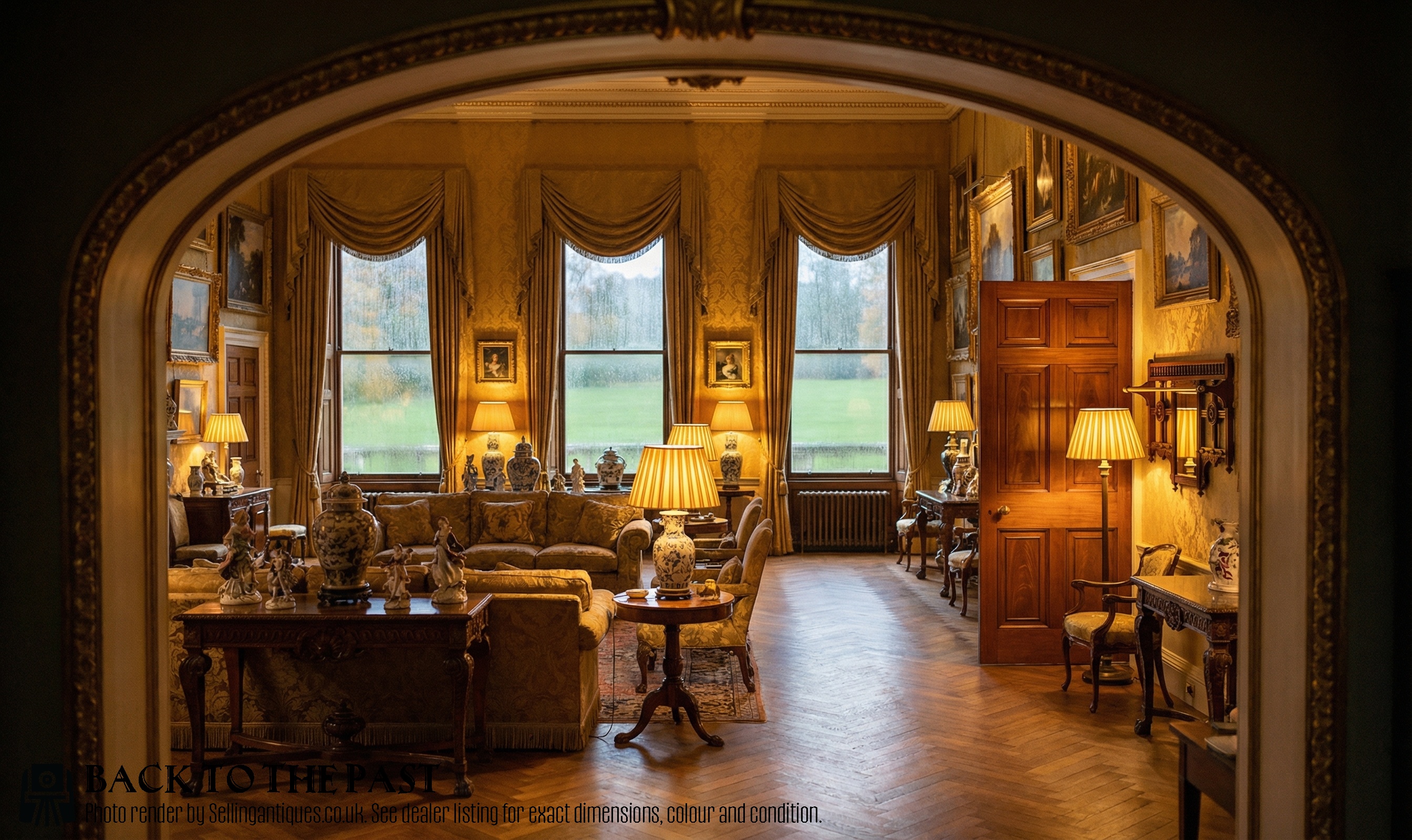
Buyers encounter distinct regional and period traits, ranging from early Victorian column designs to heavy architectural hall furniture from the late nineteenth century. Each form utilises the deep red tones of mahogany to create a strong first impression in domestic interiors.
Materials and construction
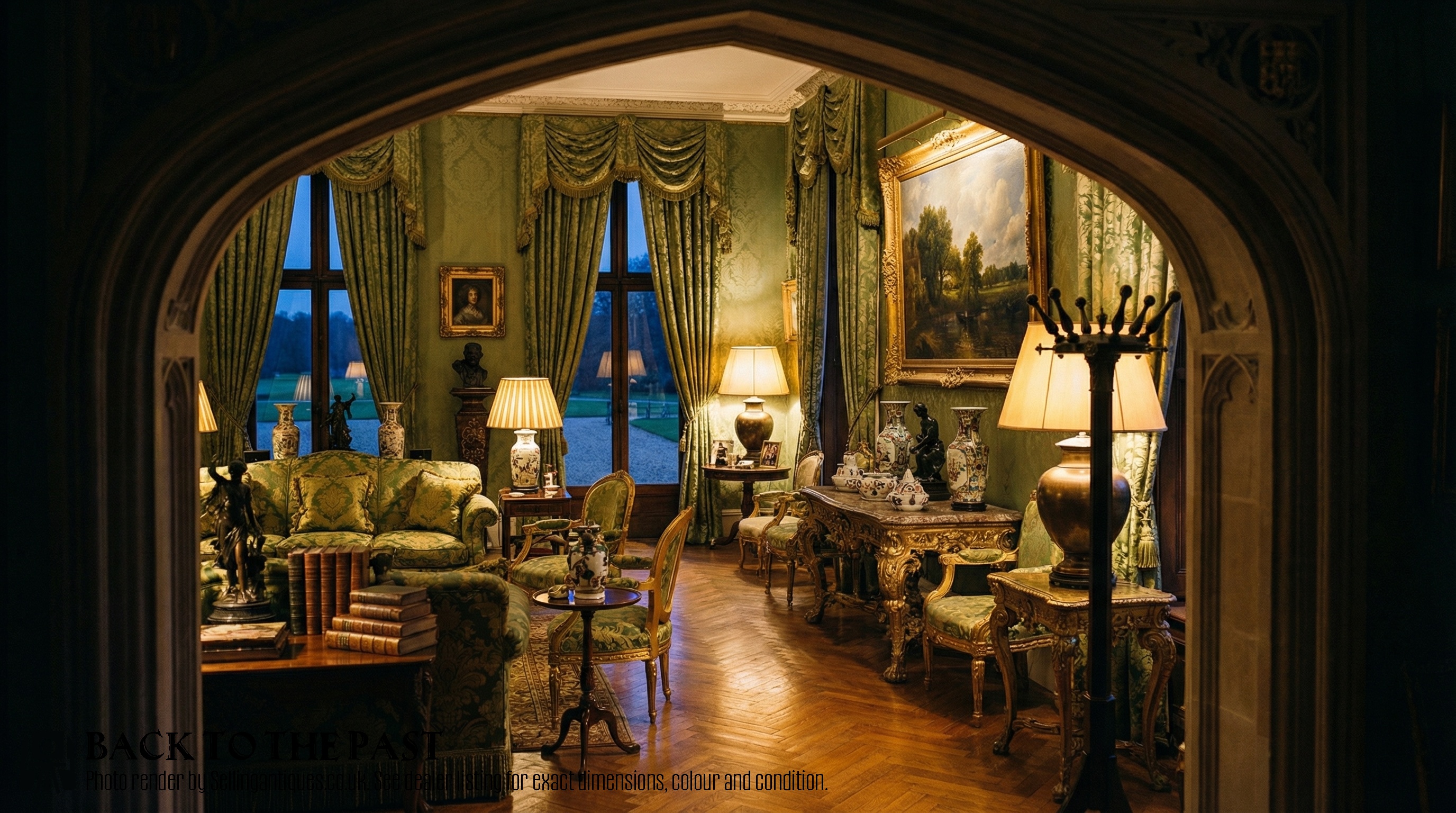
Makers utilised solid mahogany and polished veneers over secondary timbers, shaping upright columns, tripod legs, and curved branches for hat pegs. Structural integrity relies on sturdy turned shafts and heavy weighted bases or wide splayed feet.
Metal components such as brass hooks, brackets, and drip pans feature prominently across many examples, adding functional durability to the wooden frames. Additional elements like inset glass, marble shelves, and zinc trays appear in complex hall stand variants to manage wet umbrellas and hats.
Mahogany Coat Stand Retail Price Guide 2026
Typical asking prices for mahogany coat stand among the pieces listed under this phrase on Sellingantiques today, from the lower quarter to the upper quarter. They describe what is for sale here now, not the wider market.
The spectrum of quality
Quality rests upon the choice of timber and the complexity of the joinery, distinguishing sturdy architectural forms from lighter domestic pieces. Superior examples display dense, richly figured mahogany grain and robust structural framing that withstands daily weight.
The refinement of turned woodwork, the weight and finish of original brass hardware, and the integration of functional elements like revolving top sections or fitted marble tiers elevate the standing of individual pieces.
Cooke's
The Mahogany Coat Stand Glossary
- Hall tree
- A freestanding piece of hallway furniture combining coat hooks, hat pegs, and umbrella storage into a single vertical structure. These often incorporate mirrors and small ledges.
- Tripod
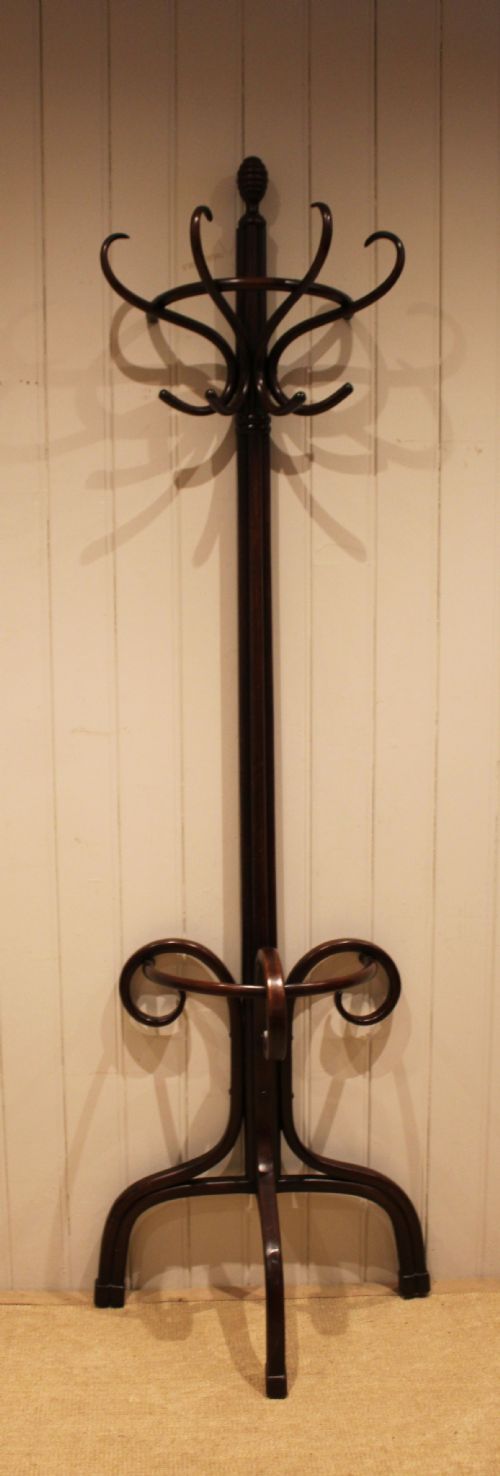
- A three-legged base configuration commonly found on lighter nineteenth-century coat stands to provide stable floor contact. This layout distributes weight evenly across the splayed feet.
- Bentwood
- Wood softened through steam application and bent into curved structural forms. This technique appears in specific twentieth-century variations of the coat stand.
- Zinc tray
- A metal liner placed at the base of a stand to catch water and mud from umbrellas. It protects the surrounding mahogany from moisture damage.
- Revolving top
- A rotating upper crown fitted with multiple coat and hat hooks for easy access. This mechanism allows users to reach garments from various angles without moving the heavy base.
Mahogany Coat Stand: Frequently Asked Questions
How do I maintain a mahogany coat stand?
Keep the wood polished with traditional wax to nourish the grain and protect the surface from dry air and sunlight.
Avoid placing wet items directly onto unprotected wooden sections by utilising the original brass or zinc drip trays where fitted.
Where should I place a hall stand?
These pieces suit entrance halls, vestibules, and wide corridors where visitors naturally deposit coats, hats, and walking sticks.
Ensure adequate floor space surrounds the base, particularly with tripod or revolving models, to allow easy access to all hanging hooks.
How do I distinguish Victorian from Edwardian stands?
Victorian examples tend to display heavier architectural proportions, dark column turns, and substantial marble components.
Edwardian pieces often feature lighter frames, Arts and Crafts influences, and occasional revolving top mechanisms with numerous brass hooks.
What is the difference between a coat stand and a hall tree?
A coat stand focuses primarily on vertical branches for hanging garments and hats around a central turned column.
A hall tree generally encompasses a broader architectural unit that includes umbrella storage, a mirror, and sometimes a small shelf or compartment.