
Mahogany Clothes Cabinet
A mahogany clothes cabinet provides substantial storage through panels of rich timber, bringing period architecture directly into a bedroom.
Mahogany Clothes Cabinet
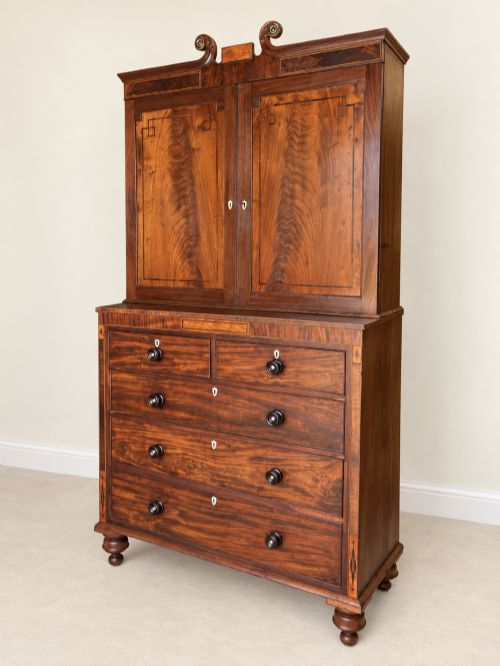
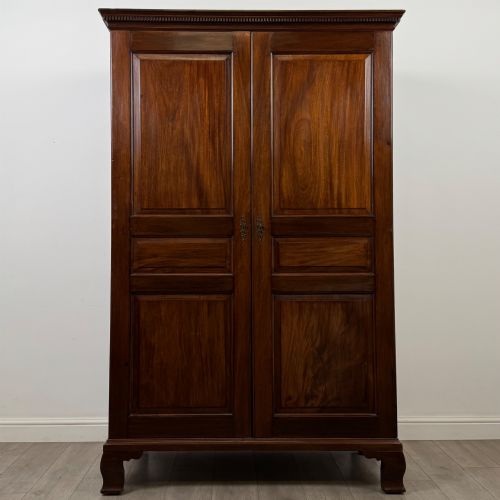
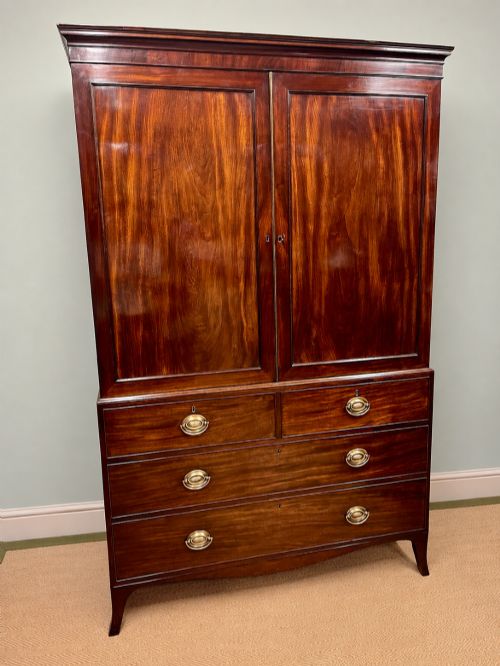
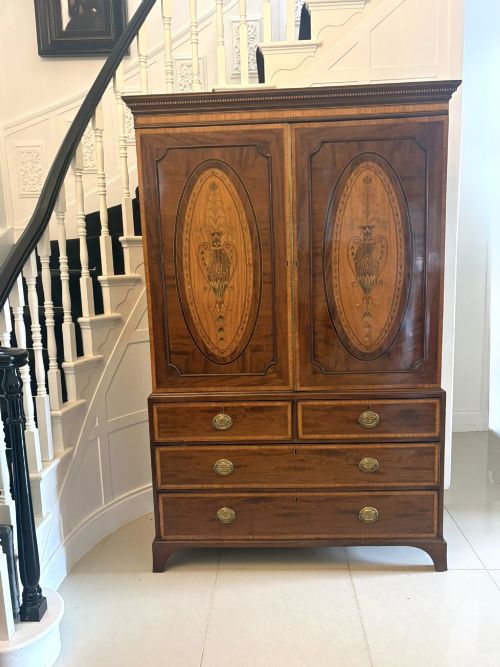
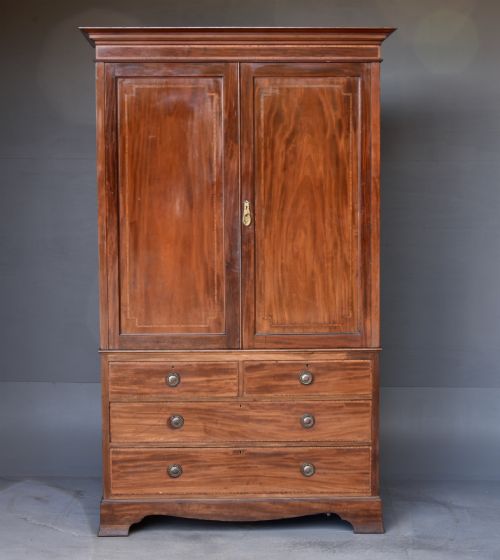
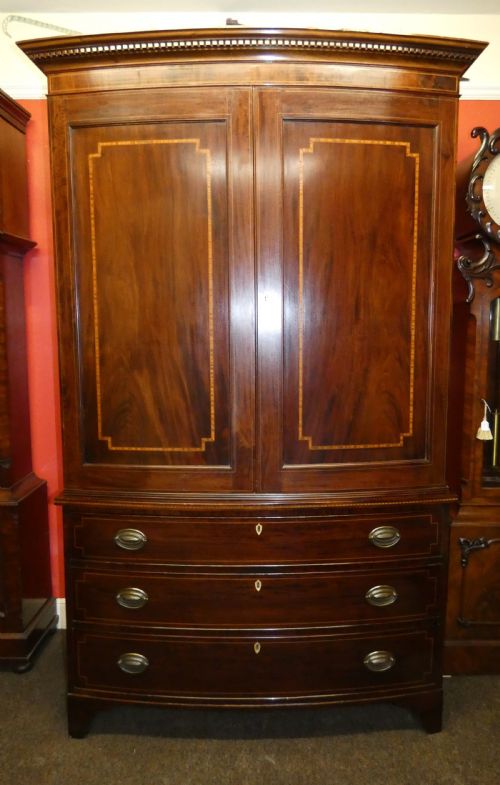
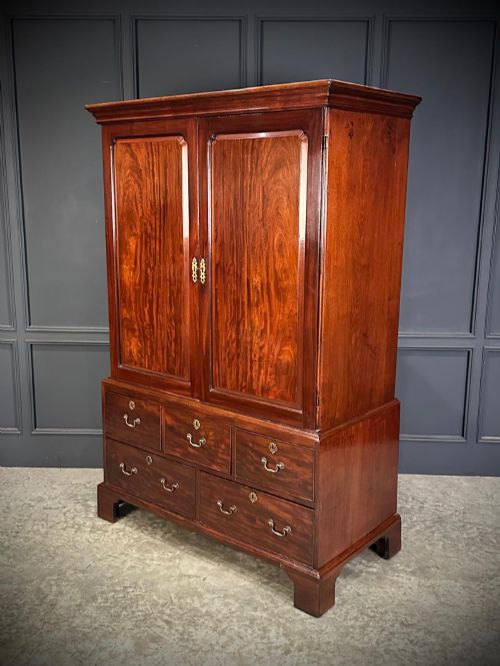
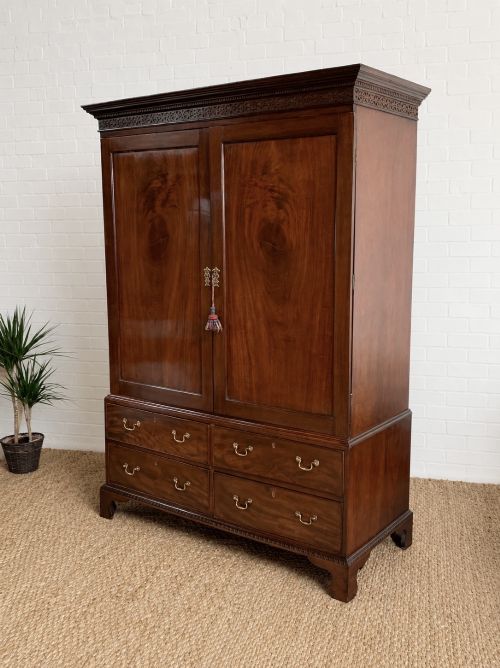
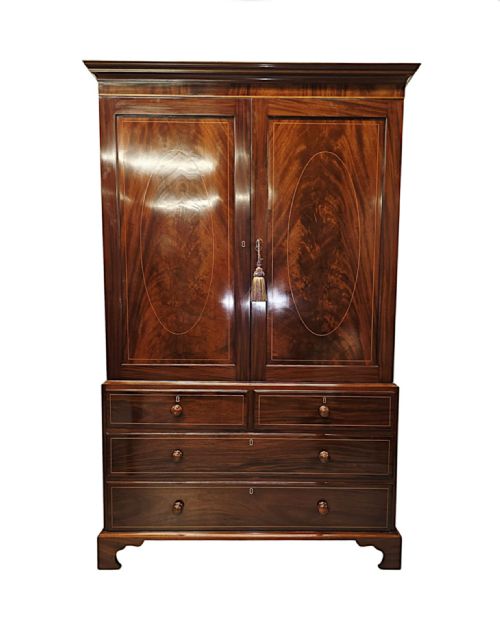
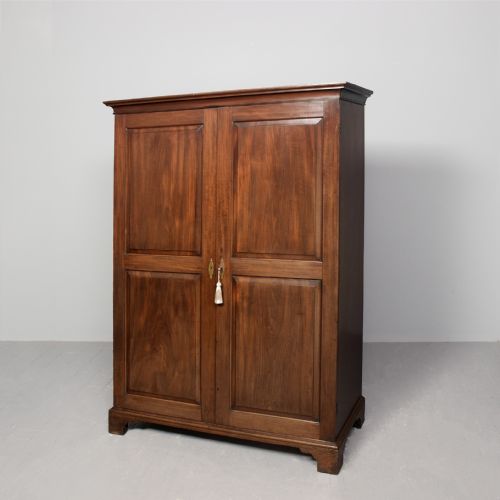
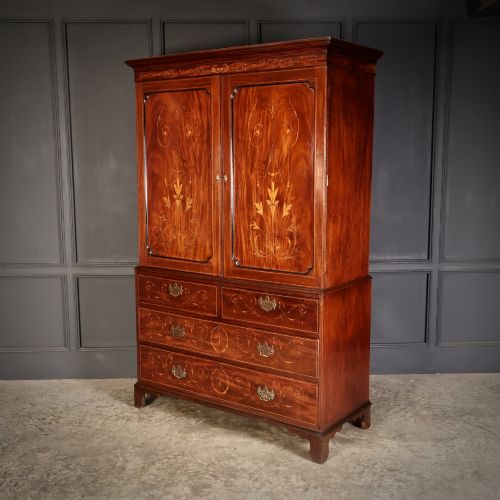
A mahogany clothes cabinet encompasses linen presses, wardrobes, and compactums spanning the Georgian, Regency, Victorian, and Edwardian eras. Buyers looking for a mahogany clothes cabinet most frequently encounter tall two-door or three-door linen presses combining upper sliding trays with lower drawers.
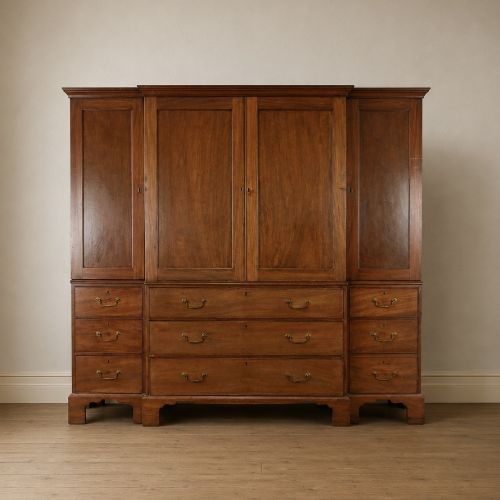
Originating largely from English workshops of the eighteenth and nineteenth centuries, these pieces vary from early George III breakfront designs to later Edwardian inlaid iterations. The primary form functions to store folded textiles above and hanging garments or drawers below.
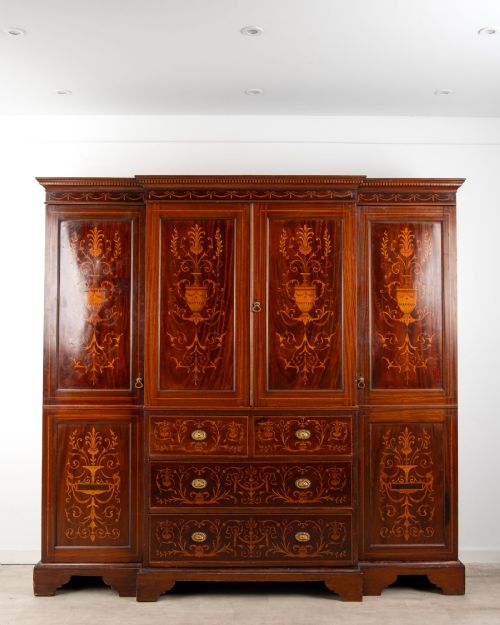
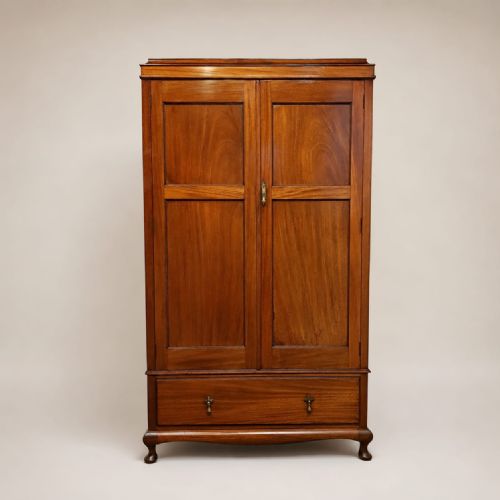
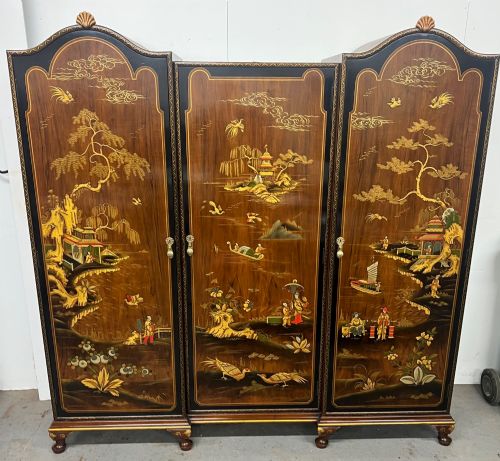
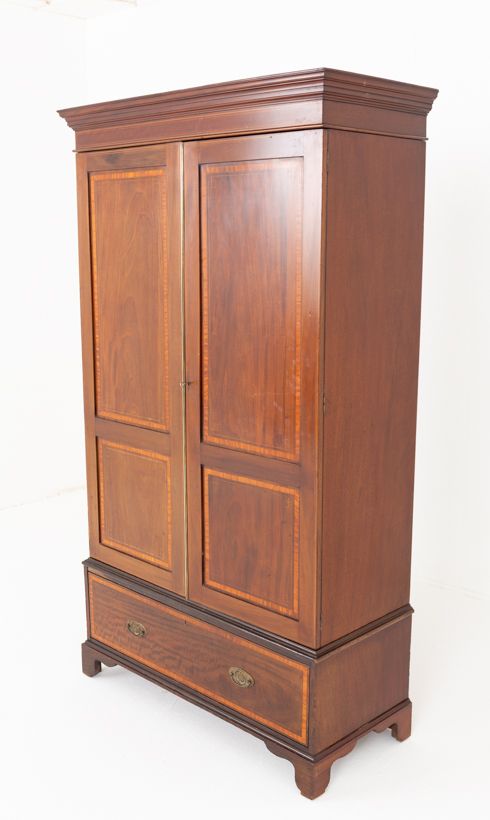
Proportions shift from substantial eighteenth-century architectural cornices to slender Edwardian or Regency formats. The inventory includes specialised pieces such as bowfront presses, corner compactums, and gentlemen's double wardrobes.
Materials and Construction
Construction relies heavily on solid mahogany and flame mahogany veneers applied to secondary woods like oak, supported by brass hardware for locks, hinges, and sliding tray handles. Cabinetmakers utilised figured timber matched across doors to create symmetrical grain patterns.
Inlay and marquetry enrich many surfaces, employing contrasting satinwood, boxwood, and rosewood crossbanding to define panels and drawer borders. Fretwork cornices and hand-carved details appear on select Georgian and nineteenth-century examples.
Interior architecture incorporates sliding linen slides, pull-out trays, and fitted hanging spaces behind panelled doors. Drawers are typically assembled with hand-cut dovetails and lined with softwoods.
Materials documented across the inventory include solid mahogany, flame mahogany veneer, satinwood, boxwood, oak, and brass hardware.
Distinctions in Execution
Quality rests upon the selection of timber figures, where book-matched flame veneer and crisp crossbanding elevate a piece above plain stock. The depth and precision of inlaid satinwood or boxwood stringing signal skilled cabinet work.
Proportion and architectural harmony separate standard production from superior examples, particularly in the carving of cornices and the integration of blind fretwork. Original brass fittings and functioning internal sliding trays preserve the integrity of the piece.
maples & co·Druce & Co·Heals·Gillows
The Mahogany Clothes Cabinet Glossary
- Linen Press
- A tall storage cabinet featuring upper sliding trays enclosed by doors, positioned above a chest of base drawers. This form was originally designed to store household linen flat before modern hanging wardrobes became common.
- Compactum
- A multi-compartment wardrobe combining hanging space, shelves, and drawers within a single unified piece of furniture. It offers diverse internal storage configurations for varied garments.
- Flame Mahogany
- A wood veneer cut from timber where the branch meets the trunk, producing a distinctive flickering flame pattern. Cabinetmakers placed these veneers symmetrically to create decorative door panels.
- Crossbanding
- A narrow strip of veneer laid around the border of a panel or drawer front with the grain running perpendicular to the centre. This technique frames the primary timber visually.
- Blind Fretwork
- Carved ornamentation applied to a flat surface in geometric or Chinese Chippendale patterns without being pierced right through. It adds texture to cornices and friezes on eighteenth-century pieces.
Mahogany Clothes Cabinet: Frequently Asked Questions
What is a clothes cabinet?
A clothes cabinet is a large freestanding piece of furniture designed for storing garments and textiles, encompassing traditional linen presses, wardrobes, and compactums.
These pieces combine internal shelves, sliding trays, and hanging space behind panelled doors, often featuring lower drawers for folded items.
How do I date a mahogany cabinet?
Dating relies on architectural style, hardware, and construction methods, moving from heavy architectural eighteenth-century cornices to lighter Edwardian inlays.
Georgian pieces display hand-cut dovetails and solid timber construction, while later nineteenth and twentieth-century examples incorporate machine-sawn elements and distinct revival styles.
How were linen presses used?
Linen presses were originally built for storing household linen flat on sliding wooden trays to prevent creasing before upright hanging wardrobes became standard.
The upper section held sheets and tablecloths behind doors, while the lower drawers accommodated smaller garments and personal apparel.
Will a large wardrobe dismantle?
Many larger period wardrobes and presses are constructed to break down into sections - cornice, base, and sides - to facilitate transport and room placement.
Buyers should verify modular construction details, as historical cabinets vary between fully fixed frames and knockdown designs.