


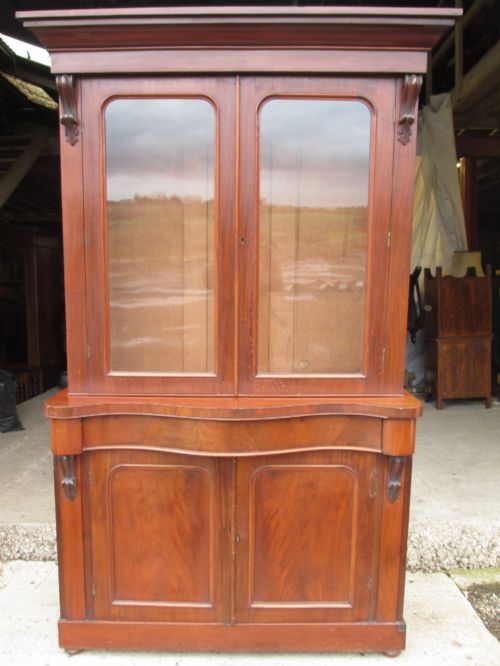
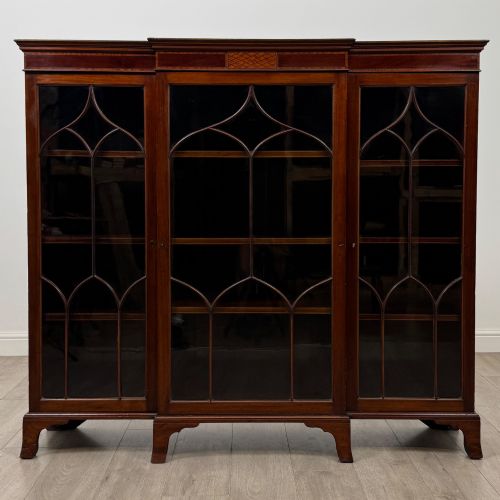
Mahogany China Bookcase
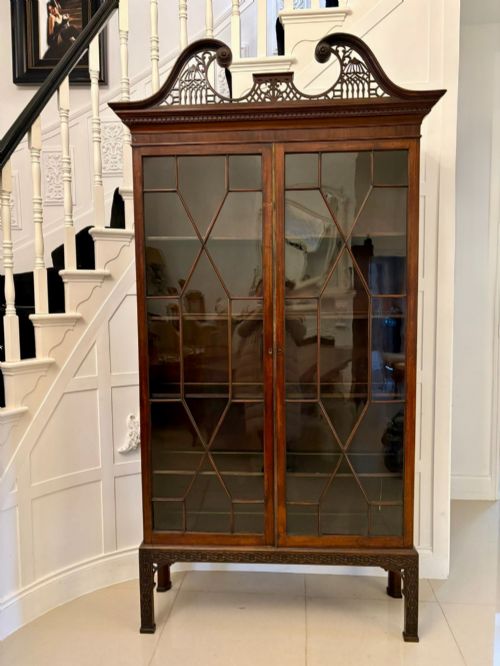
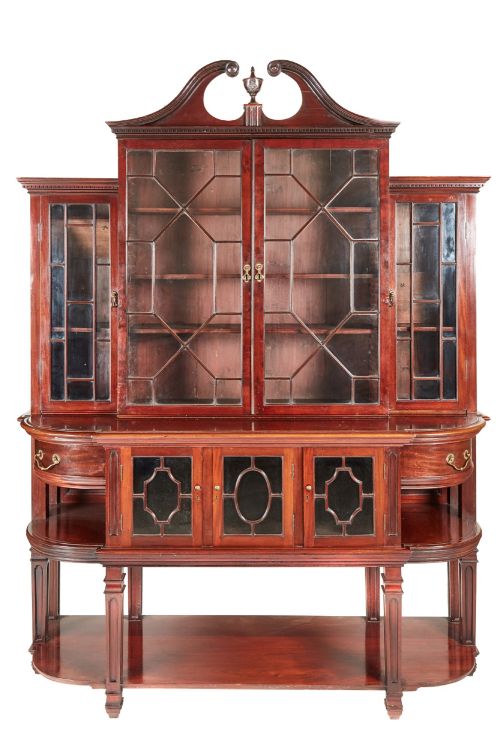
A mahogany china bookcase serves to display fine ceramics whilst holding a library, uniting timber and glass with architectural presence.
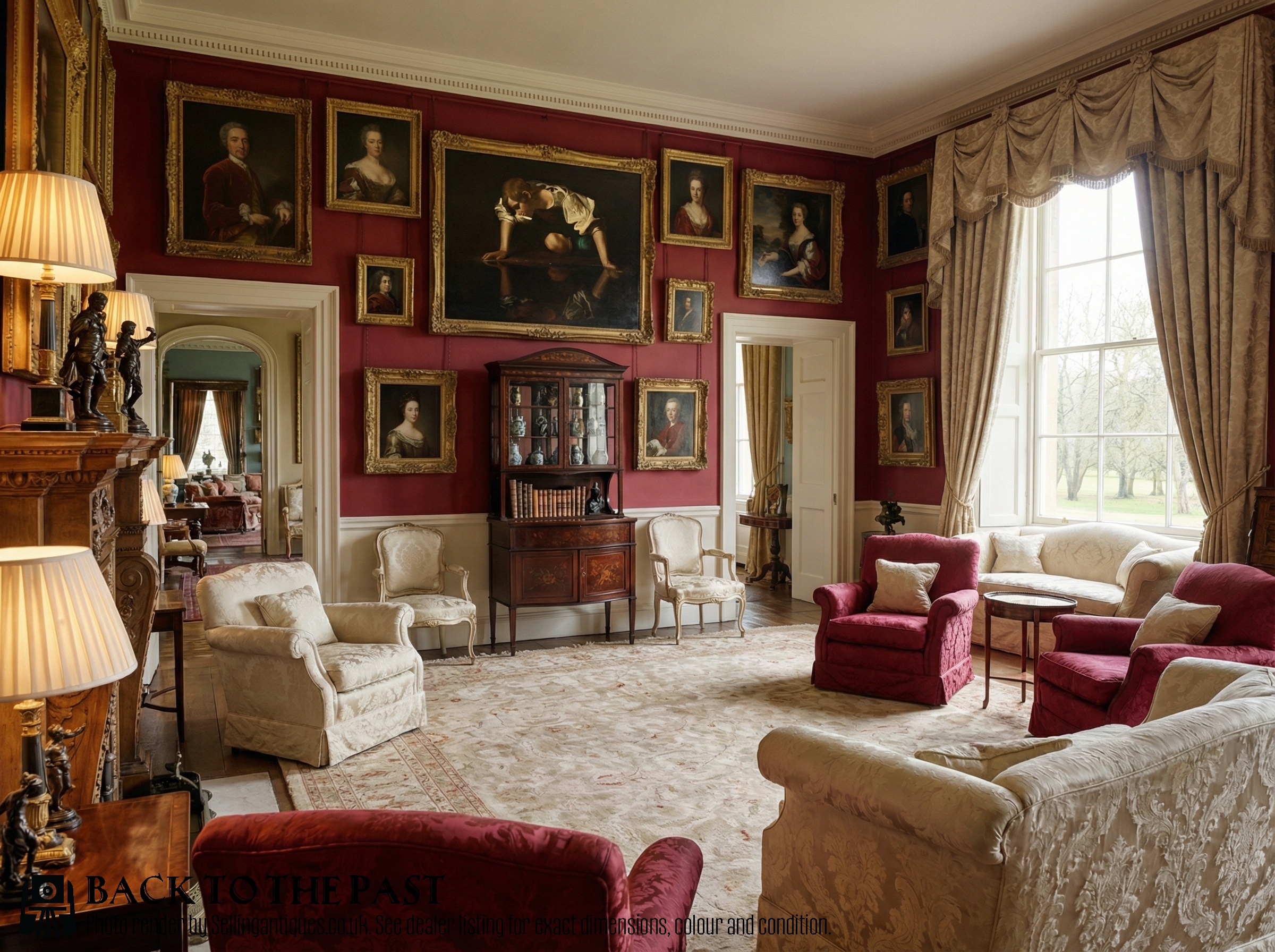
Mahogany China Bookcase
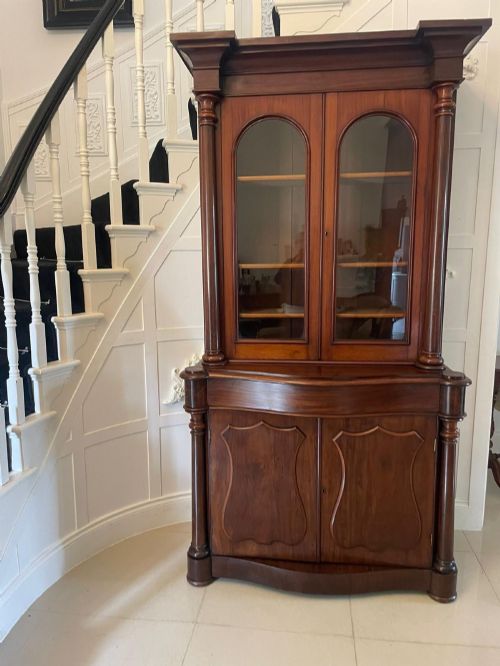
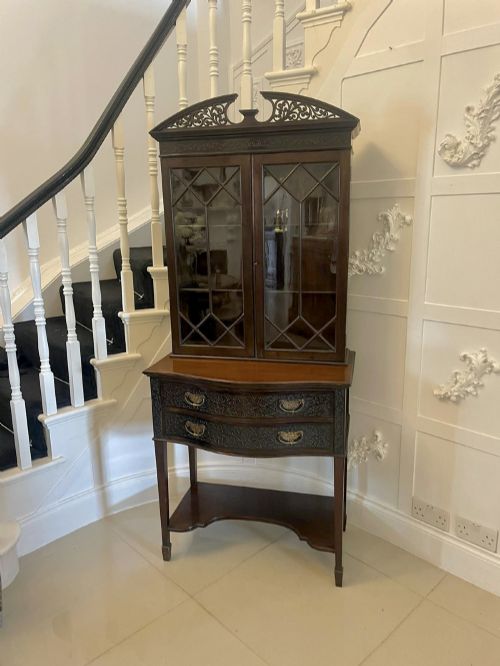
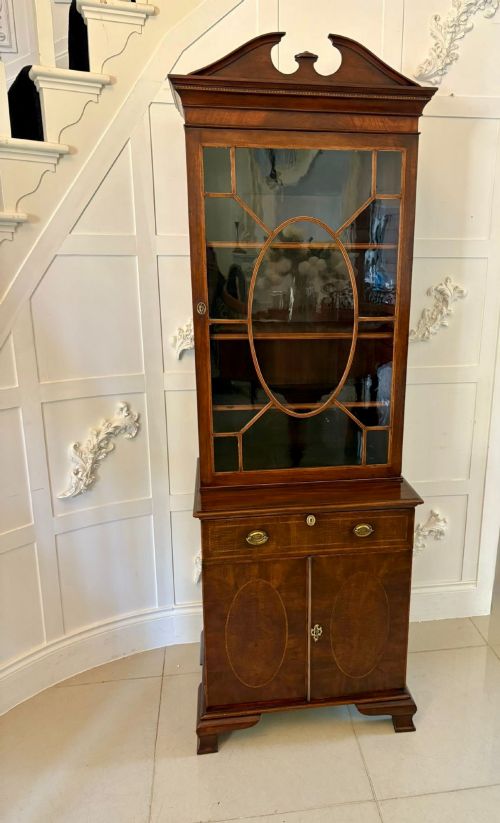
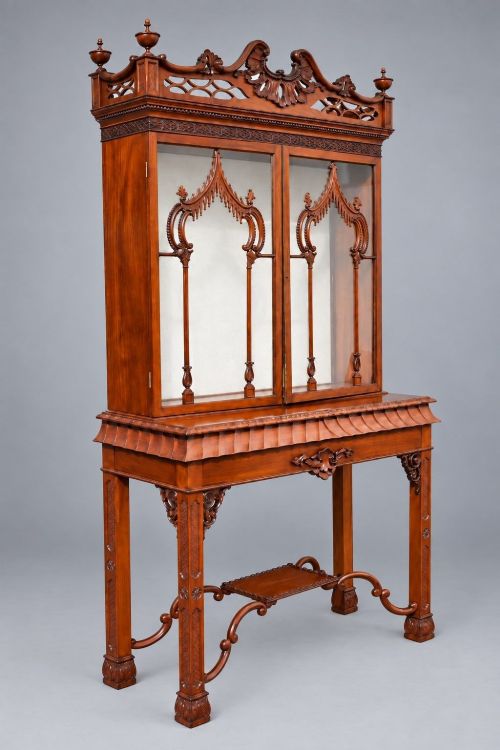
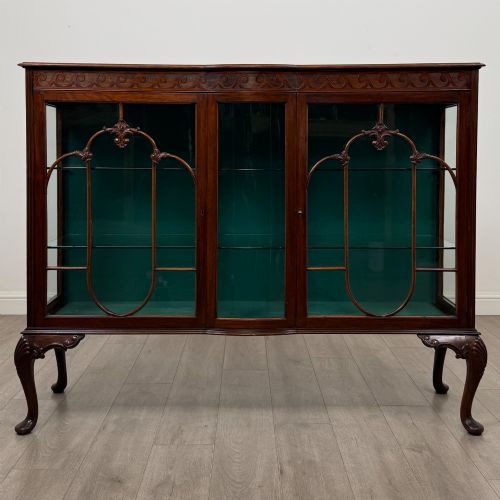
A mahogany china bookcase combines a glazed display section for porcelain with shelving for books, standing as a substantial piece of household furniture. When searching for a mahogany china bookcase, a buyer encounters pieces spanning the nineteenth and early twentieth centuries, including Victorian and Edwardian examples.
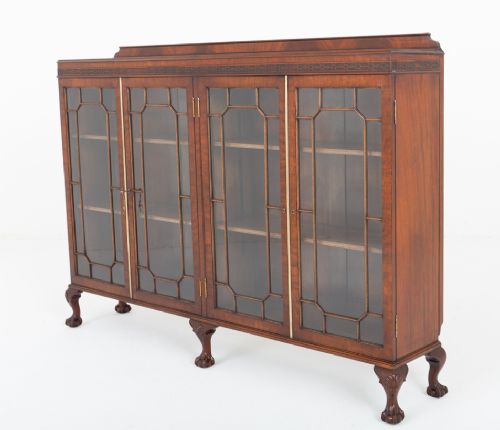
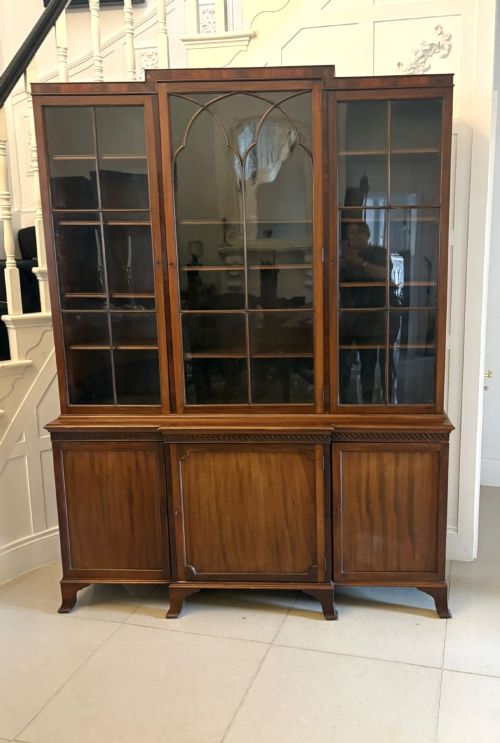
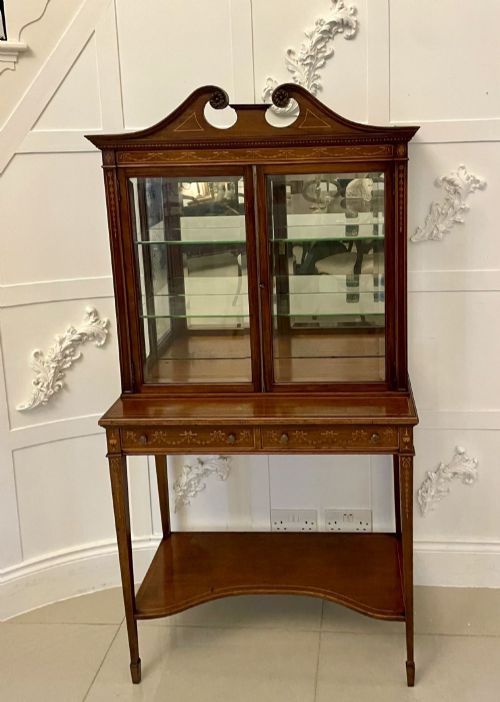
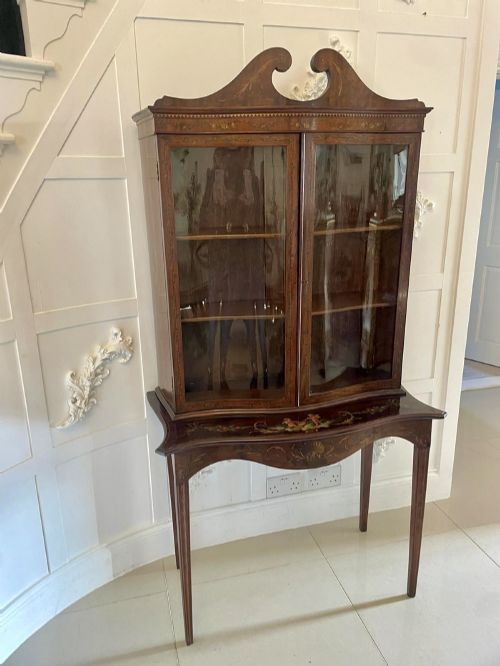
The assortment includes breakfront library cabinets, two-part display units, corner cabinets, and glazed side cabinets. Edwardian interpretations frequently feature delicate satinwood inlay, whilst Victorian iterations lean towards heavier proportions and carved detail.
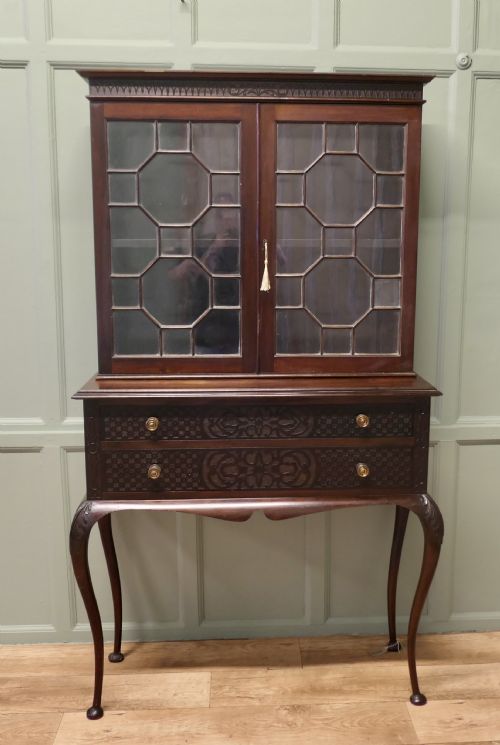
Revival styles dominate the selection, referencing earlier Georgian, Chippendale, and Sheraton aesthetics through classical glazing bars and proportions. Pieces range from tall multi-door breakfront bookcases down to compact corner and wall-anchored cabinets.
Materials and Construction
Makers utilised solid mahogany and mahogany veneers over secondary timbers, occasionally embellished with contrasting satinwood inlay and marquetry work. Brass hardware secures doors and supports adjustable shelving within the glazed upper sections.
Glass panes are held within timber frames, often configured as astragal or astral glazing bars forming geometric patterns. Structural stability is provided by panelled backs and substantial plinths, while interior surfaces sometimes incorporate fabric lining or mirror glass.
Mahogany China Bookcase Retail Price Guide 2026
Typical asking prices for mahogany china bookcase among the pieces listed under this phrase on Sellingantiques today, from the lower quarter to the upper quarter. They describe what is for sale here now, not the wider market.
Some Edwardian glazed cabinets manage to house both a modest library and a fragile tea service without looking remotely confused about their purpose.
Craftsmanship and Proportion
Quality reveals itself in the selection of timber grain, the precision of cabinet joinery, and the crispness of carved or inlaid decoration. Superior examples display balanced proportions and careful timber matching across large expanses such as breakfront doors.
Makers such as Edwards & Roberts or Jas Shoolbred produced pieces where internal fittings, original hardware, and hand-finished details elevate the construction beyond standard utilitarian joinery.
Jas Shoolbred·Edwards & Roberts·Maple & Co
The Mahogany China Bookcase Glossary
- Astragal glazing
- Timber bars that divide a glass window into smaller panes within a cabinet door. These delicate divisions often form gothic or geometric patterns characteristic of Georgian and revival pieces.
- Breakfront
- A cabinet facade where the central section projects forward from the flanking wings. This architectural arrangement creates depth and visual weight.
- Satinwood inlay
- Contrasting light-coloured timber inserted into recesses within the darker mahogany surface. It is frequently seen on Edwardian Sheraton Revival pieces.
- Marquetry
- Elaborate decorative patterns created by fitting together small pieces of veneered wood. It appears on finer Edwardian cabinet doors and friezes.
- Two-part
- A piece constructed in separate upper and lower sections for ease of transport. The glazed bookcase sits upon a base cabinet or lower drawer unit.
Mahogany China Bookcase: Frequently Asked Questions
How do I clean the glass?
Use a mild glass cleaner applied to a cloth rather than directly onto the glass. This prevents moisture from seeping into the historic mahogany timber or vintage glazing putty.
Take care around delicate astragal bars, as vigorous wiping can loosen the timber joints holding the individual panes in place.
Are the shelves adjustable?
Many period bookcases feature adjustable wooden shelving supported on traditional wooden ratchets or metal pins. This allows the interior height to be altered for different sizes of books or display items.
Older cabinets may have fixed shelving dictated by the original structural layout of the carcass.
How do I date an Edwardian cabinet?
Edwardian pieces typically date from the manufacture period between eighteen ninety and nineteen ten. Look for lighter mahogany tones, delicate satinwood inlay, and Sheraton Revival stylistic influences.
Construction methods also help, as machinery usage increased during this era whilst retaining hand-finished assembly.
Where should I place a mahogany bookcase?
Position the cabinet away from direct sunlight and heat sources to prevent the mahogany timber from drying out or warping. Stable room temperatures protect both the wood and any delicate veneer work.
Ensure the floor is level so the large doors swing properly within their frames without dragging.