




Mahogany Canterbury with Drawer
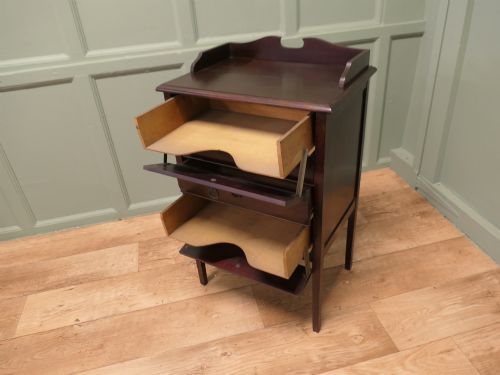
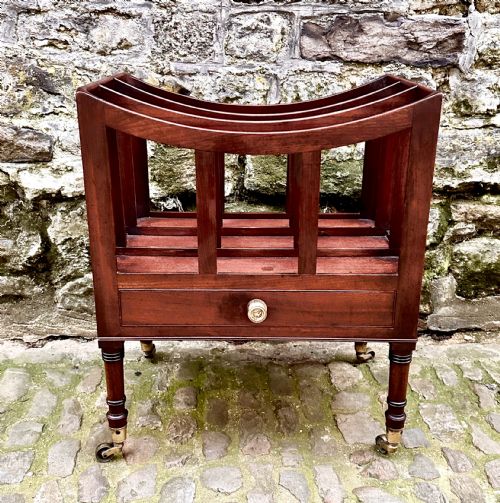
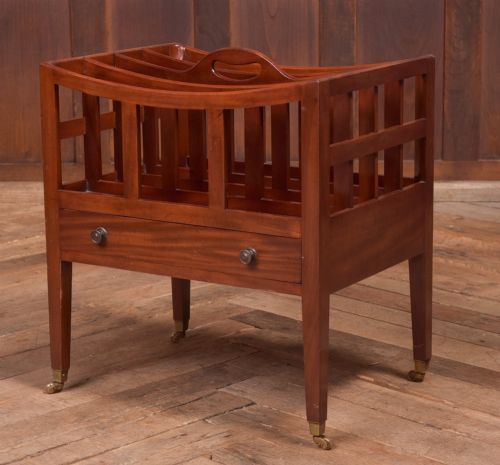
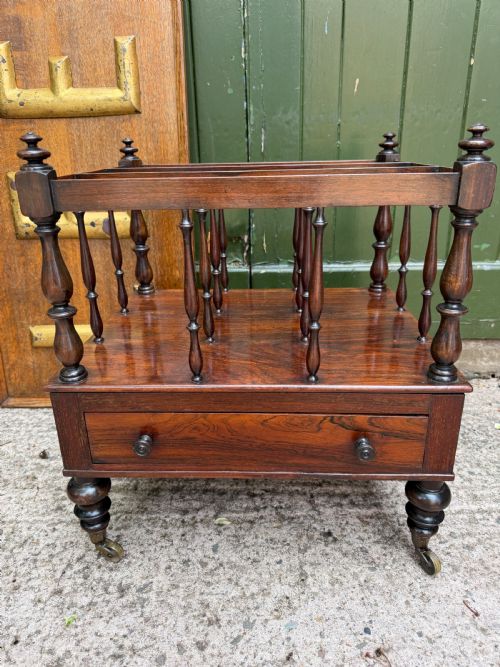
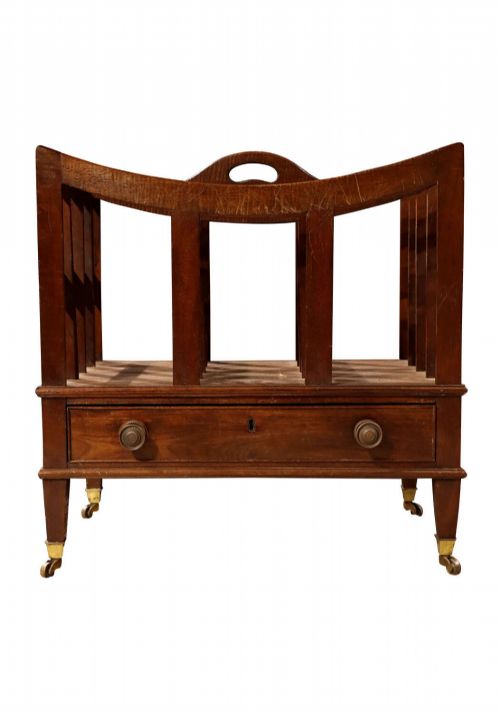
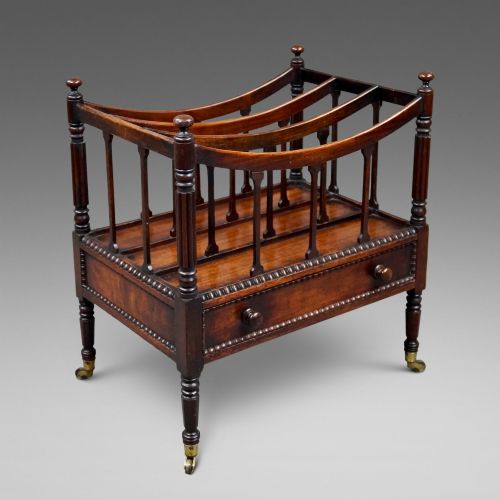
A mahogany canterbury with drawer is a practical folio stand with a base compartment, designed to keep folios and sheets tidy beside a chair.

Mahogany Canterbury with Drawer
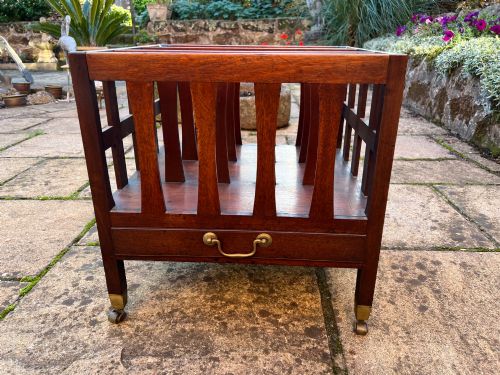
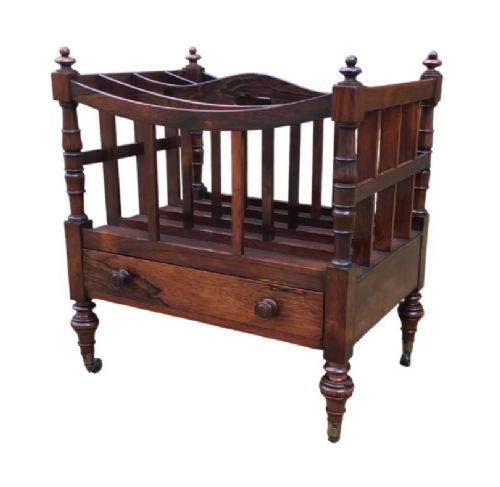
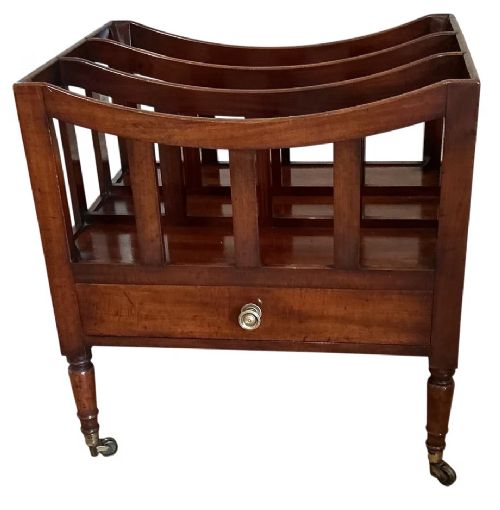
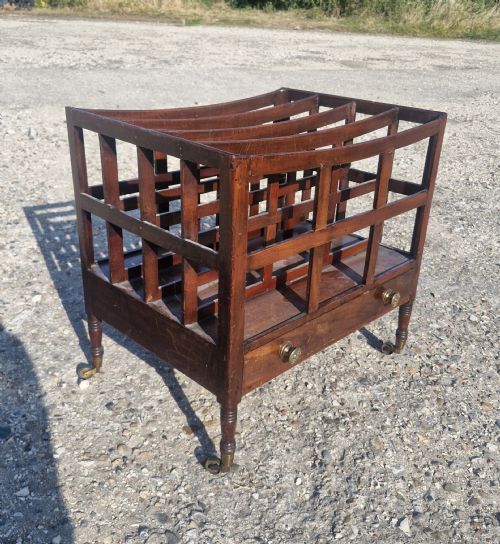
A mahogany canterbury with drawer combines partitioned vertical divisions for sheet music, magazines or folios above a low enclosed storage drawer. The pieces on this page span the Georgian, Regency, and Victorian periods, reaching back into the nineteenth century.
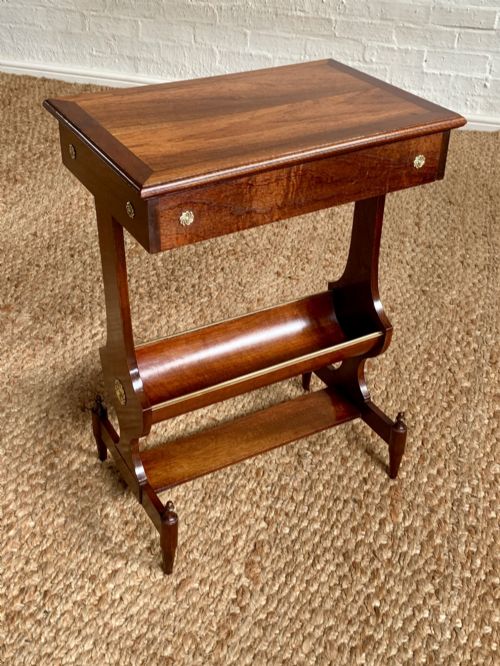
Most examples take the form of freestanding book racks or magazine stands, occasionally appearing as boat-shaped or waterfall dwarf bookcases with graduated shelves. Their primary purpose remains the orderly holding of loose papers and volumes within a parlour or sitting room.
Makers shaped these items from solid timber and veneers, frequently resting them upon square tapering legs fitted with brass castors. The combination of open slatted or pierced scroll divisions and a single frieze drawer defines the standard layout across the entire selection.
How they were made
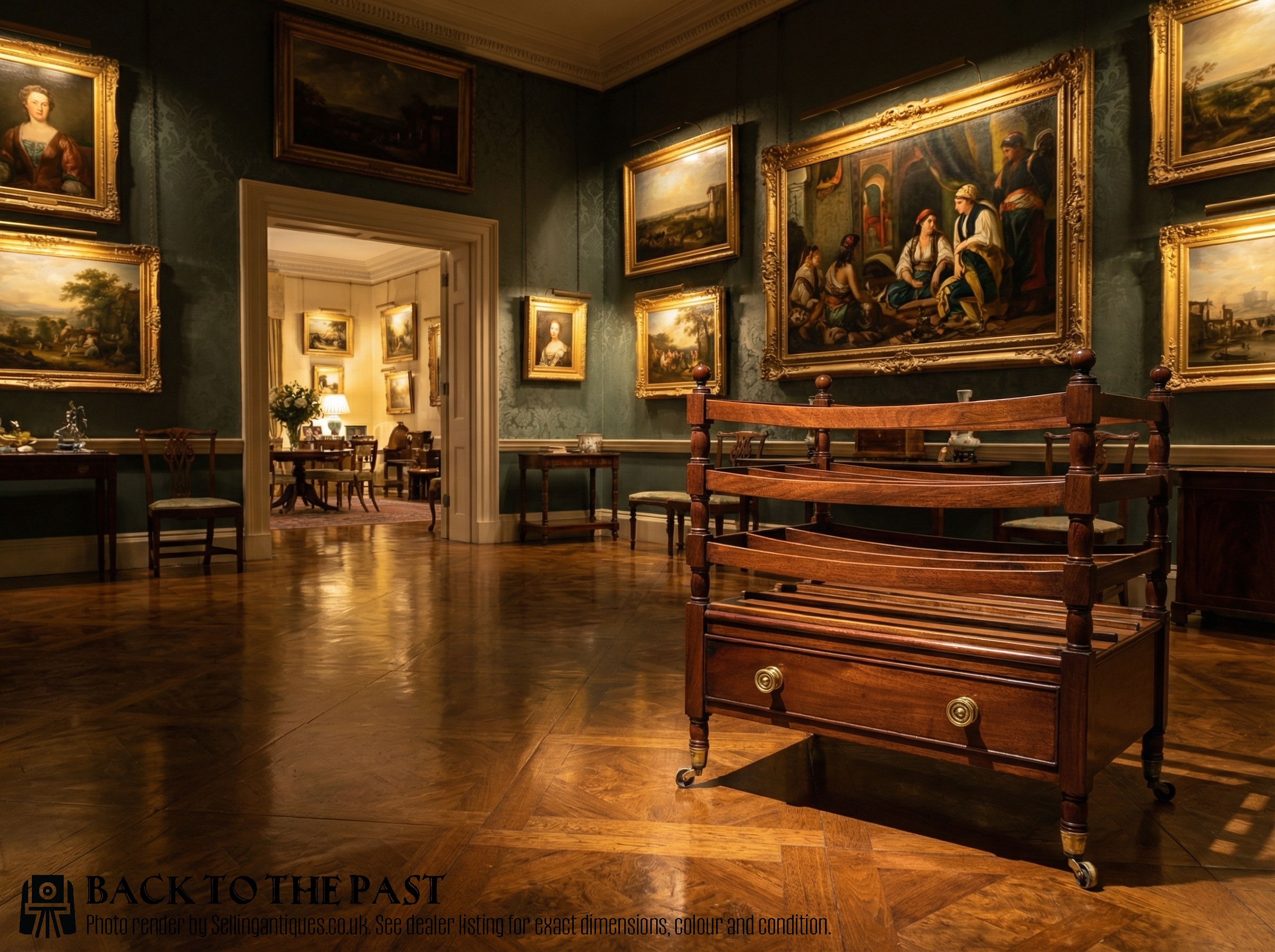
Craftsmen built these items predominantly using mahogany, selecting figured timber for visible surfaces and secondary woods for interior drawer linings. Structural joints relied on traditional carpentry methods suitable for load-bearing vertical divisions and low drawer boxes.
Decoration on these items ranges from plain turned supports to wreath carvings and pierced scroll divisions. Metal components are restricted to brass castors that allowed easy repositioning across carpeted drawing rooms.
Mahogany Canterbury with Drawer Retail Price Guide 2026
Typical asking prices for mahogany canterbury with drawer among the pieces listed under this phrase on Sellingantiques today, from the lower quarter to the upper quarter. They describe what is for sale here now, not the wider market.
Even the Archbishop of Canterbury would struggle to keep his sermon notes straight without a proper music rack.
What varies in quality
Superior examples display crisp carving on the structural divisions and finely figured mahogany grain across the primary panels. The refinement of the pierced scrollwork and the joinery of the frieze drawer separate standard production from more ambitious workshop output.
Proportion and silhouette drive the distinction between basic utility racks and decorative drawing room furniture. Pieces exhibiting well-turned legs, undamaged slat assemblies, and integrated lower drawers retain a sharper architectural clarity.
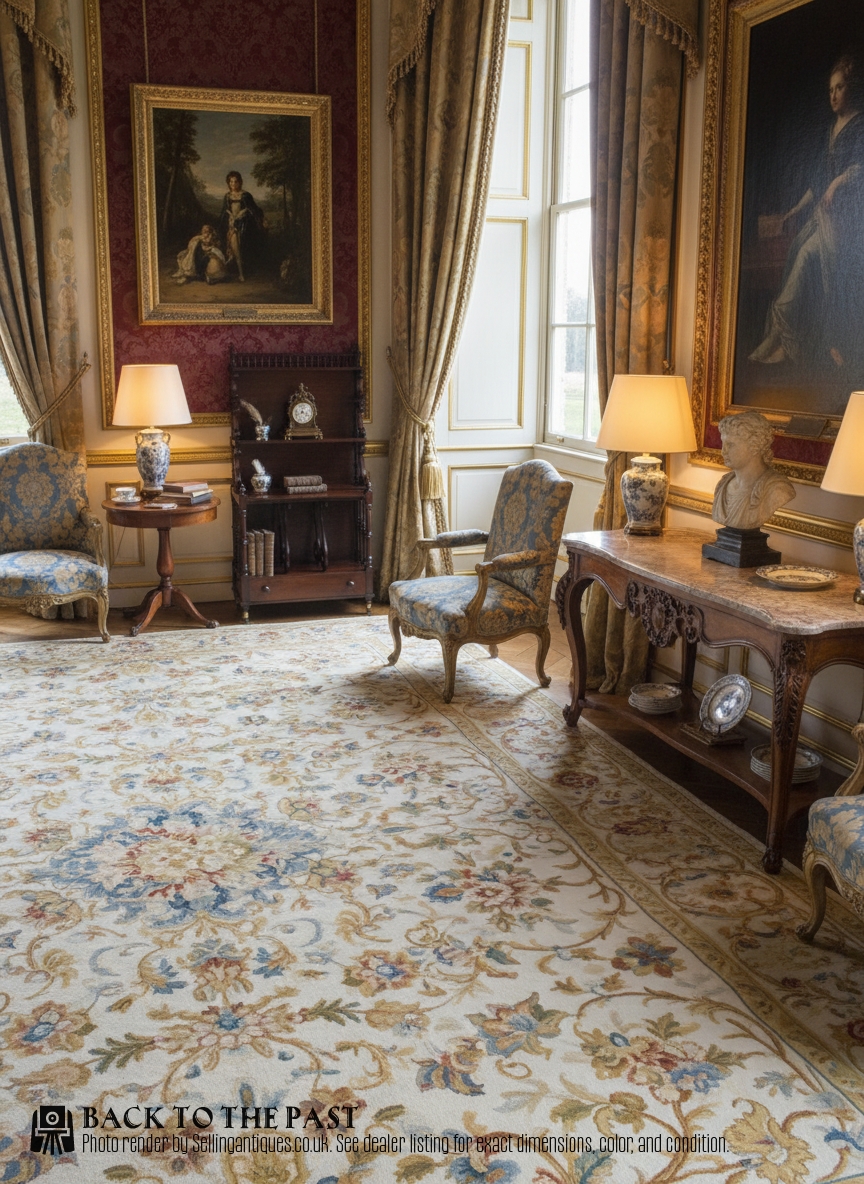
The Mahogany Canterbury with Drawer Glossary
- Canterbury
- A low stand fitted with divisions for holding books or music, usually featuring a drawer beneath. The name originates from the Archbishop of Canterbury, who supposedly commissioned the first such piece.
- Frieze drawer
- A shallow storage compartment integrated immediately beneath the main upper framework of a table or stand. This component provides concealed space for small accessories.
- Pierced scroll
- Openwork carved decoration forming curved, scroll-like patterns within the vertical divisions of a rack. This technique lightens the visual weight of the timber frame.
- Square tapering legs
- Table or stand supports that reduce in width toward the floor in a straight-sided profile. They are typical of late eighteenth and early nineteenth-century cabinet making.
Mahogany Canterbury with Drawer: Frequently Asked Questions
What was a canterbury originally used for?
These items were designed to hold sheet music, folios and periodicals near a piano or seating area. The lower drawer accommodated smaller accessories or writing materials.
Over time, owners adapted them for general book storage and newspapers within domestic living spaces.
How do I identify a Georgian canterbury?
Georgian and Regency pieces typically show precise joinery, restrained timber figuring and classical leg profiles such as square tapering supports. They rely on proportion rather than heavy ornamentation to create a refined appearance.
Later Victorian versions often introduce heavier turnings and different decorative carving styles while retaining the core functional layout.
Are these stands sturdy enough for daily use?
The solid timber construction and pegged framing make these stands robust for holding books and magazines. The original brass castors allow them to be moved gently across the floor.
Care should be taken not to overload the upper slatted divisions with excessive weight.
What timber was used for these pieces?
Mahogany is the primary wood found across all listed examples, valued for its rich colour and stable grain. Secondary timbers appear inside the concealed drawers.
Brass hardware is standard for the small castors fitted to the base of the legs.