
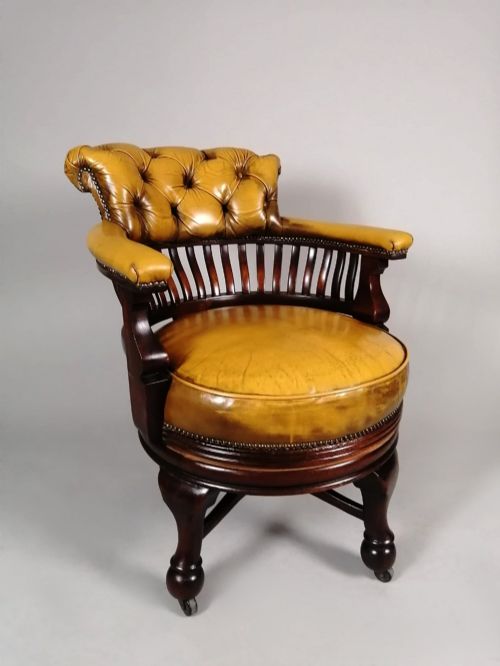
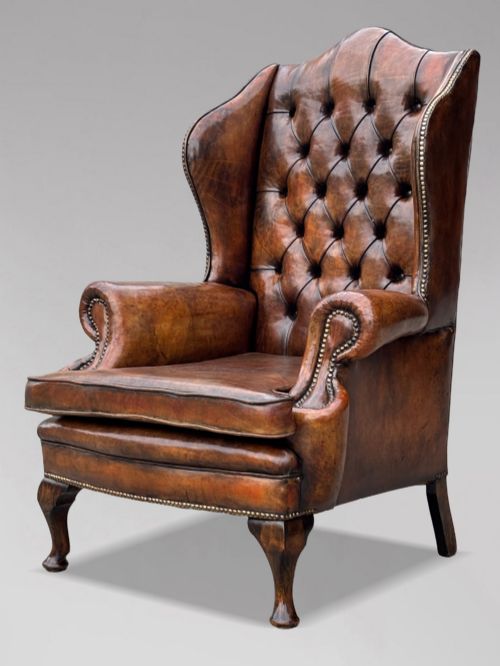
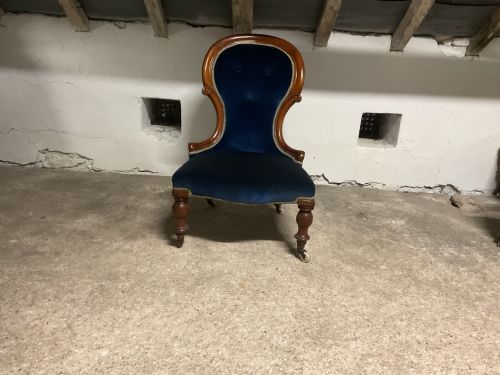
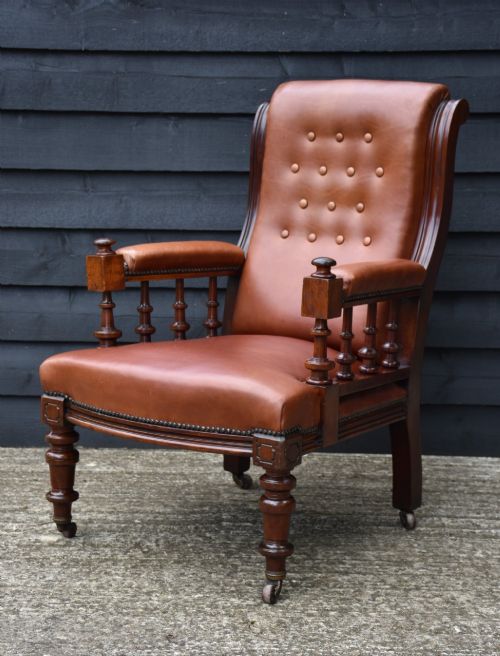
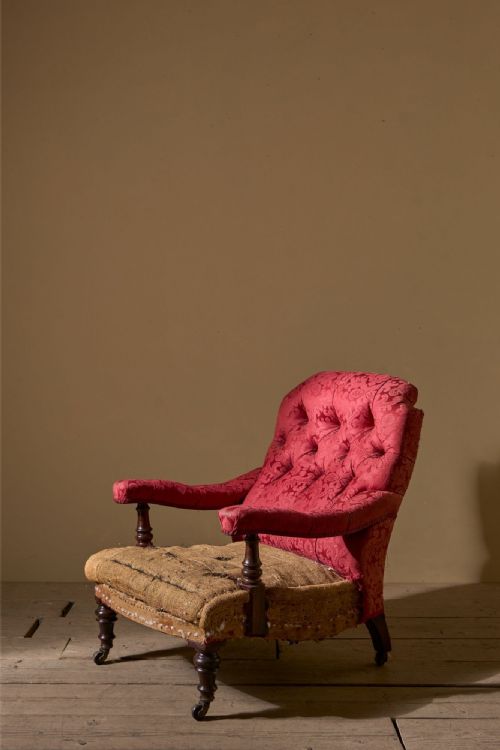
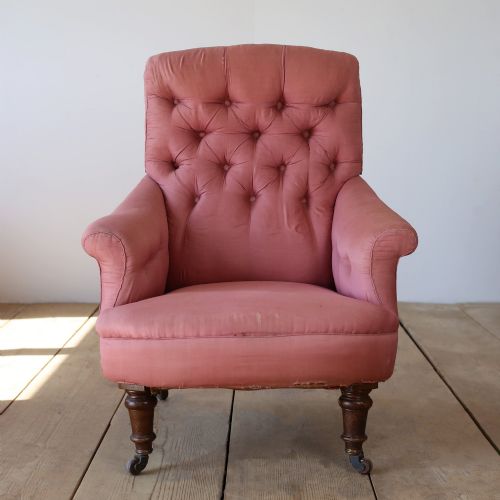
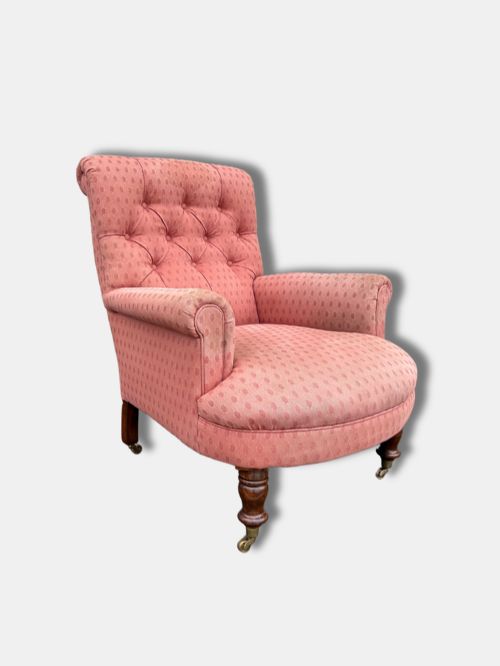
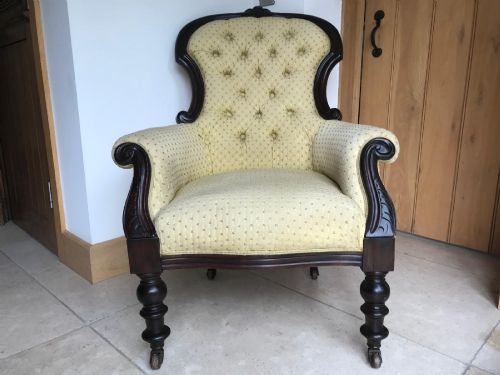
Mahogany Button Back Armchair
A mahogany button back armchair brings deep-buttoned Victorian comfort and rich timber frames into a room.

Mahogany Button Back Armchair
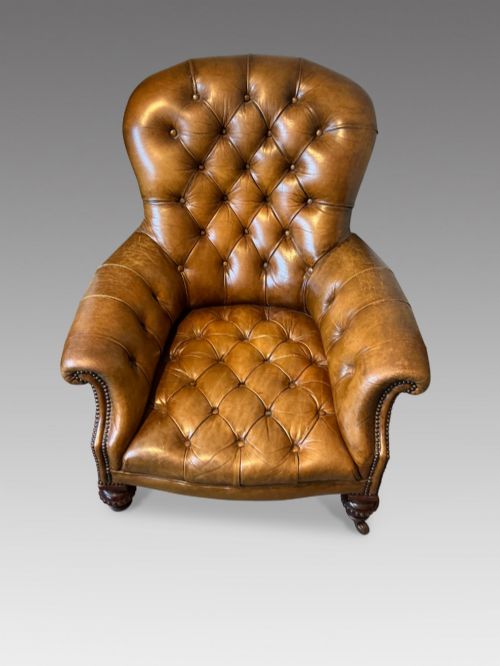
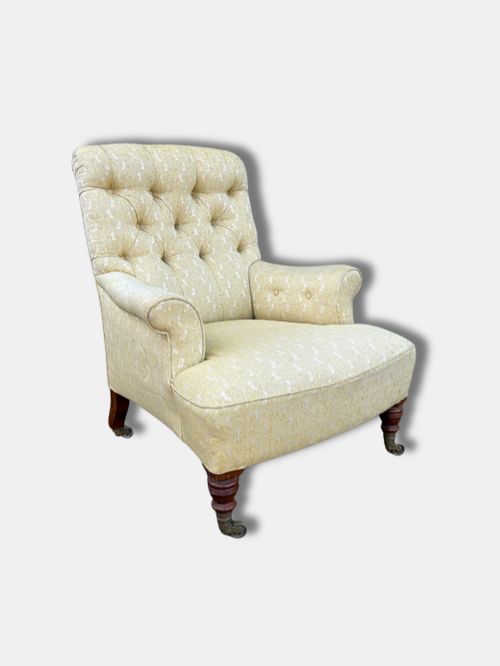
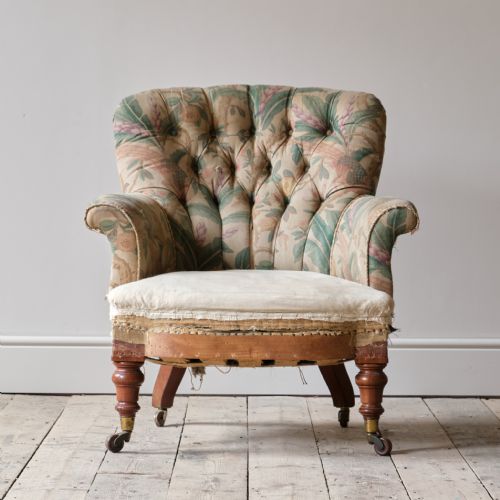
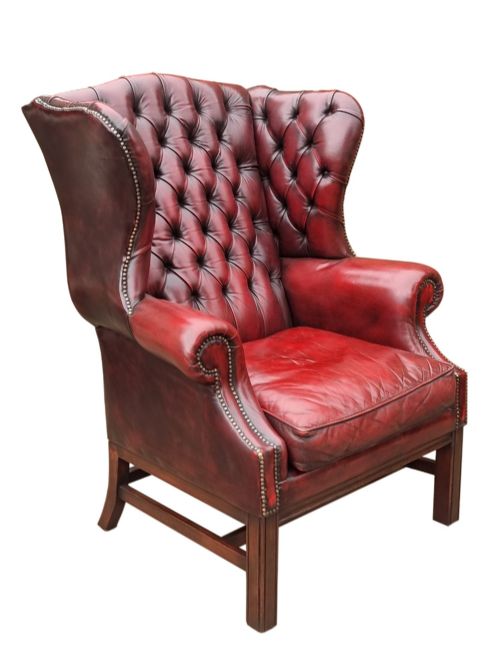
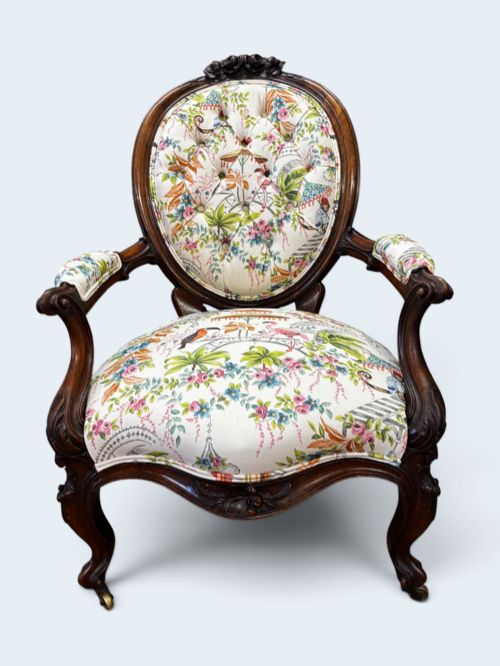
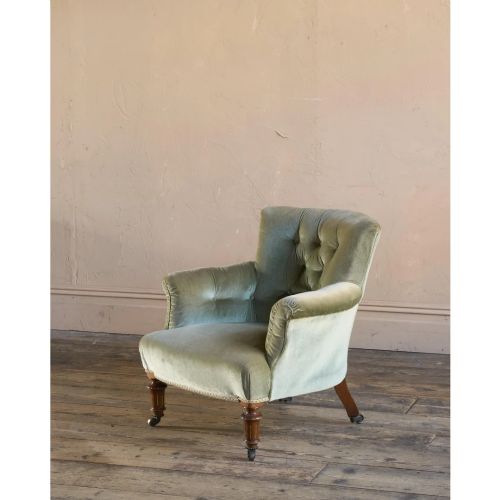
A mahogany button back armchair is a substantial nineteenth-century seating form, most commonly seen in Victorian parlour, library, and fireside configurations. These pieces combine a solid timber frame with tight upholstery secured by recessed fabric buttons.
The selection ranges from compact bedroom and nursing chairs to wide gentleman's armchairs and library wing chairs. Many examples hail from the Victorian era, alongside earlier Regency designs and later revival styles.
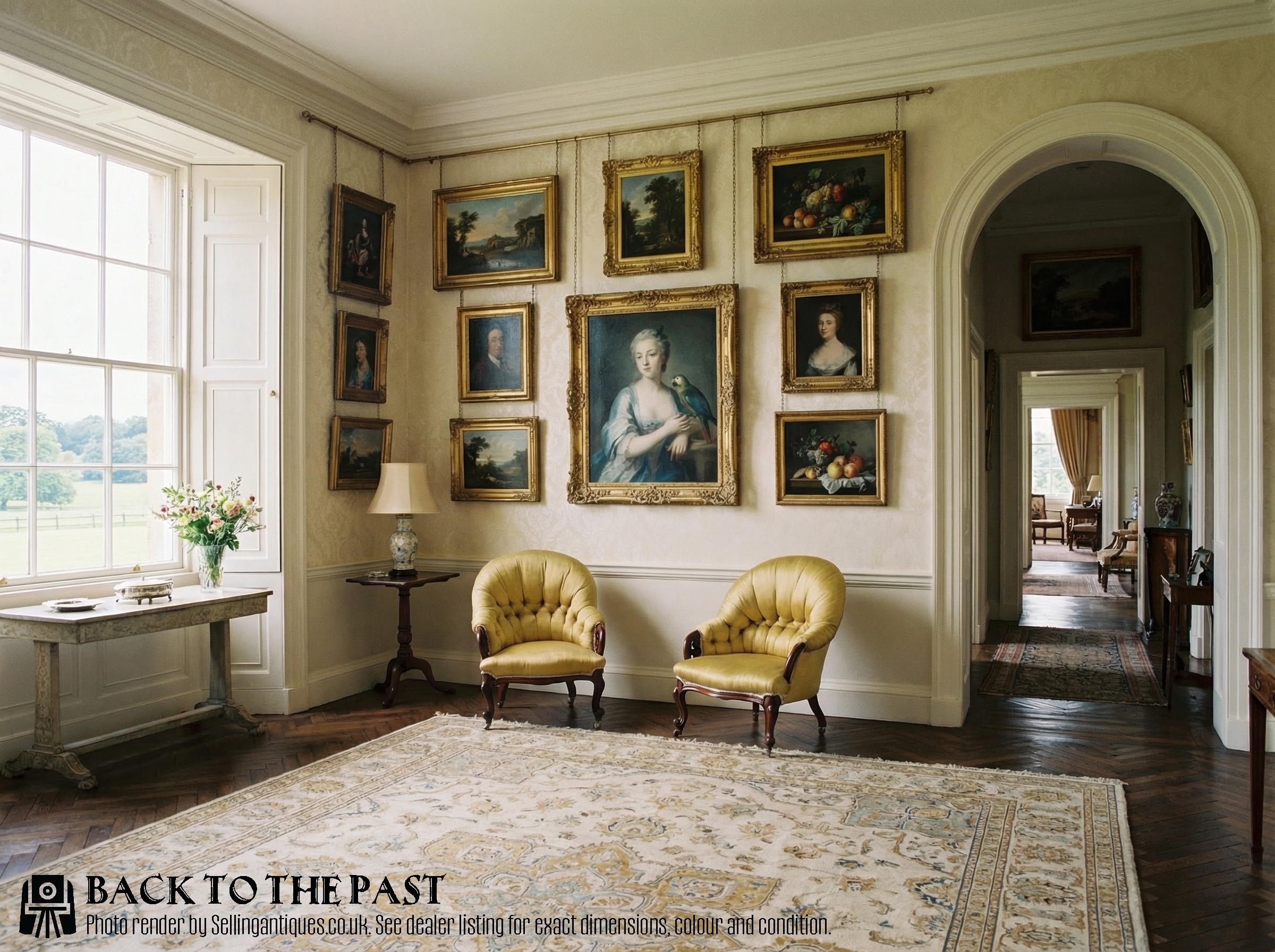
How they were made
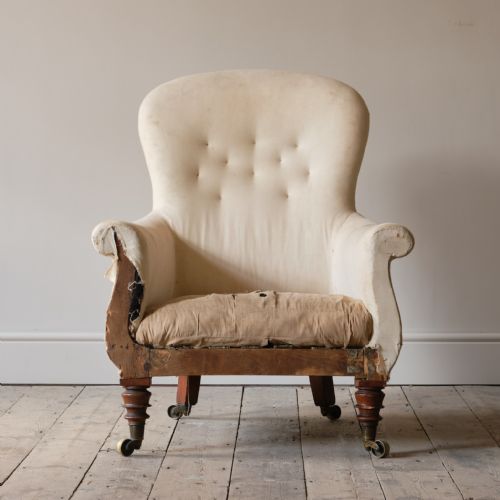
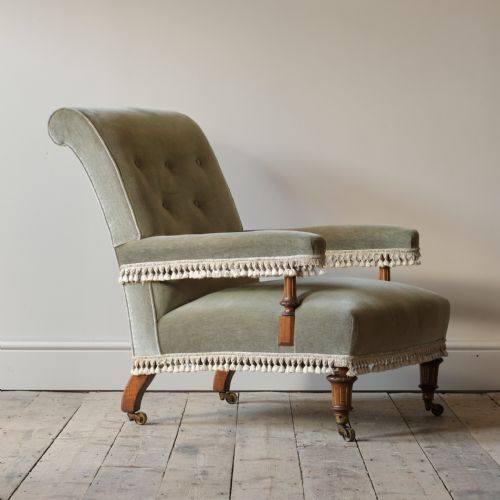
Frames are constructed from dense mahogany, sometimes accented with brass inlay, and supported on turned legs or castors. Upholstered sections rely on traditional stuffing held by hessian and calico foundations before receiving final covers of leather, velvet, or damask.
Deep buttoning requires precise placement to pull the fabric evenly into the padding, creating the characteristic rhythmic dimples across the backrest.
Mahogany Button Back Armchair Retail Price Guide 2026
Typical asking prices for mahogany button back armchair among the pieces listed under this phrase on Sellingantiques today, from the lower quarter to the upper quarter. They describe what is for sale here now, not the wider market.
The inventory encompasses library armchairs, nursing chairs, and modular salon suites.
What varies in quality
Quality rests in the sculptural authority of the mahogany show wood and the crispness of any carved details along the arms and legs. Finer examples display balanced proportions and careful timber selection, whilst simpler pieces use straightforward turned supports.
The integrity of the frame and the depth of the buttoning profile dictate the visual weight and longevity of the seating.
Gillows·Howard and Sons·Holland and Sons
The Mahogany Button Back Armchair Glossary
- Button back
- An upholstery method where tufted buttons are pulled deep into the padding to form a geometric pattern of dimples. This technique provides both structural tension and decorative texture.
- Show wood
- Exposed timber framing on an upholstered chair where the polished mahogany acts as a primary aesthetic feature. It frames the soft upholstery rather than concealing it entirely.
- Spoon back
- A curved, concave backrest resembling the bowl of a spoon, designed to cradle the human spine. This shape is frequently found on Victorian gentleman's and ladies' parlour chairs.
- Bergere
- An enclosed armchair with woven cane panels on the back and sides, though related library variants appear in mahogany. It offers a lighter visual presence than fully upholstered styles.
- Castors
- Small wheel attachments fitted to the feet of heavy armchairs to ease movement across heavy carpets. They are typically rendered in brass and ceramic.
Mahogany Button Back Armchair: Frequently Asked Questions
Where were these armchairs placed?
These chairs were traditionally positioned in libraries, drawing rooms, and master bedrooms as comfortable seats for reading or repose. Larger wing and library versions suited formal public rooms, whilst smaller nursing and slipper variants belonged to private chambers.
Their substantial weight meant they stayed firmly in one spot, often anchored near a fireplace or beside a partner desk.
How do I date a mahogany frame?
Dating relies on stylistic shifts in the mahogany framing, moving from the classical restraint of Regency brass inlay to the exuberant curves of Victorian rococo revival. Earlier nineteenth-century examples often feature heavier proportions and rich, dark timber patination.
Later Victorian and 1880s pieces frequently introduce scroll carved forelegs and exposed show wood surrounds tailored for deep buttoning.
What is a gentleman's armchair?
A gentleman's armchair is a wide, deep-seated Victorian fireside chair designed with generous proportions to accommodate male attire of the period. They almost invariably feature prominent button backs and sturdy mahogany frames built for daily use.
Companions to smaller lady's nursing chairs, they anchor the seating arrangement of a Victorian parlour.
Are these chairs suitable for daily seating?
These armchairs are built around rigid nineteenth-century hardwood frames that easily withstand regular sitting. Modern users often place them in studies or living rooms where their upright postures offer firm lumbar support.
Original internal webbing and horsehair stuffing can be maintained or restored by professional upholsterers without altering the exterior timber.