


Mahogany Box Toilet Glass
Mahogany box toilet glass pieces are practical dressing table mirrors housed in fitted timber bases, offering adjustable reflection for personal grooming.
Mahogany Box Toilet Glass
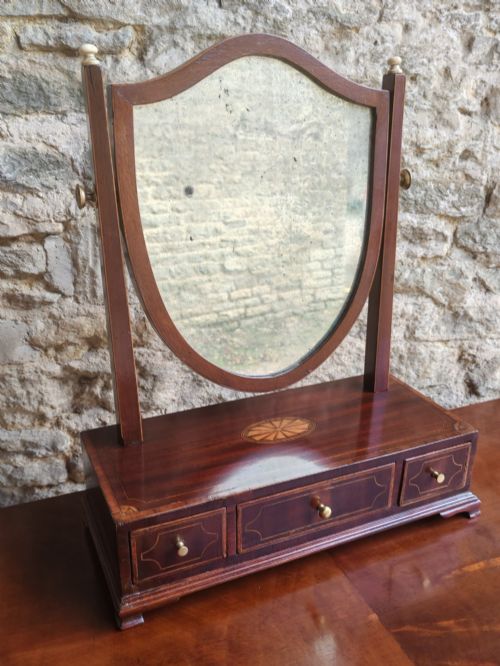
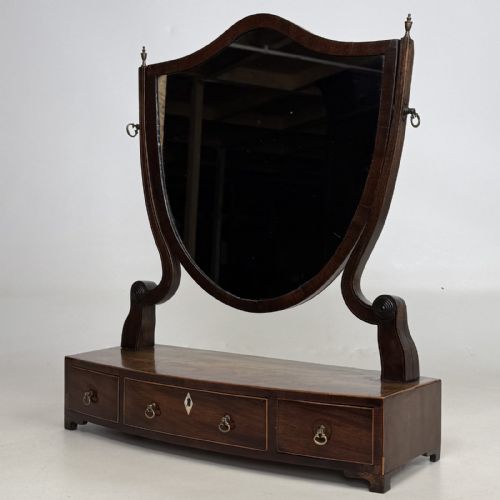
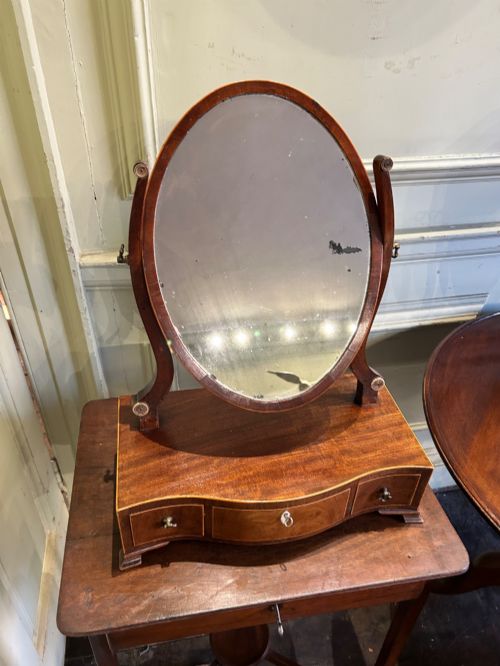
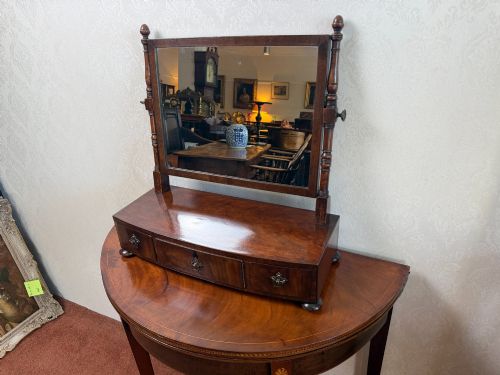
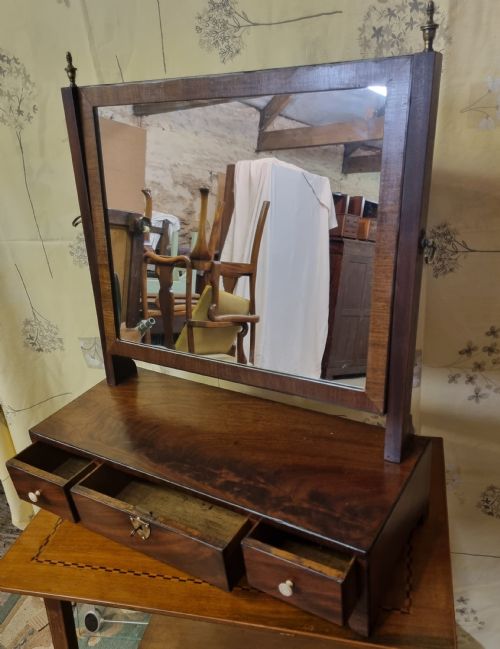
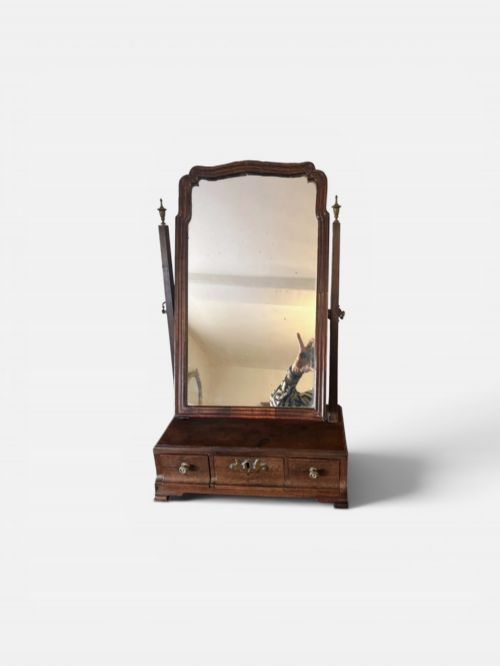
A mahogany box toilet glass sits upon a dressing table or chest, combining a pivoting mirror plate with a small storage base containing tiny drawers. This furniture form developed to assist with shaving, hair dressing and applying cosmetics before electricity simplified domestic routines.
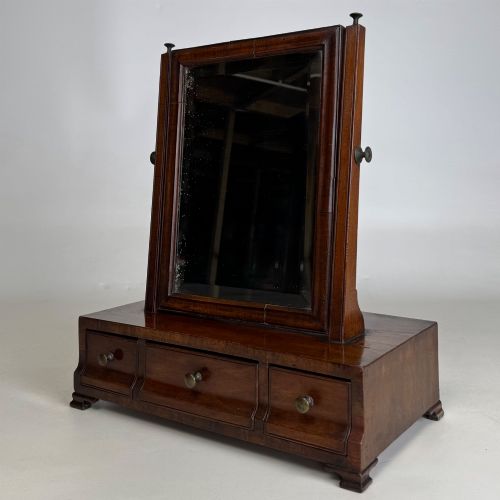
The most common examples encountered on this page belong to the Georgian and Regency periods, spanning the eighteenth and nineteenth centuries. These pieces typically rest on bracket feet or box plinths, holding a vertical or horizontal glass frame between upright support arms.
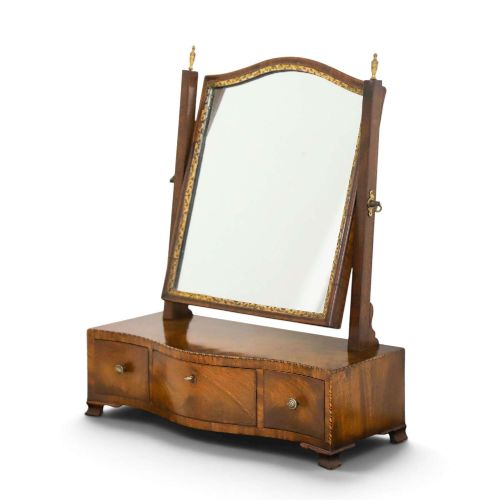
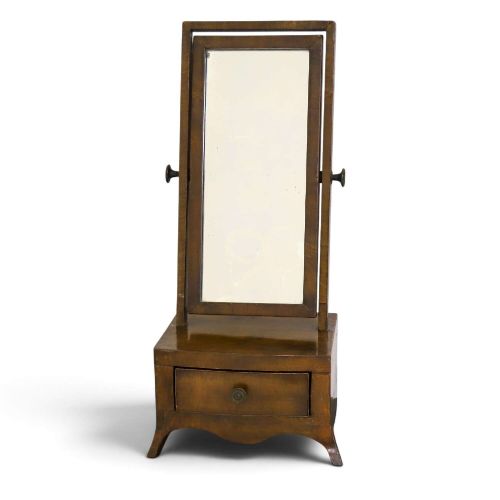
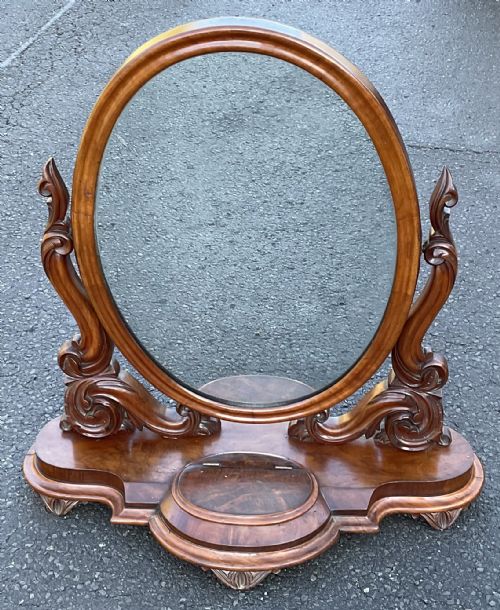
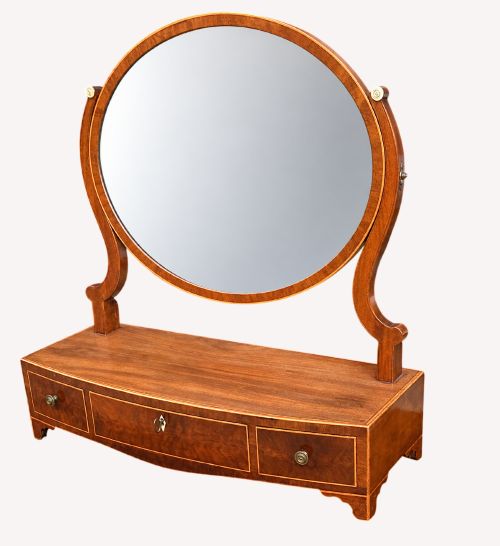
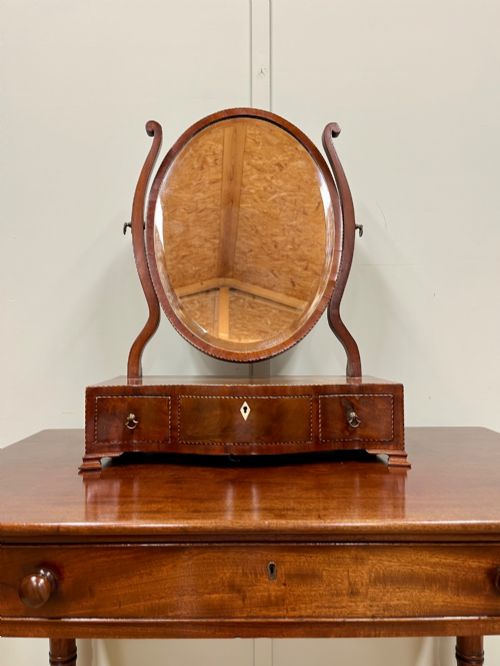
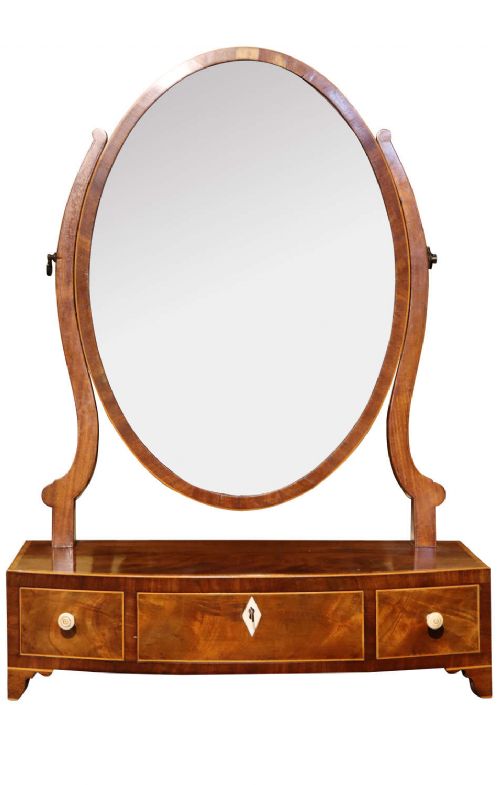
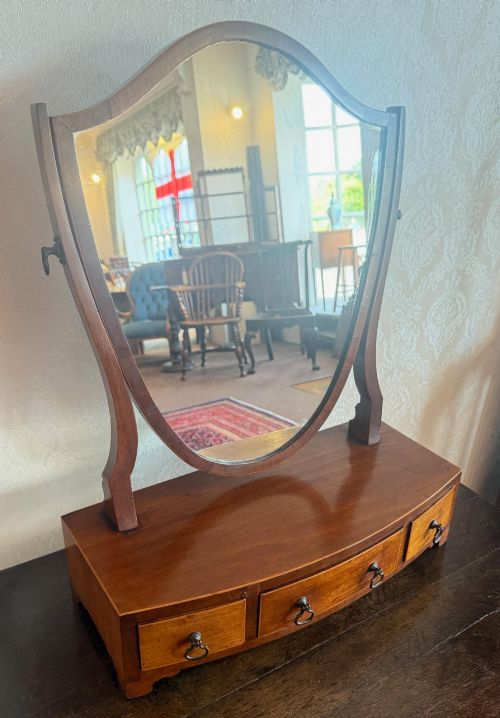
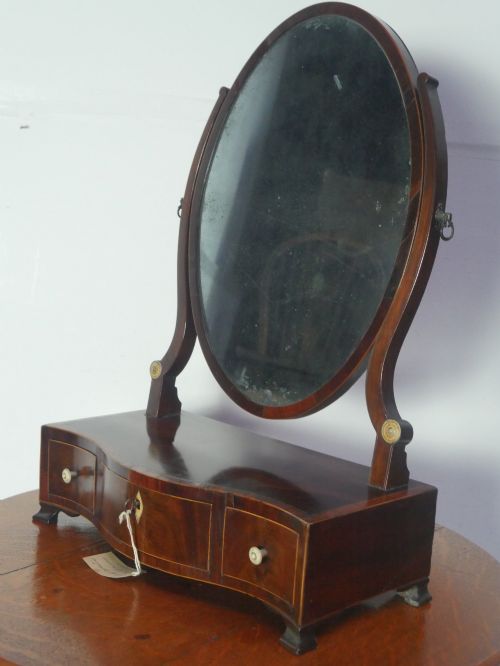
Makers constructed these mirrors in various silhouettes, ranging from simple rectangular plates to serpentine fronts, bow-fronts and oval formats. Variations include crossbanding, boxwood inlay and parcel-gilt highlights that reflect the prevailing stylistic shifts of each decade.
Distinguishing quality factors
Proportion and timber selection dictate the standing of a piece within its category. Superior examples display carefully matched flame mahogany veneers, precise dovetail joints on the drawers and elegant shaping to the mirror horns and base brackets.
The sophistication of the base layout also signals grade, with serpentine or bow-front profiles requiring greater woodworking skill than plain rectangular boxes. Integrated crossbanding, fine stringing and original mercury mirror glass further elevate a piece.
Mahogany Box Toilet Glass Retail Price Guide 2026
Typical asking prices for mahogany box toilet glass among the pieces listed under this phrase on Sellingantiques today, from the lower quarter to the upper quarter. They describe what is for sale here now, not the wider market.
Several miniature drawers hide secret compartments designed for storing small trinkets and hidden love letters.
The Mahogany Box Toilet Glass Glossary
- Toilet glass
- A portable mirror designed for tabletop use during personal grooming. These units pair a swing frame with a small box base.
- Serpentine
- A curved shape featuring a convex centre flanked by concave wings. This flowing outline appears on the front of better quality mirror bases.
- Crossbanding
- A narrow strip of veneer laid across the grain of the primary surface. This decorative border technique frames drawer fronts and box edges.
- Parcel-gilt
- Partially gilded woodwork where gold leaf highlights specific carved details. It contrasts with the dark reddish tone of polished mahogany.
- Swivel mirror
- A glass plate hung on pivoting side screws between two upright arms. This mechanism allows the user to tilt the reflection angle.
Mahogany Box Toilet Glass: Frequently Asked Questions
How do I use a toilet glass today?
These mirrors sit comfortably on modern dressing tables, chests of drawers or console tables in bedrooms and hallways.
They provide a functional, adjustable reflection while offering small drawer space for jewellery and everyday accessories.
How do I date a mahogany mirror?
Examining the construction methods of the box and drawer dovetails reveals the period of manufacture.
Earlier eighteenth-century pieces often feature serpentine shapes and parcel-gilt details, whereas nineteenth-century examples lean towards simpler rectilinear forms or distinct Victorian proportions.
Why are some mirrors oval?
Oval mirror plates became fashionable during the latter half of the eighteenth century under neoclassical influence.
Cabinet makers mounted these curved glasses within rectangular frames or pivoted them above serpentine storage boxes to soften the overall geometry.
Are the mirror plates original?
Many surviving pieces retain their early mirror glass, which can show characteristic light foxing and oxidation.
Replacement glass does occur over centuries of use, though older plates display subtle distortions and hand-silvered qualities absent in modern float glass.