
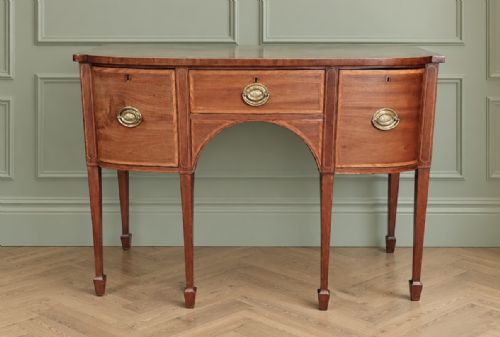
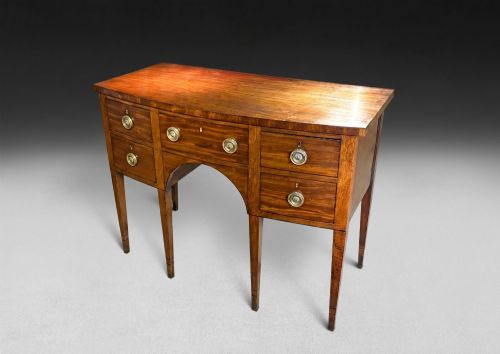
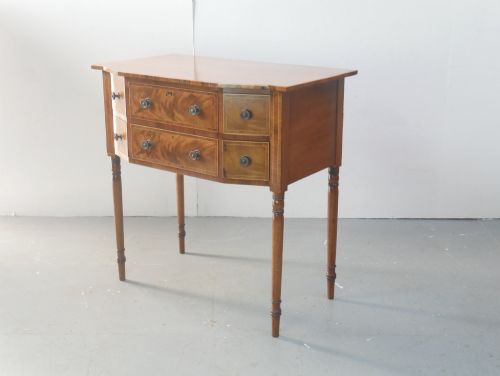
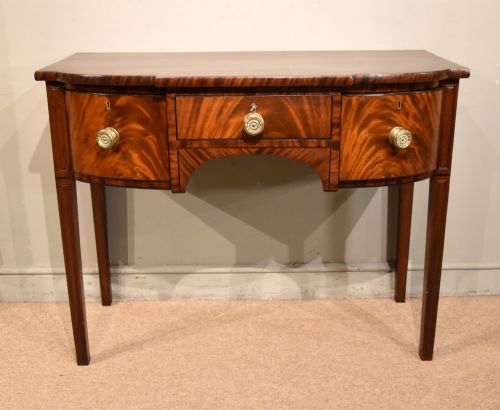
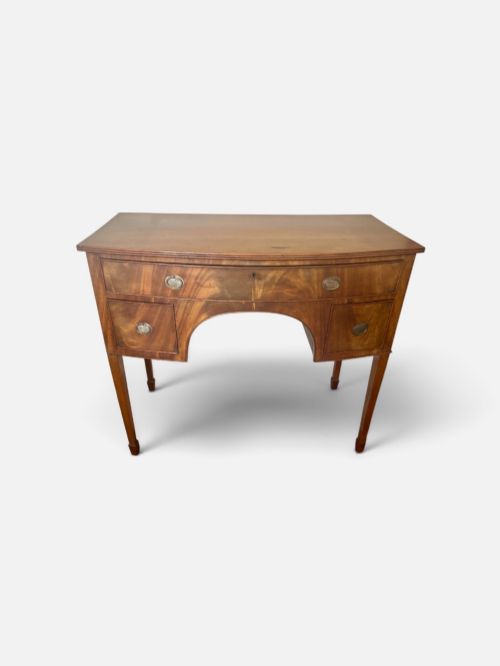
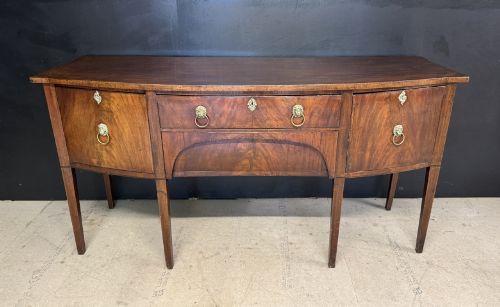

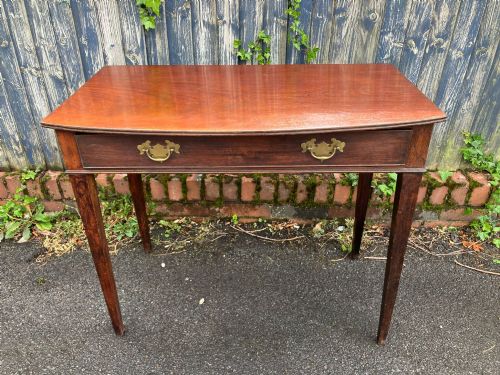
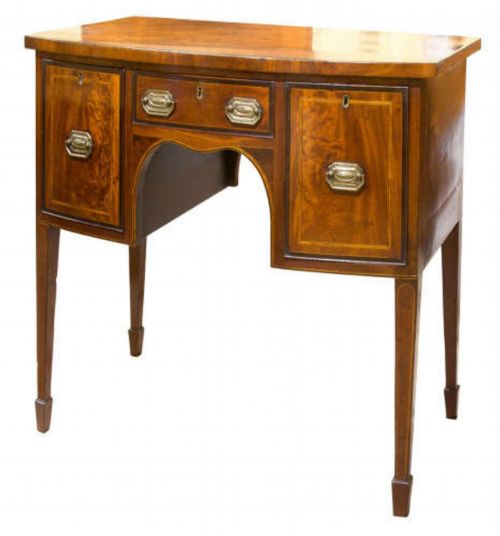
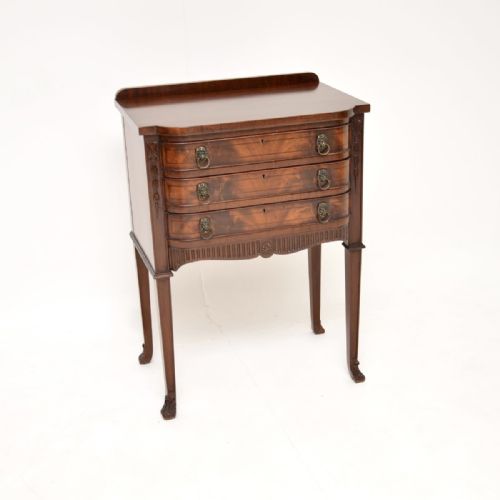
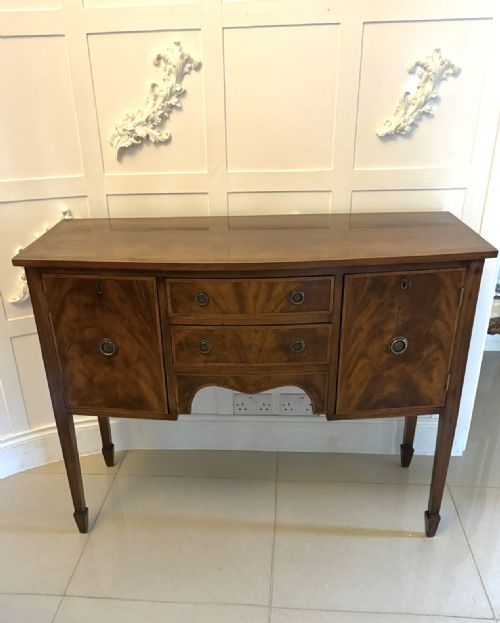

Mahogany Bowfront Table
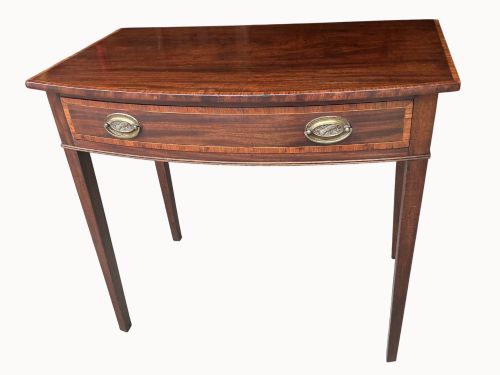
A mahogany bowfront table brings the curved elegance of Georgian and Regency craftsmanship into a room.
Mahogany Bowfront Table
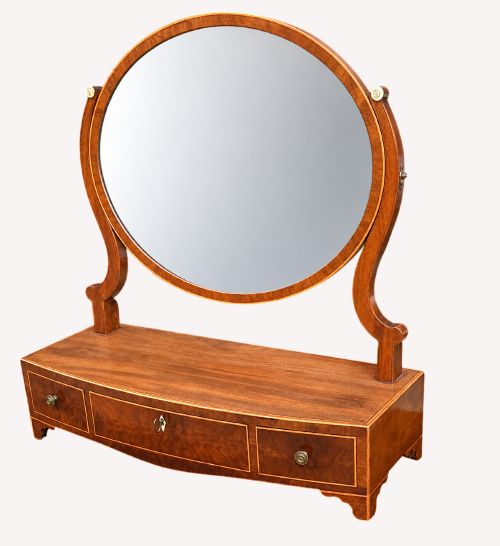
When you search for a mahogany bowfront table, you look at items designed with a convex curved front that softens the lines of a room. The pieces in this group span side tables, serving tables, dressing tables, writing tables, and bedside tables.
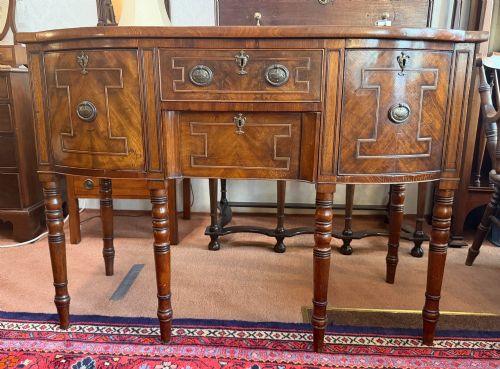
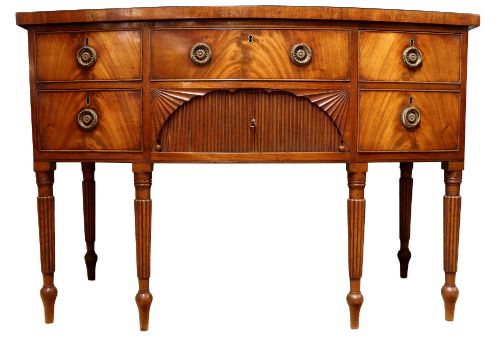
The selection ranges from eighteenth-century Georgian and George III examples to later nineteenth-century pieces and twentieth-century revivals. Side tables and dressing tables appear most frequently alongside larger sideboards.
Makers and designers from the Georgian and Regency periods established the curved silhouette, which later cabinet makers reproduced in Edwardian and twentieth-century workshops. These forms suit hallways, bedrooms, and dining spaces where depth is limited by the curve.
How they were made
Cabinet makers constructed these pieces using solid mahogany and flame mahogany veneers applied to secondary woods. The curved front required specialist steaming and shaping techniques to achieve the smooth bow contour without splitting.
Workshops embellished surfaces with contrasting timber details, incorporating boxwood, satinwood, and purpleheart bandings or stringing. Brass handles, escutcheons, and drawer pulls completed the construction of the frieze drawers.
A marble top on a nineteenth-century side table offers a cool, solid landing spot for stray keys and calling cards.
What varies in quality
Quality separates pieces through the selection of timber and the precision of the curved drawer fronts. Finer examples display symmetrical flame mahogany veneer patterns that wrap cleanly around the convex radius.
The crispness of the boxwood and satinwood inlay indicates the skill level of the original workshop. Subtler differences appear in the weight and hand-chasing of the brass hardware and the tightness of the dovetail joints in the drawers.
Maples
The Mahogany Bowfront Table Glossary
- Bowfront
- A convex curved cabinet front that projects outward in an arc. This shape gained popularity in the Georgian period to soften room angles.
- Crossbanding
- A border of veneer laid with the grain running perpendicular to the surrounding surface. Cabinet makers used contrasting timbers like satinwood for this decorative framing.
- Stringing
- Thin inlaid lines of light-coloured wood set into a darker surface. This technique outlines drawer fronts and table edges on Sheraton and Regency pieces.
- Flame mahogany
- Timber cut from the fork of the mahogany tree to reveal a rippled, flickering grain pattern. Makers reserved this veneer for primary focal points like drawer faces.
- Frieze
- The horizontal band situated directly beneath the tabletop. This section frequently houses one or more drawers fitted with brass pulls.
Mahogany Bowfront Table: Frequently Asked Questions
Where do I put a mahogany bowfront table?
These tables fit well in narrow hallways, living rooms, and bedrooms because the curved front reduces the overall footprint.
They serve effectively as serving surfaces, writing desks, or dressing tables depending on the specific form.
How do I date a mahogany bowfront table?
Dating relies on examining construction methods, timber choices, and hardware styles across periods from the eighteenth century onward.
Georgian and Regency pieces show hand-cut dovetails and older secondary woods, while Edwardian and later revivals display standardised fixings.
Did these tables always have drawers?
Many examples include one or more frieze drawers beneath the top, though some serving and side tables remain un-drawerded.
Kneehole dressing tables and writing tables typically integrate functional drawer layouts into the curved frame.
What is the difference between a side table and a serving table?
Serving tables generally possess larger proportions suited to dining rooms for food and dish placement.
Side tables offer more compact dimensions designed for general placement against walls in hallways or reception rooms.