



Mahogany and Brass Planter
These mahogany and brass planters bring rich timber and gleaming metalwork together to house greenery with classic proportion.

Mahogany and Brass Planter
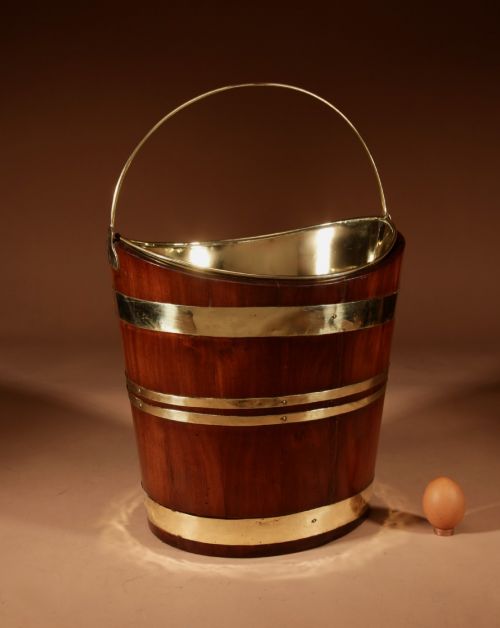
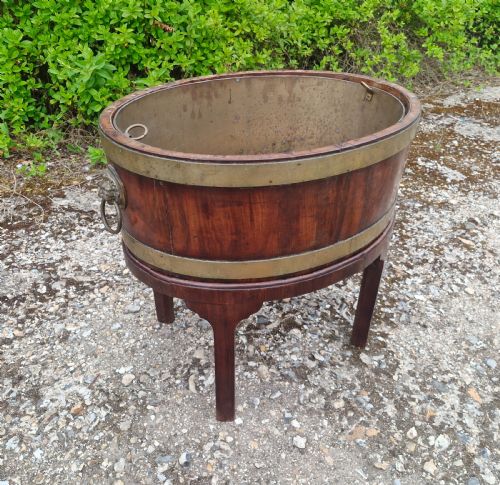
A mahogany and brass planter serves as a vessel for greenery, drawing on historical forms originally designed to cool wine or store peat. Buyers encounter round, oval and boat-shaped examples spanning the Georgian, Regency, Victorian and Edwardian periods.
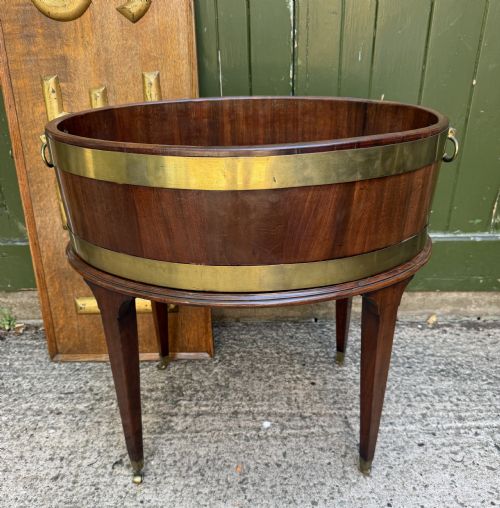
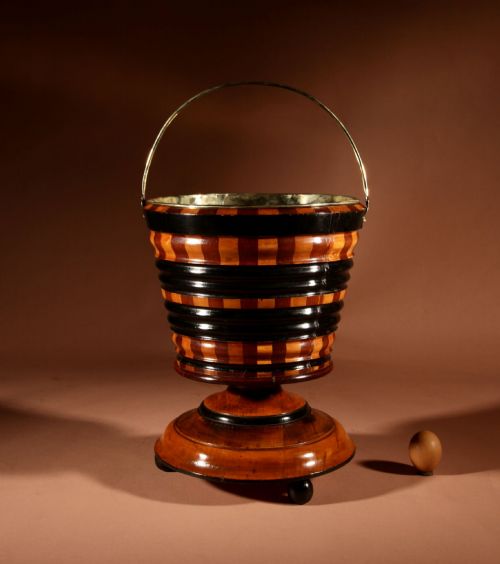
Many pieces trace their lineage to Dutch coopered buckets and tea stoves, utilising stave construction with tight joints. Makers applied brass bands and carrying handles to secure the timber vessels while adding decorative contrast.
Materials and construction methods
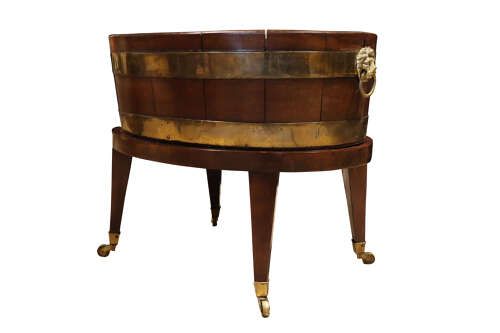
Craftsmen built these vessels primarily from solid mahogany, walnut and ebonised wood, frequently employing coopered staves held together by heavy brass bands. Some iterations incorporate satinwood inlay, box tree details or ormolu mounts to enrich the surface texture.
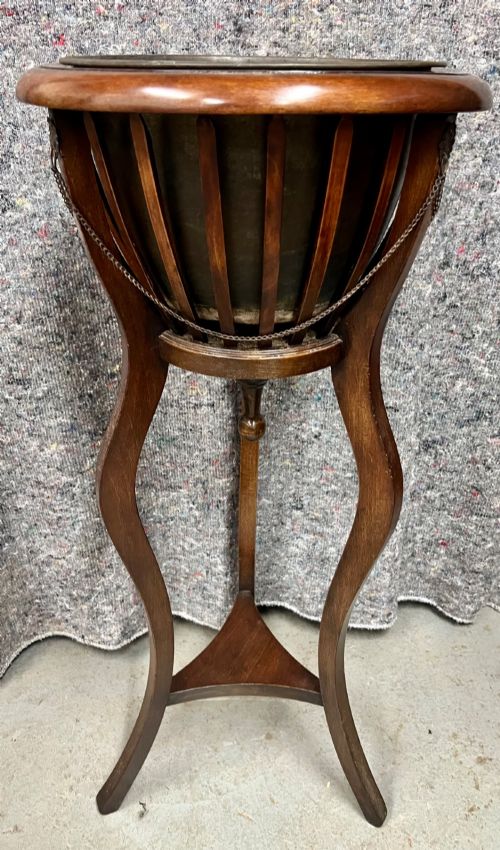
Internal zinc or metal liners protected the wooden staves from moisture when holding damp soil or melting ice. Artisans shaped these liners to fit snugly inside round, oval or boat-shaped bodies.
Listings feature pieces spanning from the 18th century through the Georgian, Regency, Victorian and Edwardian eras, utilising mahogany, walnut, zinc and brass.
Distinguishing quality across examples
The precision of the cooperage and the weight of the brass fittings dictate the structural integrity of each vessel. Superior pieces maintain tight stave joints and substantial metal bands that show crisp forming.
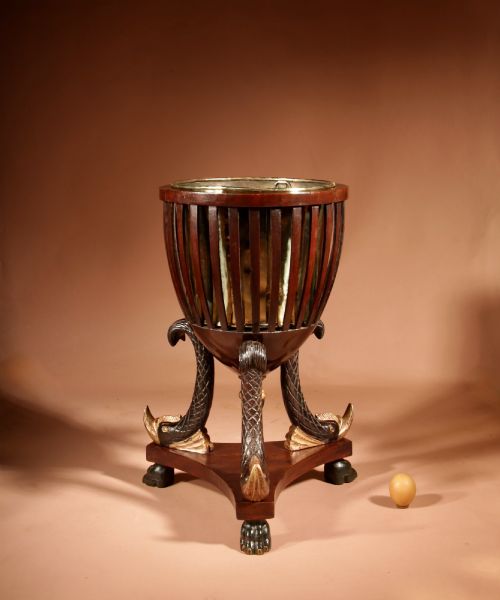
Selected examples rest on dedicated stands with inlaid decoration or carved legs, elevating the form from a simple bucket to a formal piece of furniture. The quality of the timber grain and the presence of original liners further elevate an item.
The Mahogany and Brass Planter Glossary
- Coopered wood
- Timber constructed from vertical staves joined together to form a rounded vessel, traditionally shaped by a cooper using specialised hand tools.
- Cellarette
- A lockable container or subterranean-style bin used for storing wine bottles, often sharing identical forms and brass-bound construction with planters.
- Jardiniere
- An ornamental pot or stand designed specifically to hold growing plants or flowers within a domestic interior.
- Peat bucket
- A deep lidded or open container originally used to hold dried peat for fuel, frequently adapted for domestic planting.
- Ormolu
- Gilded bronze mounts applied to furniture and decorative objects, providing polished metallic highlights against dark timber surfaces.
Mahogany and Brass Planter: Frequently Asked Questions
What is a mahogany and brass planter used for?
These vessels function primarily as decorative plant stands and indoor jardinieres to house potted greenery. Their robust construction and fitted metal liners safely contain soil and water.
Historically, many of these pieces began life as wine coolers, cellarettes or peat buckets before finding a secondary purpose in holding flora.
How do I care for the timber?
Keep the wood away from direct heat sources and sudden temperature changes to prevent the staves from shrinking or cracking. Dust regularly and apply a suitable wax polish periodically to maintain the lustre of the mahogany.
Ensure that internal metal liners are removed or thoroughly dried after watering plants to protect the surrounding wooden structure from moisture damage.
How do I tell a Georgian piece from a later one?
Georgian and Regency examples typically exhibit hand-cut dovetails, dense solid mahogany timbers and heavy, patinated brass bands secured with hand-made copper rivets. The proportions are often sharper and reflect formal neoclassical design principles.
Later Victorian and Edwardian revivals often incorporate machine-made screws, lighter secondary timbers and standardised brass fittings, alongside different interior liner configurations.
Can I plant directly into the container?
Planting directly into the vessel is generally discouraged unless a reliable, watertight zinc or metal liner is present to shield the wooden staves. Even with a liner, excess pooling water can cause rot over extended periods.
Place potted plants inside the removable liner so you can take them out for watering and drainage away from the antique timber.