


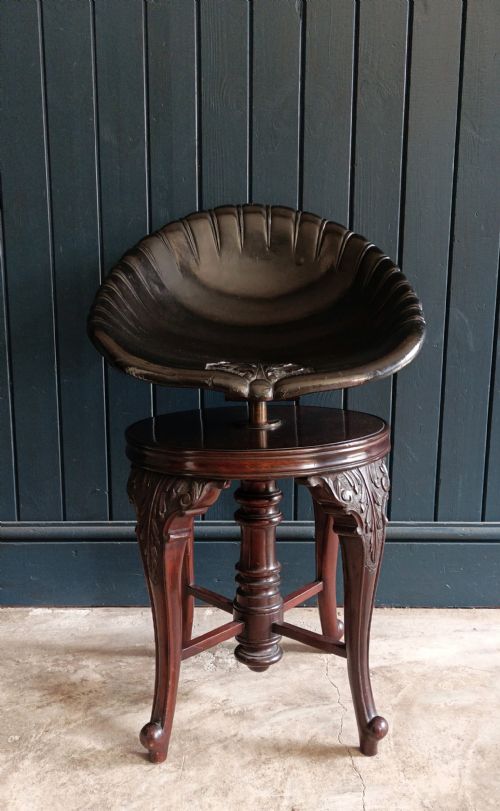
Mahogany Adjustable Stool
A mahogany adjustable stool offers a practical mechanical design alongside rich timber grain, serving musicians and dressing tables alike.
Mahogany Adjustable Stool
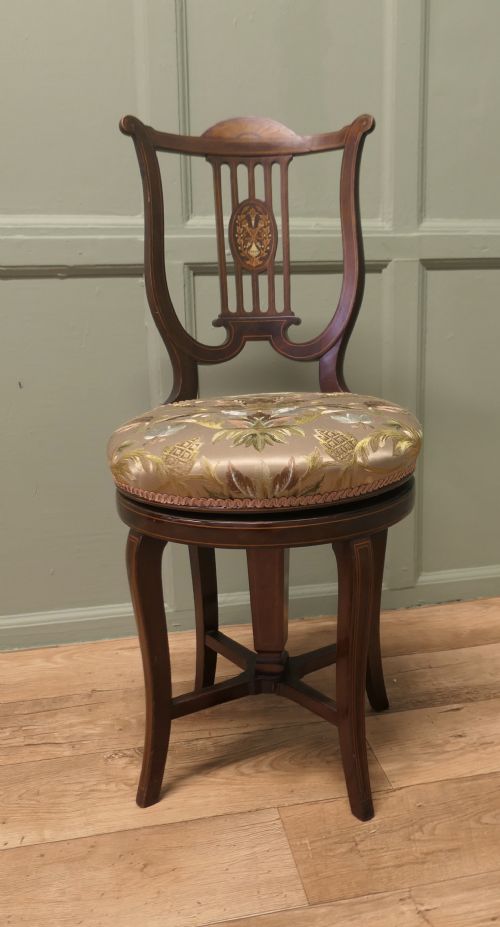
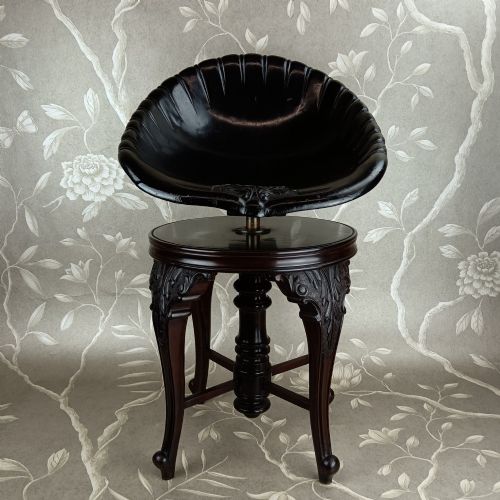
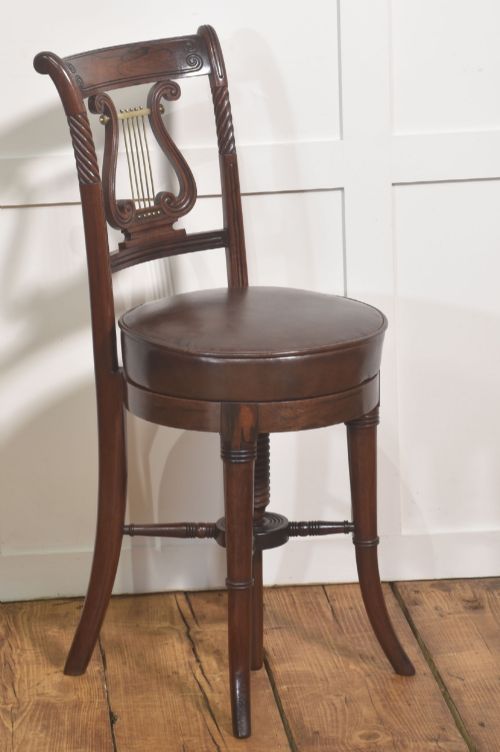
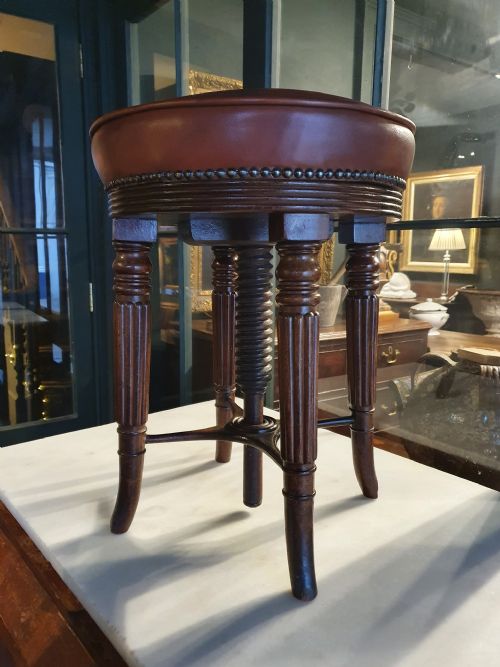
A mahogany adjustable stool is primarily encountered as a revolving piano stool, music chair, or dressing table seat originating from the nineteenth and early twentieth centuries. These pieces appear in forms ranging from simple circular revolving tops to elaborate lyre-back music chairs and metamorphic gout stools. They bridge domestic utility and functional mechanics, designed to alter height or position for the user.
The selections span distinct historical periods including Regency, William IV, Victorian, and Edwardian eras, reflecting changing domestic fashions. Piano stools and music chairs dominate the records, alongside occasional footstools, duet stools, and dressing chairs. Makers and makers' marks occasionally appear, connecting pieces to established workshops of the past.
How they were made
The primary timber used is mahogany, often shaped into circular tops, tripod legs, or carved frames. Brass mechanisms, screws, and inlay provide the necessary hardware for height adjustment and rotation. Workshops combined this dense timber with upholstery, leather, or velvet to form padded seats.
Makers utilised mechanical screws and swivelling pivots hidden beneath the upholstery to achieve the adjustable height function. Decorative details such as brass inlay, papier-mâché, and carved tripod supports were applied to elevate the appearance of the seating.
Listings feature mahogany paired with brass, leather, velvet, and papier-mâché across Victorian, Regency, and Edwardian periods.
What varies in quality
The distinction between standard items and superior examples rests upon the sophistication of the adjustment mechanism and the execution of the woodwork. Pieces bearing attribution to known makers display finer carving on the legs and tighter joints in the revolving screw assembly. Superior grade items integrate brass inlay or specialised forms like the lyre back with greater precision.
Upholstery materials and secondary details such as original leather or velvet distinguish ordinary utility pieces from finer salon furniture. The stability of the swivel action and the weight of the mahogany timber indicate the standard of construction applied by the original workshop.
Jennens and Bettridge·Gillows·James Shoolbred·H Brooks and Co
The Mahogany Adjustable Stool Glossary
- Revolving piano stool
- A seat featuring a mechanism that allows the top to spin and alter height via a central screw thread.
- Gout stool
- An adjustable footrest designed to elevate and support the foot or leg at a variable angle.
- Lyre back
- A chair back shaped in the symmetrical outline of an ancient musical instrument, often seen on music chairs.
- Papier-mâché
- A moulded composite material made from paper pulp and binder, utilised for decorative panels on specific Victorian pieces.
- Metamorphic
- A descriptive term for furniture that transforms from one functional form into another, such as a stool altering its angle.
Mahogany Adjustable Stool: Frequently Asked Questions
How do you adjust the height?
The seat rotates around a central wooden or metal screw thread, raising or lowering as it turns.
Some examples utilise a mechanical ratchet or patent mechanism hidden beneath the upholstery.
Where were these placed originally?
They stood beside pianos, harp stands, and dressing tables in period drawing rooms and boudoirs.
Smaller variants served as footstools or gout stools near firesides.
How do I date a stool?
Dating relies on the stylistic markers of periods such as Regency, William IV, or Edwardian design.
Turned legs, brass inlay, and any maker stamps or patent marks provide additional chronological clues.
Are the seats always upholstered?
Most examples feature padded tops covered in leather, velvet, fabric, or textile materials.
A number of pieces present plain or inlaid wooden swivel tops without upholstery.