


Luri Tribal Rug
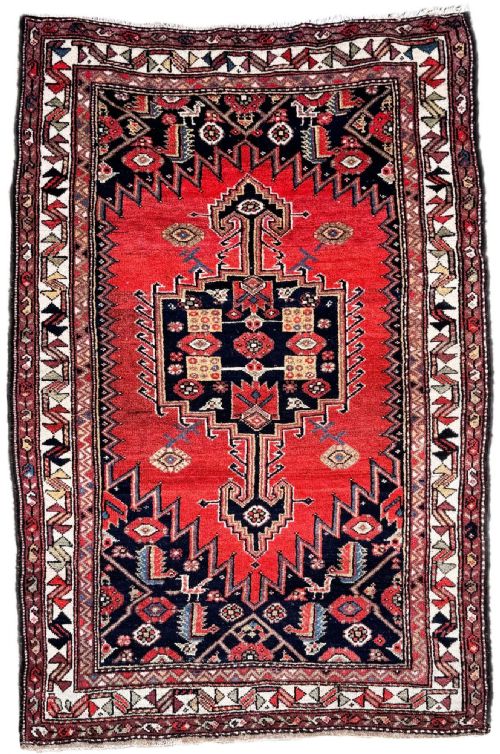
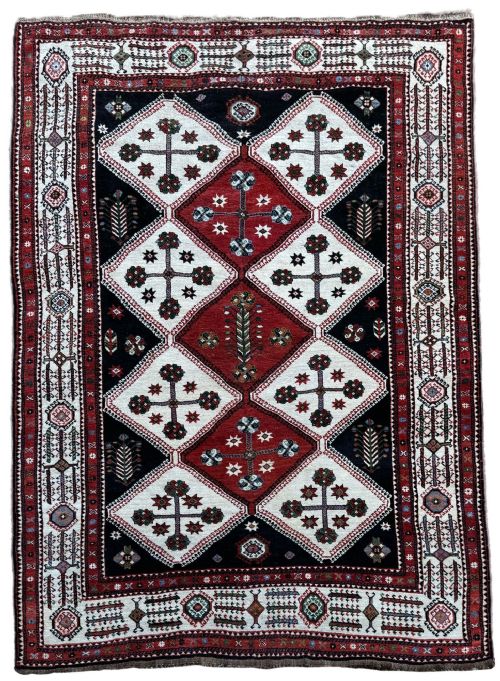
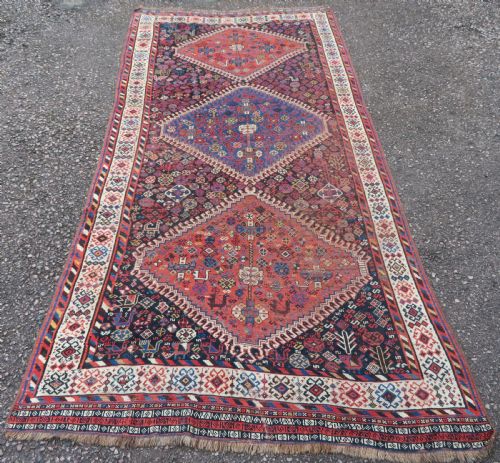
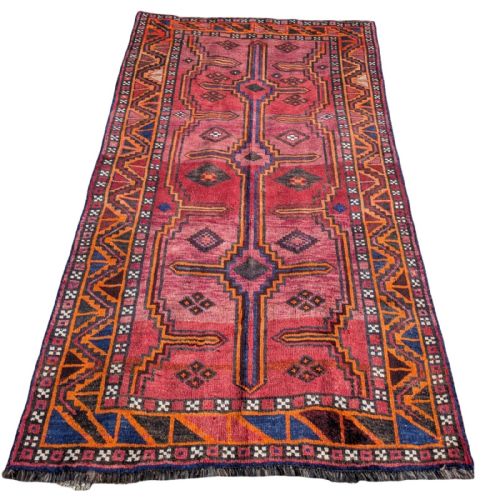
A luri tribal rug brings robust wool and geometric motifs from western Persia into a room.
Luri Tribal Rug
A luri tribal rug originates from the nomadic and village weavers of Luristan and western Persia. These pieces include floor coverings, runners, kelim rugs, and functional utilitarian items such as bread sofrehs and wheat sacks.
The material record spans from the late nineteenth century through to the 1930s. Buyers encounter formats ranging from small bag faces and saddle bags to larger carpets and long rugs.
Designs draw upon Persian tribal traditions, often sharing visual traits with neighbouring Qashqai and Khamseh groups. Motifs feature repeat shield patterns, trees of life, flowers, and animals.
How they were made
Weavers utilised hand-spun wool for its durability and resilience. This material forms both the foundation and the pile of the textiles.
Natural dyes provide the palette, creating deep tones that age gracefully over time. Hand weaving techniques ensure each piece retains a characteristic rustic structure.
Listings feature hand-spun wool and natural dyes across pieces dated from the nineteenth century to 1930.
What varies in quality
The distinction lies in the handling of natural dyes and the precision of the tribal design. Stronger visual balance and clear colour saturation separate the finer examples from standard village work.
Knot density and the integrity of the hand-spun wool foundation dictate the longevity of the carpet. Pieces exhibiting crisp iconography and well-rendered motifs command greater attention.
The Luri Tribal Rug Glossary
- Sofreh
- A woven spread used for kneading bread or serving meals. These flatwoven pieces often display striking geometric compositions.
- Tacheh
- A traditional wheat sack utilised by tribal groups for storage and transport. They are typically collected for their compact and graphic designs.
- Kelleh
- A format descriptor for a carpet that is longer than it is wide, though broader than a standard runner. These rectangular textiles suit specific gallery spaces.
- Khamseh
- A confederation of tribes whose weaving traditions intersect with Luri production. Shared design elements often link these groups in historical attributions.
- Luristan
- A mountainous province in western Persia associated with nomadic weaving. The region is known for robust wool textiles employing natural dyes.
Luri Tribal Rug: Frequently Asked Questions
Where were luri tribal rugs made?
These textiles originate from Luristan and western Persia, produced by the Luri and Luri-Bakhtiari tribes inhabiting the region.
Weavers worked within nomadic and village settings, drawing on local materials and traditional designs passed down through generations.
What is a tacheh?
A tacheh is a traditional wheat sack woven for agricultural and domestic storage by tribal groups in western Persia.
Collectors prize them today as compact examples of tribal weaving, often featuring dense geometric patterns across the face.
How do I care for wool rugs?
Protect the wool pile by vacuuming gently without a rotating brush bar and keeping the textile away from direct sunlight.
Allow air circulation underneath and consult a specialist in antique Persian carpets for professional washing when required.
Are these rugs suitable for hallways?
Long rugs and narrow runners produced by these tribes function well in corridors and high-traffic areas.
Their sturdy hand-spun wool construction handles regular foot traffic while adding traditional geometric colour to narrow spaces.
How can I date an antique rug?
Dating relies on assessing the natural dyes, the handling of the hand-spun wool, and stylistic conventions recorded in the weaving.
Pieces from the nineteenth and early twentieth centuries display characteristic wear patterns and dye variations distinct from later production.