


Flat Weave Tribal Textile
A flat weave tribal textile brings geometric structure and nomadic history into a room through wool and natural dyes.
Flat Weave Tribal Textile
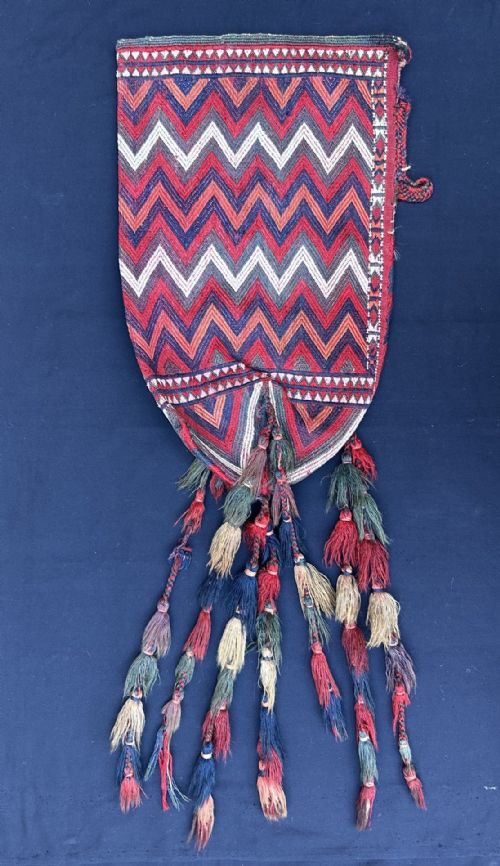
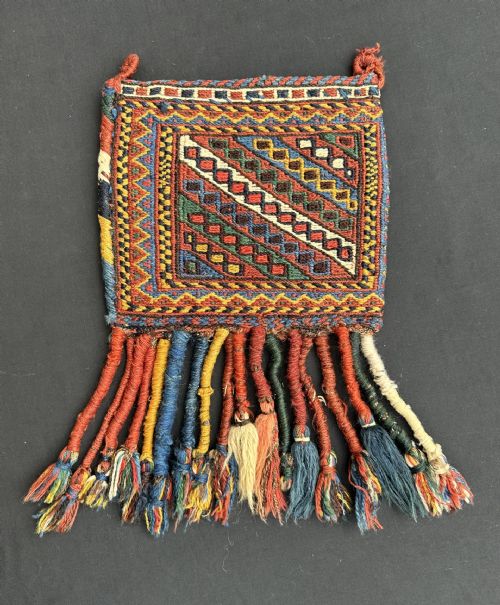
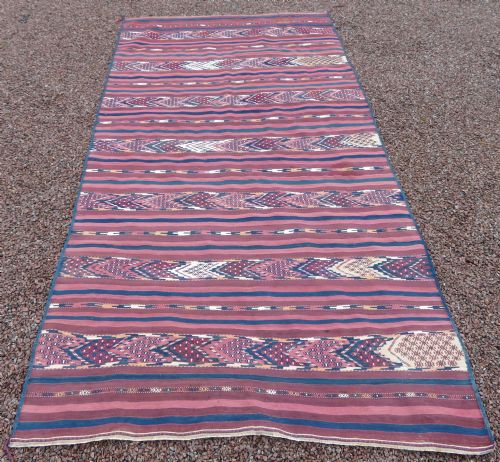
A flat weave tribal textile is a utilitarian item made by nomadic and village weavers across Central Asia, Persia, the Caucasus, and Anatolia. When searching for a flat weave tribal textile, buyers encounter functional objects including storage bags, saddlebag faces, floor coverings, and cushions dating from the mid-nineteenth century to the early twentieth century.
The pieces on this page span several distinct regional traditions, featuring Turkmen, Shahsevan, Afshar, Luri, and Caucasian tribal origins. These textiles served practical roles within tribal life, functioning as grain bags, bedding sacks, and wall hangings before entering the antique market.
Most examples rely on specific regional formats such as the chuval, torba, khorjin, and mafrash. These formats dictate the scale and proportions of the pattern, ranging from long runner dimensions to square storage panels.
Assessing quality and execution
Quality in a flat weave tribal textile depends on the tightness of the weave, the clarity of the graphic design, and the integrity of the natural dyes. Finely spun wool and precise geometric execution elevate an everyday utility bag into a sophisticated piece of textile art.
The presence of original backs, complete fringes, and tassels distinguishes well-preserved examples from fragmentary panels. Better pieces retain their structural balance and crisp chromatic contrasts, showing minimal distortion across the flat surface.
Salt bags occasionally retain traces of mineral dust trapped tightly within their soumak folds from decades spent hanging inside nomadic tents.
Turkmen Tribes·Afshar Nomads·Shahsavan Nomads·Bakhtiari Tribes·Luri Tribes
The Flat Weave Tribal Textile Glossary
- Soumak
- A brocade-like flat-weaving technique where coloured weft threads are wrapped over the warp threads in various sequences. This method creates a textured surface and adds durability to storage bags and salt bags.
- Chuval
- A large storage bag traditionally used by Turkmen tribes for household goods and bedding. These pieces often feature repeating guls and banded designs.
- Torba
- A smaller storage bag than the chuval, typically hung inside a nomadic tent for personal items. They often display intricate border systems and precise tribal motifs.
- Mafrash
- A rectangular bedding chest panel woven in soumak or pile techniques by Shahsevan and Caucasian nomadic groups. Four side panels and a base formed a complete trunk.
- Cicim
- A decorative flat-weave technique involving supplementary weft threads that create raised patterns on the surface. Weavers utilised this method to add texture and secondary designs to plain weave grounds.
- Khorjin
- A paired saddlebag designed for transport on animals, featuring two compartments connected by a central web. Surviving examples frequently appear separated into individual bag faces.
Flat Weave Tribal Textile: Frequently Asked Questions
What is a flat weave tribal textile?
A flat weave tribal textile is an unpiled woven fabric created by nomadic groups for utilitarian storage and daily use. These items include salt bags, saddlebags, and floor spreads.
Unlike knotted pile carpets, these pieces rely on interweaving warp and weft threads to build crisp geometric patterns. Their construction reflects the practical needs and artistic traditions of specific weaving communities.
How were these tribal bags used?
Nomadic families utilised these textiles to transport and store grain, salt, clothing, and bedding inside tents. Their robust flat weave construction protected contents during seasonal migrations.
Many items doubled as decorative hangings or ground coverings within the nomadic dwelling. Over time, the wear from daily use contributed to the softened character seen in surviving antiques.
How do I style a flat weave textile?
Flat weave tribal textiles adapt well to modern interiors as wall hangings, table covers, or low-profile floor accents. Their graphic patterns and flat profiles suit minimalist and traditional spaces alike.
Smaller bag faces and cushions integrate easily onto seating furniture or display stands. Framing larger panels protects the textile while highlighting its structural geometry on a wall.
How can I tell different tribal designs apart?
Tribal designs depend on distinct regional motifs, colour choices, and weaving structures specific to each group. Turkmen items frequently feature octagonal guls, while Shahsevan and Caucasian pieces display complex diagonal stripes and hooked polygons.
Examining the technical structure, such as soumak wrapping versus simple tapestry weave, provides further clues to origin. Comparing edge finishes and wool preparation helps pinpoint the specific nomadic heritage.