
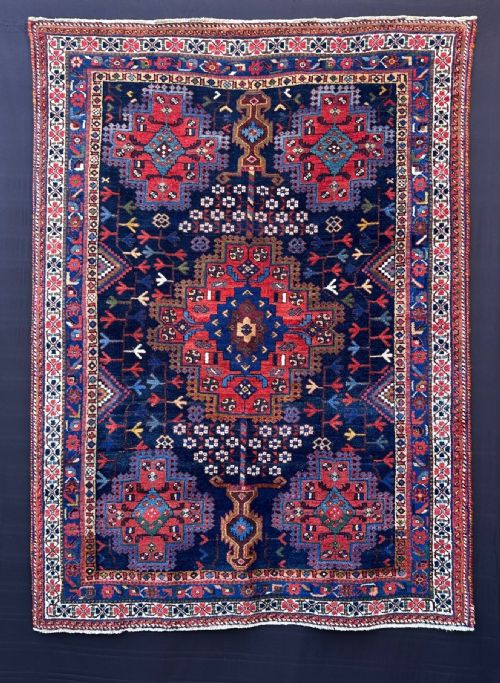


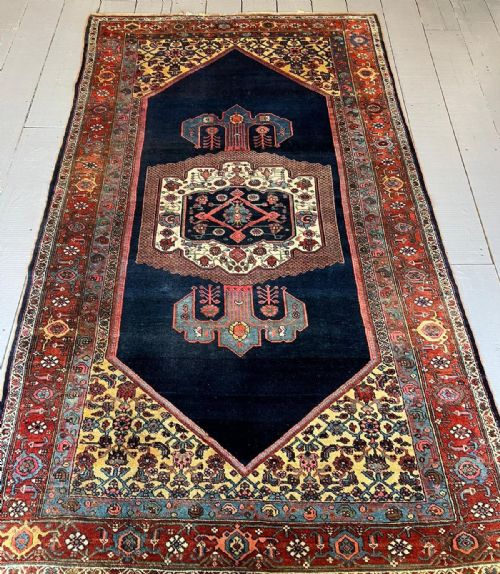


Navy Wool Persia Carpet
A navy wool persia carpet brings deep indigo ground tones and traditional tribal geometry into domestic spaces.
Navy Wool Persia Carpet
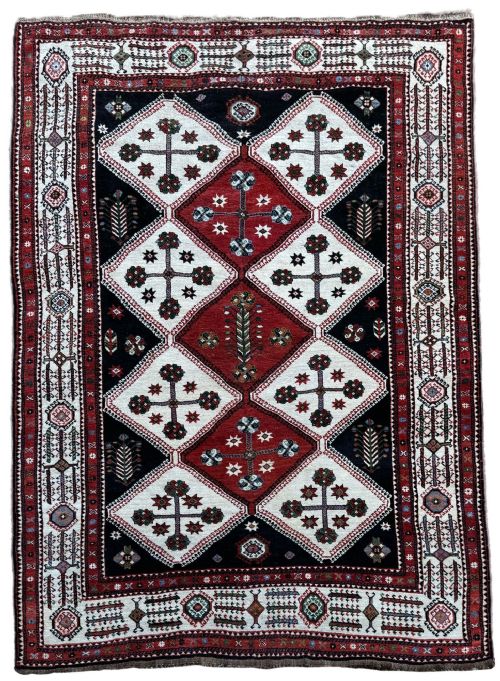
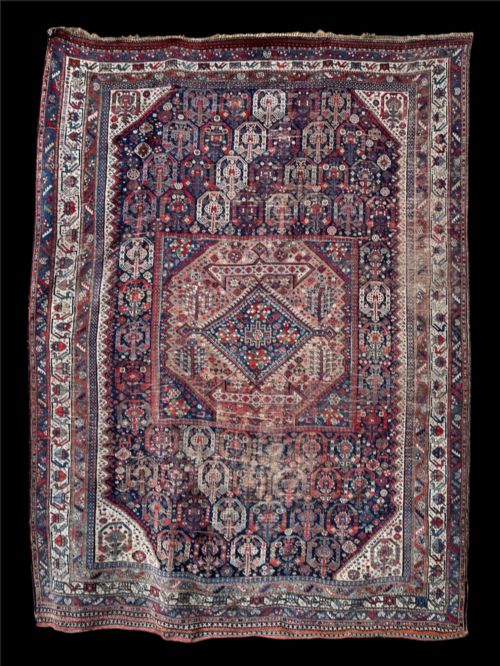
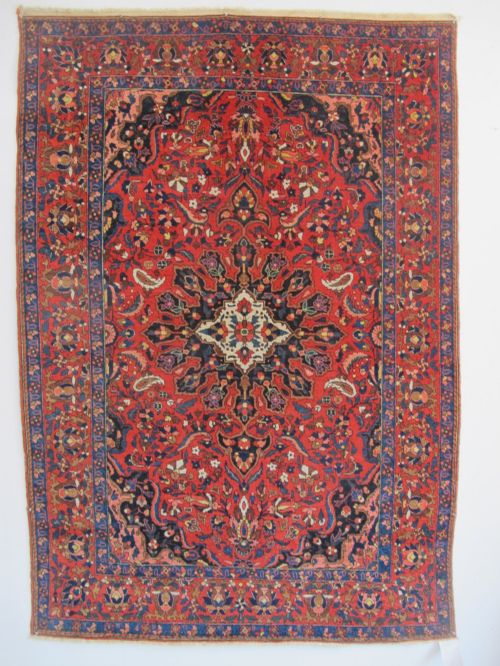
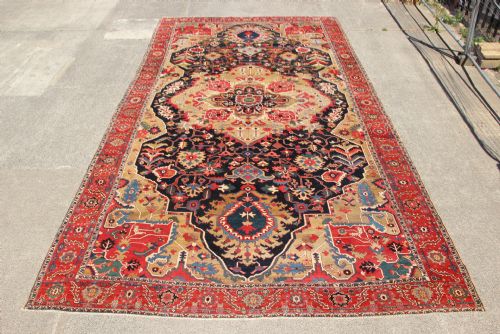
A navy wool persia carpet encompasses hand-knotted room-size floor coverings and runners originating from Persian tribal confederacies and weaving centres. The selection on this page spans the nineteenth and early twentieth centuries, featuring regional styles such as Heriz, Bakhtiar, Khamseh, and Afshar.
Buyers encounter various formats ranging from compact village scatter rugs to large ceremonial carpets and hallway runners. These textiles reflect the distinct aesthetic traditions of nomadic tribes and settled workshops across western, southern, and north-western Persia.
Materials and Construction
Weavers constructed these pieces using durable wool piles knotted onto sturdy cotton foundations. Many examples incorporate natural dyes derived from plants and minerals, yielding nuanced shades that age with considerable depth.
The density of the knotting and the quality of the spun wool determine the tactile resilience of each floor covering. Regional looms employed specific structural techniques, from symmetrical knots in village workshops to asymmetrical knotting in tribal formats.
Listings feature pieces from the late nineteenth century through to the 1920s, constructed predominantly from wool and cotton using natural dyes.
Elements of Distinction
Quality separates along the precision of the tribal drawing, the clarity of the natural dye palette, and the integrity of the wool foundation. Superior examples display balanced proportions, saturated navy grounds, and crisp execution of traditional motifs.
The condition of the original selvedges and the evenness of pile wear also influence the standing of an individual rug. Pieces retaining their full outer borders and authentic end finishes demonstrate higher archival integrity.
The Navy Wool Persia Carpet Glossary
- Kelleh
- A long, narrow room carpet format traditionally used alongside larger floor coverings in Persian homes.
- Selvedge
- The reinforced outer edge of a carpet formed by wrapping warp threads to prevent fraying.
- Warp
- The vertical foundation threads stretched tightly on the loom before knotting begins.
- Weft
- The horizontal threads passed alternately over and under warp threads to secure the rows of knots.
- Heriz
- A north-west Persian weaving centre known for bold geometric medallions and robust structural wool.
Navy Wool Persia Carpet: Frequently Asked Questions
How do I clean an antique Persian rug?
Gentle surface brushing and periodic professional dusting maintain the wool fibres without disturbing the natural foundation.
Avoid harsh chemical immersion or excessive moisture, which can compromise vintage natural dyes and cotton warps.
Can I place these carpets in high-traffic hallways?
Dense wool piles and sturdy cotton foundations allow many of these runner formats to withstand regular residential passage.
Using a quality underlay prevents slippage and cushions the textile against hard stone or wooden flooring.
How do regional styles differ across Persia?
North-western weaving centres like Heriz favour geometric medallions, whilst southern tribal groups such as the Khamseh and Afshar incorporate intricate animal and vegetal motifs.
Central urban workshops typically produce refined curvilinear patterns with balanced floral arrangements.
What indicates a natural dye palette?
Subtleabrush strokes of colour variation, known as abrash, often point to traditional plant-based dyeing methods applied in small batches.
These tones mellow gracefully over decades, developing a characteristic patina absent in synthetic equivalents.