


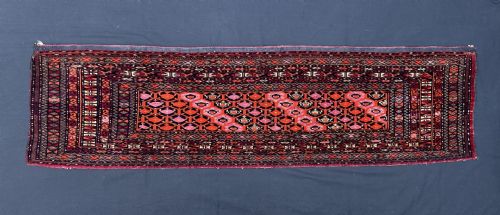
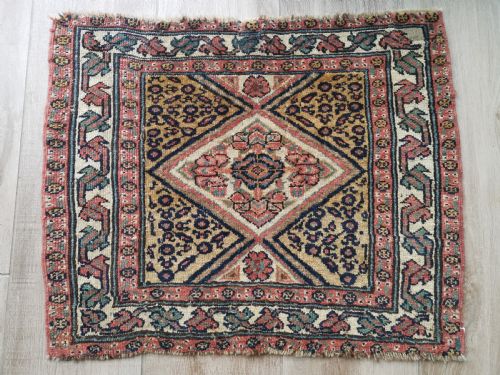
Nomadic Geometric Rug
When you search for a nomadic geometric rug, you step into a world of tribal textile artistry woven by nomadic weavers across Persia, Central Asia, and the Caucasus.
Nomadic Geometric Rug
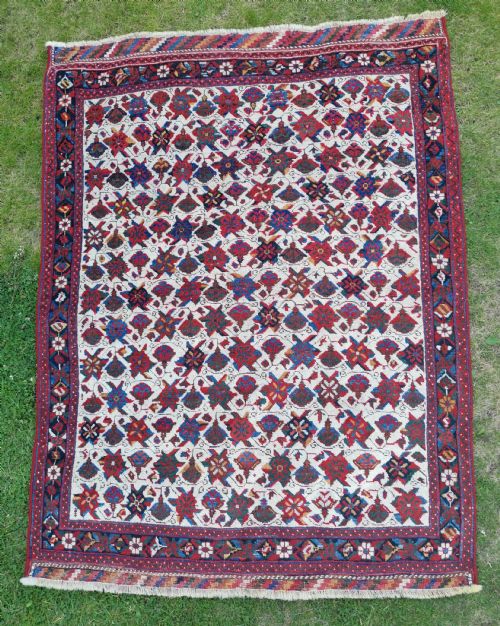
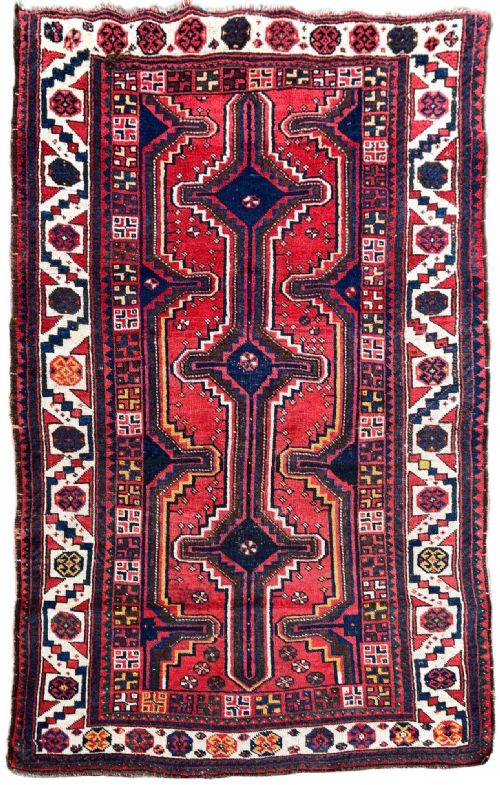
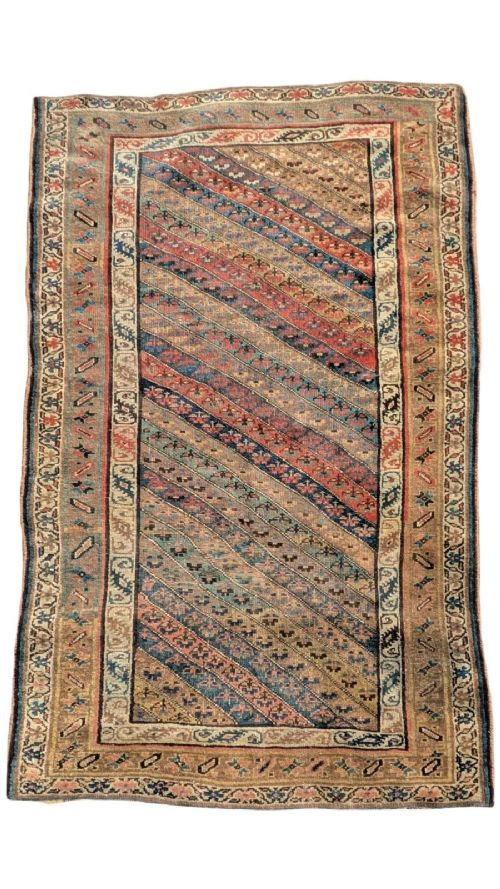
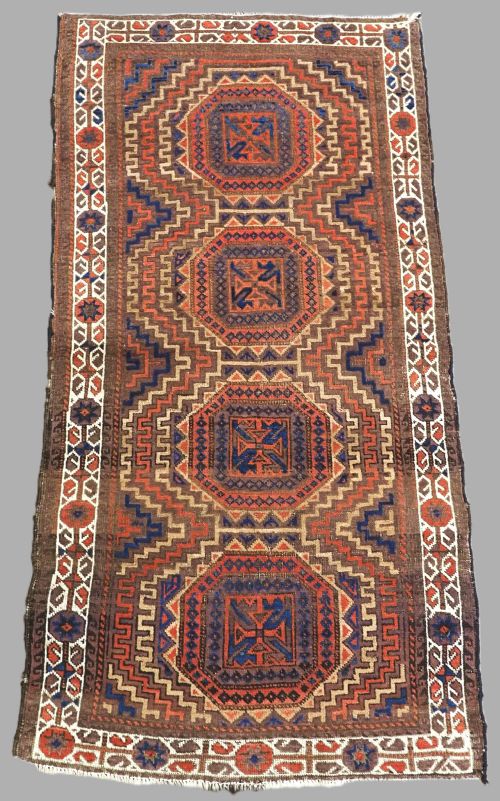
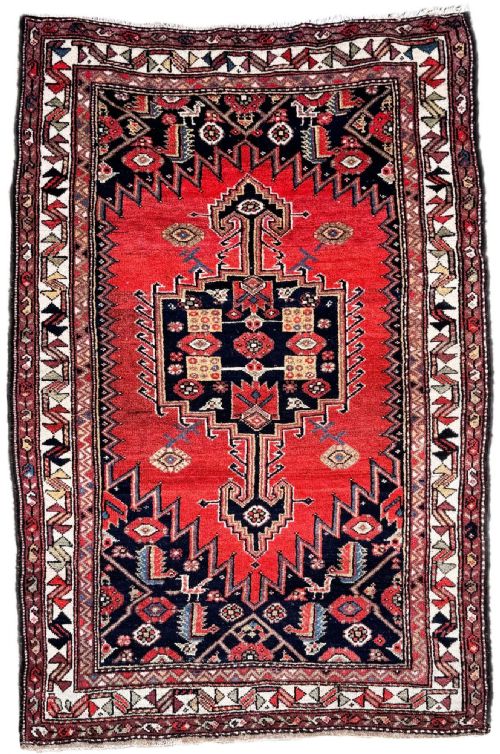
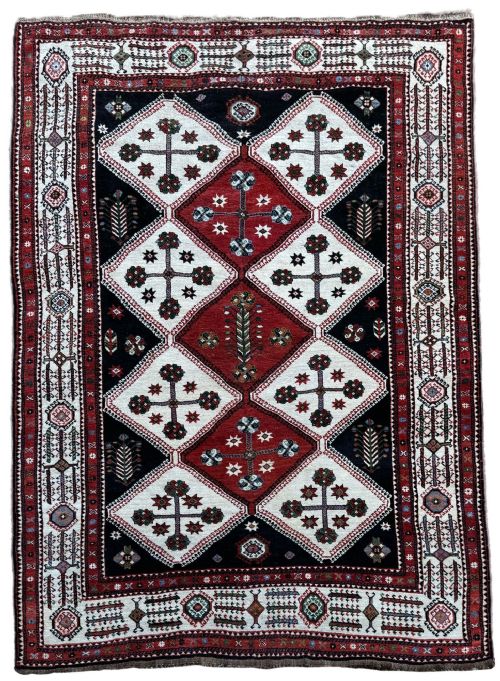
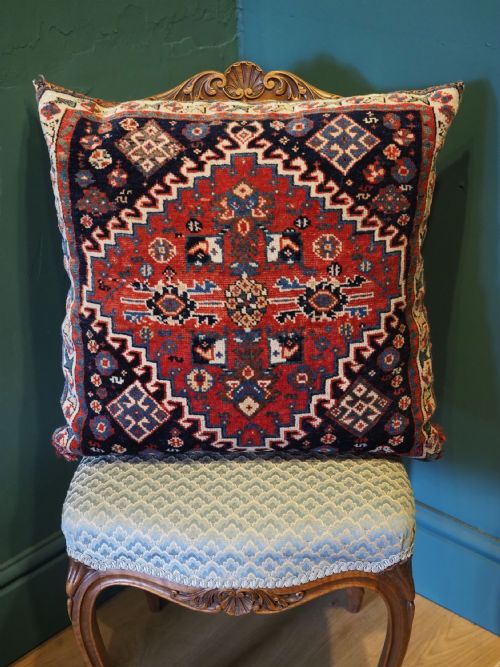
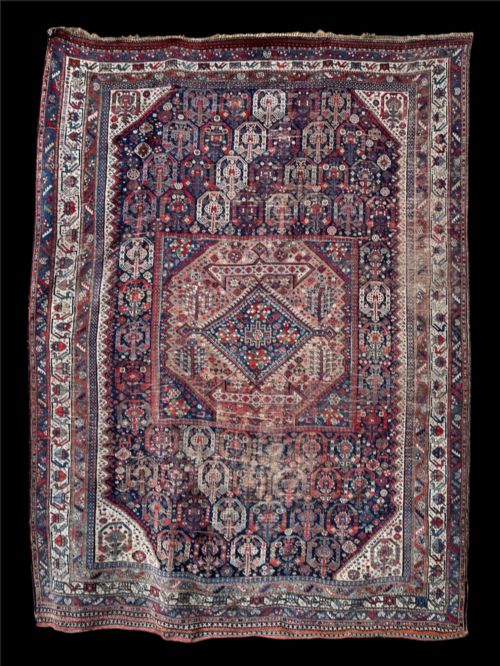
A nomadic geometric rug embodies the functional artistry of tribal groups such as the Afshar, Baluch, Khamseh, and Turkmen. These pieces originate from distinct regions including South Persia, Turkmenistan, and Azerbaijan, reflecting the cultural heritage of their makers.
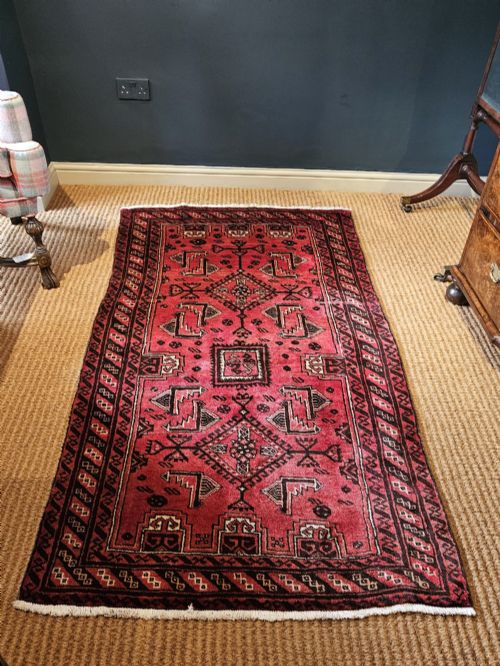
The visual vocabulary relies heavily on repeated angular motifs, guls, and lattice patterns rather than floral curves. Pieces date primarily from the late nineteenth century through the early decades of the twentieth century.
Materials and Construction
Makers utilised hand-spun wool and pure wool for the pile, frequently paired with cotton foundations to provide structural stability. Felt also appears in specific Central Asian embroideries.
Natural dyes produced the rich palette visible across these textiles, interacting with the wool fibres to develop a distinct patina over decades of use.
Listings span the nineteenth and early twentieth centuries, featuring wool, cotton, and felt across Persian, Turkmen, and Caucasian tribal traditions.
Evaluating Execution and Condition
Quality rests in the precision of the tribal iconography, the handled weight of the wool, and the depth achieved by natural dye formulas. Finer knots and tighter pile construction distinguish master weaver output from utilitarian items.
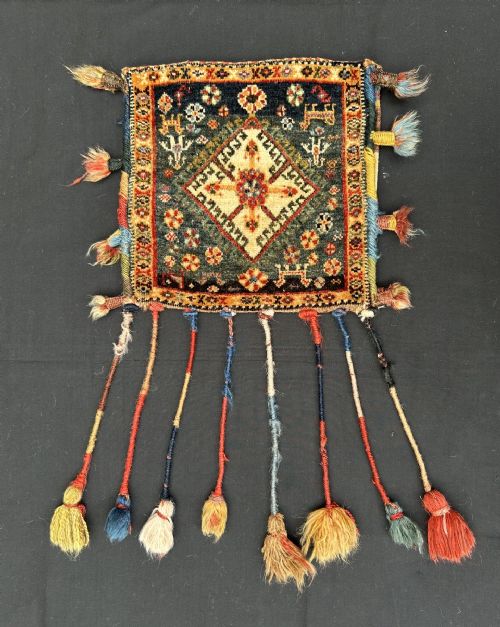
Condition varies from intact examples complete with original tassels and plain weave backs to distressed pieces bearing the honest wear of past nomadic utility.
The Nomadic Geometric Rug Glossary
- Gul
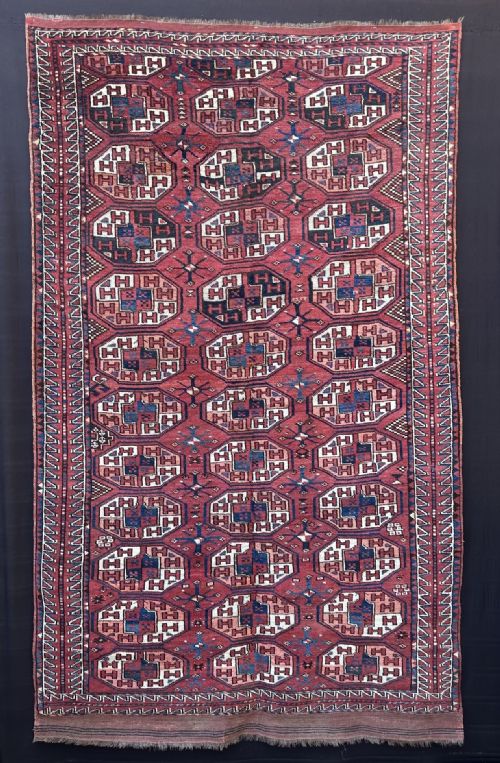
- A repeating medallion motif characteristic of Turkmen and Central Asian tribal weaving. These octagonal or gabled forms identify specific tribal lineages.
- Prayer Rug
- A textile featuring a mihrab or arch design indicating the direction of Mecca. These smaller formats were utilised for individual daily devotion.
- Saddle Bag
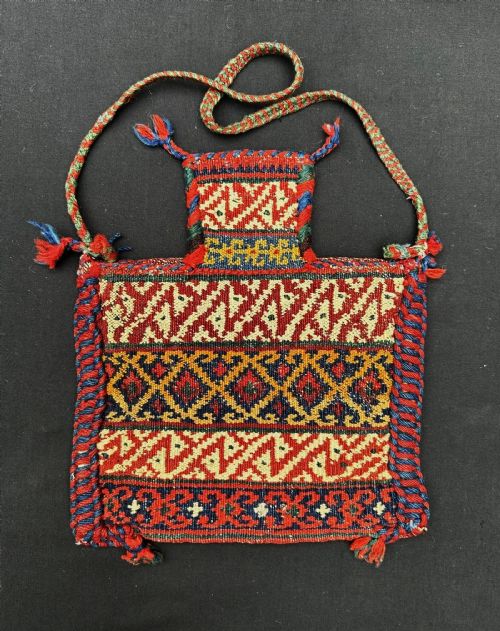
- A dual-pouch container woven for transport on pack animals during migration. Surviving examples often separate into individual bagfaces or retain their connecting web.
- Jollar
- A small Turkmen bag utilised for household storage inside the yurt. They display characteristic tribal patterning across the face.
- Kapunuk
- A decorative tent door hanging placed around the wooden frame of a nomadic dwelling. These trapezoidal forms frame the entrance.
Nomadic Geometric Rug: Frequently Asked Questions
What is a nomadic geometric rug?
These are hand-woven textiles produced by tribal groups for practical use in nomadic camps. They employ rectilinear motifs rather than curved floral designs.
Such pieces include floor rugs, prayer mats, and utilitarian storage bags originating from Persia and Central Asia.
How were these rugs used?
Nomads utilised these textiles as floor coverings, bedding, prayer mats, and storage containers for salt, tobacco, and personal items. They formed an essential part of daily life during seasonal migrations.
Smaller formats functioned as saddle bags or horse covers, engineered to withstand rigorous travel across rugged terrain.
How do I identify tribal origins?
Attribution relies on specific structural traits, wool characteristics, and distinct design repertoires such as the guls of the Turkmen or the pictorial elements of the Afshar.
Palette choices and border arrangements further guide the identification of particular confederacies and regions.
How do I care for an antique rug?
Protect the textile by placing it in low-traffic areas away from direct sunlight to preserve natural dyes and wool integrity. Gentle vacuuming without a rotating brush bar maintains the pile.
Professional cleaning tailored to antique wool ensures the preservation of the foundation and original tassels.