
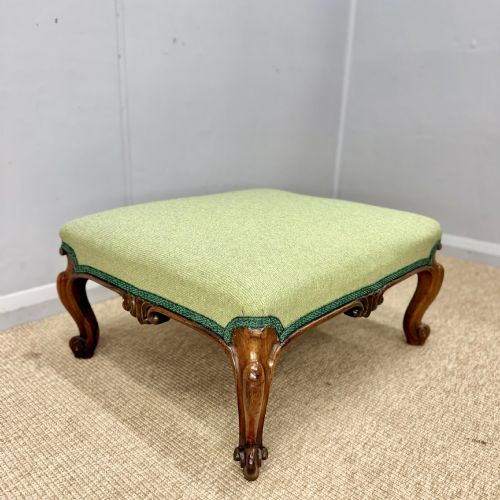


Low Wooden Pouffe
These low wooden pouffe examples offer practical comfort and period character, bringing compact seating into a sitting room.
Low Wooden Pouffe
A low wooden pouffe takes the form of a compact footstool or small seat, designed to sit close to the floor for resting feet or low seating. The pieces seen here span periods from the Georgian era through the Victorian years into the early twentieth century.
Makers of these items shaped them in diverse styles, including Jacobean Revival, Edwardian, French Chateau, and Anglo-Indian designs. Forms range from round upholstered stools to carved rosewood footstalls and centre stools.
Most examples rely on traditional timber frames paired with upholstered surfaces, spanning simple wooden construction to intricate inlaid or carved bodies. Buyers encounter geometric kilim tapestry, needlepoint, and woven fabric coverings across the selection.
How they were made
Craftsmen built the frames using dense hardwoods such as mahogany, rosewood, walnut, oak, and general hardwood. These timbers provided the structural strength needed for low seating while allowing for detailed turning and carving.
Surface ornamentation involved carving, such as the decorative work seen on Anglo-Indian and Georgian pieces, alongside intricate Tunbridge Ware inlay. Upholstery methods secured fabrics like needlepoint, kilim tapestry, and woven textiles over padded foundations, sometimes accented with brass details.
The listings show pieces from the Georgian, Victorian, and Edwardian periods, utilising mahogany, rosewood, walnut, oak, and general hardwood.
What varies in quality
Quality rests in the selection and working of the timber, distinguishing simple utilitarian frames from pieces featuring elaborate carved details or specialised inlay work. Dense hardwoods like rosewood and mahogany generally indicate higher ambition in the original workshop.
The integrity of the frame construction and the fidelity of the period style, whether Jacobean Revival or Art Nouveau, dictate the standing of the piece. Finer examples maintain crisp carving and precise joinery that withstands decades of use.
The Low Wooden Pouffe Glossary
- Tunbridge Ware
- A form of woodwork characterised by minute mosaic decoration made from differently coloured woods arranged in geometric patterns. This technique appears on specific Victorian items.
- Needlepoint
- A type of counted thread embroidery stitched over canvas to create dense, durable textile surfaces. It frequently covers the top of period footstools.
- Kilim Tapestry
- A flatwoven textile traditionally produced in regions including the Middle East and parts of Europe. Such rugs and fabrics were often repurposed to upholster nineteenth-century stools.
- Anglo-Indian
- A style reflecting British influence on traditional Indian craftsmanship, often featuring dense, deep carving in exotic timbers like hardwood and rosewood.
Low Wooden Pouffe: Frequently Asked Questions
What is a low wooden pouffe used for?
These items serve primarily as footstools or low auxiliary seating in a living space. Their compact dimensions allow them to sit easily in front of armchairs or beside firesides.
Historically, they provided practical comfort while adding a decorative textile element to the room. Today, collectors use them to introduce period texture into traditional and modern interiors.
How do I date a wooden footstool?
Dating relies on identifying the timber species, construction methods, and stylistic cues such as Victorian turnings or Georgian carving. Secondary woods and upholstery substrates also offer clues to the decade of manufacture.
Comparing the decorative motifs against documented periods helps narrow down the origin. Subtle shifts in silhouette from the mid-nineteenth century to the early twentieth century reveal the progression of design.
Are these stools comfortable for daily use?
Many period footstools retain supportive padded surfaces suitable for resting feet or occasional low seating. Some pieces have received newly updated upholstery to ensure they meet modern standards of comfort.
Original padding may feel firmer or require careful treatment depending on its age and condition. Buyers intending heavy daily use often examine the internal structure for stability.
How do I care for antique timber and upholstery?
Wood surfaces benefit from occasional dusting and the sparing application of traditional wax to nourish the grain. Keeping pieces away from direct heat sources prevents the timber from drying out or splitting.
Upholstered sections require gentle vacuuming with a soft attachment to remove dust from fabrics like tapestries or needlepoint. Professional cleaning is recommended for delicate antique textiles to preserve the fibres.