
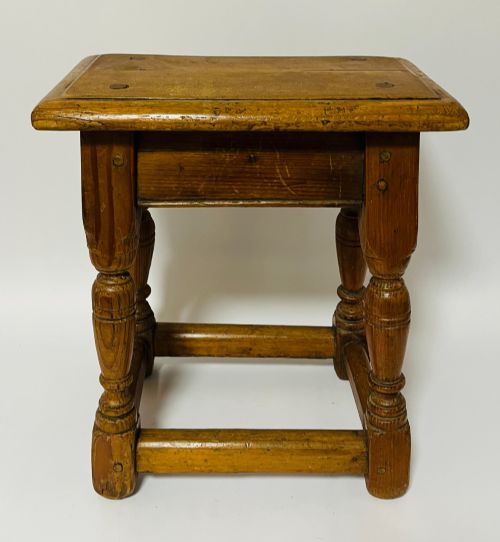
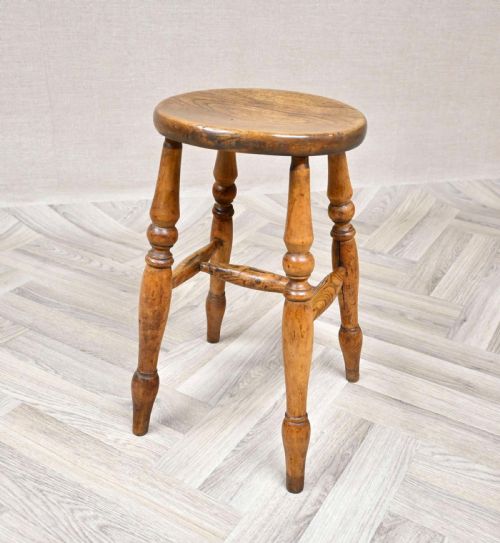
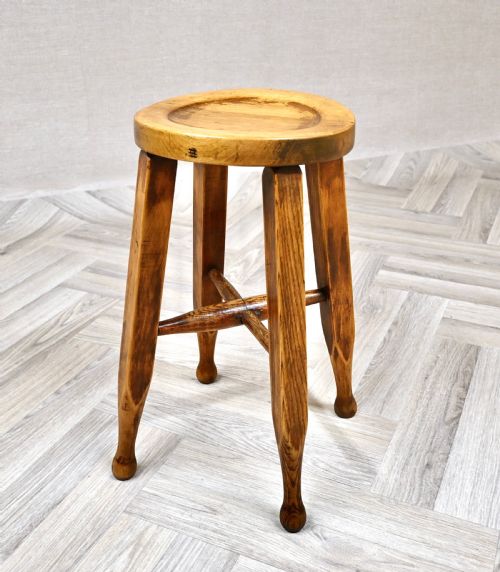


Brown Timber Footstool
These brown timber footstools offer solid construction and honest utility, bringing warmth and dependable seating to traditional interiors.
Brown Timber Footstool
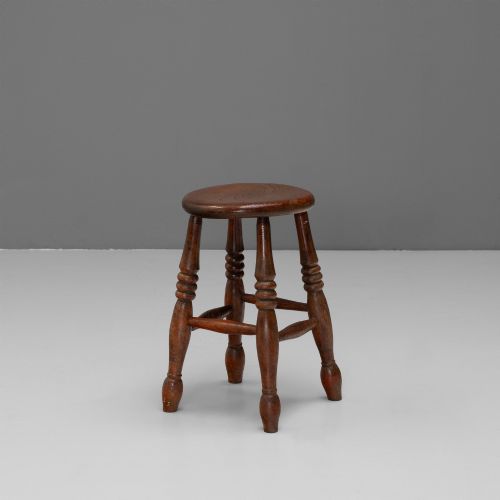
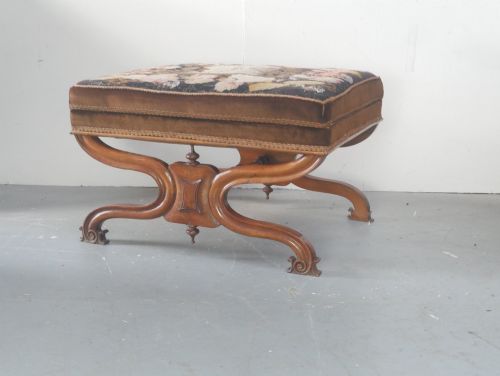
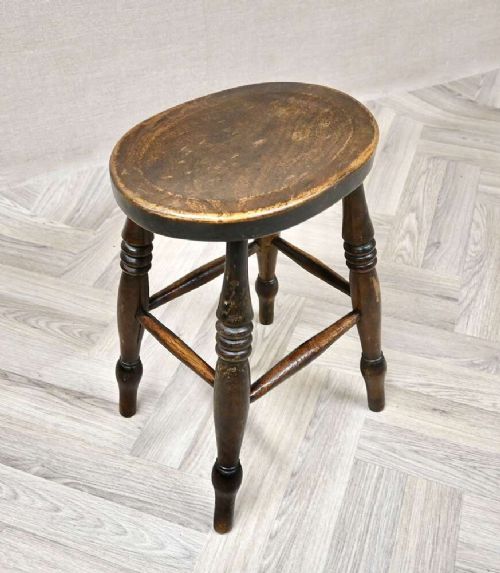
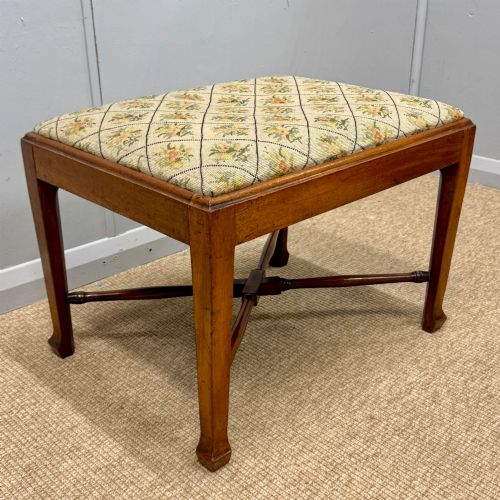
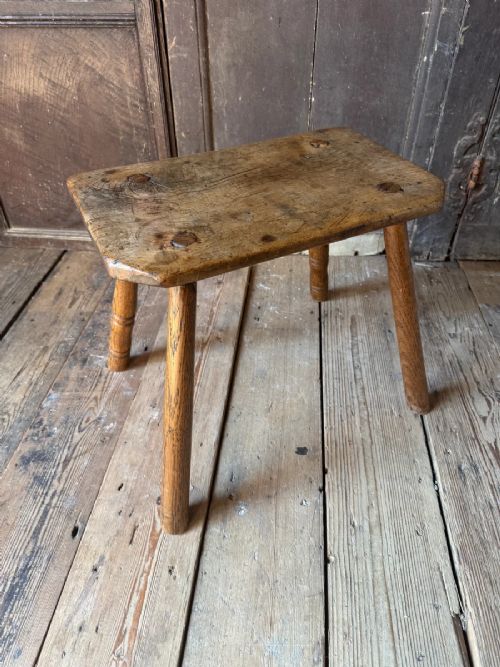
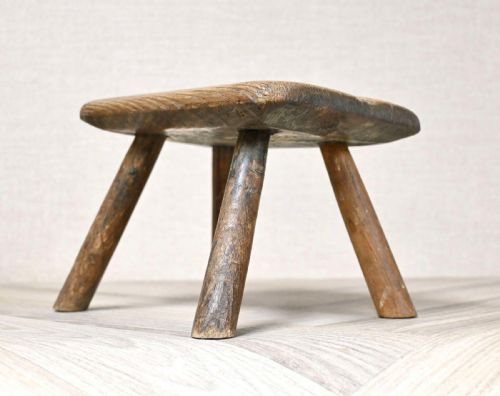
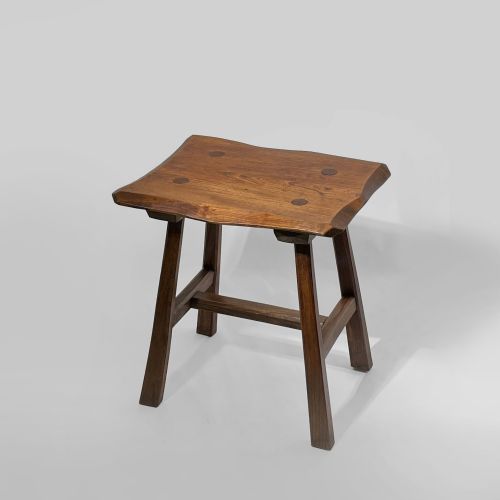
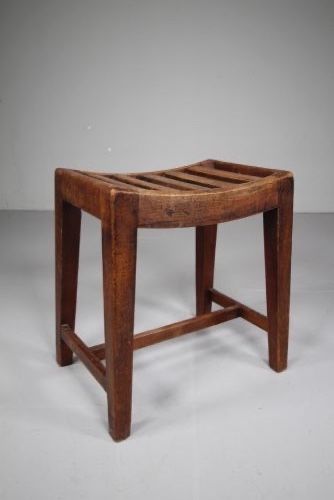
A brown timber footstool represents a broad category of domestic seating designed for resting feet or low sitting, spanning centuries of rural and formal craftsmanship. You will encounter various forms ranging from plain vernacular designs to more formal revival pieces.
The selection includes pieces originating from the eighteenth century through to the early twentieth century, encompassing styles such as Victorian Country, Rustic Vernacular, and Georgian.
Common forms on this page include hearth stools, dressing table stools, and low vernacular seats, providing practical function alongside historical character.
Materials and construction methods
Construction relies heavily on traditional hardwoods and timbers including oak, elm, mahogany, walnut, ash, and sycamore, often paired with turned legs and robust joinery. Makers utilised solid timber boards for seats and joined frames using pegs or mortise and tenon techniques.
Surface details frequently incorporate woven elements like cane and rattan, or upholstered finishes featuring fabric and tapestry, depending on the period and intended use of the stool.
Listings include timber footstools spanning the eighteenth, nineteenth, and early twentieth centuries, constructed from oak, elm, mahogany, and ash.
Factors of quality and distinction
Quality in these pieces is dictated by the selection of timber, the integrity of the original joinery, and the subtlety of hand-shaping in elements like seats and turned legs. Superior examples retain their original surface patination and structural stability without intrusive repairs.
Simpler rural stools rely on the charm of rustic proportion and honest wear, whereas formal pieces demonstrate refined cabinet-making skills through shaped rails and sophisticated wood choice.
The Brown Timber Footstool Glossary
- Vernacular
- Items made by local craftsmen for everyday use rather than following high-style academic designs. These pieces often utilise locally available timbers.
- Joint stool
- A sturdy wooden stool constructed with mortise and tenon joints, commonly featuring turned legs and stretcher supports.
- Cross stretcher
- Wooden bracing bars connecting the legs of a stool near the base to provide additional structural rigidity.
- Burr yew
- A timber harvested from the growth excrescences of yew trees, highly prized for its swirling, decorative grain patterns.
- Patina
- The surface sheen and colour developed on timber through decades of handling, exposure to light, and polishing.
Brown Timber Footstool: Frequently Asked Questions
How do I date an old wooden stool?
Dating relies on observing tool marks, timber species, construction joints, and overall style conventions associated with specific periods. Examining the wear patterns and type of fixings also provides clues.
Comparison with documented examples from similar eras helps narrow down the decade of manufacture, though many vernacular pieces remain difficult to pin to an exact year.
Were these stools used only for feet?
While many low examples served as footstools near hearths, others functioned as child seats, milking stools, or auxiliary seating in dressing rooms and parlours.
Their compact dimensions made them versatile items moved easily around the home for various domestic tasks.
How should I clean a antique timber stool?
Maintenance requires gentle dusting with a dry cloth and occasional application of appropriate beeswax to nourish the wood and preserve the surface shine.
Avoid harsh chemical cleaners or excessive moisture, which can damage old timber and dissolve original patination.
What is the difference between vernacular and formal stools?
Vernacular stools were built by local joiners or householders using available regional woods with a focus on utility rather than fashion.
Formal stools follow academic design movements such as Georgian or Victorian styles, featuring refined carving, expensive timbers like mahogany, and precise upholstery.