


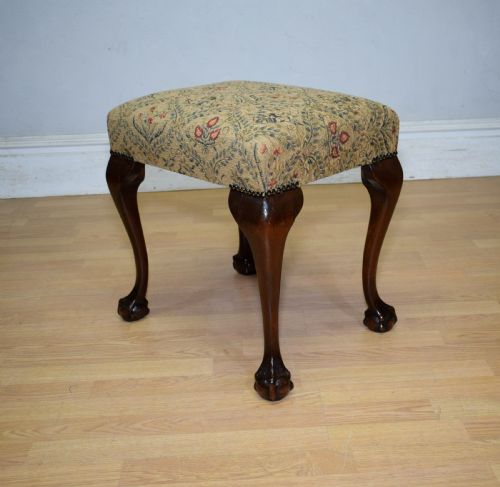

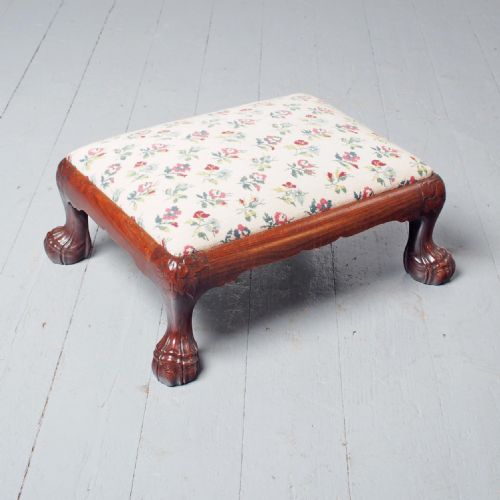


Vintage Tapestry Pouffe
These vintage tapestry pouffe selections are practical footstools and ottomans upholstered in needlepoint and fabric, offering low seating and footrests for traditional interiors.
Vintage Tapestry Pouffe
When you search for a vintage tapestry pouffe, you encounter low upholstered seats and footstools designed for resting feet or low sitting. The examples available here span periods such as the Victorian era, the nineteenth century, and the early twentieth century.
The forms on this page include ottomans, dressing stools, and window stools. These pieces originate from various design traditions, including Regency, Chippendale style, Georgian style, and Jacobean revival.
Most items combine a wooden frame with textile upholstery. Buyers typically find compact footstools alongside larger heavy oak or rosewood structures intended for drawing rooms and dressing rooms.
How they were made
Frames are constructed from timber species such as mahogany, rosewood, oak, and other woods, sometimes featuring carved details or gilded surfaces. Woodworkers shaped these supports to carry upholstered seats.
Upholstery relies on fabric, needlepoint, tapestry, velvet, and leather. Needlepoint and tapestry panels involve stitched wool and silk threads worked into patterned designs before mounting onto the wooden bases.
Listings feature mahogany, rosewood, oak, and general wood frames paired with needlepoint, tapestry, velvet, leather, and fabric upholstery.
What varies in quality
The standard of a piece rests upon the density of the timber frame and the complexity of its woodwork. Carved mahogany or rosewood structures demand greater joinery skill than plain wooden frames.
Upholstery execution separates standard examples from finer ones. Finely worked needlepoint and tapestry textiles show intricate pictorial or geometric patterns that reflect the time invested by the maker.
Whytock and Reid
The Vintage Tapestry Pouffe Glossary
- Needlepoint
- A type of canvas work embroidery used for upholstery. It provides the patterned textile surface seen on many traditional footstools.
- Ottoman
- A low upholstered seat or footstool without a back or arms. These versatile forms serve as seats or footrests in period interiors.
- Rosewood
- A dense, dark timber utilised for fine furniture frames. Its rich grain appearance characterises several nineteenth-century pieces.
Vintage Tapestry Pouffe: Frequently Asked Questions
What is a vintage tapestry pouffe used for?
These items serve as low footstools, ottomans, and dressing stools. They provide a place to rest feet or a low seat in living spaces and bedrooms.
Their compact size allows them to fit easily beside armchairs or dressing tables while adding textile texture to a room.
How do I identify a Victorian pouffe?
Victorian examples often feature dark woods like rosewood and mahogany paired with detailed needlepoint or tapestry upholstery. Look at the framing style and construction methods for clues to this period.
Some pieces also incorporate stylistic elements from the nineteenth century such as carved wooden supports and heavy fabric skirts.
Are these stools sturdy enough for sitting?
Most pieces are built with solid timber frames designed to support weight. However, their primary historical function as footstools or dressing seats means they suit light sitting rather than heavy daily use.
Checking the stability of the wooden frame helps determine its suitability for regular seating.
What materials make up the frames?
Frames are built from various woods including mahogany, rosewood, oak, and general timber. Some examples feature carved ornamentation or gilded finishes.
The choice of wood often corresponds to the period and stylistic influence of the piece.