


Antique Upholstered Rest
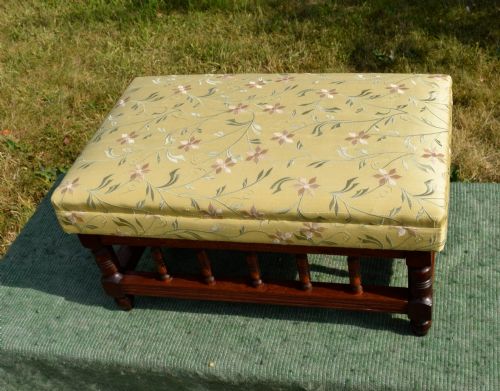
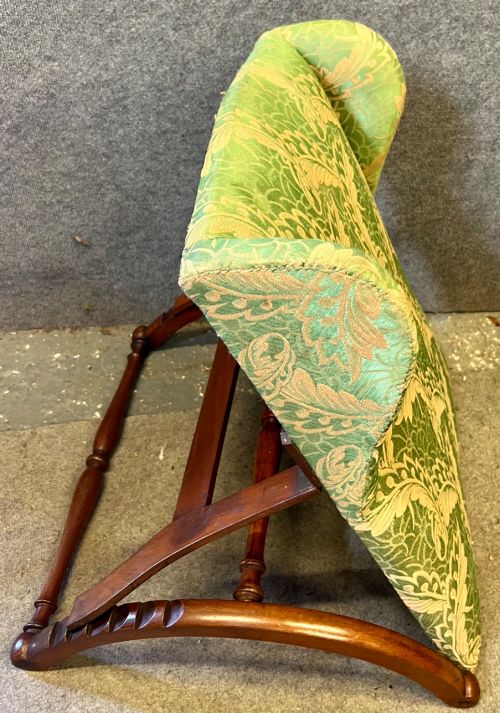
These antique upholstered rest pieces range from walnut footstools to adjustable gout rests, built to support tired feet and weary limbs in the Victorian and Regency eras.
Antique Upholstered Rest
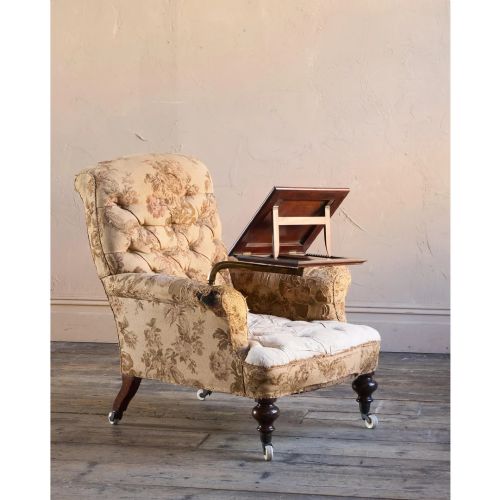
An antique upholstered rest typically takes the form of a low footstool, a metamorphic gout stool with an adjustable mechanism, or occasionally a library armchair with a reading stand. The pieces listed here span the Georgian, Regency, William IV, and Victorian periods, extending into Edwardian times.
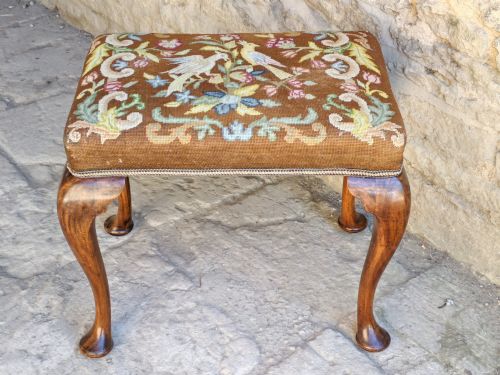
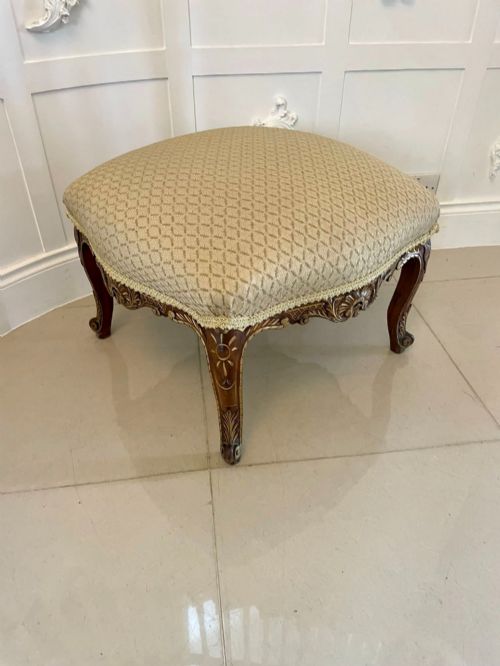
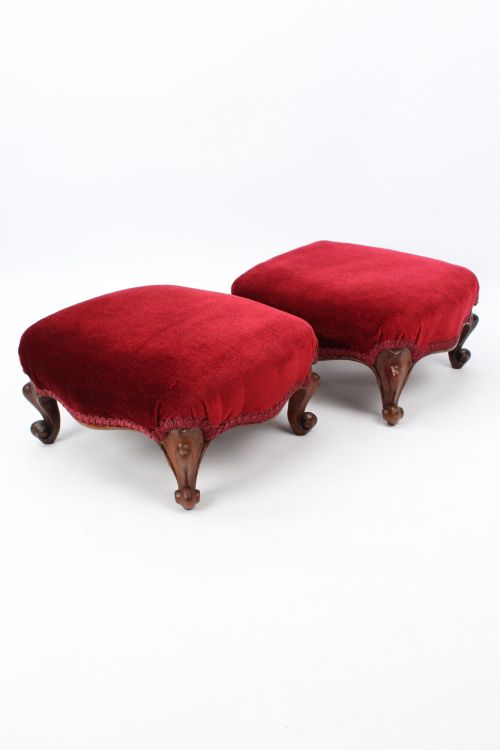
Footstools and gout rests dominate the selection, often upholstered in original needlepoint, wool tapestry, velvet, or tweed. You will frequently encounter walnut, mahogany, and beechwood frames supporting these textile-covered surfaces.
Materials and Techniques
Cabinetmakers utilised hardwoods such as mahogany, walnut, oak, and rosewood to construct the structural frames of these rests, frequently employing carving, gilding, and ebonising for decorative effect. Brass fittings often appear on adjustable mechanisms and castors.
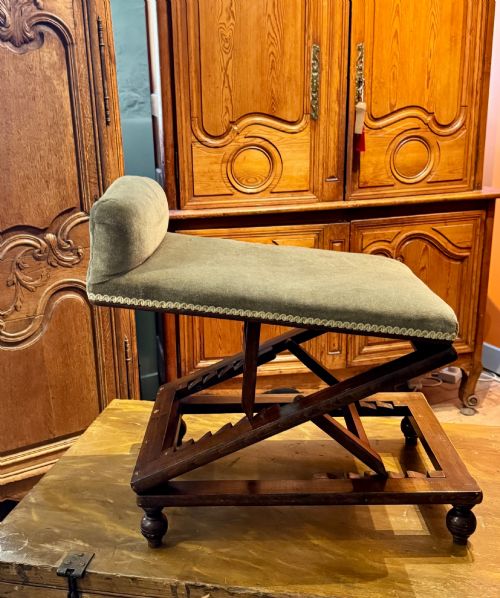
The upholstery technique relied on traditional stuffing methods covered with textiles like wool tapestry, velvet, leather, damask, or needlepoint. Gout stools incorporated movable ratchets and hinges to alter the angle of the rest for the user.
China feet occasionally support these little rests, offering a charming ceramic touch to Victorian footstools.
Craftsmanship and Survival
Quality rests reveal themselves through the crispness of the timber carving and the sophistication of any mechanical adjustments, such as those found on gout stools and chair backs. Superior examples maintain their original framing timbers without excessive replacement.
The integrity of the textile covering, whether needlepoint, tapestry, or leather, dictates much of the appeal. Pieces that retain their early or original upholstery alongside sound wooden frames represent the upper tier of surviving examples.
Mathew Gregson
The Antique Upholstered Rest Glossary
- Gout stool
- A footrest featuring an adjustable sloping top designed to elevate and support the foot or leg of someone suffering from gout. These items often include a mechanical ratchet to alter the incline.
- Needlepoint
- A type of canvas work embroidery traditionally used to cover the seats and rests of period stools and chairs. It employs wool or silk yarn stitched through a grid mesh.
- Metamorphic
- A descriptive term for furniture that changes shape or function through mechanical hinges or ratchets, such as a stool converting into an angled foot rest.
- Giltwood
- Timber that has been coated with a thin layer of gold leaf or gesso preparation. This finish appears on more decorative Victorian and Regency frames.
- Sabre leg
- A concave tapering furniture leg that curves outward in the manner of a cavalry sabre. This form frequently characterises Regency period stools.
Antique Upholstered Rest: Frequently Asked Questions
How do I date a Victorian footstool?
Dating relies on timber choice, turning styles, and upholstery evidence. Victorian pieces frequently employ walnut or rosewood with heavy carving or buttoned velvet.
Earlier Regency items tend to feature mahogany with sabre legs, while later Edwardian examples show lighter timbers and simpler profiles.
Were these rests used only for gout?
While many adjustable rests were made specifically for gout sufferers, others served simply as fireside footstools or carriage stools for travelling comfort. Their portable size made them versatile accessories in nineteenth-century rooms.
Fixed-top stools provided general leg support, whereas adjustable versions accommodated different seating heights and personal comfort needs.
Are the needlepoint covers original?
Some pieces retain their period needlepoint or wool tapestry covers, while others have been reupholstered during their lifetime. Close inspection of the tack holes and textile wear helps determine age.
Original textiles display appropriate fading and wear patterns consistent with nineteenth-century hand-stitching techniques.