



Low Seated Armless Chair
A low seated armless chair offers a compact footprint and deep comfort, making it a versatile addition to bedroom or salon settings.
Low Seated Armless Chair
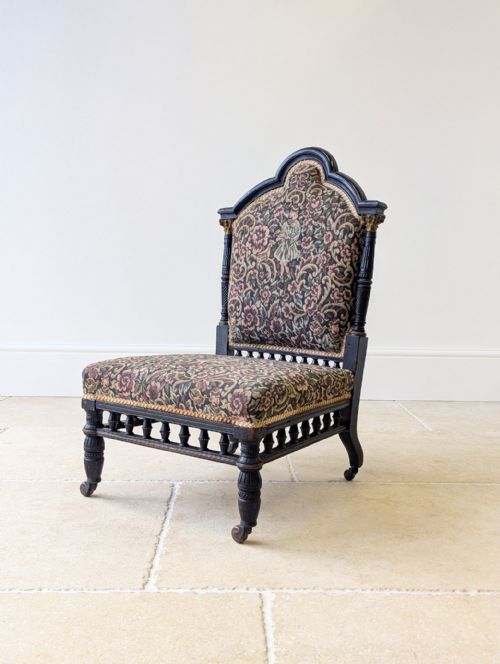
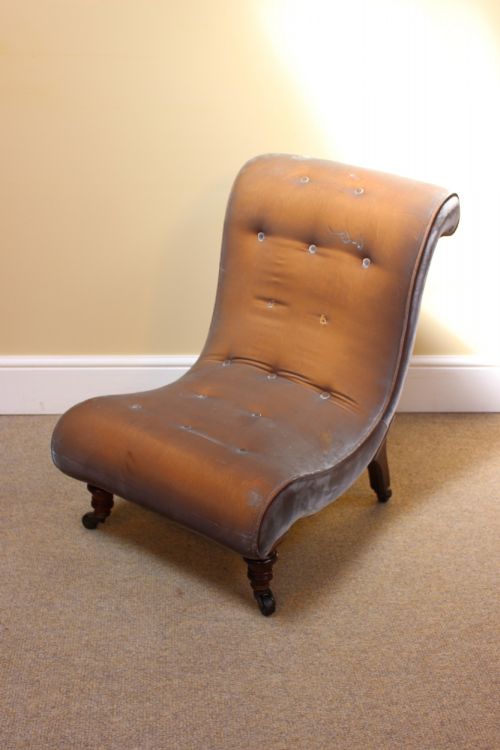
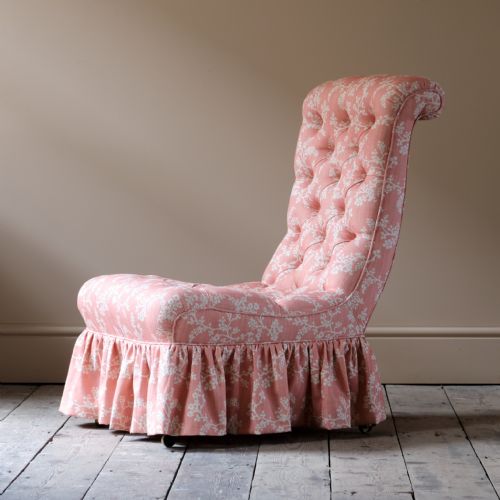
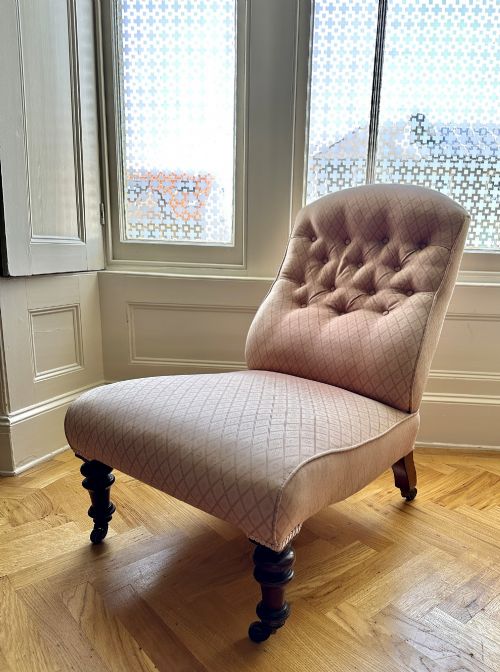
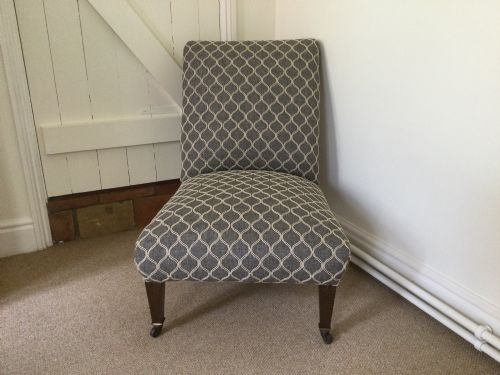
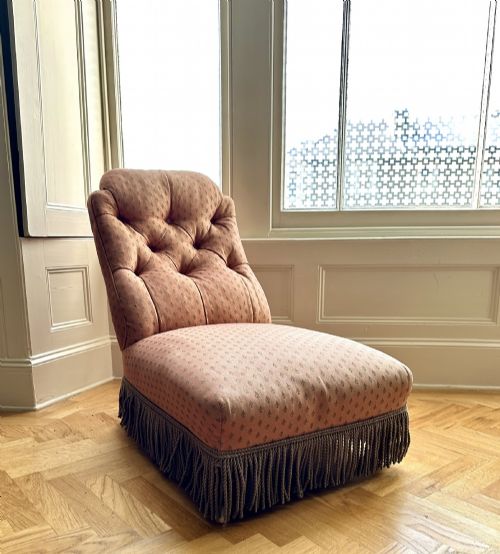
A low seated armless chair spans forms such as slipper chairs, nursing chairs, salon chairs, and bedroom chairs. These pieces appear across the nineteenth century, Victorian, and Edwardian periods, with examples ranging from the eighteen fifties to nineteen hundred and five.
The selection here includes walnut, mahogany, rosewood, ebonised wood, and solid oak frames. Many pieces feature traditional upholstery, button backs, fabric, velvet, textile, fringe, and brass castors or gilt legs.
Materials and Construction
Frames rely on hardwoods like walnut, mahogany, rosewood, and oak, shaped with carved details or turned supports such as bobbin legs and cabriole legs. Ebonised finishes and gilt details appear on specific salon and bedroom pieces.
Upholstery techniques involve deep buttoning, fabric and velvet coverings, and decorative fringe trims. Brass hardware, including castors, supports mobility on larger frames.
Low Seated Armless Chair Retail Price Guide 2026
Typical asking prices for low seated armless chair among the pieces listed under this phrase on Sellingantiques today, from the lower quarter to the upper quarter. They describe what is for sale here now, not the wider market.
Quality Variations
The refinement of the wood frame carves out the distinction between standard production and superior workshop output. Subtle proportions, sturdy timber joints, and precise turning on elements like bobbin or cabriole legs define the better examples.
Upholstery execution and frame integrity dictate longevity. Original or faithful period textiles, secure buttoning, and robust internal webbing separate basic bedroom seating from notable maker-attributed pieces.
Gillows·Hindley and Sons·Howard and Sons
The Low Seated Armless Chair Glossary
- Slipper chair
- A low seated chair originally designed for bedrooms to allow women to dress comfortably. These pieces typically feature short legs and no arms.
- Nursing chair
- A low-profile upholstered chair historically used by mothers with infants. The compact design and lack of arms facilitated easy movement.
- Button back
- An upholstery style where depressions are created in the padding by stitching buttons through to the frame. This technique keeps the stuffing evenly distributed.
- Cabriole leg
- A furniture leg that curves outward and then tapers inward. This style mimics animal limbs and appears on many Victorian frames.
- Ebonised wood
- Timber treated with a dark stain or finish to imitate ebony. This process became popular during the nineteenth century for decorative salon furniture.
Low Seated Armless Chair: Frequently Asked Questions
What is a low seated armless chair used for?
These pieces serve primarily as bedroom chairs, slipper chairs, or salon seating where a low profile is desired.
Their compact size allows them to fit easily into smaller spaces or dressing rooms without overwhelming the room layout.
How do I identify a Victorian slipper chair?
Victorian examples typically feature turned wooden legs, exposed walnut or mahogany frames, and button-backed upholstery.
Look for period characteristics such as nineteenth-century joinery methods, brass castors, and low seat heights designed for dressing.
Are these chairs comfortable for daily use?
Most pieces offer deep seating and padded backrests designed for relaxation. The lack of arms makes changing positions straightforward.
Comfort levels depend largely on the condition of the internal padding and the height of the low seat.
How do I care for antique upholstery?
Protect fabric and velvet coverings from direct sunlight to prevent fading and fibre degradation. Regular gentle vacuuming removes surface dust.
Consult a professional restorer for cleaning or reupholstering older textiles to preserve the underlying frame structure.