

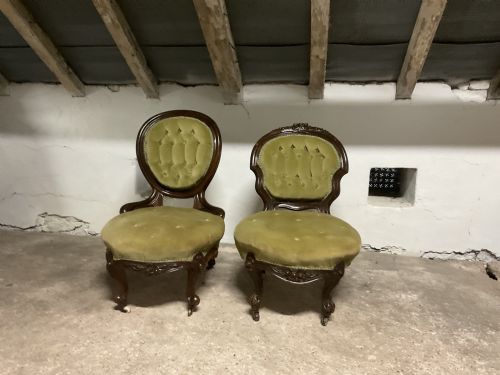
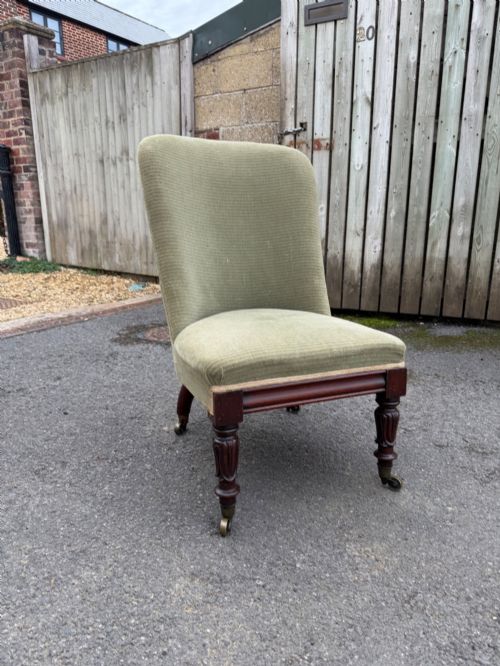
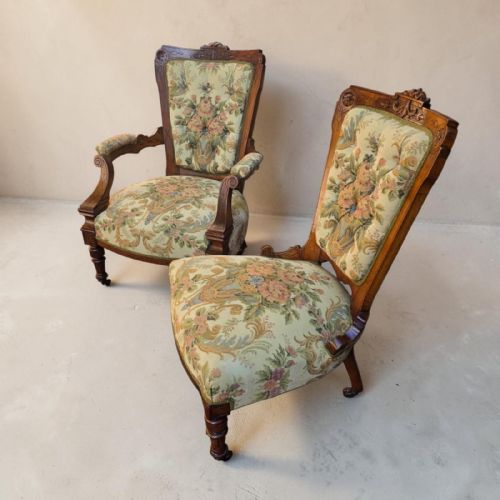
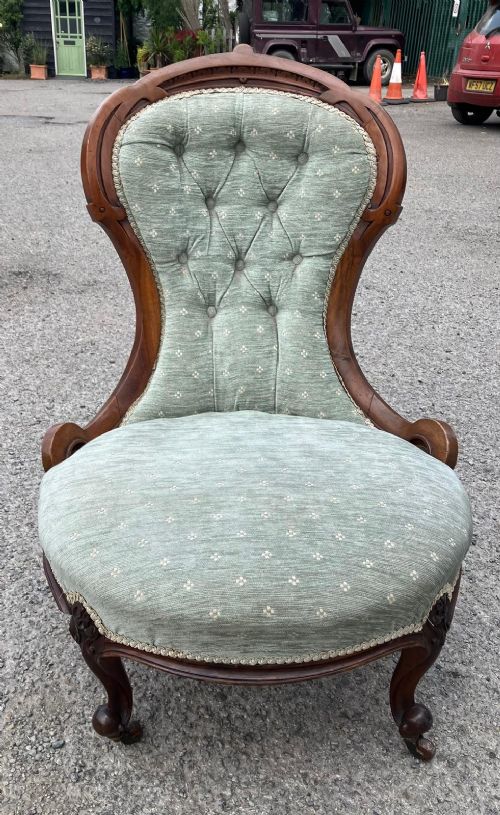


Green Slipper Chair
Green slipper chair pieces bring low-slung comfort and period character to a room, offering compact seating rooted in nineteenth-century design.
Green Slipper Chair
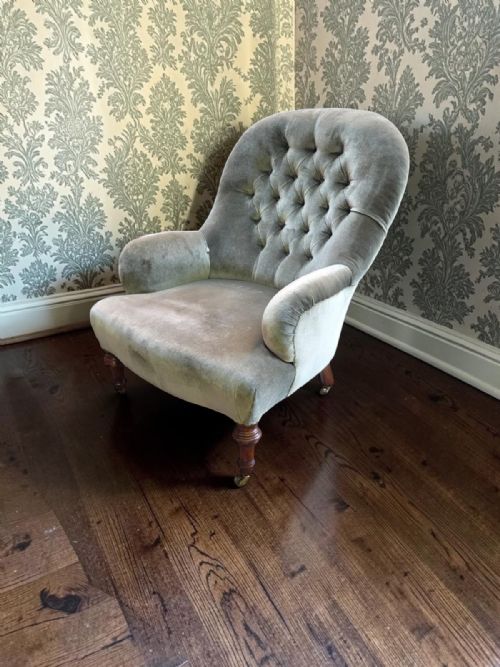
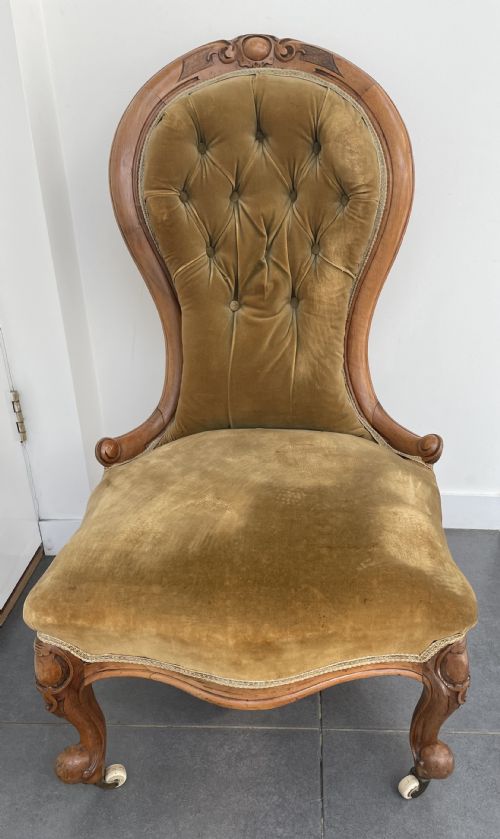
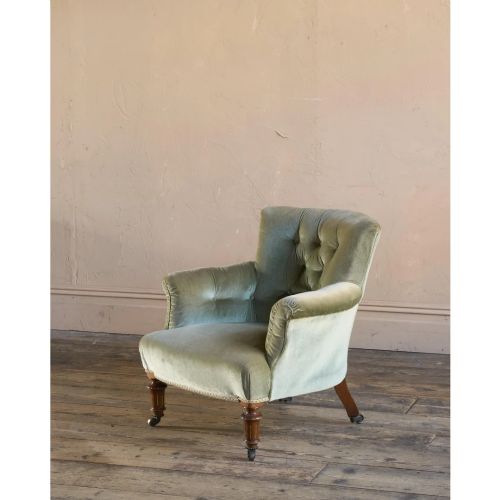
A green slipper chair sits low to the floor, traditionally designed to assist ladies with putting on shoes or garments in the bedroom. On this page, the form appears alongside closely related seating such as nursing chairs, occasional chairs, and bedroom chairs.
The selections span multiple periods, most notably the Victorian era, alongside Georgian, Regency, Edwardian, and William IV examples. Buyers encounter various timber frames, including walnut, mahogany, rosewood, and ebonised wood, often upholstered in velvet, linen, fabric, or rexine.
Makers and workshops of the nineteenth century produced these low chairs with distinct regional and stylistic variations, ranging from carved walnut showwood frames to simple bobbin leg supports.
How they were made
Timber frames in walnut, mahogany, and rosewood provide the structural foundation, often shaped through carving, turning, or ebonising. Joinery methods of the period rely on traditional tenon and mortise construction.
Upholstery techniques involve traditional stuffing materials secured within velvet, linen, or tapestry fabrics. Button backing and decorative brass castors frequently complete the assembly of these nineteenth-century seats.
Green Slipper Chair Retail Price Guide 2026
Typical asking prices for green slipper chair among the pieces listed under this phrase on Sellingantiques today, from the lower quarter to the upper quarter. They describe what is for sale here now, not the wider market.
The site archives show walnut slipper chairs upholstered in green velvet among past sales.
What varies in quality
The refinement of the timber carving and the sophistication of the frame silhouette separate standard examples from finer pieces. Showwood frames with detailed floral or scroll carving demand greater cabinetmaker skill.
The integrity of the original proportions and the choice of upholstery textiles dictate the visual impact of the piece. Period textiles and careful buttoning contribute to a more authentic appearance.
Gillows
The Green Slipper Chair Glossary
- Showwood
- Timber framing left exposed around the upholstered sections of a chair. This technique highlights the carved grain of walnut or mahogany.
- Button back
- An upholstery method where deep buttons are pulled tight into the padding to create a geometric quilted pattern. This style appears frequently on nineteenth-century seating.
- Castor
- A small wheel fitted to the base of a furniture leg to ease movement across floors. Brass fittings are common on Regency and Victorian examples.
- Scroll back
- A chair back curving outward or inward in a scroll profile. This shape defines many early Victorian and William IV designs.
- Bobbin leg
- Furniture supports turned on a lathe to resemble a series of wooden reels or bobbins. This vernacular turning style appears on nineteenth-century pieces.
Green Slipper Chair: Frequently Asked Questions
What is a green slipper chair used for?
Originally designed for dressing rooms and bedrooms, these low seats allowed women to comfortably reach their shoes. Today they function well as accent seating in living spaces or studies.
Their compact height makes them suitable for smaller rooms where standard armchairs might overwhelm the floor plan.
How do I date a green slipper chair?
Dating relies on examining the timber frame, turning style, and upholstery methods. Victorian examples often feature walnut showwood and buttoned velvet, while Regency pieces display cleaner mahogany lines.
Hardware such as brass castors and the profile of the legs also offer clear indicators of the manufacturing period.
Are nursing chairs the same as slipper chairs?
Nursing chairs share a similarly low profile to accommodate period clothing and domestic tasks, but they often feature higher backs for seated comfort during infant care. Slipper chairs focus specifically on the low-slung posture required for dressing.
Both forms belong to the wider category of nineteenth-century bedroom and occasional seating.
How do I care for antique velvet upholstery?
Vacuum the fabric gently using a soft brush attachment to remove dust without crushing the pile. Professional textile cleaning is recommended for any deeper maintenance.
Keep the chair away from direct sunlight to prevent the green dye and natural fibres from fading over time.