


Louis XVI Dining Chairs
Louis xvi dining chairs bring French neoclassical balance to a room, offering straight tapered legs and crisp carved frames.
Louis XVI Dining Chairs
When searching for louis xvi dining chairs, buyers encounter pieces spanning the eighteenth century through the twentieth century, including revival works from the nineteenth and early twentieth centuries. These seating options appear primarily as side chairs, salon chairs, and armchairs configured in sets or pairs.
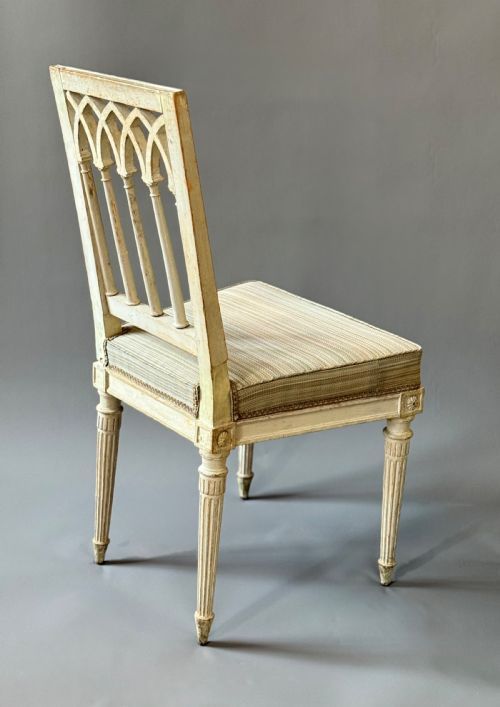
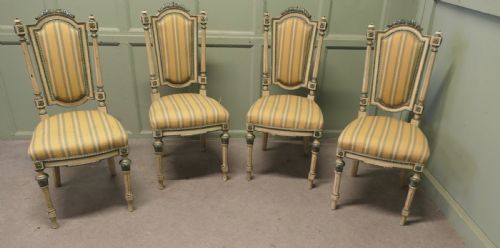
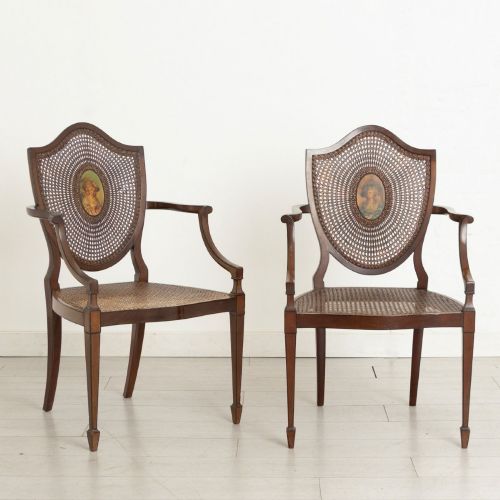
The materials recorded in these listings encompass giltwood, painted wood, beech, and walnut, frequently paired with fabric, silk damask, velvet, or cane inserts. Styles range from French neoclassical and louis xvi revival to gothic revival, second empire, and french empire.
Most examples found on this page reflect nineteenth-century and early twentieth-century interpretations, capturing the symmetry and architectural restraint associated with the period. Buyers select these chairs to introduce formal seating into dining spaces and drawing rooms.
How they were made
Carpenters shaped these frames from hardwoods such as beech and walnut, employing hand carving to define fluted legs, rosette corner blocks, and medallion backs. Timber construction was frequently finished with layers of paint or applied gold leaf to create giltwood surfaces.
Upholstery techniques involved webbing and stuffing mounted directly into wooden seat rails, finished with textiles including silk damask and velvet fixed with decorative tacks. Alternatively, seats and backs incorporated woven cane panels fitted within rebated wooden frames.
The inventory includes single pairs alongside large matching suites numbering up to forty-two chairs with silk damask upholstery.
What varies in quality
The refinement of the hand carving separates standard production from finer examples, visible in the crispness of acanthus leaves, fluting, and beaded borders. Superior frames maintain structural integrity at the joinery points where the seat rails meet the legs.
Surface treatments dictate the visual character, distinguishing between evenly applied period paint finishes and later alterations. The quality of the upholstery materials, from woven silk damask to traditional cane work, reflects the intended status of the seating.
The Louis XVI Dining Chairs Glossary
- Medallion back
- A circular or oval wooden chair back typical of neoclassical seating designs. This shape defines many louis xvi style frames.
- Giltwood
- Timber coated with a thin layer of gold leaf applied over a prepared gesso ground. This finish provides a reflective surface on formal chairs.
- Caning
- Woven rattan material used for chair seats and backs. It offers a light, porous surface texture.
- Side chair
- An upholstered or wooden chair without armrests designed for dining or side placement. These form the majority of seating sets.
- Neoclassical
- An artistic movement drawing inspiration from the classical art and architecture of ancient Greece and Rome. It emphasises straight lines and symmetry.
Louis XVI Dining Chairs: Frequently Asked Questions
How do I date these chairs?
Dating relies on timber species, tool marks, construction methods, and the style of the carving. Eighteenth-century originals show hand-sawn framing components, whereas nineteenth- and twentieth-century revivals incorporate later industrial joinery and standardised screws.
Examining the wear patterns on the feet and the composition of the paint or gilt layers helps distinguish period production from subsequent revival interpretations.
Are these chairs comfortable for dining?
Most period and revival models offer upright support derived from formal neoclassical seating conventions. The seat height and vertical backrests are designed for upright posture during formal meals rather than lounging.
Buyers can adjust comfort levels through the internal upholstery padding and webbing tension during professional restoration work.
Can I mix different sets?
Mixing sets requires careful attention to seat height, wood finish, and the specific neoclassical proportions of each frame. Pairing armchairs at the head of a table with simpler side chairs follows historical precedent.
Matching painted or gilt tones ensures visual continuity across disparate pairs or smaller groupings gathered around a single dining table.
How do I care for painted frames?
Painted and gilt surfaces require dusting with a soft, dry cloth to prevent abrasion. Moisture and chemical cleaning agents can damage historic paint layers and gilt surfaces.
Maintaining stable indoor humidity levels prevents the underlying wood from expanding or contracting, which protects the painted finish from cracking.