


Louis XV Stool
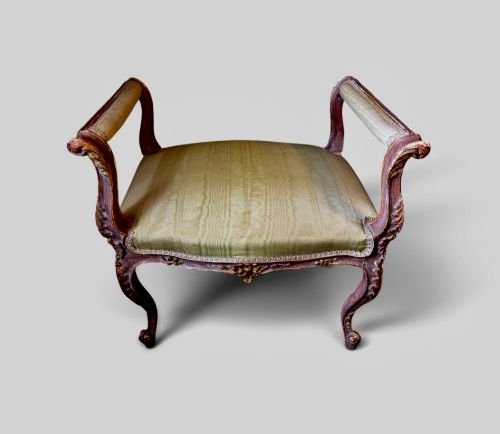
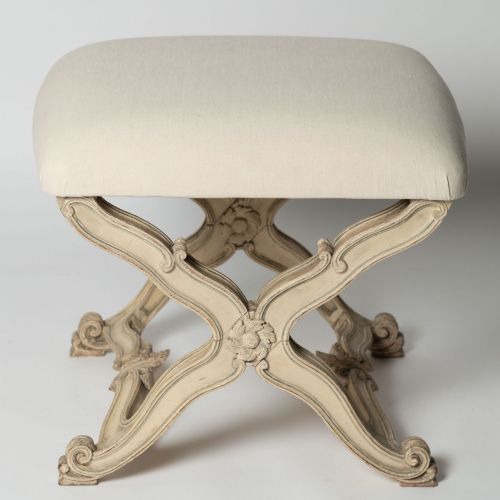
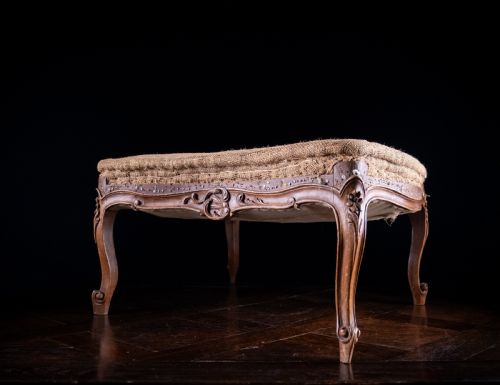
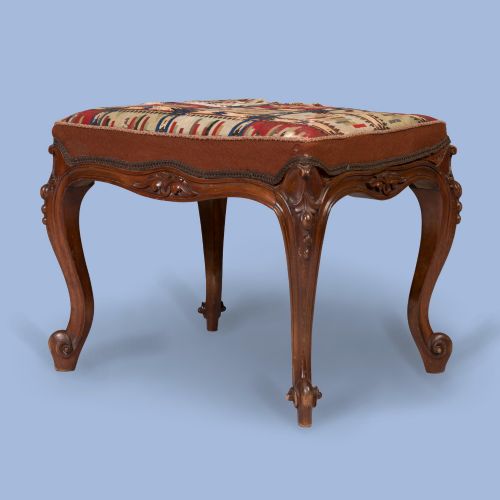
A louis xv stool brings the flowing, serpentine curves of eighteenth-century France into a room through rich carved wood and traditional upholstery.
Understanding the louis xv stool
When you search for a louis xv stool, you enter a field dominated by nineteenth-century revival pieces rather than original eighteenth-century seating. The inventory spans the late Victorian decades, with dates clustering around eighteen eighty, eighteen ninety, and nineteen hundred.
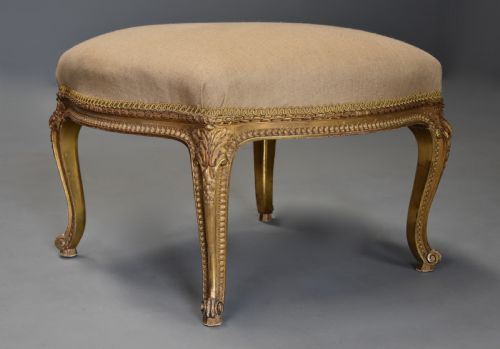
Forms vary from compact footstools and piano stools to larger ottomans, window seats, and components of a duchesse brisee. These pieces reflect the French chateau aesthetic, often rendered by provincial or revival makers adopting the rococo idiom.
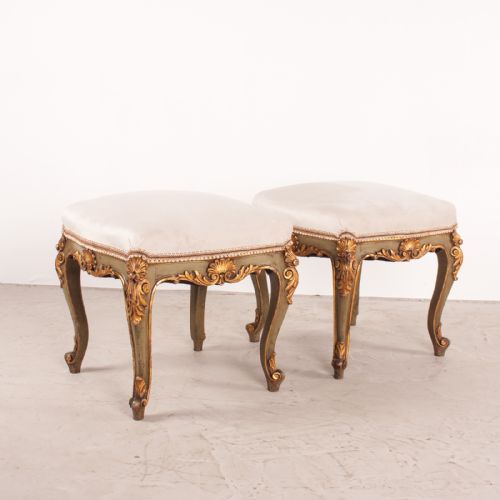
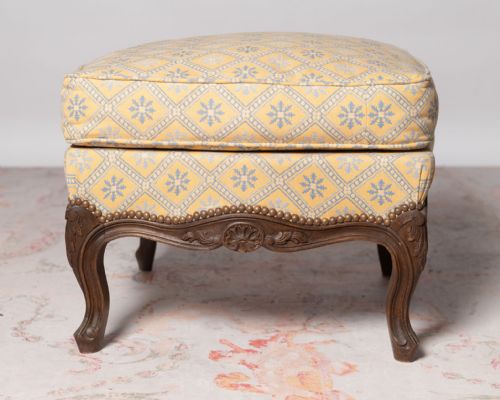
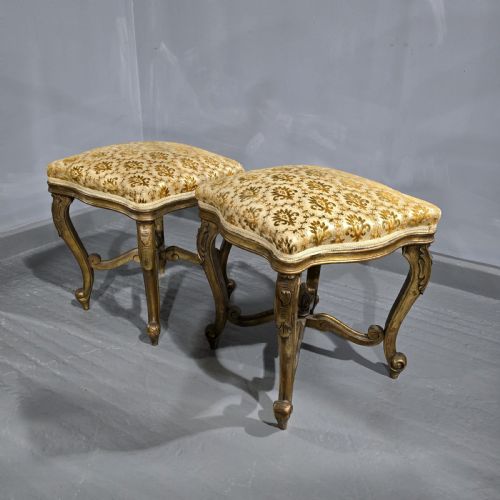
The prevailing style relies on the characteristic asymmetric curves, cabriole legs, and organic motifs associated with the court of Louis the fifteenth. Buyers find both single seats and matched pairs designed for domestic comfort and decorative display.
Distinctions in quality
Quality separates through the depth and crispness of the hand carving on the wooden frame. Superior examples display fluid, undercut foliage and harmonious proportions rather than mechanical shallow scoring.
The choice of primary wood and the integrity of the original giltwood or painted finish dictate the tier of the piece. Substantial walnut frames with robust cabriole legs stand apart from lighter, simpler beech constructions.
Retail Price Guide 2026
Typical UK retail prices for louis xv stool, calculated from the Sellingantiques database of over a million retail prices indexed since 2003. This retail price guide relies exclusively on Sellingantiques data; no external sources or auction records are used, so the figures do not describe the wider market.
Listings feature walnut, beech, and giltwood frames paired with traditional textiles including wool tapestry, hessian, and jute.
The Louis XV Stool Glossary
- Cabriole leg
- A furniture leg that bends outward in a convex curve and then tapers inward in a concave arc, terminating in a scroll or pad foot. This defining feature of the style mimics organic animal forms.
- Giltwood
- Timber treated with a thin layer of gold leaf applied over a prepared gesso ground. It provides the brilliant metallic sheen seen on formal salon seating.
- Duchesse brisee
- A multi-part lounge chair comprising an armchair and one or two footstools that combine to form an extended chaise longue. It translates literally as broken duchess.
- Hessian
- A coarse woven fabric, typically made from jute fibres, used as the traditional structural foundation beneath upholstery stuffing. It provides durable support for internal springs and hair.
- Toile de Jouy
- A traditional cotton fabric featuring printed pastoral or floral vignettes, often in monochrome on an off-white ground. It appears on revival ottomans and window seats.
Frequently Asked Questions
Are these stools from the eighteenth century?
The vast majority of pieces found in this category date from the nineteenth century, specifically between eighteen seventy and nineteen hundred. They represent revival movements that drew inspiration from earlier French royal designs.
Craftsmen during the Victorian era and the late nineteenth century revived these historic forms using period techniques, meaning buyers acquire high-quality nineteenth-century interpretations rather than original period furniture.
How do I distinguish walnut from beech frames?
Walnut offers a darker, richer natural grain with visible figuring that suits polished or subtly waxed finishes. It tends to feel heavier and denser in the hand.
Beech has a tighter, paler grain and was frequently selected by makers who intended to apply paint, gesso, or heavy gilding to the finished frame.
What is the difference between a footstool and an ottoman?
Footstools in this tradition are generally smaller, lower pieces designed specifically to support the feet while sitting in an armchair or by a fireside. They often feature prominent carved cabriole legs.
Ottomans and window seats provide larger, wider seating surfaces, sometimes built for two people to share or to sit before a dressing table or window.
How should I care for antique upholstery?
Preserving the fabric requires gentle vacuuming with a soft brush attachment to remove dust without stressing old textiles or decorative braid. Avoid placing these pieces in direct sunlight to prevent fading.
If the internal hessian and stuffing remain traditional, keep the stool in a stable indoor climate away from dampness to protect the organic materials inside the frame.