




Louis XV Revival Cabinet
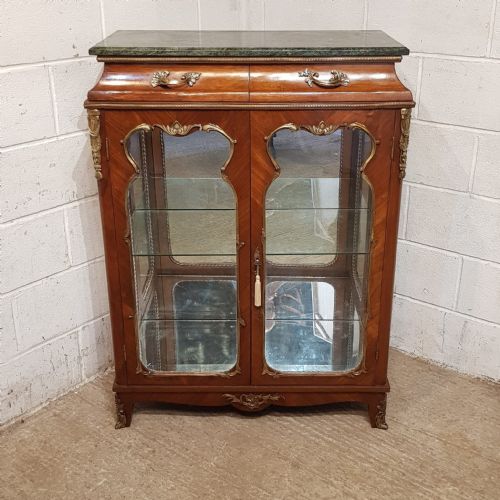
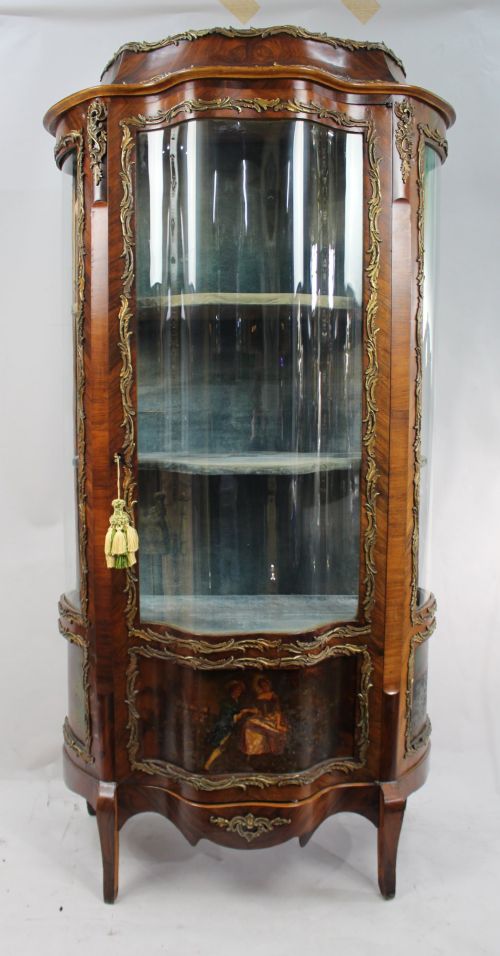
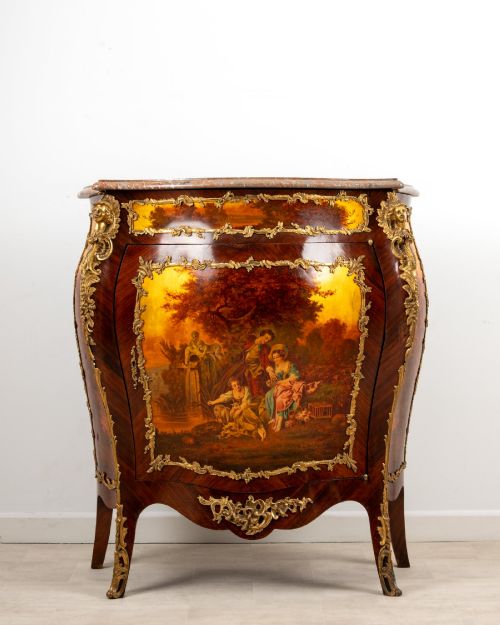
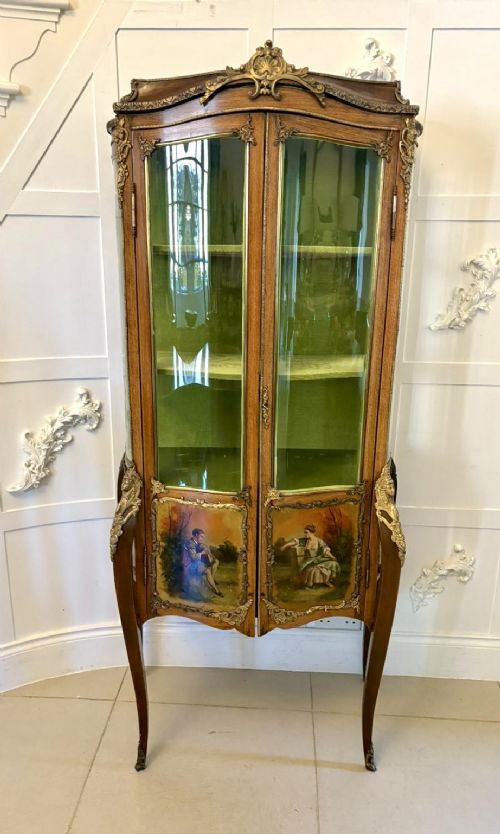
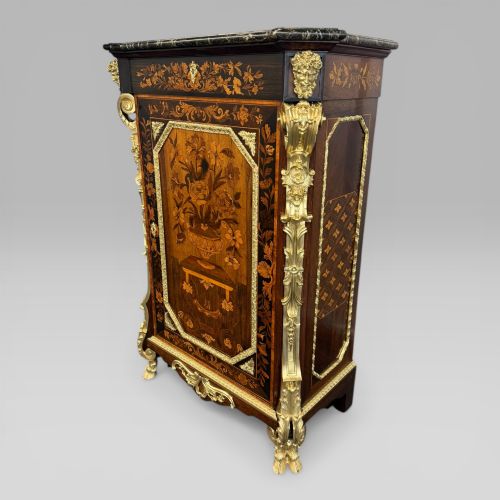
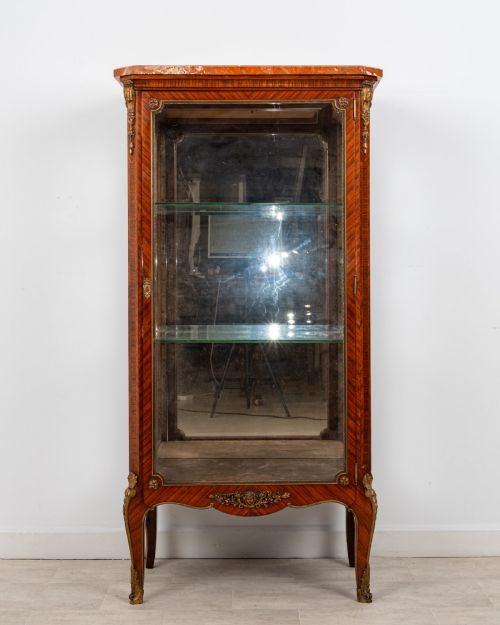
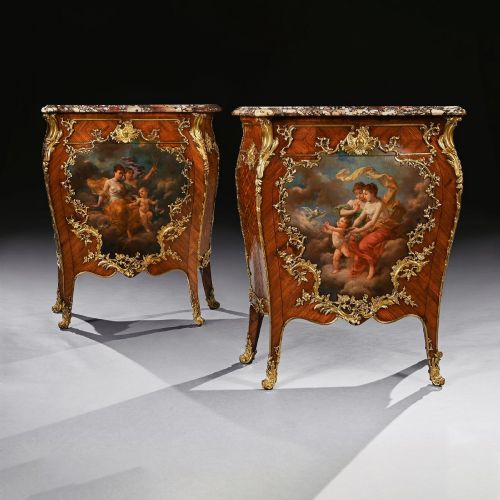
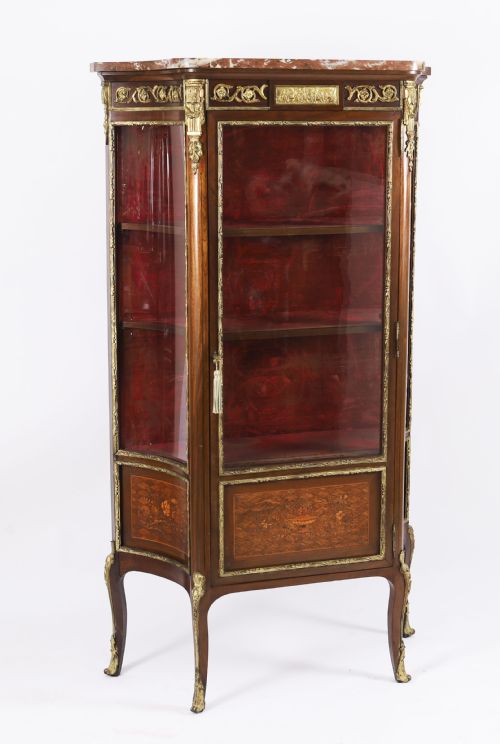
These louis xv revival cabinet pieces bring French Rococo elegance into a room through curved walnut, ormolu, and intricate marquetry.
What these pieces are
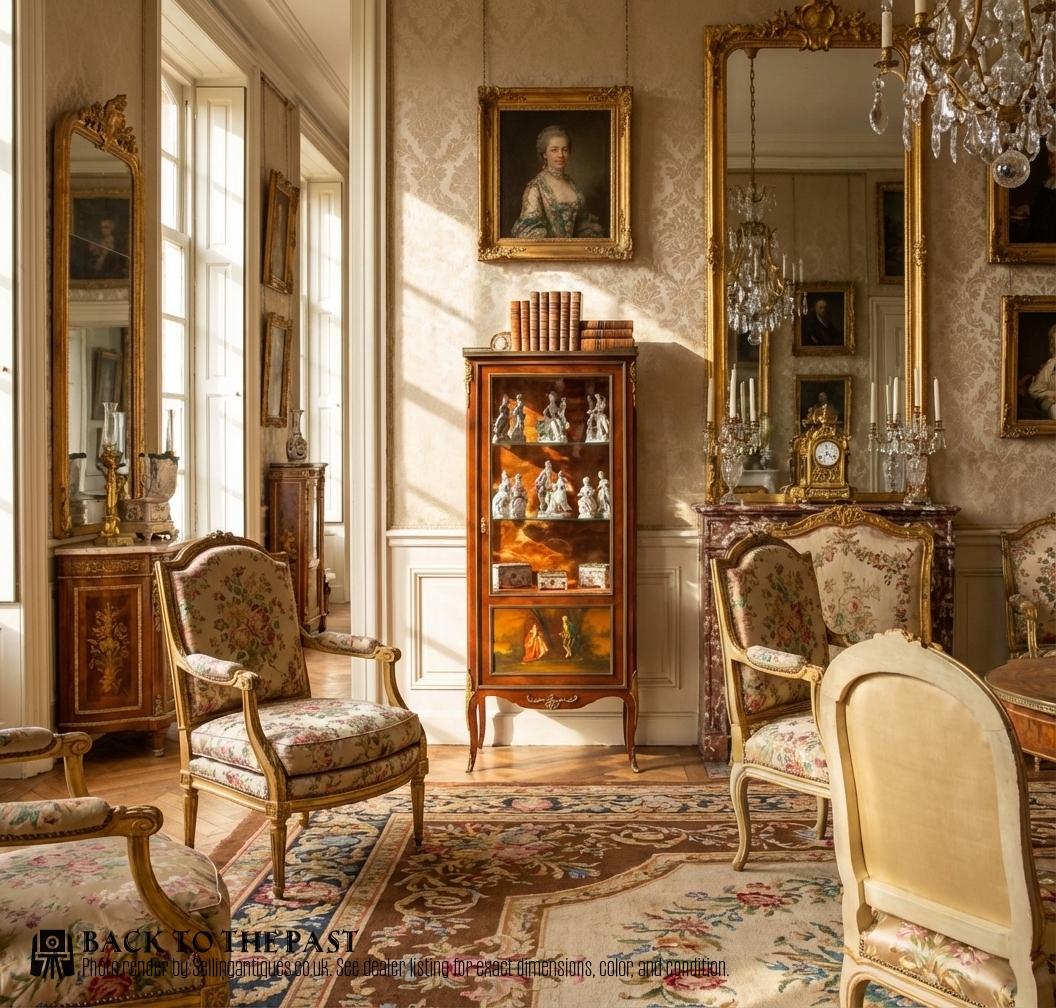
A louis xv revival cabinet takes the curving lines and ornate detailing of the French Rococo movement and reinterprets them for nineteenth and early twentieth century interiors. Buyers searching this phrase look for display pieces, side cabinets, pier cabinets, and smaller bedside chests that replicate the grace of earlier French furniture.
The pieces appearing here range from grand exhibition quality credenzas down to compact bedside tables. Walnut, kingwood, and rosewood form the primary bodies, often shaped with serpentine fronts and mounted with decorative bronze or brass elements.
Origins trace directly to nineteenth century French workshops and English makers influenced by continental styles. The overarching aesthetic relies on organic forms, floral marquetry, and glazed panels designed to showcase curated objects within a room.
How they were made
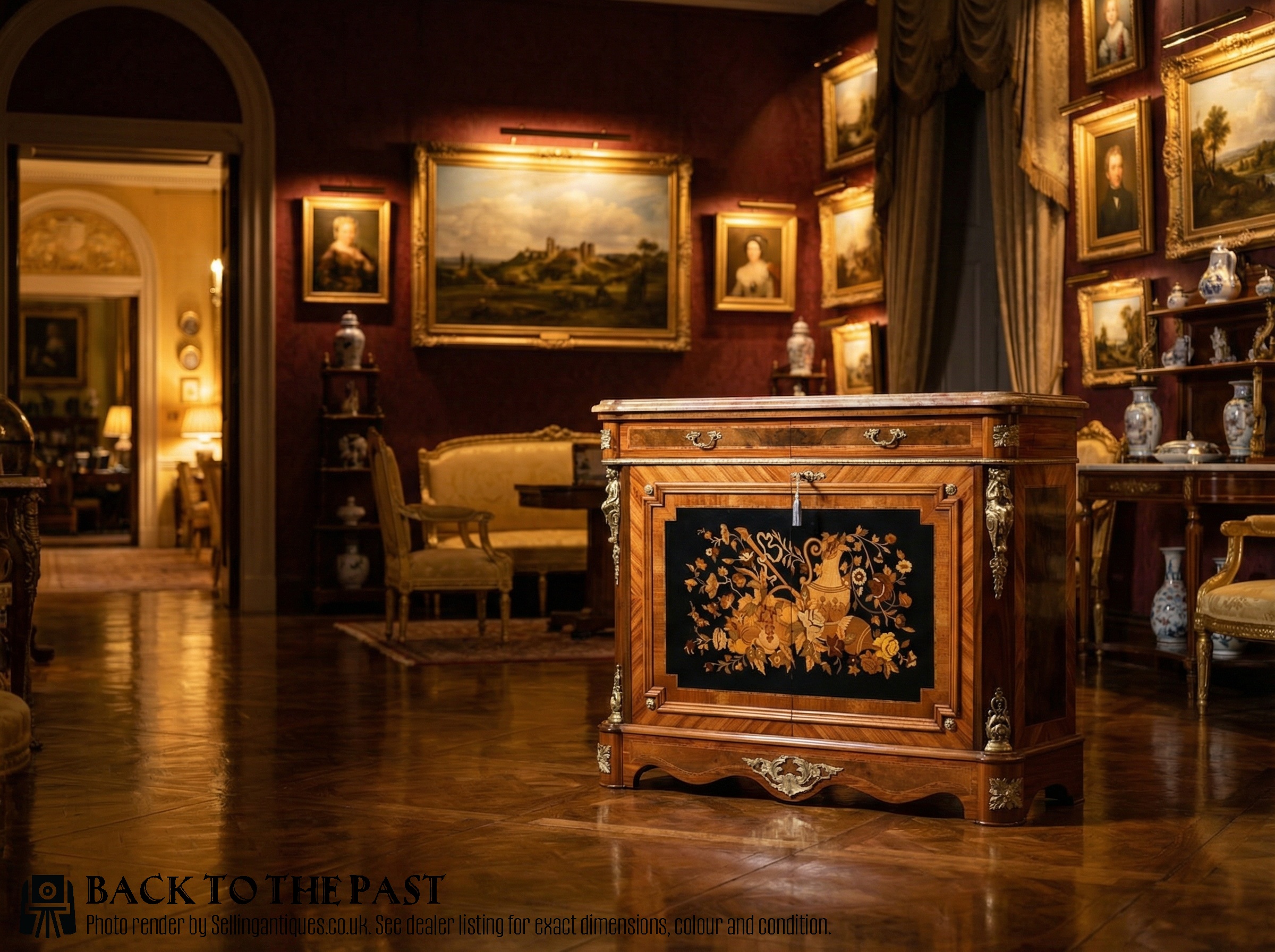
Cabinet makers utilised dense hardwoods including walnut, kingwood, rosewood, oak, and cherry as the foundational structure for these cabinets. Veneers of exotic woods were hand cut and laid in floral marquetry, parquetry, or Blake marquetry patterns across curved surfaces.
Gilded bronze or ormolu mounts were cast and chased to accentuate the corners, feet, and borders of each cabinet. Marble tops, inset porcelain plaques, and hand painted Vernis Martin panels were integrated into the wooden carcasses to complete the decorative scheme.
Retail Price Guide 2026
Typical UK retail prices for louis xv revival cabinet, calculated from the Sellingantiques database of over a million retail prices indexed since 2003. This retail price guide relies exclusively on Sellingantiques data; no external sources or auction records are used, so the figures do not describe the wider market.
Dates span from the mid-nineteenth century through to the interwar period of the twentieth century.
What varies in quality
The division between standard production and top tier work rests in the crispness of the ormolu mounts and the depth of the marquetry. Superior examples exhibit hand chased bronze mounts that fit the wooden contours precisely, alongside multi-toned wood veneers that retain their original contrast.
Structural execution also dictates the tier of the piece, visible in the hand cut dovetails of the drawers and the precise alignment of serpentine doors. Maker attribution, such as signed pieces by established nineteenth century workshops, separates workshop output from exhibition grade commissions.
Edward Holmes Baldock·G. Durand
The Louis XV Revival Cabinet Glossary
- Ormolu
- Gilded bronze mounts applied to furniture. This technique provides metallic highlights that frame the wooden panels.
- Marquetry
- Inlaid wood veneers forming decorative patterns. Craftsmen use contrasting timbers to create floral or geometric pictures.
- Vitrine
- A glass fronted display cabinet. These pieces allow collectors to exhibit porcelain and small valuables securely.
- Serpentine
- A cabinet front curving outward in the centre and inward at the sides. This shape demands advanced woodworking skill.
- Vernis Martin
- A simulated Japanese lacquer technique developed in France. It produces a glossy, translucent finish often decorated with painted scenes.
Frequently Asked Questions
How do I clean an ormolu mount?
Dust gently with a soft dry cloth to prevent the accumulation of dirt in the recesses. Avoid abrasive polishes that strip the historic gilding.
Keep the metal away from moisture and direct chemical sprays. Professional conservation is advised if tarnish obscures the underlying bronze detail.
Where should I place a vitrine cabinet?
Position the cabinet away from direct sunlight to protect delicate wood veneers and marquetry from fading over time. Stable indoor humidity prevents the timber from warping.
Allow enough surrounding space to appreciate the curved serpentine lines and ormolu mounts without obstruction from modern furniture.
How do I identify nineteenth century revival work?
Examine the interior secondary woods, construction joints, and hand cut dovetails behind the facade. Nineteenth century French and English pieces often combine traditional joinery with machine sawn backing boards.
Look for the patination of the timber and the weight of the bronze mounts. Period pieces show consistent age wear across the internal carcass and exterior veneer.
What is the difference between a credenza and a pier cabinet?
A credenza typically presents as a long, low cabinet with multiple doors, designed to sit against a main wall. Pier cabinets are narrower, built specifically to occupy the wall space between windows.
Both forms utilise the same decorative vocabulary of marquetry and ormolu mounts but serve different spatial requirements within a formal room.