


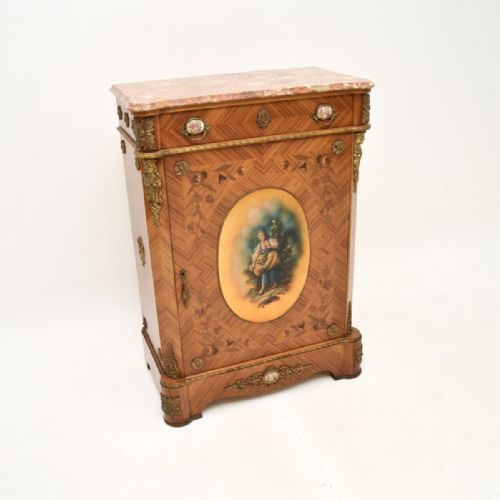
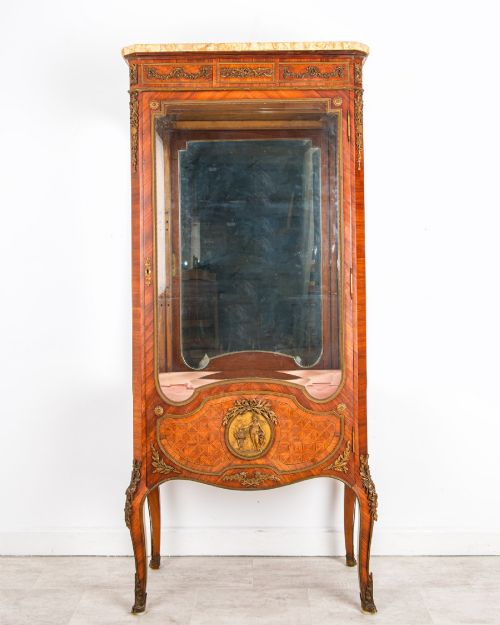
Louis XV Parquetry Cabinet
These pieces unite fluent curves with precise geometric wood veneers.
Louis XV Parquetry Cabinet
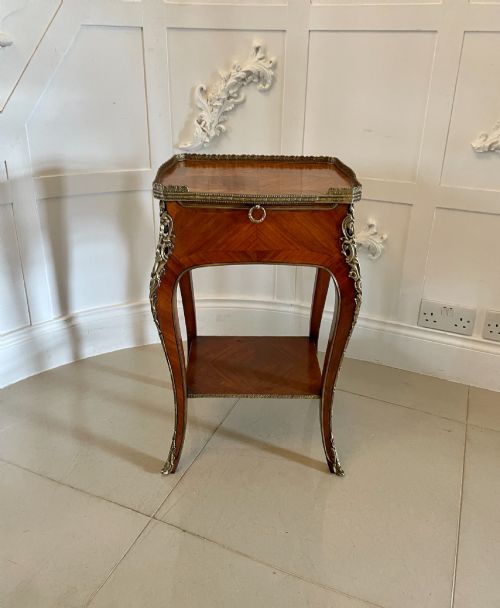
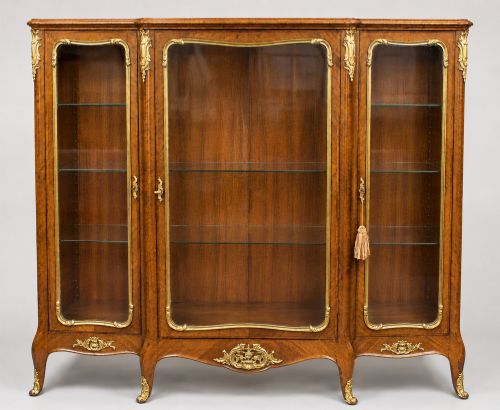
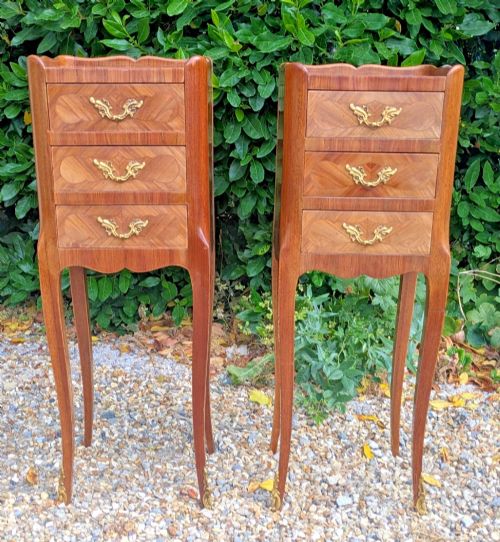
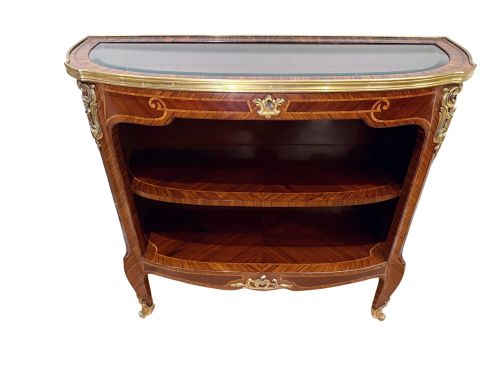
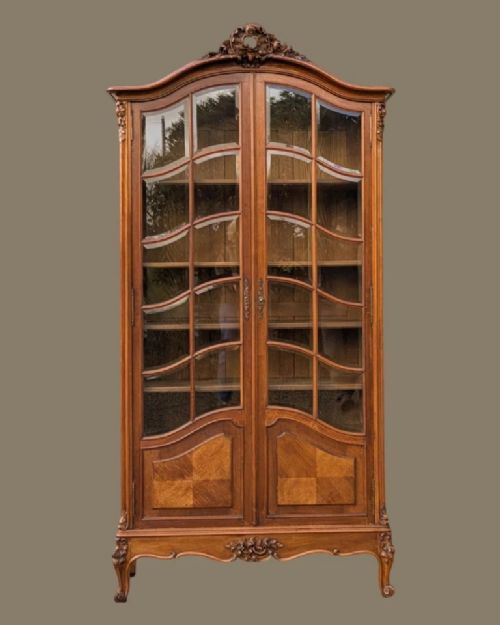
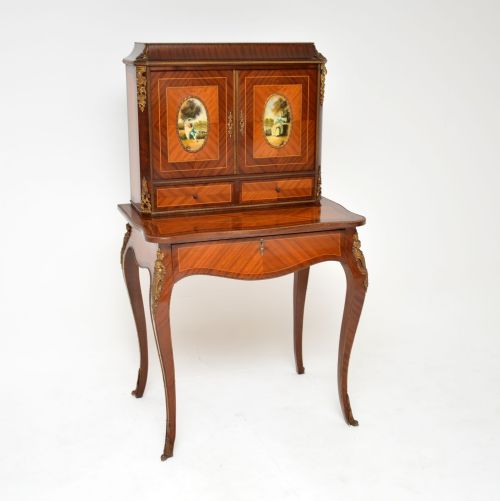
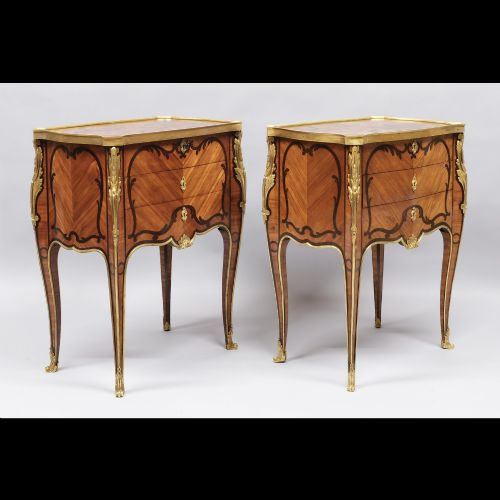
A louis xv parquetry cabinet brings together the undulating forms of the rococo revival and tightly patterned wood veneers. You will encounter side cabinets, bedside tables, and display cabinets spanning the eighteenth century to the early twentieth century.
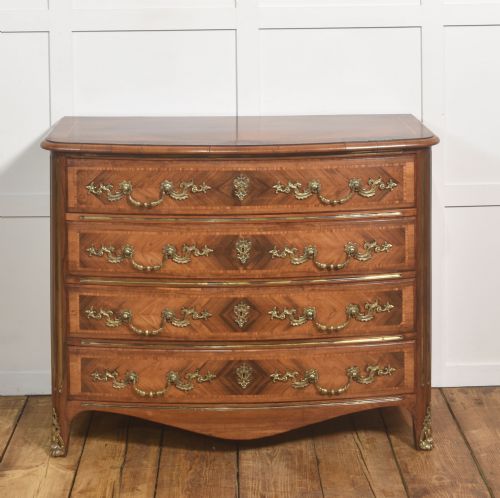
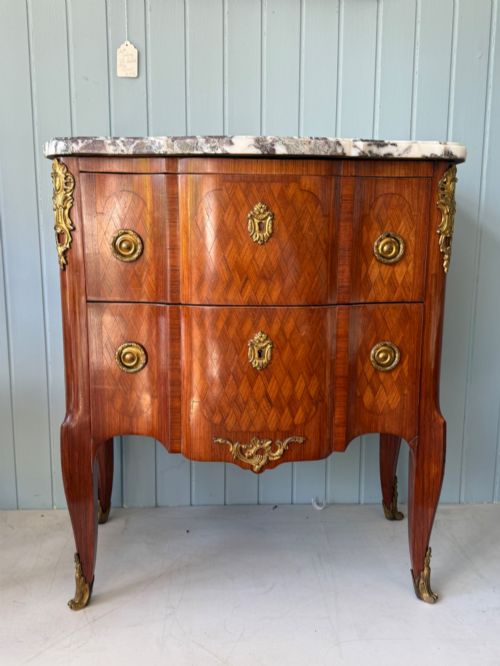
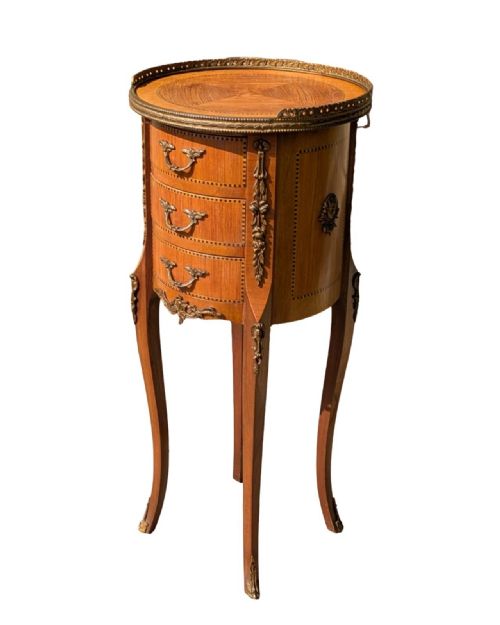
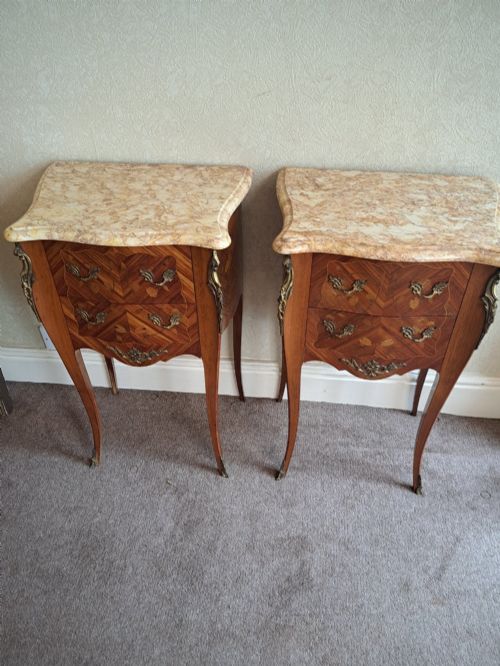
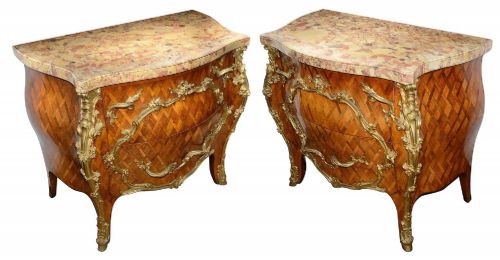
The profile typically follows a serpentine or bombe contour, sitting upon cabriole legs. Many examples incorporate shaped marble tops and cast metal mounts that trace the structural lines.
How they were made
Cabinetmakers laid fine veneers of kingwood, walnut, and rosewood onto a carcase in geometric parquetry patterns. Ormolu and gilt bronze mounts were cast, chased, and fixed to protect corners and accentuate the curved outlines.
Slabs of marble were shaped to follow the serpentine contours of the wooden tops. Surface decoration sometimes included inlaid marquetry or porcelain plaques set into the timber frames.
Listings feature items dated across the eighteenth, nineteenth, and twentieth centuries, utilising kingwood, walnut, marble, and ormolu.
What varies in quality
The precision of the veneer work dictates the standing of a piece, particularly how cleanly the geometric parquetry meets along curved surfaces. Crispness in the chasing of the ormolu mounts distinguishes standard workshop production from finer examples.
Weight and selection of the marble top also play a part, alongside the fluidity achieved in shaping the structural carcase without losing stability.
Maison Millet
The Louis XV Parquetry Cabinet Glossary
- Parquetry
- Geometric patterns formed by fitting small pieces of contrasting wood veneer together. This technique covers cabinet surfaces in repeating angled designs.
- Ormolu
- Gilded bronze used for decorative mounts and furniture trim. The metal is cast and chased before application to the wooden carcase.
- Bombe
- A swelling, outwardly curving shape characteristic of rococo case furniture. This profile requires skilled veneer work to follow the convex contours.
- Cabriole
- A furniture leg that curves outward and then tapers inward to a foot. The form echoes organic lines found in mid-eighteenth-century design.
- Vitrine
- A glass-fronted display cabinet designed for porcelain or small objects. These pieces often feature glazed side panels alongside fitted shelving.
Louis XV Parquetry Cabinet: Frequently Asked Questions
Where do I place a bedside cabinet?
These compact cabinets suit domestic bedrooms as functional stands next to a bed. Their shaped marble tops provide a durable surface for lighting and small items.
They also function effectively in smaller reception spaces where floor area is limited. The decorative parquetry allows them to stand alone against a wall.
How do I care for marble tops?
Marble surfaces require regular dusting with a soft cloth to prevent particulate accumulation. Mild soapy water removes minor marks without harming the polished finish.
Acidic substances should be kept away from the stone to prevent surface etching. Wax can be applied lightly to maintain the sheen of the surrounding timber veneer.
What is the difference between parquetry and marquetry?
Parquetry relies on geometric shapes like cubes or chevrons to create repeating patterns across a surface. This method highlights the natural grain and colour contrast of timbers such as kingwood and walnut.
Marquetry employs pictorial arrangements, assembling diverse veneers to depict flowers, landscapes, or urns. Both techniques appear frequently across nineteenth-century revival furniture.
How do I identify a display cabinet?
Display cabinets feature glazed doors and frequently glass side panels intended for viewing contents from multiple angles. Shelving within is often arranged to showcase porcelain or decorative objects.
These pieces combine the enclosed storage of a cabinet with the visual transparency of a bookcase. They often incorporate ormolu mounts and parquetry borders framing the glass.